
Shavnabada Monastery
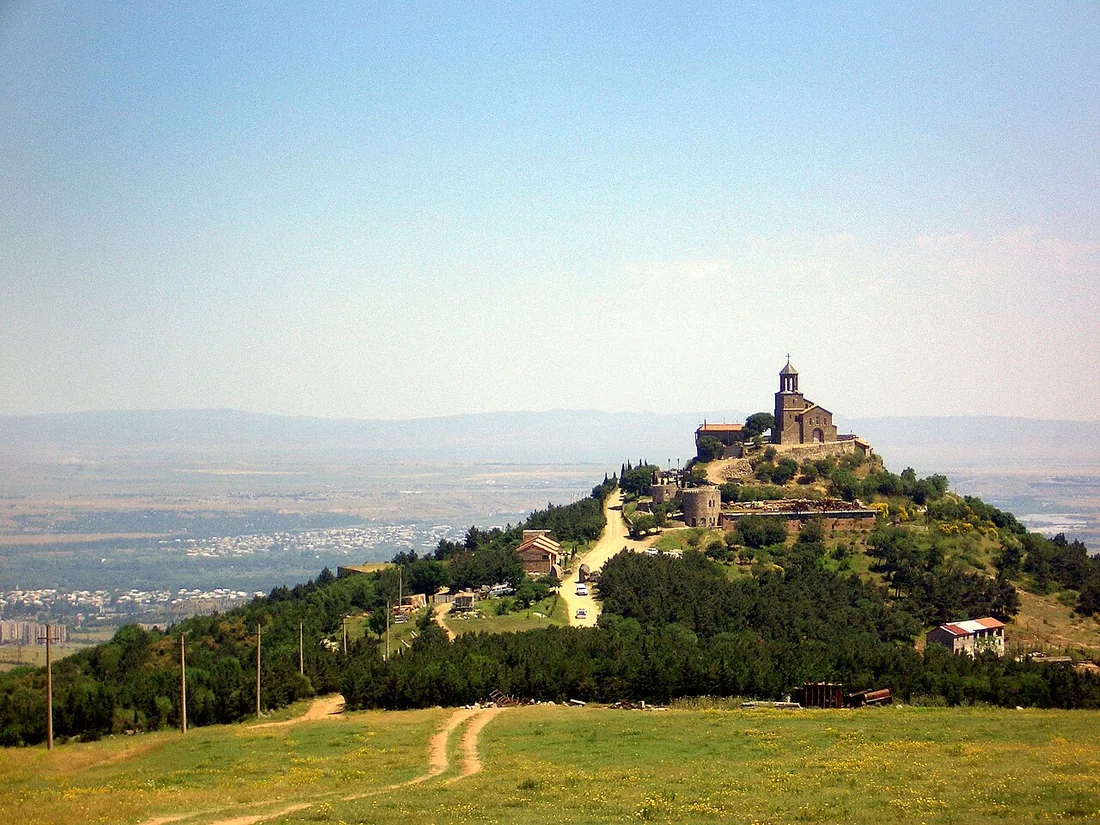
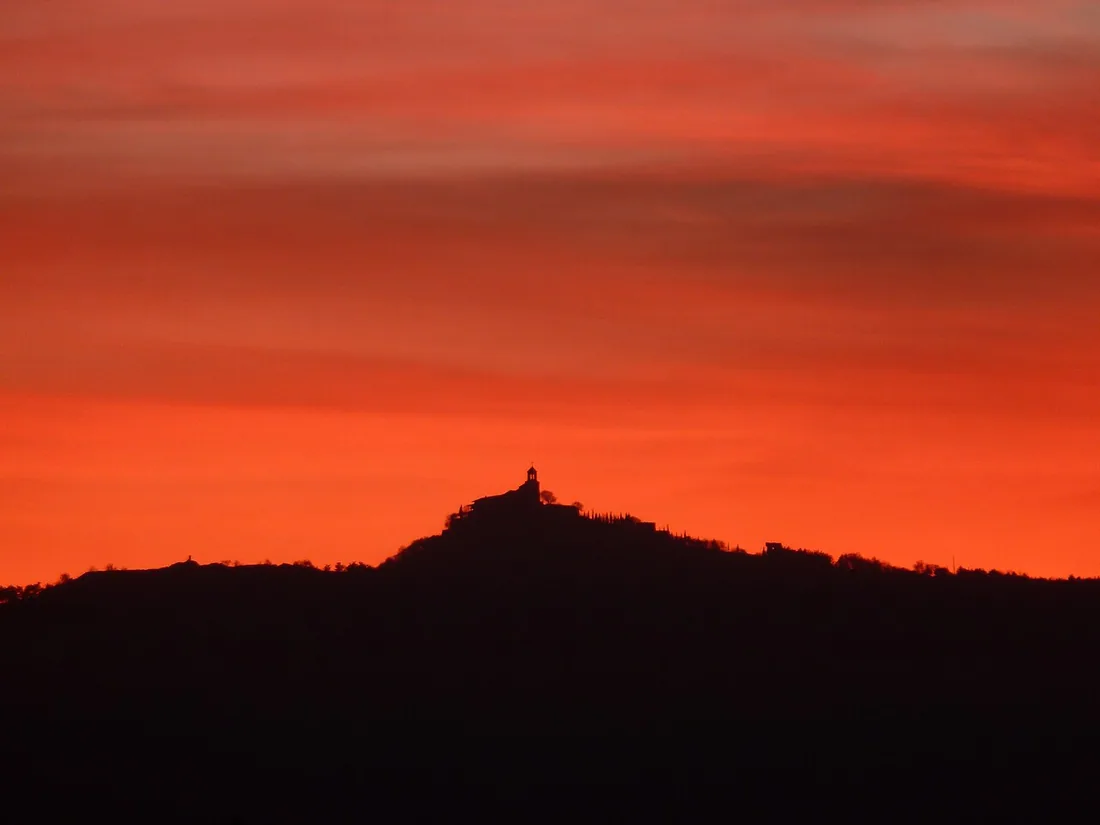
A monastery of St George on a forested mountain above Teleti, named after a legendary black-cloaked rider — with its own icon school and wine.
- Time needed
- 1 h
- From Tbilisi
- 19 km · 0:35
- Road
- Unpaved sections
- Car needed
- Crossover / SUV
- Season
- May–October
- Entry
- free
The mountain is named after a cloak — shavi nabadi, the black felt cape of a rider who, the story goes, won a battle for Georgia and was never seen again.
Tradition tells it more than one way. In one version the king gave an unknown warrior a black cloak as a reward for his courage; after the thanksgiving service the man vanished, and people later recognised his face in a fresco of St George. In another, St George himself led the royal army in the black cloak. Some tellings set the battle in 1795, the year Agha Mohammad Khan's Persian army sacked Tbilisi — in the legend, at least, the invaders were beaten here.
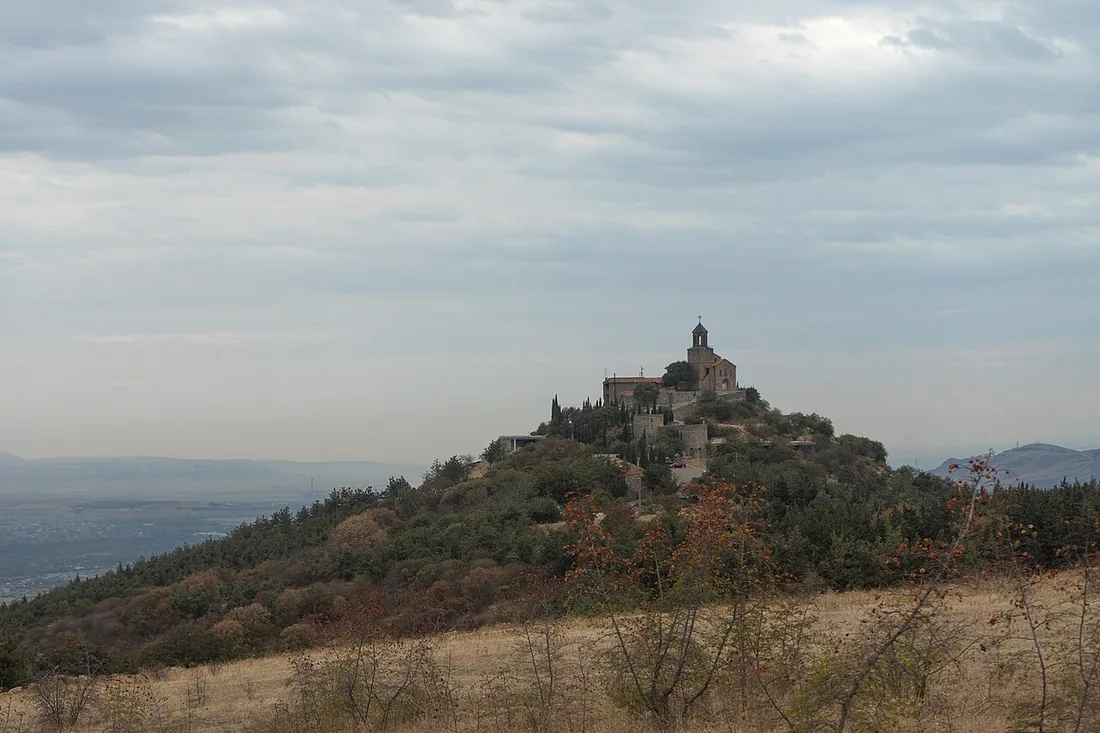
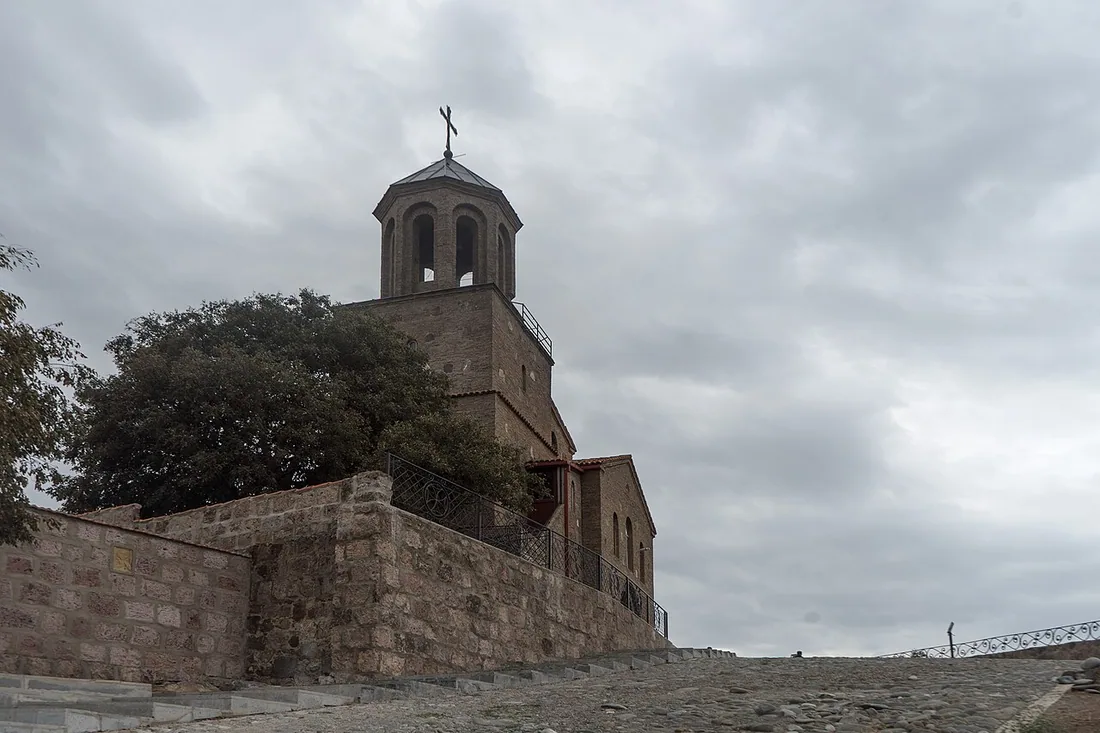
The history is quieter. The monastery's Church of St George dates from the 12th century; a second church and a bell tower were added later, though sources disagree on when. Today it is a working monastery with an icon-painting school, and most of the icons in the church were painted by local hands. There is a cellar too, and the monks make a wine that carries the mountain's name: Shavnabada.
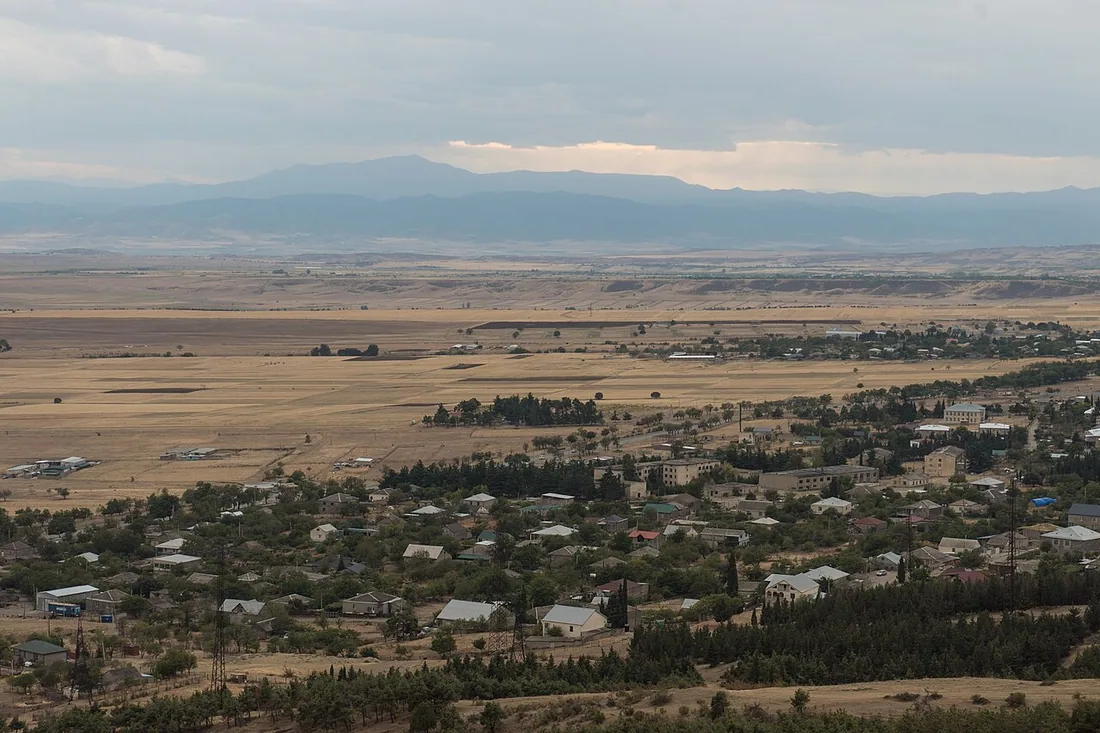
The drive is part of the visit. The last kilometres climb through forest on a rough track, and from the top, at around 790 metres, Tbilisi spreads out to the north.
Nobody knows who wore the black cloak. The mountain has kept his name anyway, and the monks pour it into bottles.
Gallery
Practical advice
This is a working monastery and entry is free. Dress modestly: long trousers for men, a skirt and headscarf for women. Keep your voice low in the church and ask before taking photographs. There is nothing on site beyond the church — no café, no toilets — so bring water. If you would like a bottle of the monastery's wine, ask whether any is for sale. The view over the city is especially fine towards sunset, but start down before dark: the forest track is no place for night driving. An hour is enough.
How to get there from Tbilisi
From the centre, head south along the Right Bank embankment and the Rustavi highway, then fork onto the S6 towards Marneuli and pass through Ponichala. About 3 km along the S6, turn right onto the local road towards the mountain; the last few kilometres climb through forest on a rutted gravel track. In all it is about 19 km and 35 minutes. In dry weather an economy car manages at a crawl; after heavy rain or in winter the track turns to mud — then take an SUV or leave it for another day. Fill up in the city; parking at the gate is limited.
Click a marker for details. Coloured lines are ready-made road trips.
Nearby places
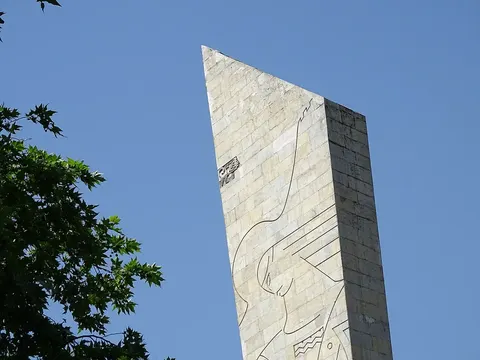
Monument to the 300 Aragvians
A 1959 obelisk above the Mtkvari at Ortachala, raised where remains of Tbilisi's defenders of 1795 were unearthed.
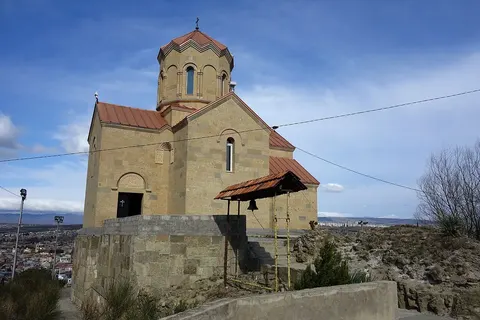
Tabori Monastery of the Transfiguration
A monastery rebuilt in 1995–2001 on the ridge facing Narikala — a hill shahs and kings fought over, with Old Tbilisi laid out below.
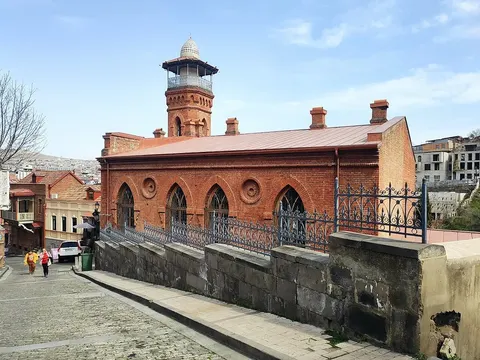
Juma Mosque, Tbilisi
Old Tbilisi's last surviving mosque, at the foot of Narikala: red brick, an octagonal minaret, two mihrabs, and Sunnis and Shias praying in one hall.
Narikala Fortress
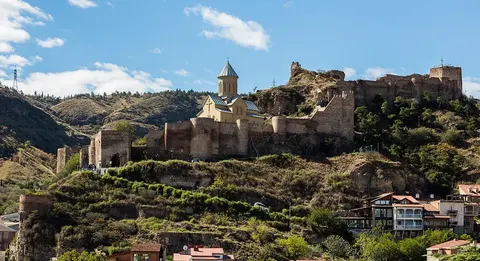
Sixteen centuries of wall on the Sololaki ridge above the Old Town: Tbilisi's citadel, its oldest silhouette and its widest view.
Best car for this trip
Unpaved sections
Guides
- Do You Need a 4x4 in Georgia? We rate the road surface and the minimum car class for all 267 places in our database. 227 of them need nothin
- The Best Time to Visit Georgia, Counted Month by Month Georgia does not have one season. It has two countries: a 60% country from November to April and a 99% country
Pickup locations
Car Rental in Tbilisi — 6 km (straight line)
Booking and enquiries
The easiest way to reach these places is by car — you pick the route and the stops.