
Samshvilde
An abandoned medieval city on a narrow promontory between two canyons, with substantial ruins and dramatic ground.
- Time needed
- 3 h
- From Tbilisi
- 66 km · 1:25
- Road
- Mostly paved
- Car needed
- Crossover / SUV
- Season
- May–October
- Entry
- free
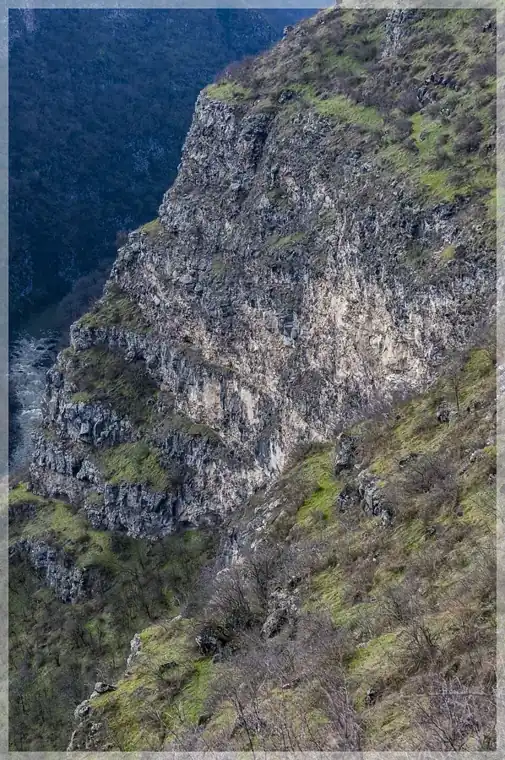
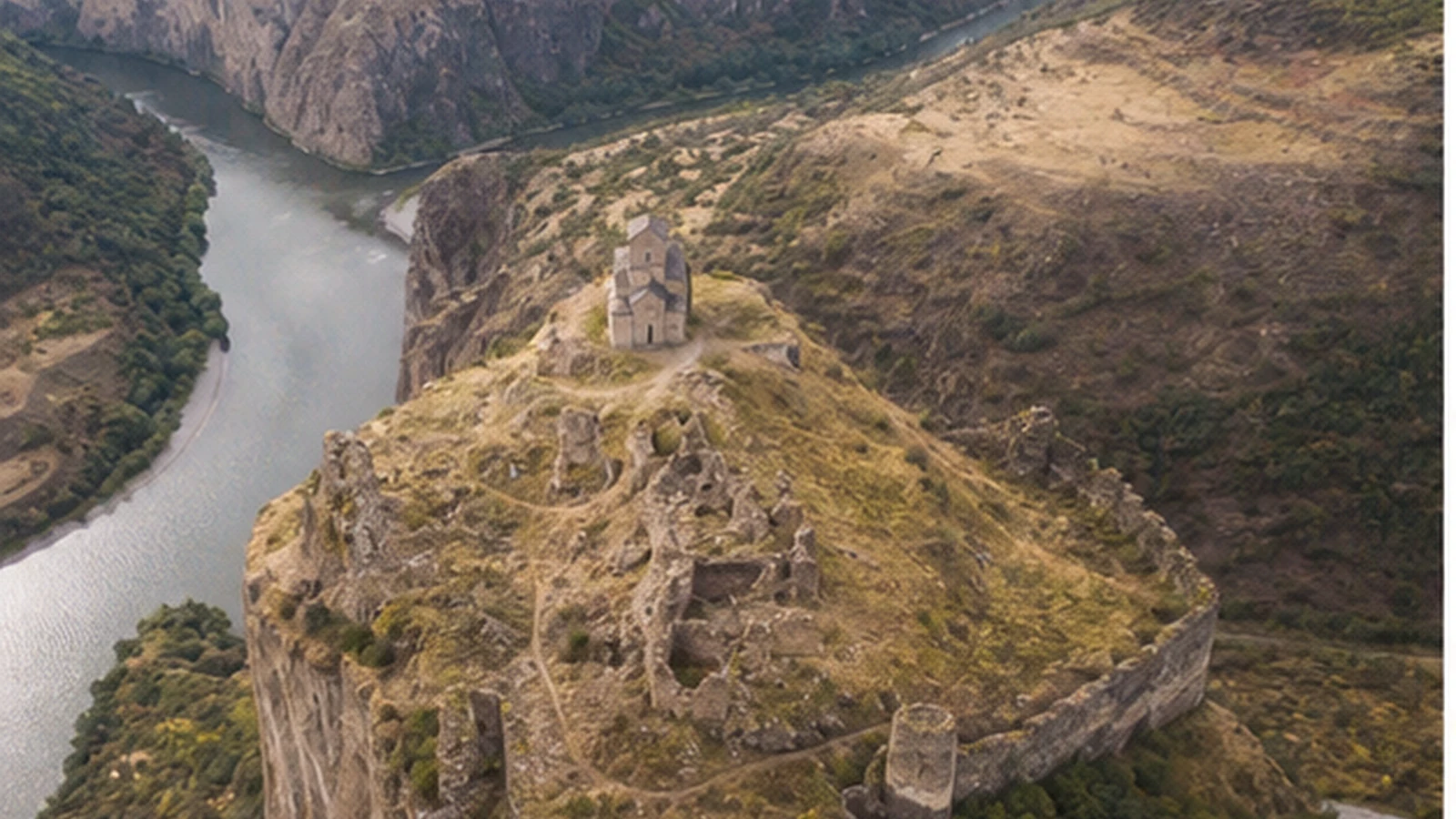
Samshvilde looks far less impressive on a map than it does on the ground. The city stood on a triangular promontory cut on both sides by deep gorges, those of the Khrami and the Chivchavi. The rock drops almost vertically on either flank, and the only approach is a narrow neck of land. It is a natural fortress that needed walls in one place only.
The site was inhabited from antiquity, and Georgian chronicles list it among the oldest cities of Kartli. In the 11th century Samshvilde became the capital of the Armenian Kiurikian kingdom; in 1110 David the Builder took it, his first major success on the road to unifying the country. Timur later destroyed it, and the city emptied out over the following centuries.
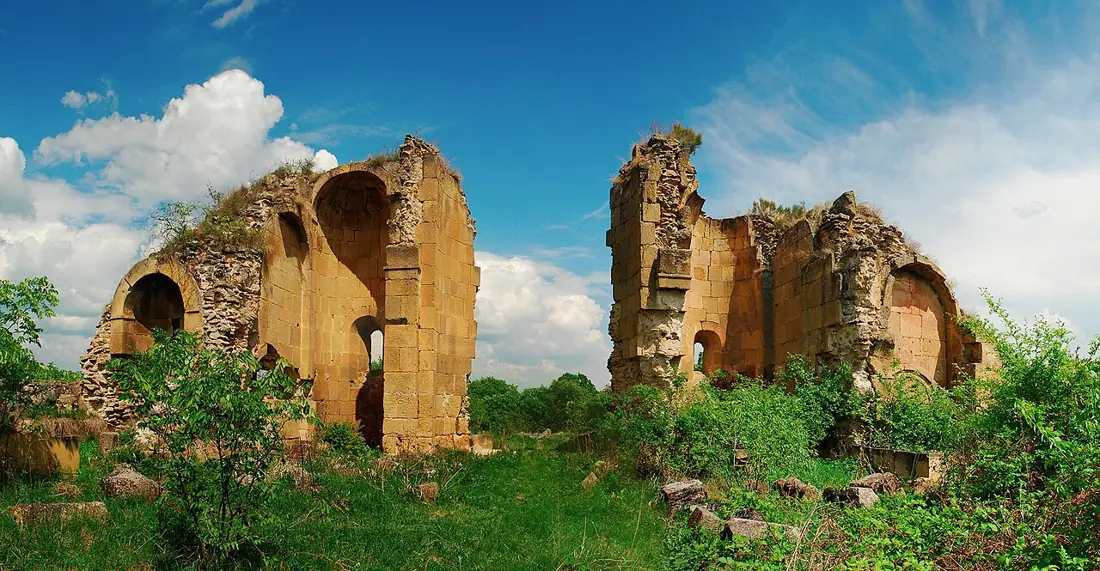
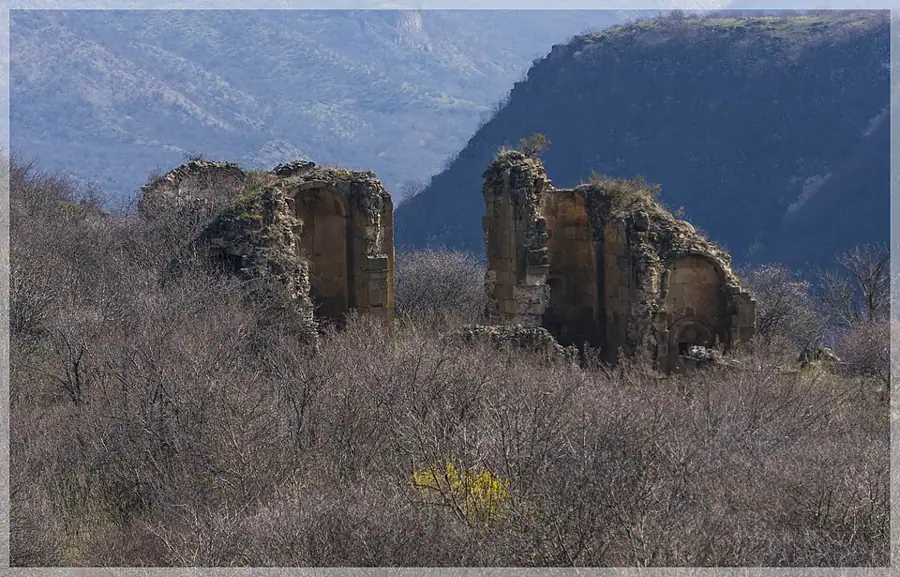
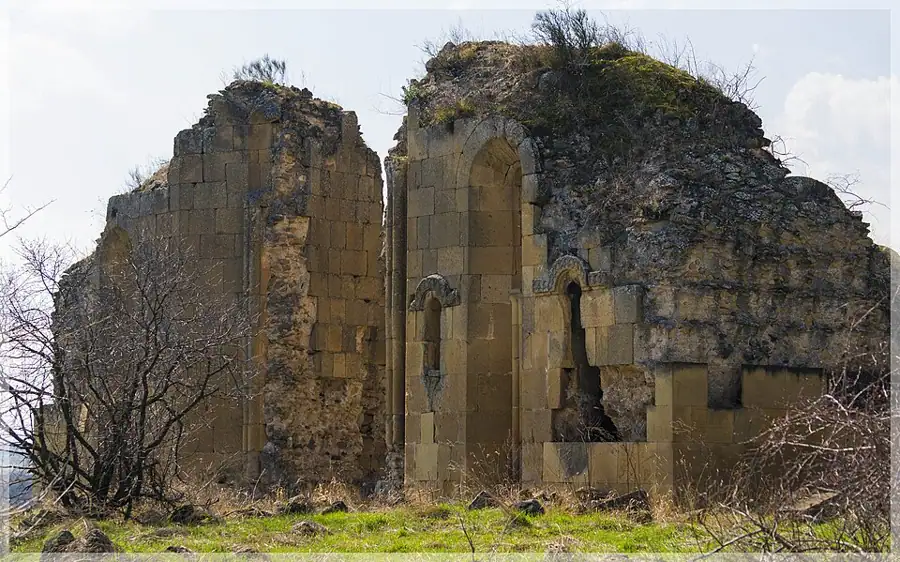
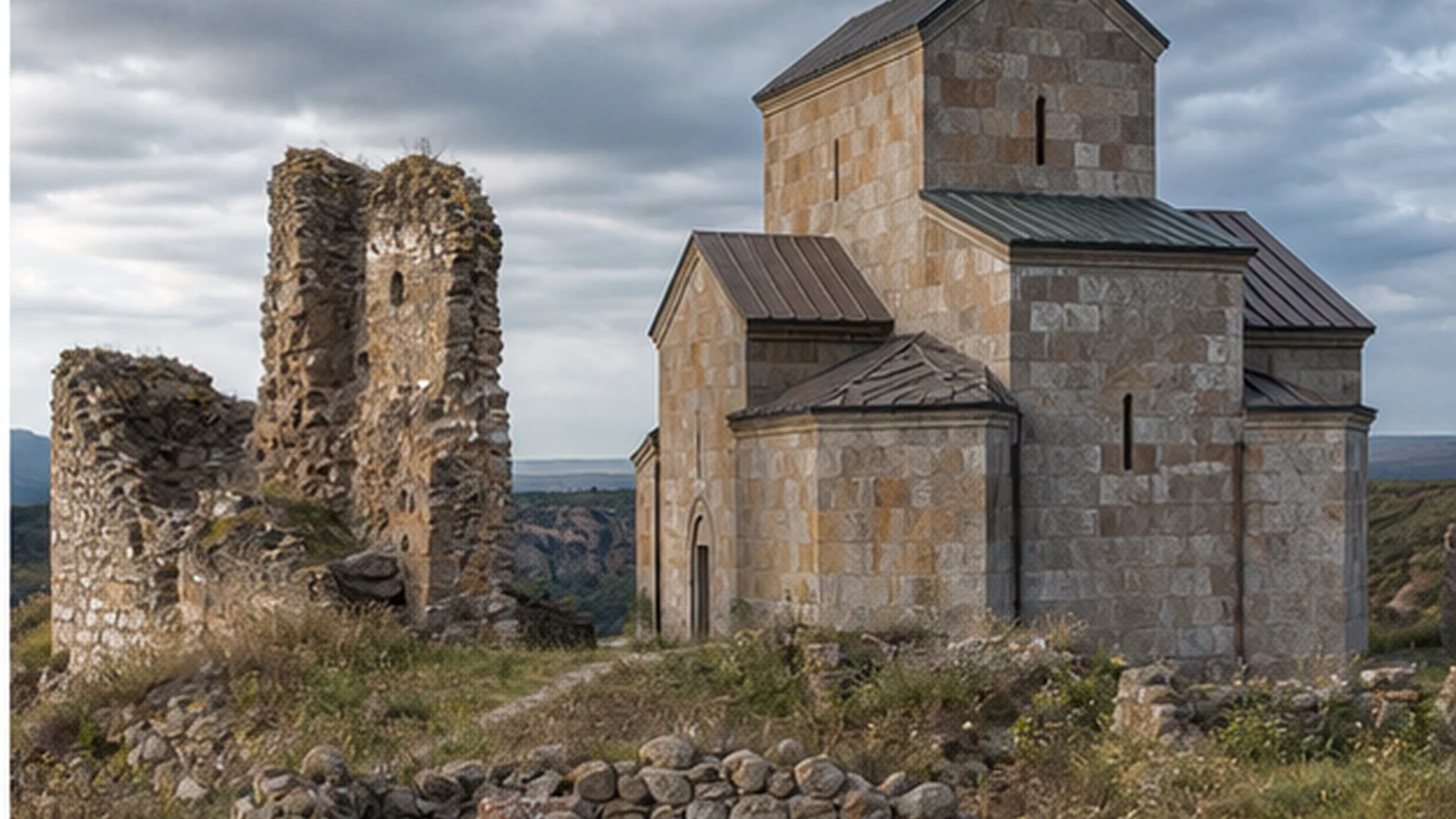
Scattered across the promontory today are the ruins of Samshvilde Sioni, a domed cathedral of 759-777 whose wall inscription names its builders; sections of city wall and a gate; rock-cut chambers and tombs; and the remains of a bathhouse. A University of Georgia expedition has been excavating since the late 2010s and a new section opens most seasons.
Walking out to the far tip and back is around two kilometres. The view down into the Khrami canyon is genuinely vertiginous, and there is no railing anywhere. In spring the plateau is full of flowers; in summer the sun is merciless, since there is almost no tree cover.
Gallery
Practical advice
Allow three hours — the site is large and the paths are unmarked. Take real care near the edges: the Khrami canyon drops sharply and nothing is fenced, so hold on to children. Closed shoes are essential; stones and open shafts hide in the grass. There is no shade and no water, so carry at least two litres in summer. Late autumn and spring are much more comfortable. There are no toilets.
How to get there from Tbilisi
Head southwest from Tbilisi through Koda on the Tetritskaro road, then turn off at the sign for Samshvilde. Sixty-six kilometres in all, about an hour and twenty-five minutes. The main road is asphalt and in good condition; the last five kilometres are gravel and dirt that turn slippery after rain, so decent ground clearance helps. Refuel in Koda or Tetritskaro. Cars are left at the neck of the promontory and the rest is on foot.
Click a marker for details. Coloured lines are ready-made road trips.
Nearby places
Birtvisi
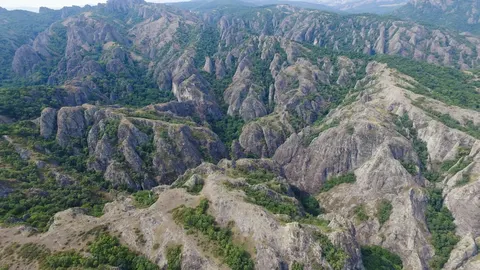
A labyrinth of limestone towers and narrow gorges an hour from Tbilisi, with a medieval fortress built into natural rock.
Kveshi Fortress
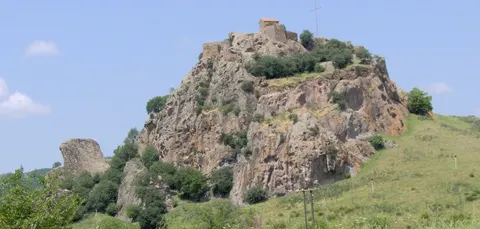
A medieval border fortress on a rock spur above the Khrami river, in Bolnisi municipality.
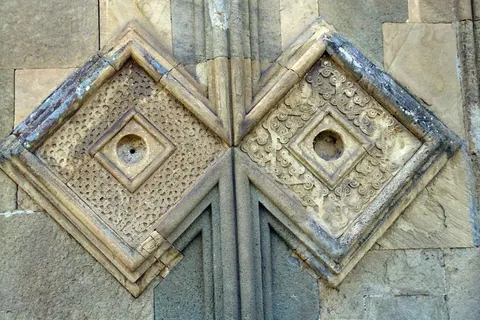
Gudarekhi Monastery
A 13th-century monastic complex at the foot of the Trialeti range, with one of the earliest dated bell towers in Georgia.
Part of these road trips
- Kvemo Kartli Archaeology Road 2 days · 285 km
Best car for this trip
Mostly paved
Guides
- The Best Time to Visit Georgia, Counted Month by Month Georgia does not have one season. It has two countries: a 60% country from November to April and a 99% country
- Driving in Georgia: What the Distances Actually Cost You Georgia is a small country with slow roads. Here is what 267 measured drives from Tbilisi say about how long y
Pickup locations
Car Rental in Tbilisi — 32 km (straight line)
Booking and enquiries
The easiest way to reach these places is by car — you pick the route and the stops.