
Lanchkhuti
Guria's northern gateway: birthplace of Noe Zhordania, a hotbed of the 1905 peasant revolt, and the last big stop before the sea.
- Time needed
- 2 h
- From Tbilisi
- 298 km · 4:20
- Road
- Paved
- Car needed
- Economy class
- Season
- All year
- Entry
- free
Most drivers see Lanchkhuti only through the windscreen on the way to the sea, and never notice that the man who led independent Georgia's government from 1918 to 1921 was born here.
Noe Zhordania came into the world in January 1868, into a family of minor landowners. Fifty years later he chaired the government of the Democratic Republic of Georgia, until the Red Army invasion of 1921 drove him into exile in France, where he died in 1953. Several other members of the 1919 Constituent Assembly were Lanchkhuti men too.
That was no accident. In 1902 a local schoolteacher, Grigol Uratadze, was among those who started the Gurian peasant movement; in the spring of 1903 villagers refused to rent the landlords' fields, and on 20 April 1904 police killed two activists from ambush. On 22 October 1905 insurgents stormed the town's police station and carried off its weapons. On 26 May 1922 the town gathered to mark Independence Day, and the Soviet authorities broke the rally up.
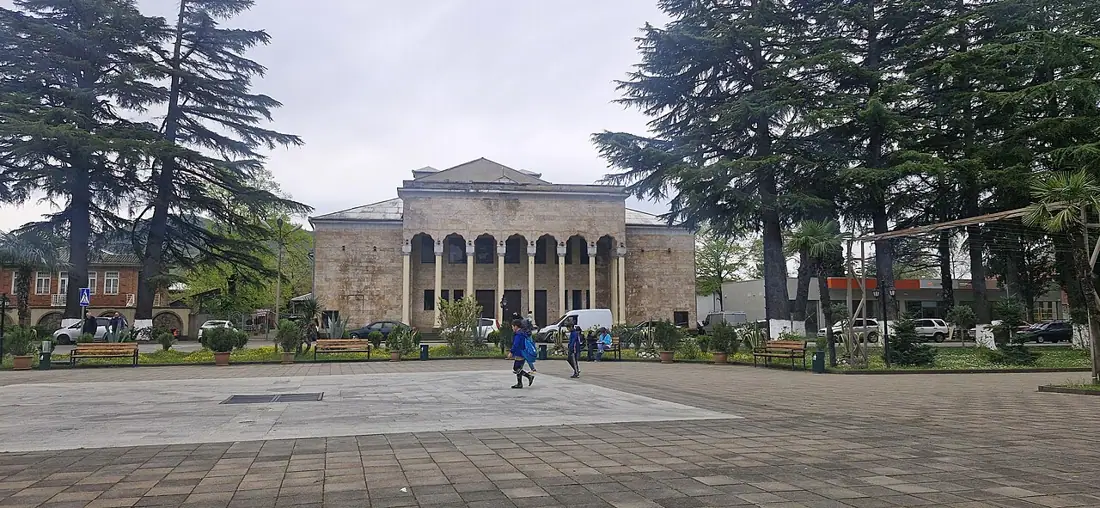
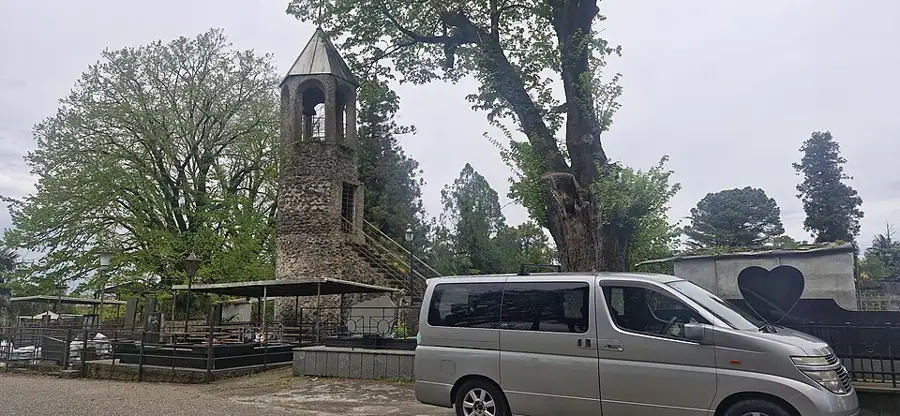
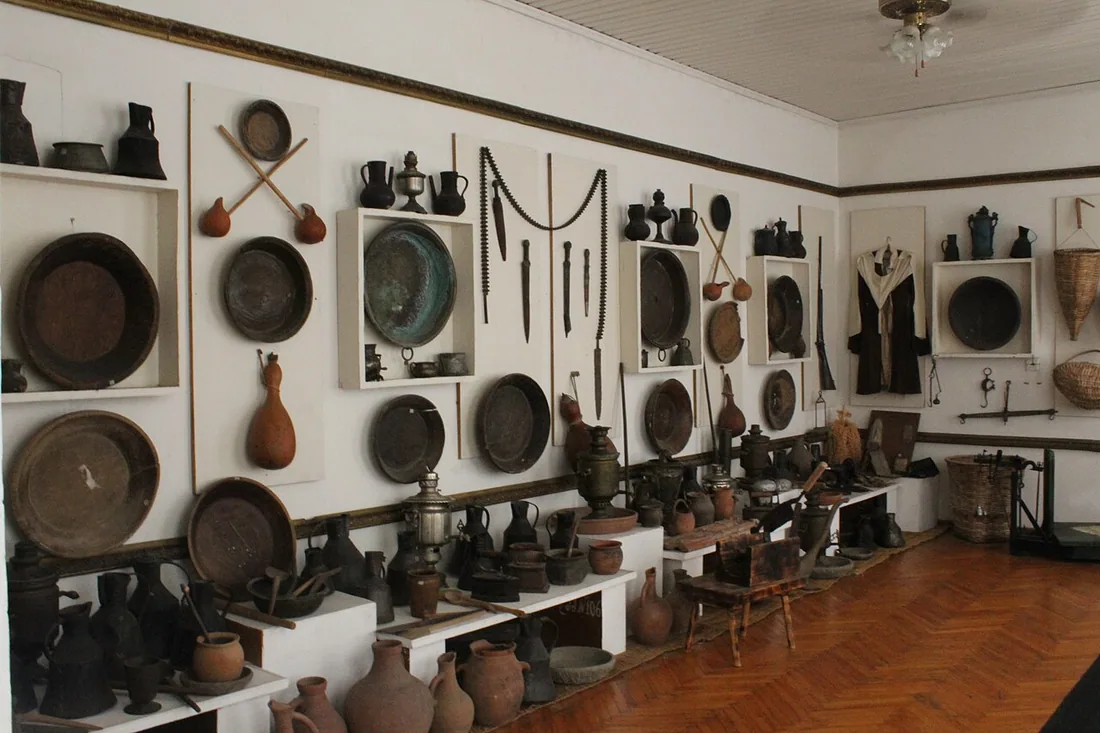
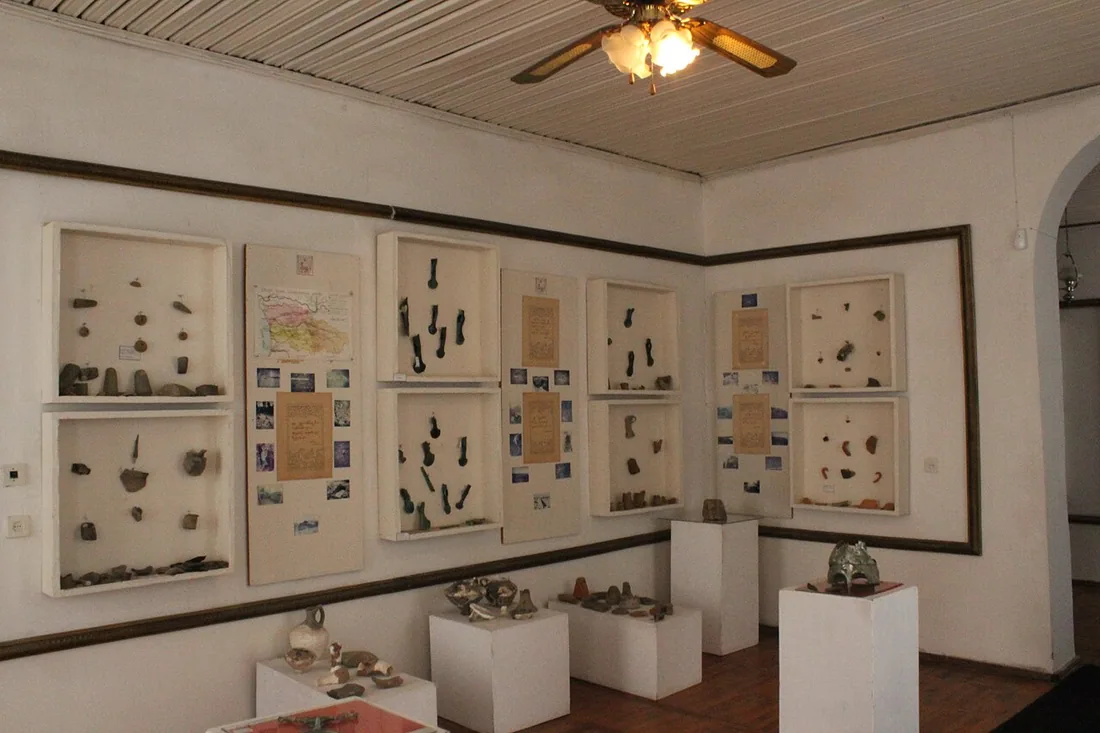
What to see: - the Museum of Local Lore (founded 1978): a 4th-century BC bronze helmet, Colchian bronze axes, Zhordania's personal belongings, and mementoes of the Gurian horsemen who travelled to America - the theatre on the main square, among deodars and palms: eight columns with paired shafts and capitals that blend the Corinthian and Egyptian orders - the round rubble-stone bell tower in the Agaraki quarter, four metres tall, all but the last trace of a vanished church
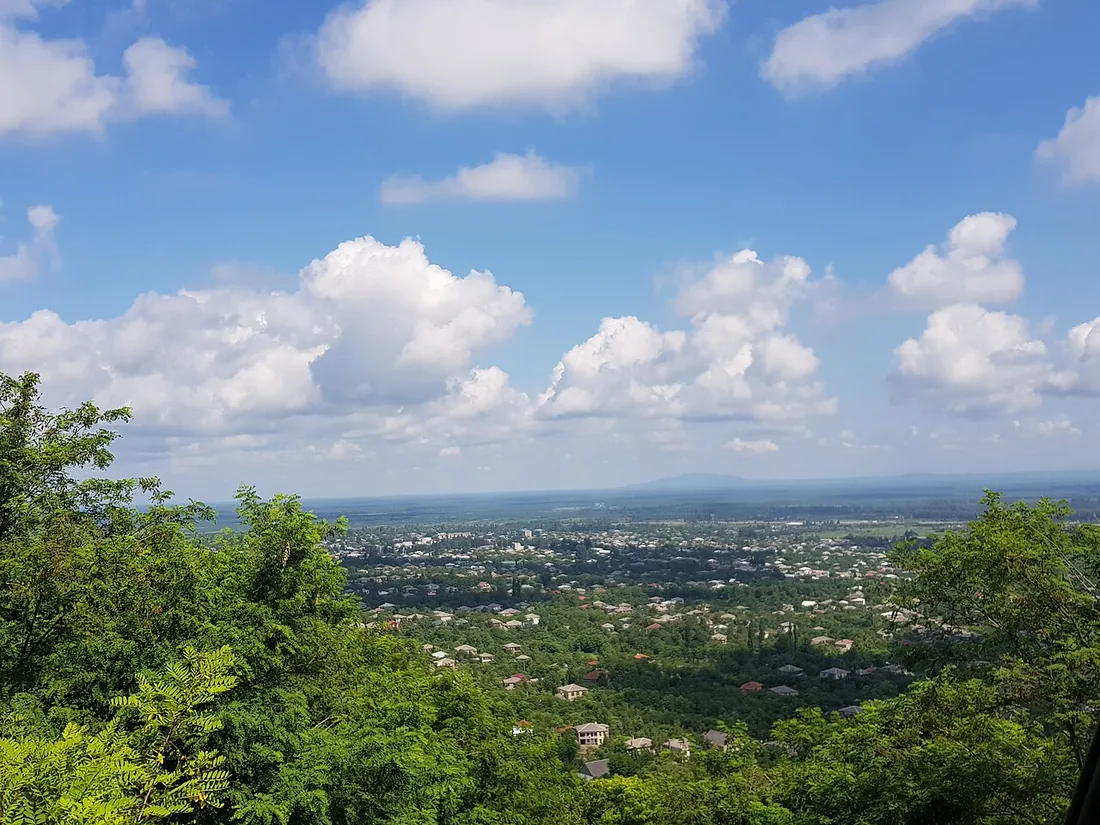
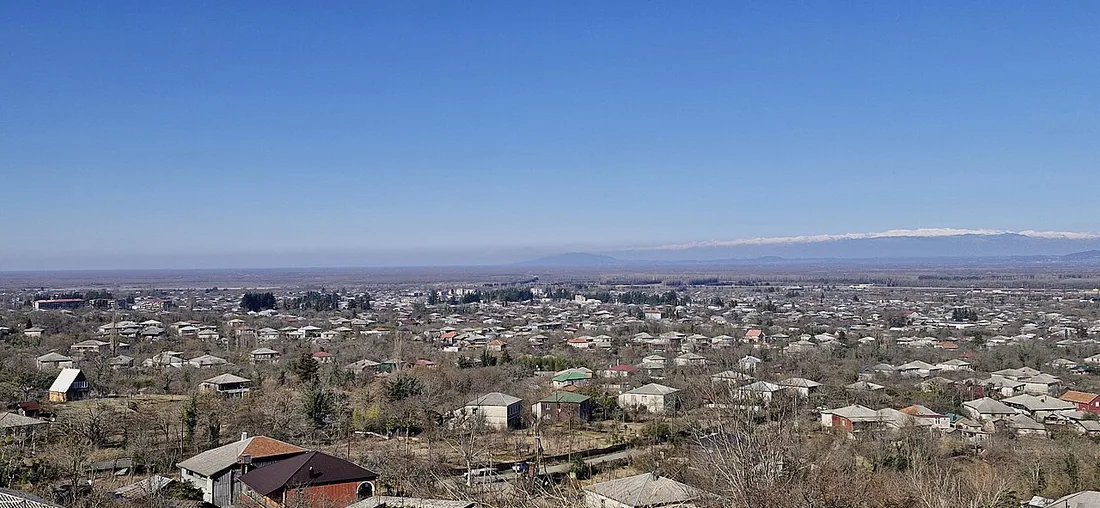
Tradition says Queen Tamar's horses had to be reshod five times before they got here, and the name grew from that; linguists prefer a Megrelian-Laz root meaning "cattle place" or "lookout". West of the town, the peat bogs of Kolkheti begin. Stop for fuel, by all means — then give the museum an hour.
Gallery
Practical advice
Give the town one to two hours. Museum hours are not published reliably, so ask locally before counting on it. Lanchkhuti is also the practical stop of the route: cash machines, a pharmacy, supermarkets and fuel, all thinner on the ground in Ureki and Grigoleti. The market is liveliest in the morning, with hazelnuts and honey in autumn. Parking in the centre is free and easy. Do not walk into the Kolkheti marshes on your own: there are no paths and the mosquitoes are merciless, so contact the national park administration first.
How to get there from Tbilisi
From Tbilisi take the S1 (E60) west past Khashuri, Zestaponi and Kutaisi to Samtredia, then turn south onto the S12 — 298 km, about four hours twenty. It is asphalt throughout: fast, largely dual carriageway to Samtredia, then an ordinary two-lane road. Lanchkhuti sits directly on the S12, so there is no detour; here the roads divide, south to Ozurgeti and west to Grigoleti and the sea. Fuel in Kutaisi, Samtredia and Lanchkhuti itself. An economy car is entirely sufficient.
Click a marker for details. Coloured lines are ready-made road trips.
Nearby places
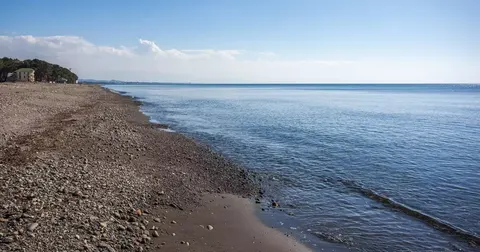
Grigoleti
A quiet shore village of dark magnetic sand and pines, with the Kolkheti wetlands pressing right up behind the beach.
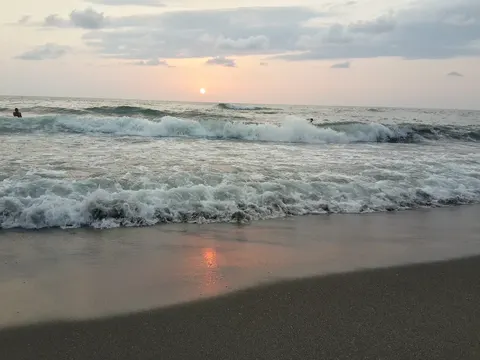
Ureki
Black, magnetite-rich sand, a belt of pines and a sea that stays shallow far from shore: Ureki is Georgia's classic family beach on the Guria coast.
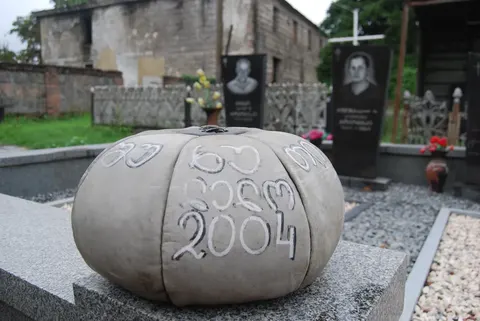
Shukhuti and Lelo Burti
Every Orthodox Easter the two halves of a Gurian village fight over a 16-kilo leather ball, and the winning ball ends up on a grave.
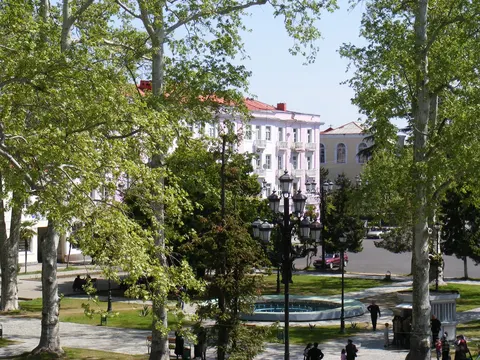
Ozurgeti
Guria's capital since the days of the Gurieli princes: a green town on three terraces, with a drama theatre that has played since 1868.
Best car for this trip
Guides
- Driving in Georgia: What the Distances Actually Cost You Georgia is a small country with slow roads. Here is what 267 measured drives from Tbilisi say about how long y
Pickup locations
Car Rental at Kutaisi Airport — 38 km (straight line)