
Mtatsminda Park and Funicular
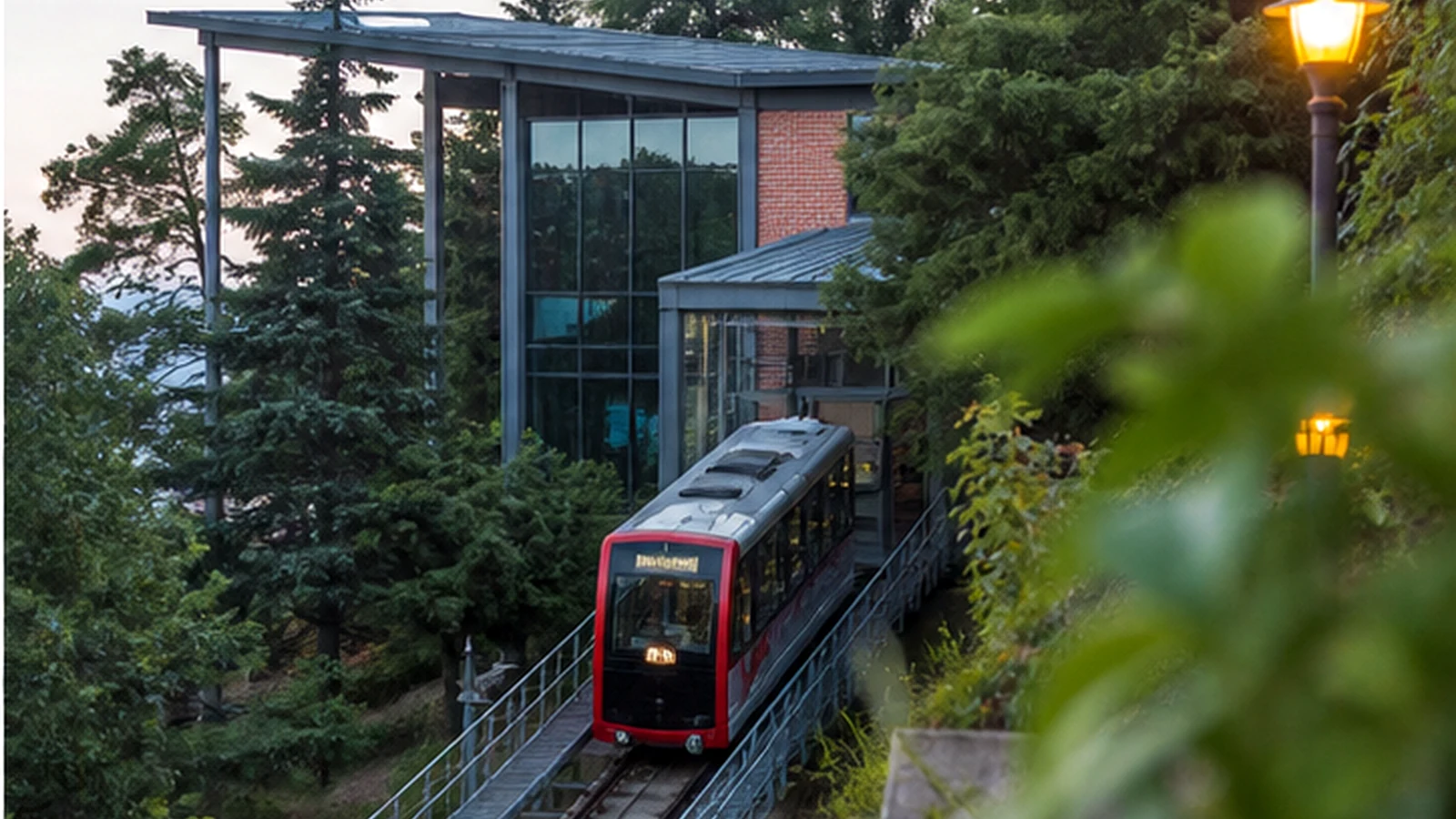
Tbilisi's highest balcony: a 1905 funicular lifts you to a Ferris wheel on the lip of the ridge, with the whole city turning below.
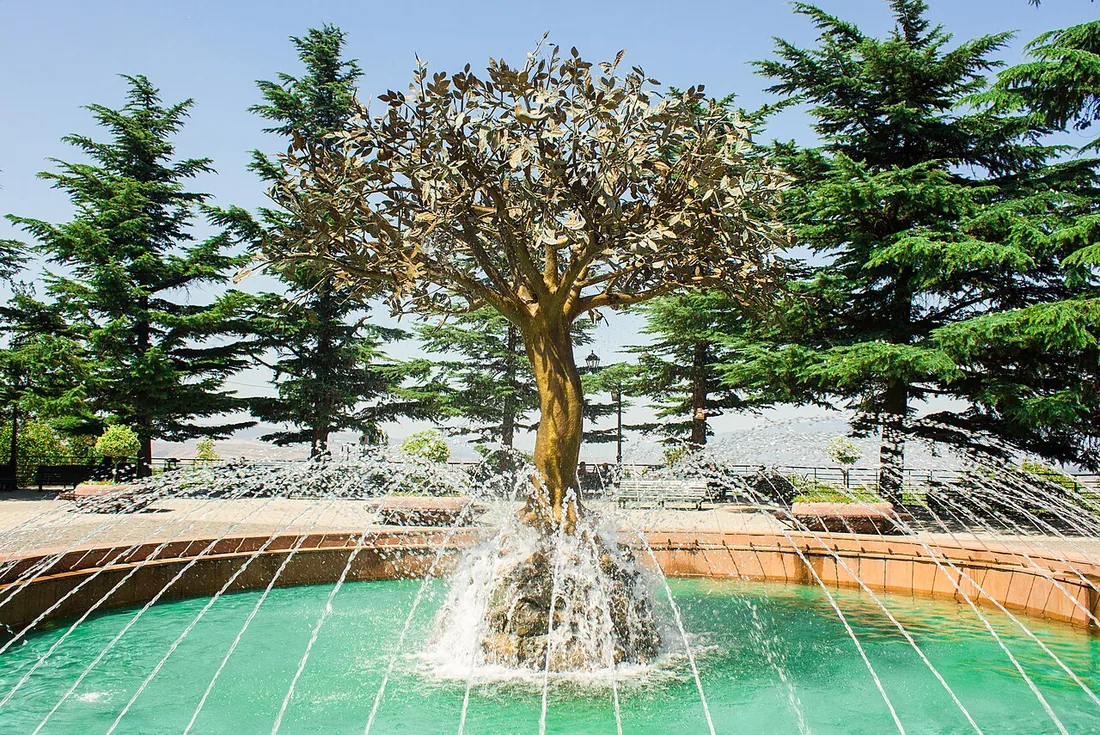
- Time needed
- 3 h
- From Tbilisi
- 6 km · 0:20
- Road
- Paved
- Car needed
- Economy class
- Season
- All year
- Entry
- free (funicular paid)
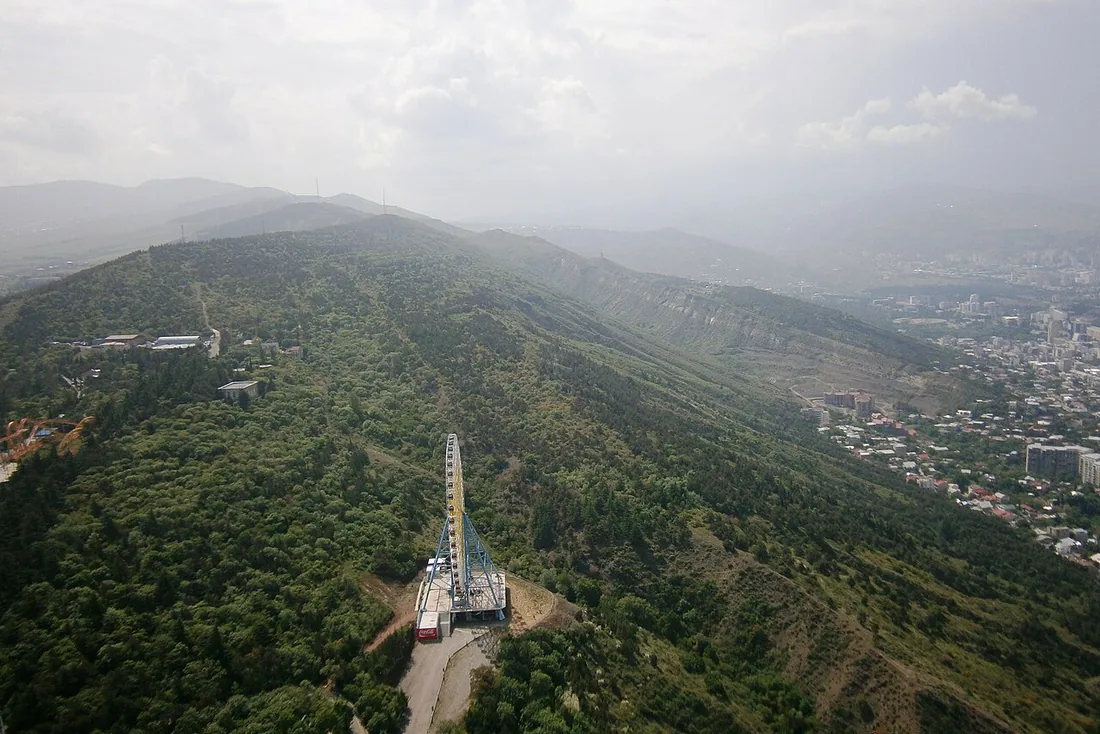
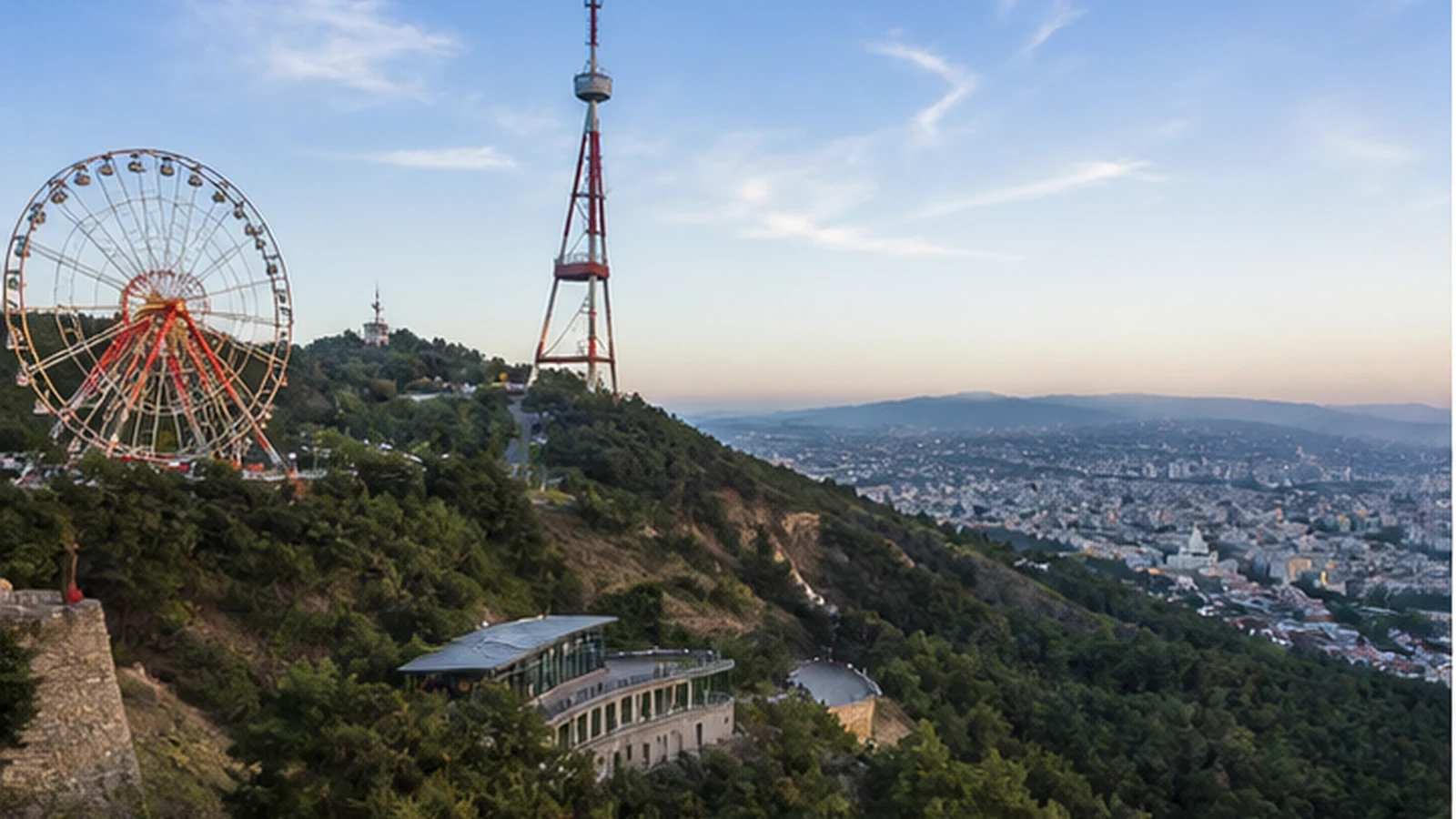
From the top station of the funicular, 727 metres above the sea, Tbilisi finally fits into a single look. The Mtkvari coils through the valley like a dropped ribbon; Narikala, the gilded dome of Sameba and the grey ranks of Soviet housing blocks line up in one sweep, and behind them the hills fade out layer by layer.
The mountain was once called Mamadaviti, after the sixth-century monk David of Gareja, who cut himself a cell on its slope; in the tenth or eleventh century it was renamed Mtatsminda, the Holy Mountain, after Athos. The 1900s had more worldly plans. The city dreamed of an "Upper Tbilisi" on the plateau, and the Belgian company that ran the trams offered the way up: a funicular, opened on 27 March 1905. Niko Pirosmani dedicated a large canvas to the occasion, and his painting "Funicular" hangs today in the Art Museum of Georgia. The painter himself died poor in 1918 and lies in the Nino cemetery, in a grave nobody recorded — not, as is often claimed, in the Pantheon at the line's halfway stop.
Upper Tbilisi was never built. In the 1930s the Soviet authorities laid out a park instead, and from 2001 it was remade as a modern amusement park. The funicular, worn out, stopped in June 2000 and carried passengers again only in 2012.
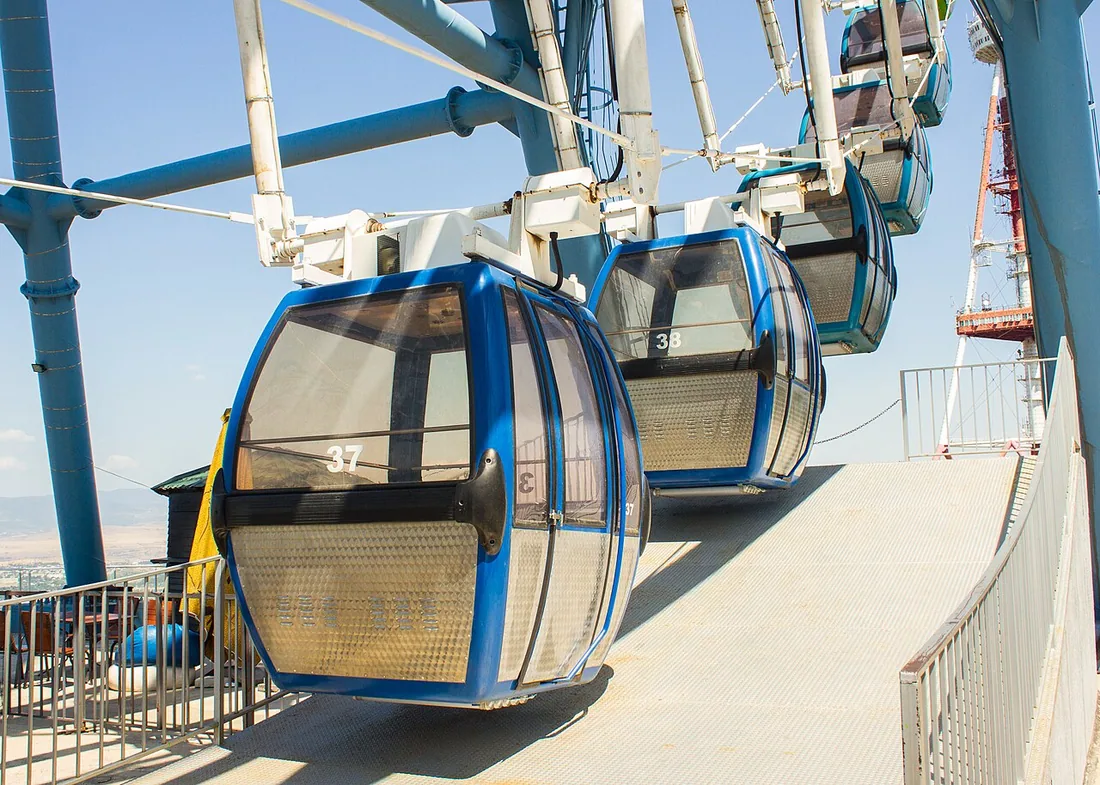
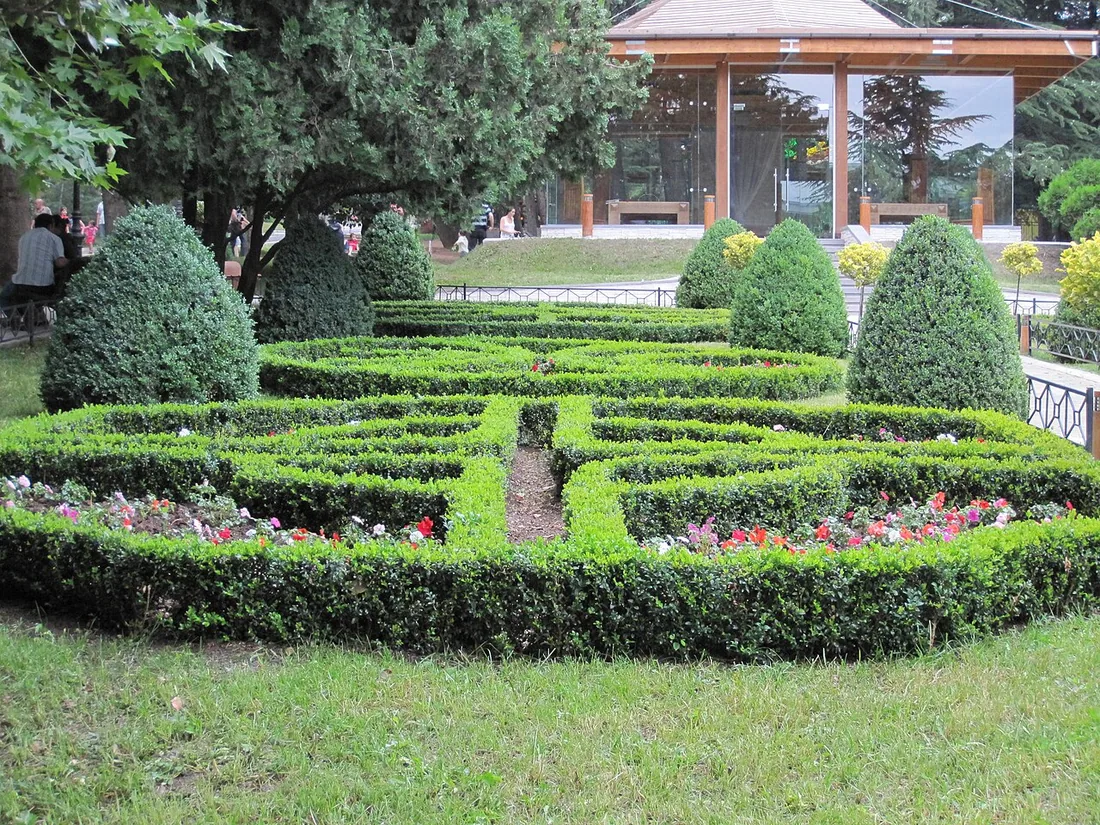
The wheel is the point now. Sixty-five metres high, it stands right on the edge of the ridge and takes ten to twelve minutes to turn, so the city tilts slowly beneath your feet. Around it are roller coasters, water slides, a Ghost Castle ride, woodland paths and restaurant terraces.
Stay until dark. The city switches itself on street by street, and the last carriages slide back down into the light, full of sleepy children.
Gallery
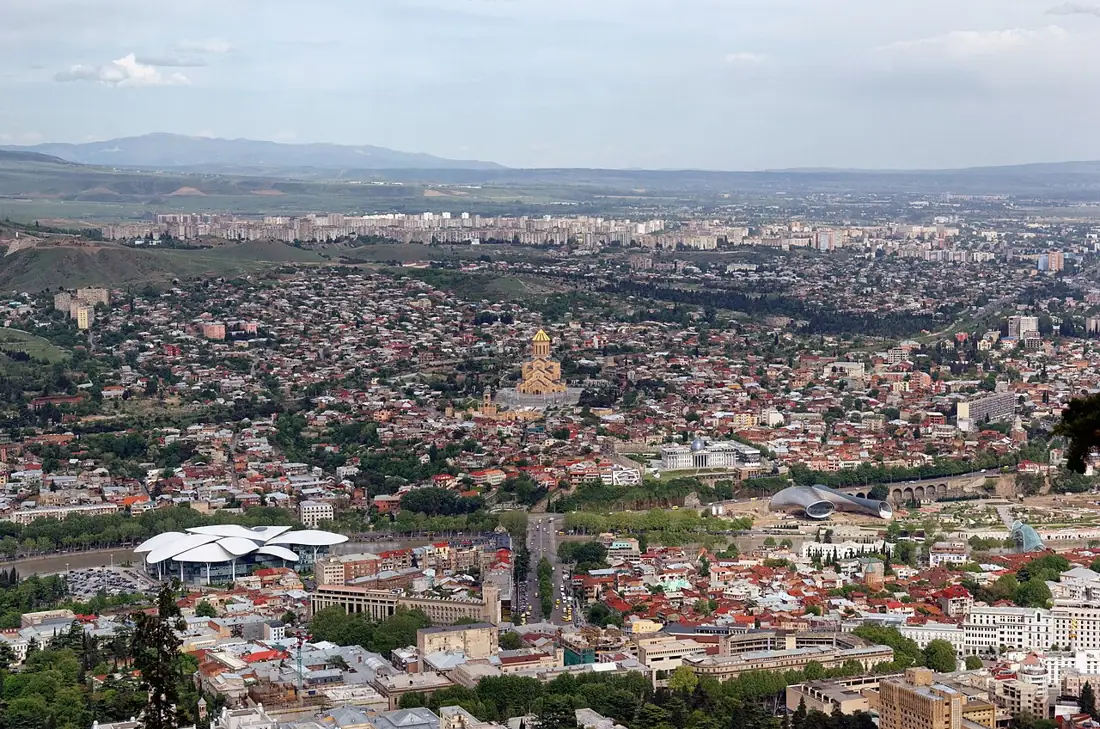
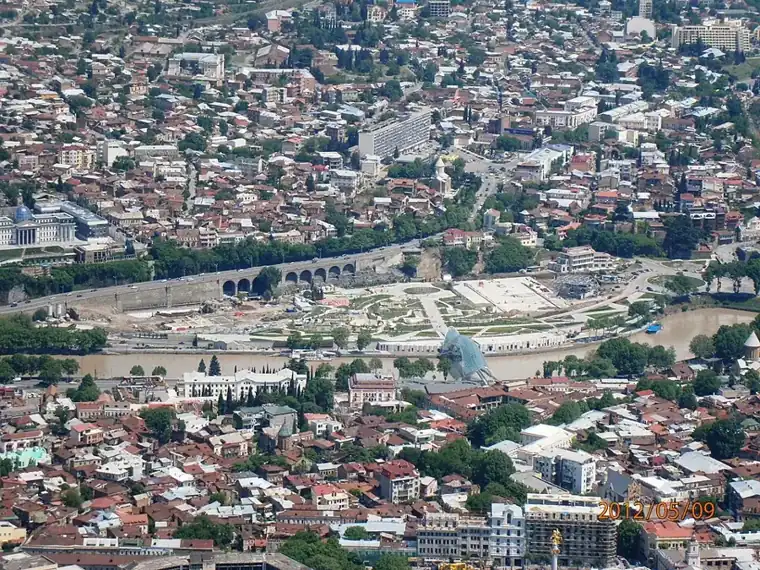
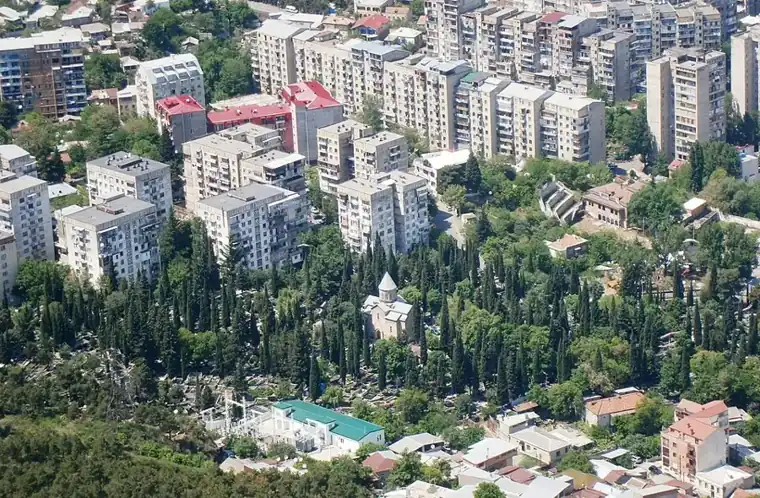
Practical advice
Come about two hours before sunset and you get the daytime city, the golden light and the night lights in one visit. The funicular and the rides are paid with a rechargeable park card sold at the stations: top it up once, and generously if children are with you. The ridge is windy and a few degrees cooler than Rustaveli Avenue, so bring a layer even in July. On weekend evenings the queue at the lower station can be long; weekdays are calmer. Cafés, a restaurant and toilets are inside the park. In winter some rides close, but the cold, clean air gives the sharpest views of the year.
How to get there from Tbilisi
There are two ways up. The easy one: drive or take a taxi to the lower funicular station on Chonkadze Street, find a metered bay in the surrounding streets (scarce in the evening) and ride up. The other: drive the whole way, about 6 km and 20 minutes from Freedom Square, through Vake and up the hairpin road that climbs the ridge towards Okrokana. It is asphalt throughout and ends at a large car park by the park gates. The bends are narrow, and after snow or a hard frost they ice over; on those days the funicular is the only sensible choice. Any economy car will manage the climb.
Click a marker for details. Coloured lines are ready-made road trips.
Nearby places
Mtatsminda Pantheon
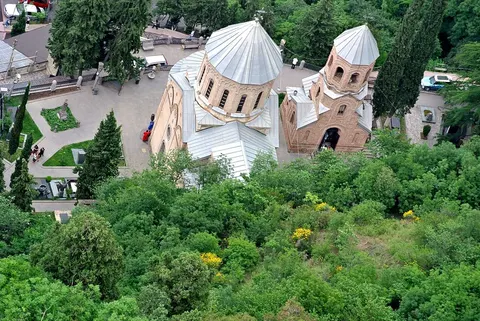
Moss-grown terraces round St David's church, halfway up the holy mountain: Griboyedov and Nino, Ilia, Vazha, Galaktion and Georgia's quarrels.
Georgian National Museum
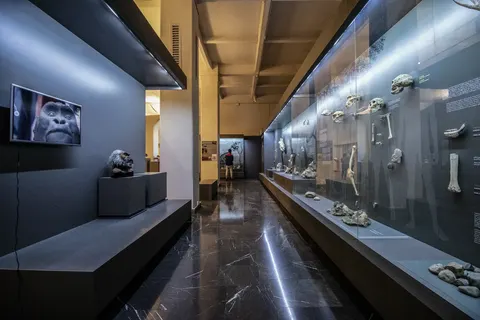
The Janashia Museum on Rustaveli Avenue: 1.8-million-year-old Dmanisi skulls, Colchian gold and a sober hall on the Soviet occupation.
Rustaveli Avenue
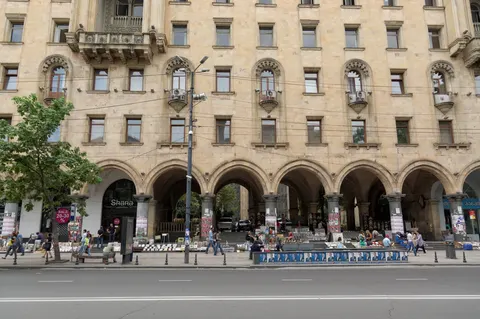
A kilometre and a half of opera, parliament, frescoed church and plane-tree shade: Tbilisi's showcase and the stage of its political memory.
Part of these road trips
- Family Georgia in Seven Easy Days 7 days · 820 km
Best car for this trip
Guides
- Driving in Georgia: What the Distances Actually Cost You Georgia is a small country with slow roads. Here is what 267 measured drives from Tbilisi say about how long y
Pickup locations
Car Rental in Tbilisi — 1 km (straight line)