
Norashen Armenian Church
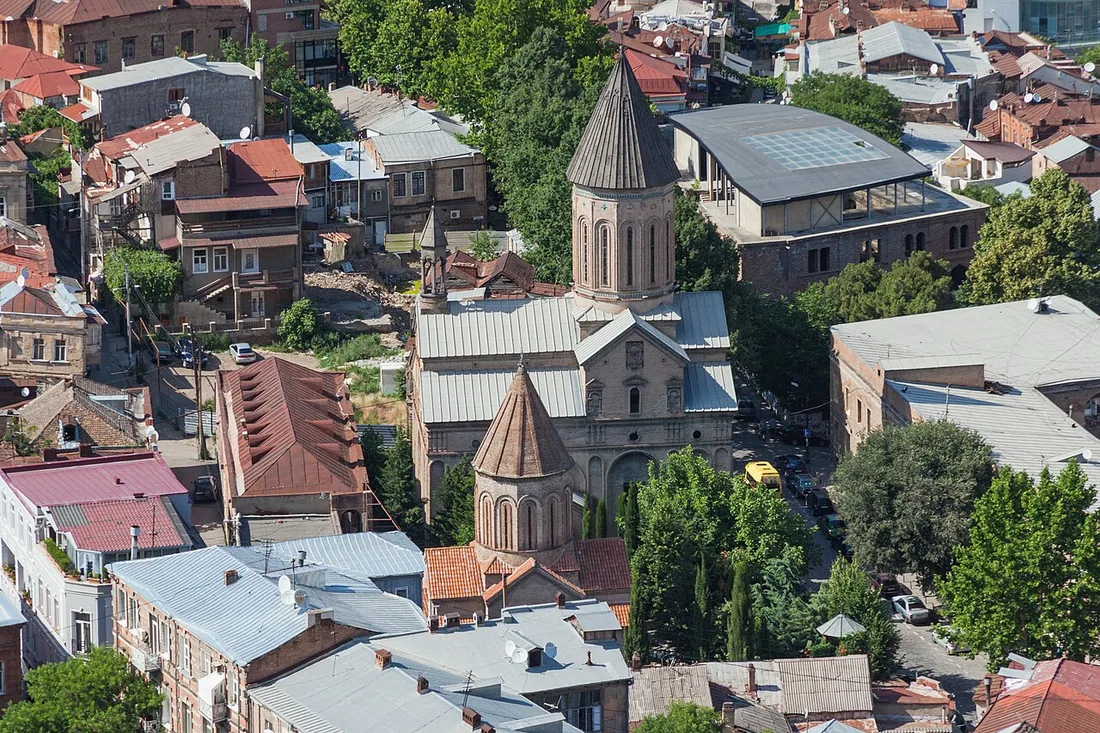
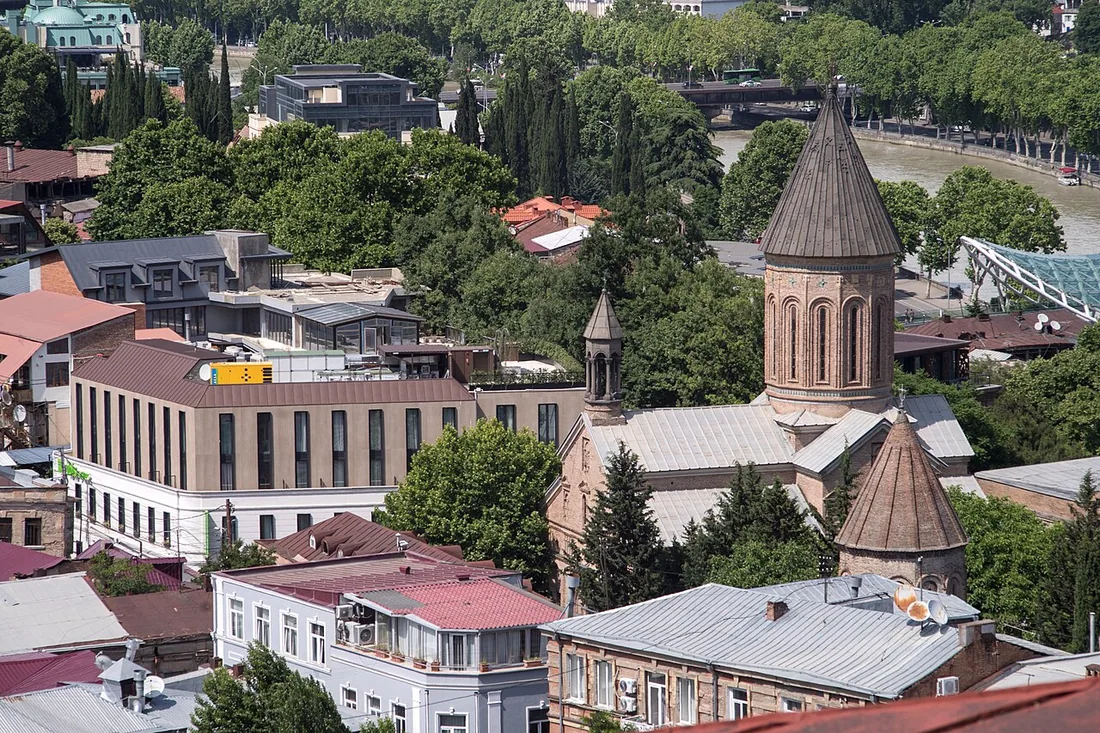
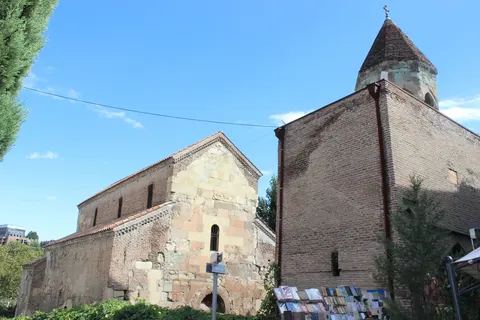
A 15th–16th-century Armenian church a stone's throw from Sioni, locked since 1995 — its story now told by its walls, gate and courtyard gravestones.
- Time needed
- 0.5 h
- From Tbilisi
- 3 km · 0:15
- Road
- Paved
- Car needed
- Economy class
- Season
- All year
- Entry
- free
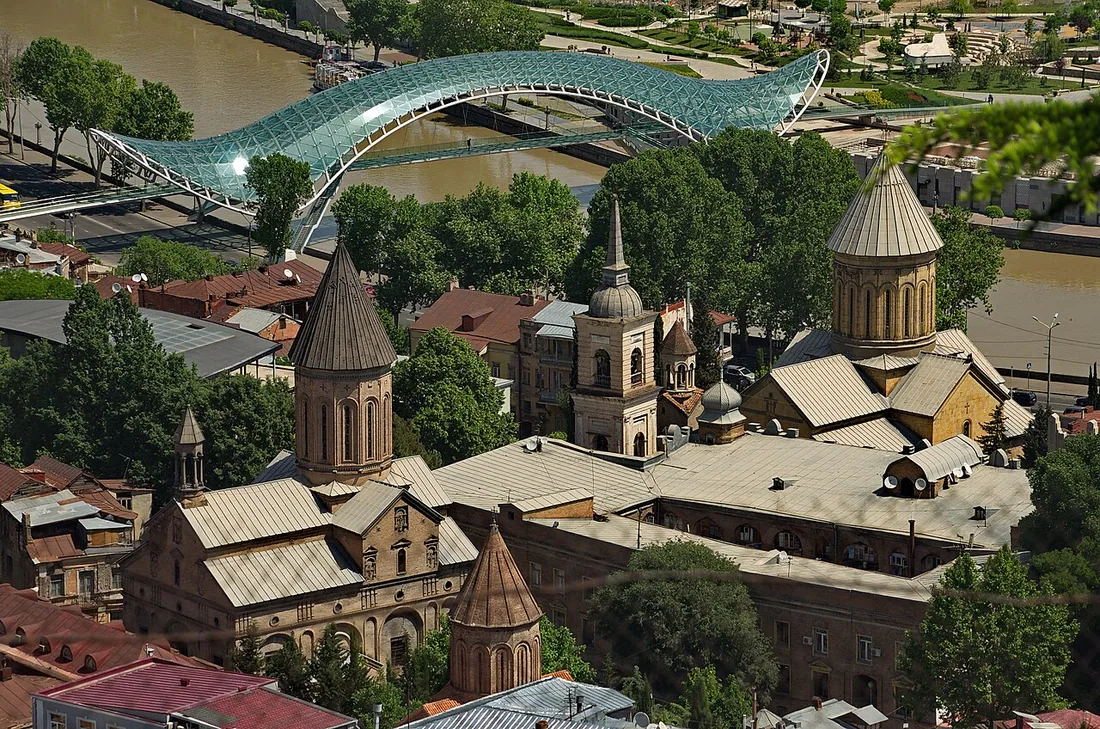
A hundred metres from Sioni Cathedral stands a church that has been locked since 1995 — and its closed door says more about Tbilisi than many open ones.
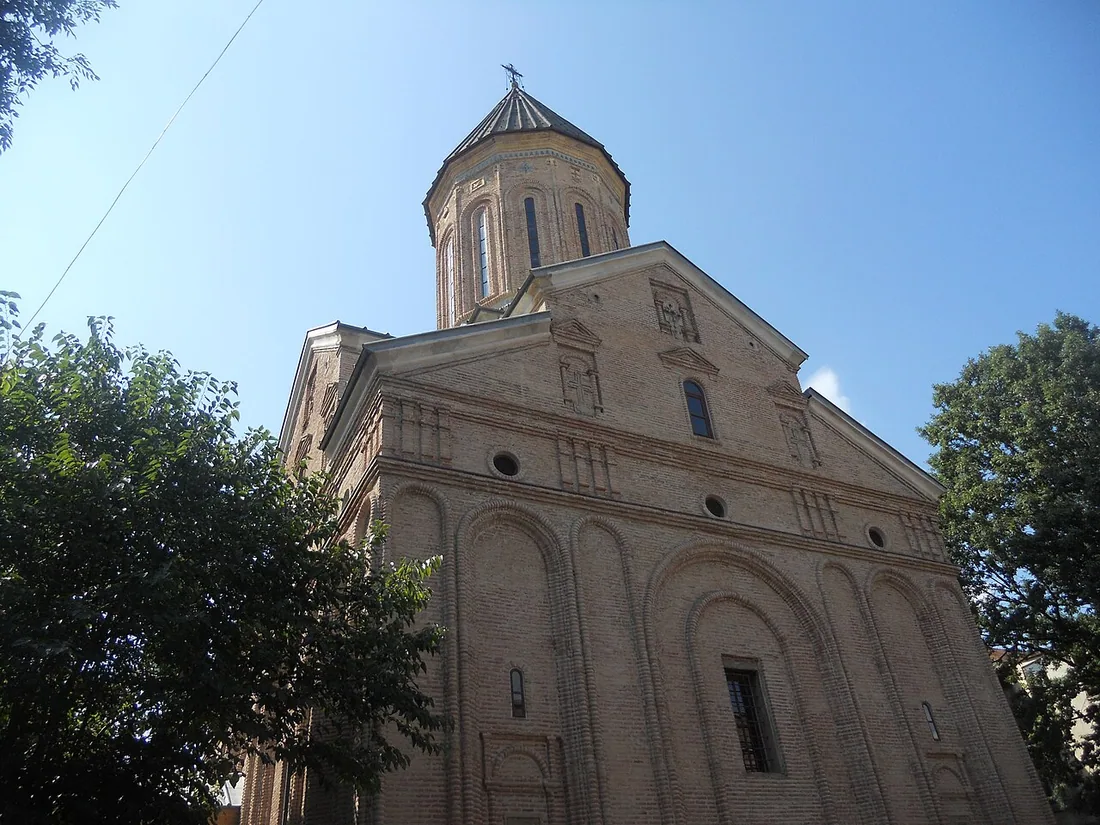
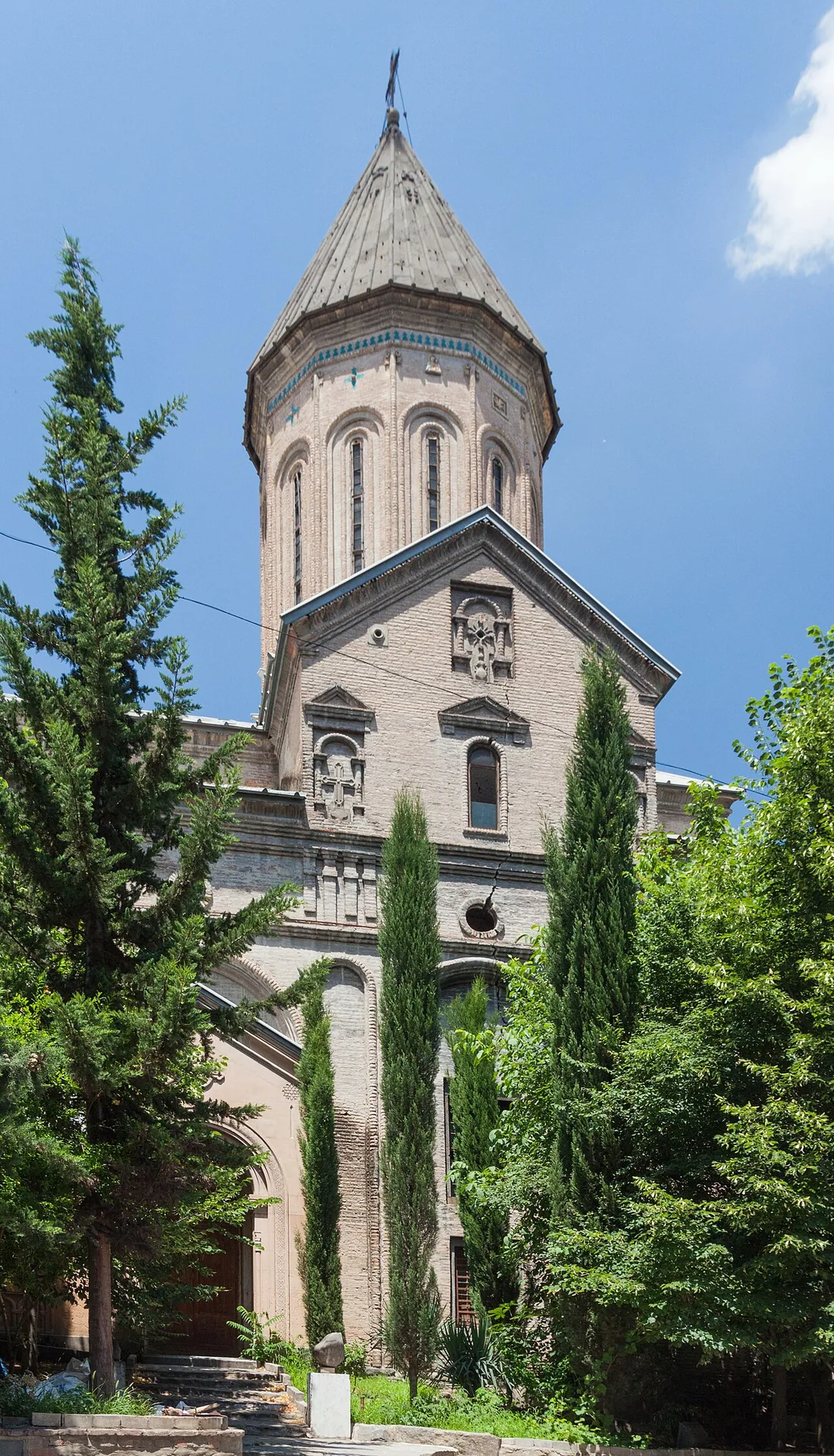
Norashen means "newly built" in Armenian. A wealthy Armenian noble named Satat raised it between 1467 and 1507 and dedicated it to the Holy Mother of God (Surb Astvatsatsin) — and to the memory of his grandfather, his father, his wife, their three sons and, last, himself. In 1650 Khoja Nazar, a New Julfa merchant, paid for a renovation; a year earlier he had set a khachkar, an Armenian cross-stone, into the wall. In 1793 Hovnatan Hovnatanian, of the celebrated family of Armenian painters, covered the interior with frescoes. Two years later Agha Mohammad Khan's sack of Tbilisi left it badly damaged; repairs probably lasted until 1808.
After a lively nineteenth century of repairs and parish schools for boys (1858) and girls (1866), the Soviet authorities closed it on 22 December 1933; by 1972 it housed an Academy of Sciences library.
Then came the dispute. On 15 February 1995 Georgian Orthodox clergy consecrated the building as a church of the Annunciation; the Armenian Church protested, and within a month both sides agreed to close it until ownership was settled. It never has been. Jean Chardin in 1673 and Egnate Ioseliani in 1837 both recorded it as Armenian; since the late Soviet years some Georgian scholars and the Georgian Church have contested that. In 2015–16 the national heritage agency strengthened the walls and dome and returned the original Armenian gravestones to the yard.
Today you see Norashen only from outside. Whatever survives of Hovnatanian's frescoes — Armenian sources say much was erased in the 1990s — lies behind the locked door. Few buildings in Tbilisi hold the city's mixed past so plainly, or keep it so firmly behind a gate.
Gallery
Practical advice
The church is closed: no interior visit and no services. The courtyard gate is sometimes open and sometimes not, so you may see the facade and gravestones only from the lane. Fifteen to thirty minutes is plenty; pair it with Sioni Cathedral, the Great Synagogue and Anchiskhati, all a few minutes' walk away. There is no fee and no toilet, but cafés line every surrounding street. Cobbles and steps at the gate make it hard going with a wheelchair or pushchair. This is a sore subject for both communities: photograph quietly, leave the politics out of conversations with passers-by, and dress as you would for any church.
How to get there from Tbilisi
You cannot drive to the door: Kote Afkhazi Street (formerly Leselidze Street) is pedestrianised around the church. From Freedom Square it is about 1.3 km by car — around 10 minutes once you allow for one-way loops and the hunt for a space — but only a little over half a kilometre on foot: walk down Kote Afkhazi Street towards Sioni and you are there in about ten minutes. If you come by car, leave it in a paid car park near Freedom Square or Meidan and walk the last 2–5 minutes. The nearest metro station is Freedom Square (Tavisuplebis Moedani, Line 1). Any economy car will do; the challenge here is parking, not the road.
Click a marker for details. Coloured lines are ready-made road trips.
Nearby places
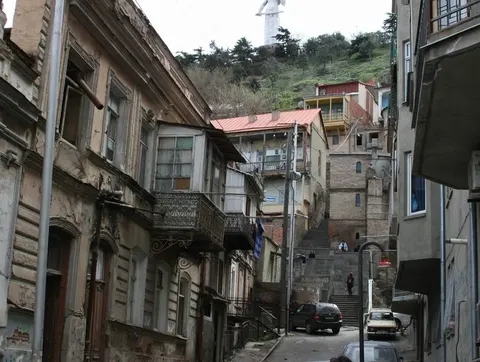
Betlemi Quarter and the Stairs
A street that turns into a stone stair below Narikala: two Bethlehem churches, a Sasanian-era fire temple and washing lines over old Tbilisi.
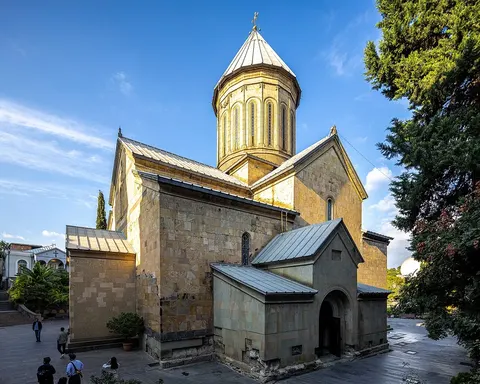
Sioni Cathedral
A honey-coloured cathedral in the old town, destroyed and rebuilt for fourteen centuries, where St Nino's grapevine cross rests in candlelight.

Tbilisi History Museum (Karvasla)
An 1818 merchants' caravanserai on 17th-century vaults beside Sioni Cathedral, now Tbilisi's city-history museum with some 50,000 objects.
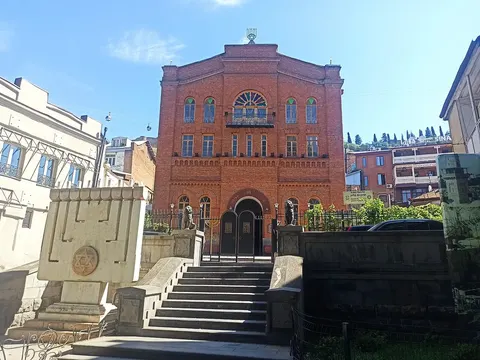
Great Synagogue of Tbilisi
Georgia's largest synagogue: red brick, Moorish-tinged arches and a painted prayer hall, built in 1904–1911 by Jews from Akhaltsikhe.
Anchiskhati Basilica
Tbilisi's oldest surviving church: a sixth-century basilica on Shavteli Street, low and dim, where Georgian polyphony still fills the stone.
Best car for this trip
Guides
- Driving in Georgia: What the Distances Actually Cost You Georgia is a small country with slow roads. Here is what 267 measured drives from Tbilisi say about how long y
Pickup locations
Car Rental in Tbilisi — 1 km (straight line)