
Khornabuji Fortress
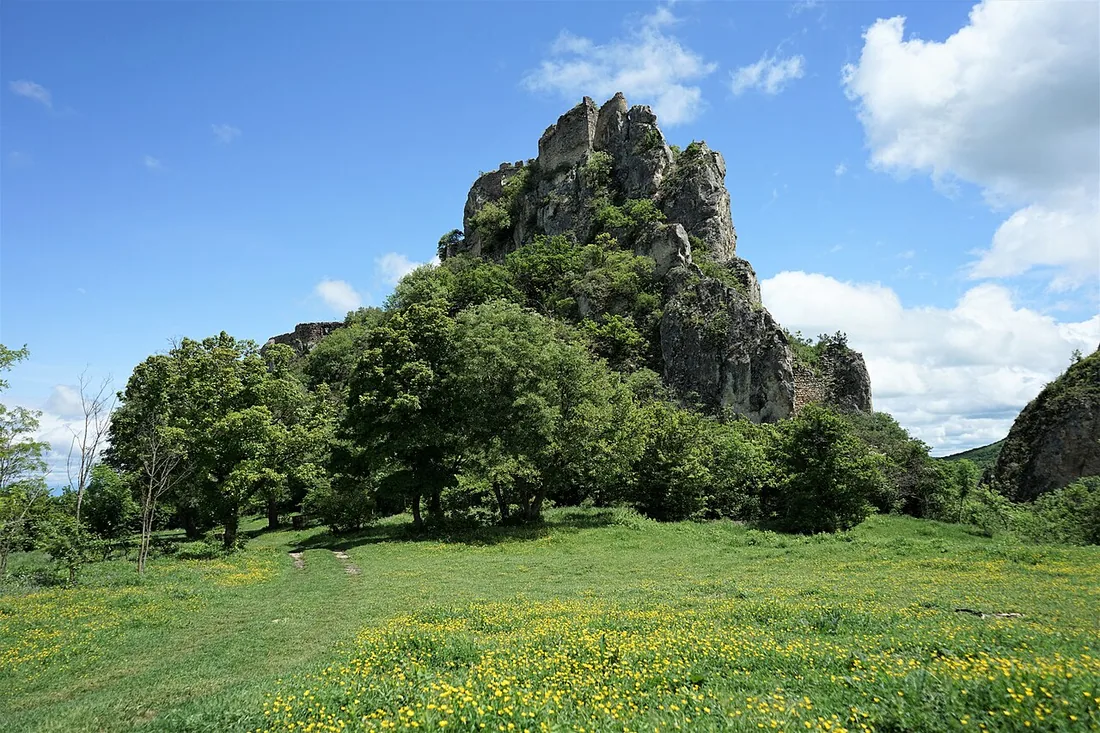
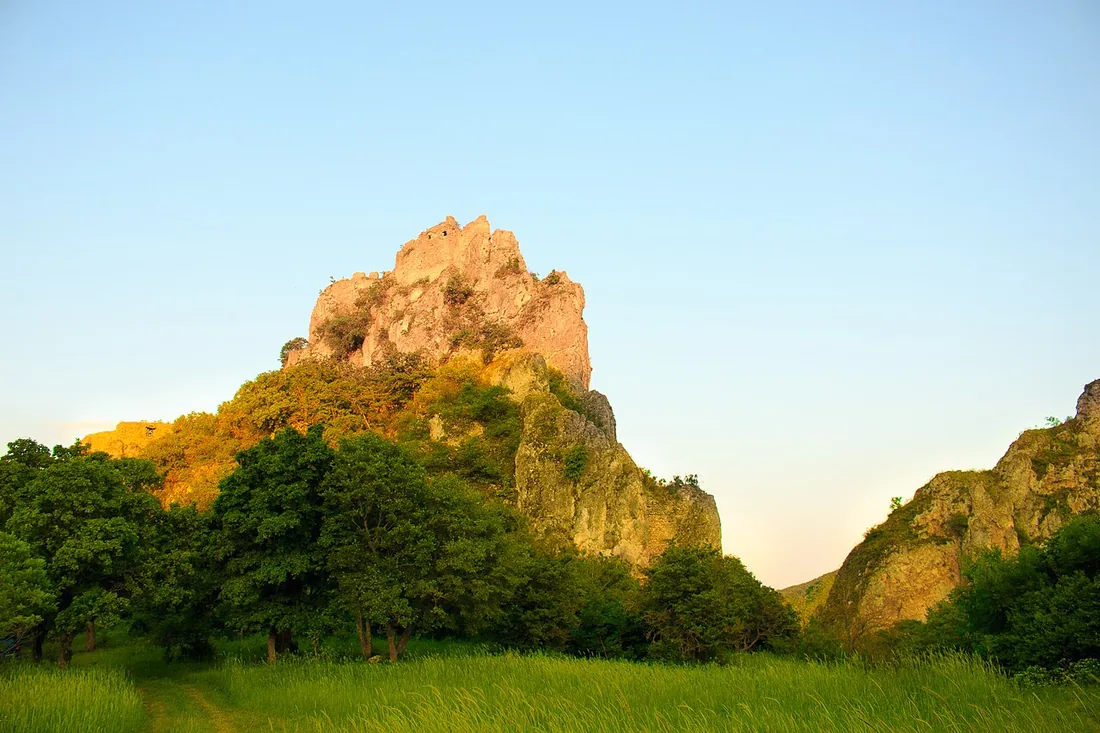
Ruined walls on a lone pale-grey crag above Dedoplistskaro, where a 5th-century king seated a bishop and the plain gives way to steppe.
- Time needed
- 1.5 h
- From Tbilisi
- 133 km · 2:35
- Road
- Mostly paved
- Car needed
- Crossover / SUV
- Season
- All year
- Entry
- free
From the plain, Khornabuji looks grown rather than built: cliffs of pale grey rock, and on their broken crest a line of walls and tower stumps so close in colour to the rock that the two make one silhouette.
It is old even by Georgian standards. The first stronghold here was probably raised at the end of the 1st millennium BC, when it was the only fortification commanding the valleys of the Iori and the Alazani. The written record begins in the 5th century with King Vakhtang Gorgasali: Khornabuji was then one of the largest settlements in Kakheti, and after building Svetitskhoveli in Mtskheta the king appointed a bishop here.
Its fortunes were those of a frontier town. In the late 5th or early 6th century the Sasanians took it and destroyed the town, which slowly grew back on the flat ground below. One reading of the sources has Mongols under Berke Khan ruining it again around 1264, with the survivors moving to Sighnaghi; another blames the 17th-century invasion of Shah Abbas. Either way, the town never came back. The castle did: Erekle II rebuilt it in the 18th century, and excavations in the 1970s found the lost settlement beneath the fields at its foot.
Locals still call it Tamar's Fortress. Some sources say the queen ordered it rebuilt in the 13th century; other historians think that record describes a different castle. The name is more than folklore, then, but not yet proven fact.
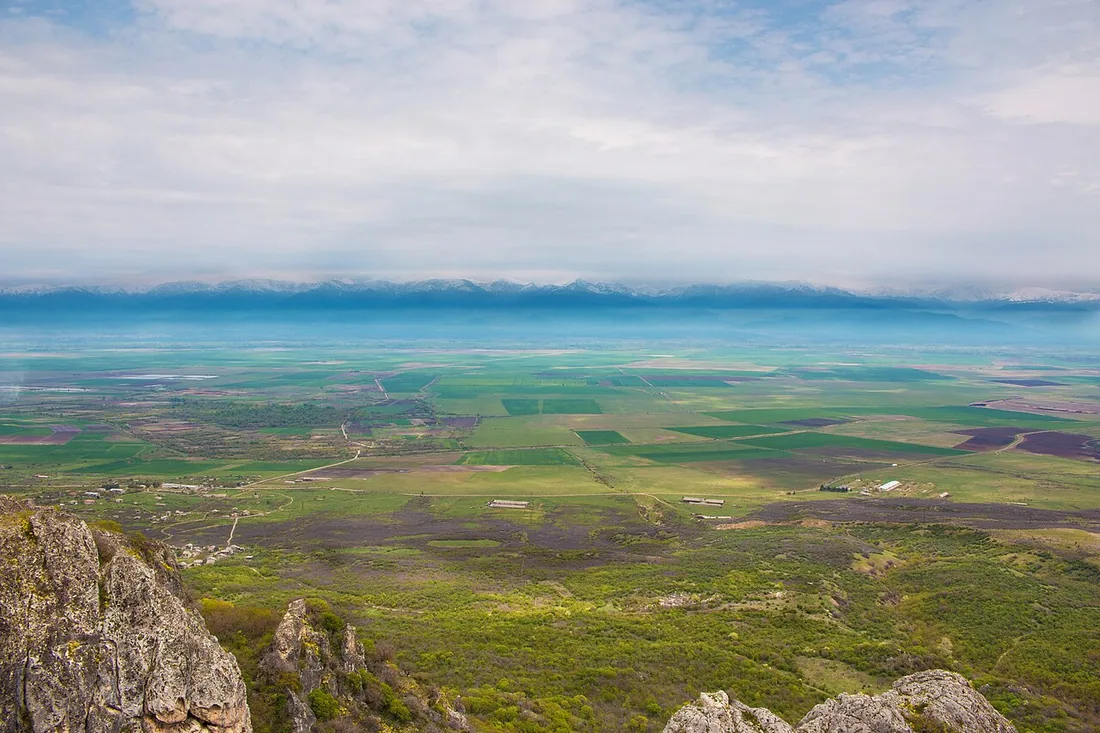
The climb is short and steep. At the top the country splits in two: to the north the Alazani plain and, on a clear day, the wall of the Caucasus; to the south open, dry steppe running on towards Vashlovani. Two Georgias meet below these walls, and the fortress was built to watch the seam.
Gallery
Practical advice
Allow an hour and a half. There is no ticket and no kiosk, so bring water and, in summer, a hat: the crag has almost no shade and the midday heat here is fierce. The last stretch is on foot and steep in places, so wear shoes with good grip and keep children close near the edges. Come in the late afternoon, when the pale rock warms in colour and long light fills the plain. Artsivi (Eagle) Gorge is only about 3.5 km away and pairs naturally with the visit; Dedoplistskaro has shops and food.
How to get there from Tbilisi
Leave Tbilisi eastwards on the S5 Kakheti highway past Sagarejo. After roughly 90 km turn onto the Sh40 for Sighnaghi, then follow the Sh41 south-east via Bodbe until it joins the Sh39, which brings you into Dedoplistskaro. All of this is asphalt. From the northern edge of town a dirt-and-gravel track of about 2 km leads to the foot of the crag, some fifteen minutes from the centre. Total about 133 km; allow 2 hours 35 minutes. An SUV is the comfortable choice for the track, especially after rain. Fill up in Dedoplistskaro.
Click a marker for details. Coloured lines are ready-made road trips.
Nearby places
Dedoplistskaro
The frontier town of the Shiraki plain: David the Builder's outpost, a Russian fort, a Siemens oil venture and the gateway to Vashlovani.
Artsivi (Eagle) Gorge
A small limestone canyon above Dedoplistskaro where griffon vultures and black storks nest, and a bellflower grows that exists nowhere else.
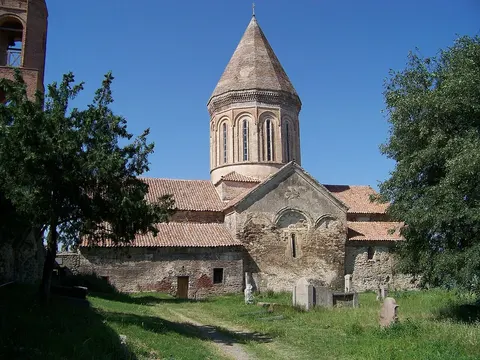
Khirsa Monastery
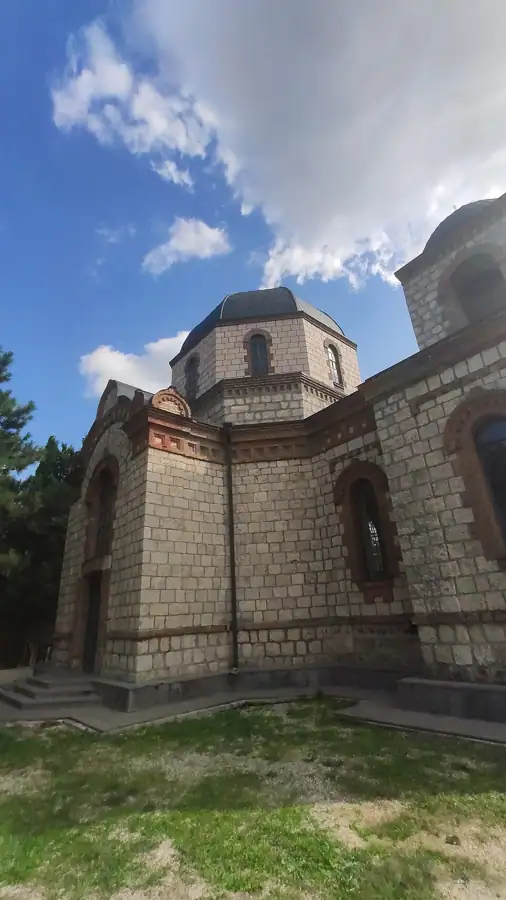
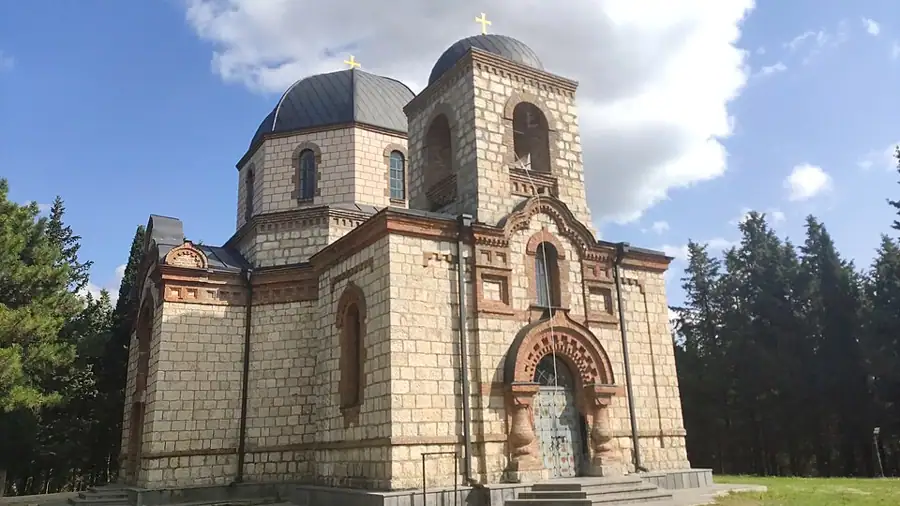
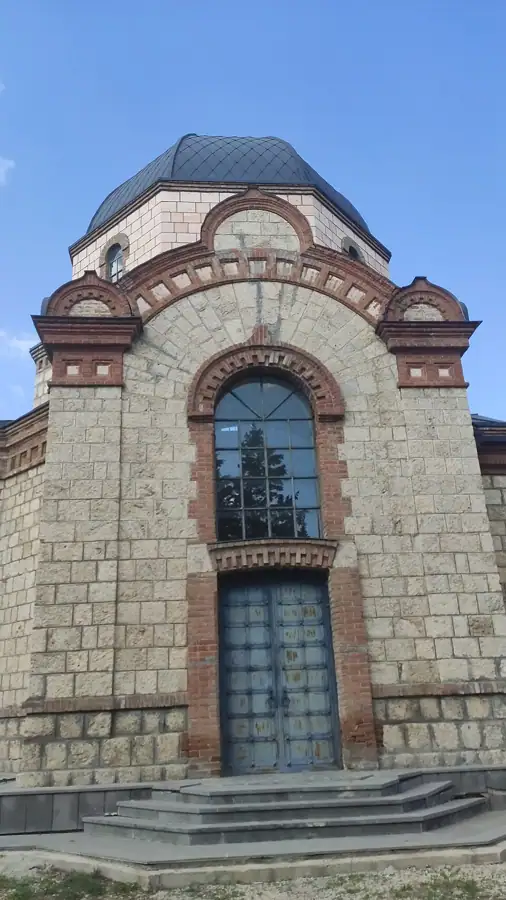
A domed church of sandstone and brick at Tibaani, where a stone dated 886 sits upside down in an arch beneath the dome.
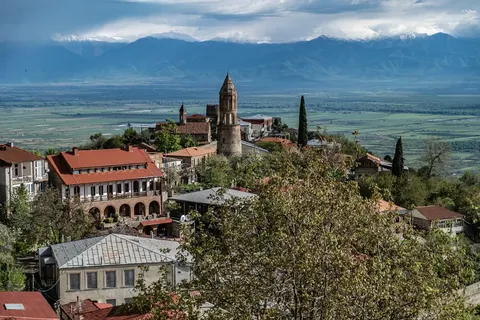
Sighnaghi
King Erekle's walled refuge on a ridge at 790 metres: towers, cobbled lanes and the whole Alazani Valley laid out below the Caucasus.
Part of these road trips
- Lagodekhi Nature Weekend 2 days · 310 km
Best car for this trip
Mostly paved
Guides
- Driving in Georgia: What the Distances Actually Cost You Georgia is a small country with slow roads. Here is what 267 measured drives from Tbilisi say about how long y
Pickup locations
Car Rental at Tbilisi Airport — 100 km (straight line)