
Kartlis Deda (Mother of Georgia)
Twenty metres of aluminium on the Sololaki ridge: a bowl of wine for friends, a sword for enemies, and the whole Old Town at her feet.
- Time needed
- 1 h
- From Tbilisi
- 3 km · 0:15
- Road
- Paved
- Car needed
- Economy class
- Season
- All year
- Entry
- free
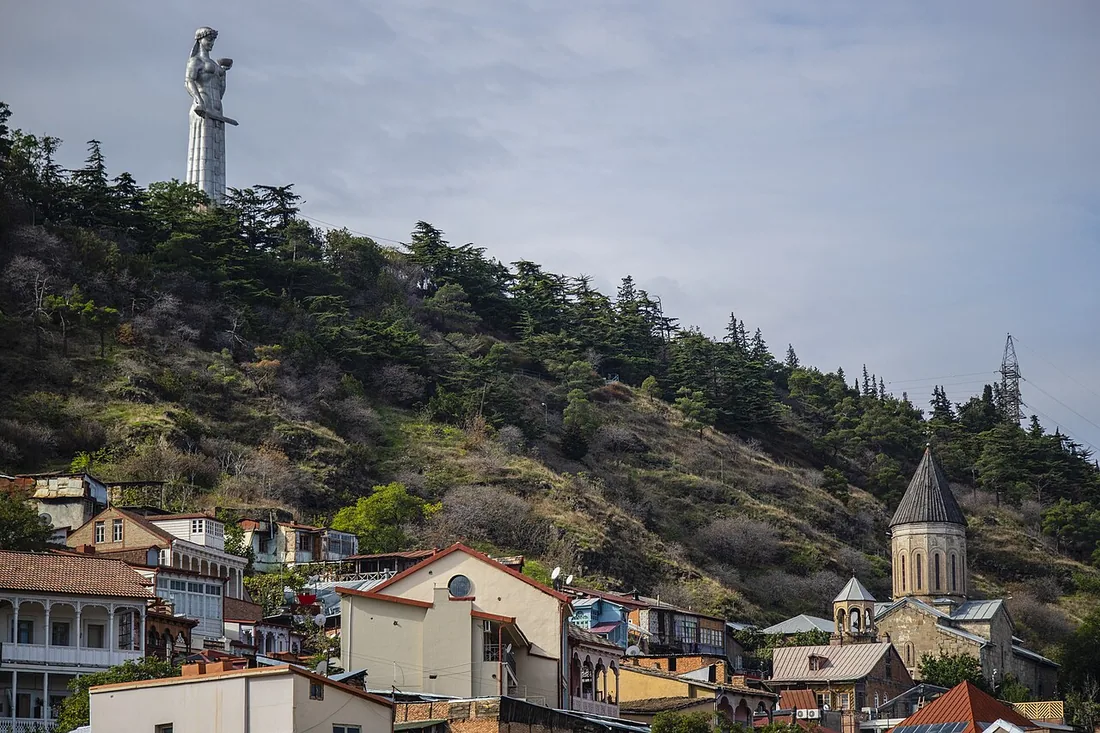
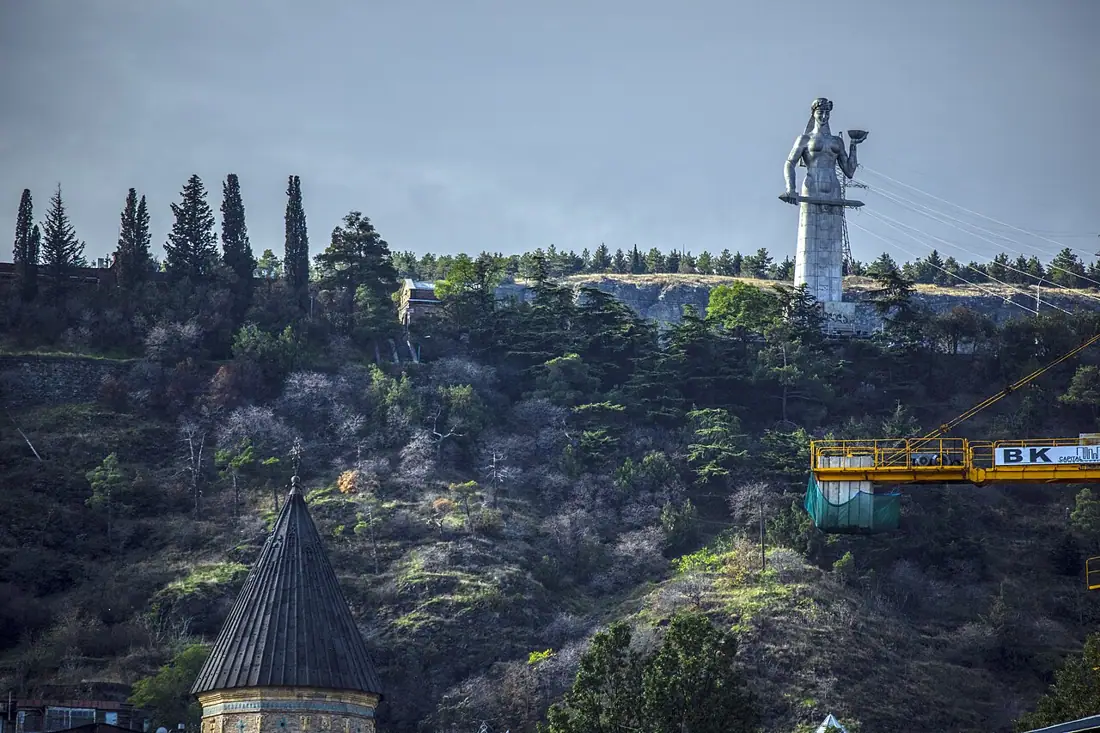
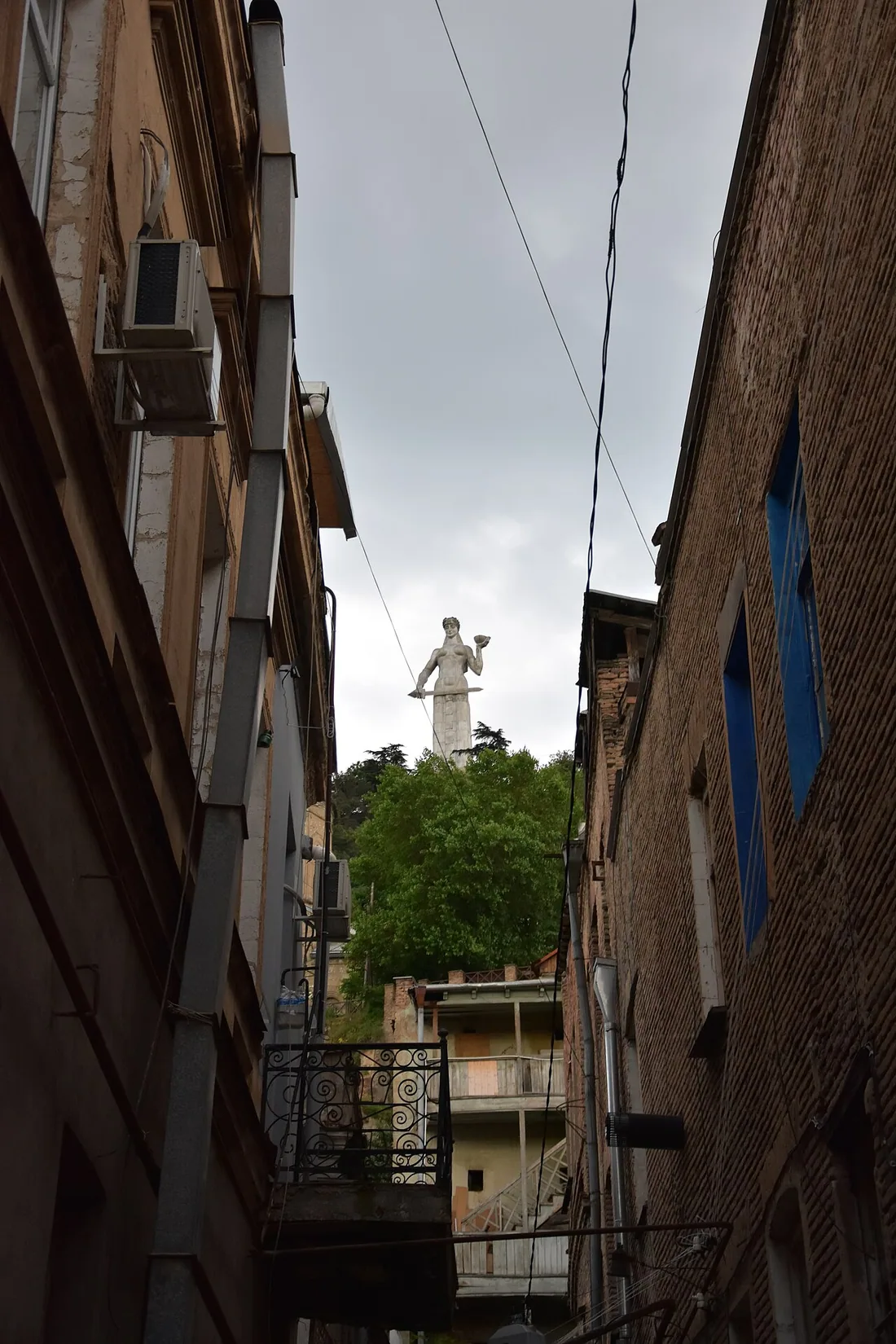
She holds a bowl of wine in her left hand and a sword in her right, and from the Sololaki ridge Tbilisi still reads her message as it did in 1958: wine for the friend, the blade for the enemy. The twenty-metre figure of a woman in Georgian national dress is Kartlis Deda, in the encyclopaedias Kartvlis Deda, 'Mother of the Georgians', and she stands in almost every photograph of the city.
She went up in 1958, the year Tbilisi celebrated 1,500 years since its founding. The sculptor Elguja Amashukeli, who received the Shota Rustaveli State Prize for her in 1966, saw the two objects in her hands as the city's history in brief: endless battles against enemies and an equally endless welcome for friendly guests. She was meant to be temporary. The first figure was a wooden allegory made for the celebrations; when the city decided to keep her, the timber was sheathed in aluminium in 1963 to protect it, and in 1997 the old statue was replaced by the one you see today.
Close up she is less a statue than a silhouette, her metal taking on the colour of the sky. From her feet the whole basin opens: the domes of the Old Town, the Mtkvari bending beneath the Metekhi cliff, and behind you the green gorge of the Botanical Garden. The ridge path runs east to Narikala Fortress, a few minutes' walk, with a drop on one side and the city's roofs on the other.
Come at the end of the day. The Old Town turns gold, then blue, the lights come on street by street, and the woman with the cup and the sword keeps watch over the city she was made both to welcome and to defend.
Gallery
Practical advice
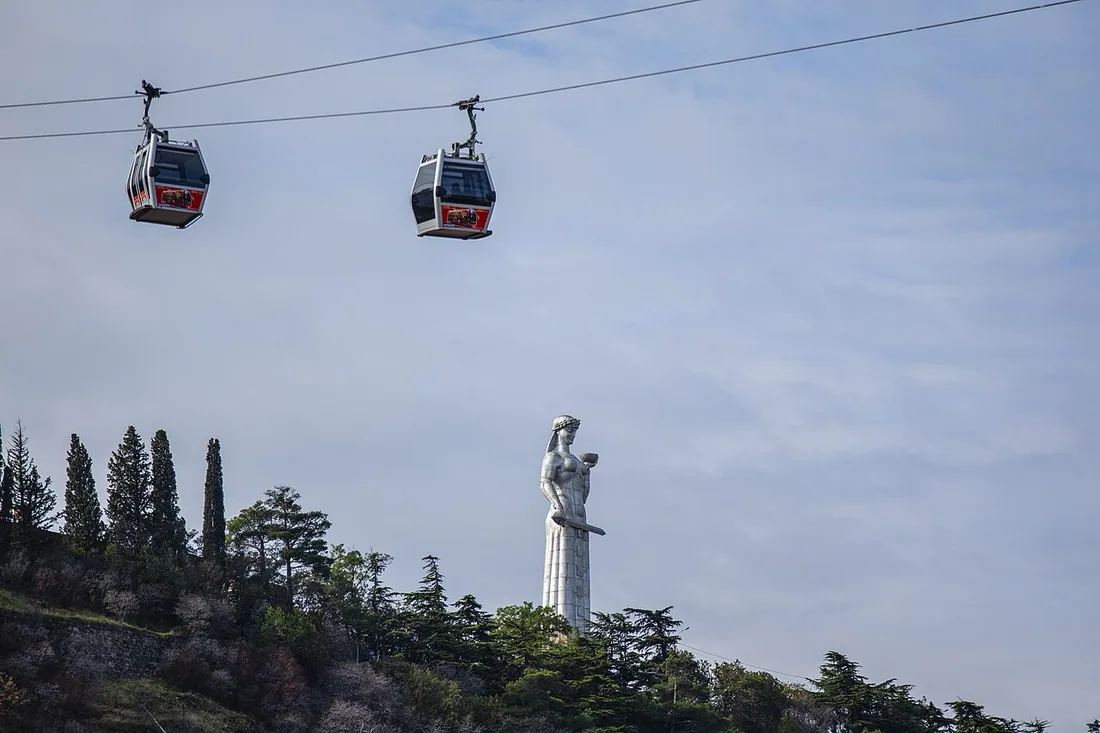
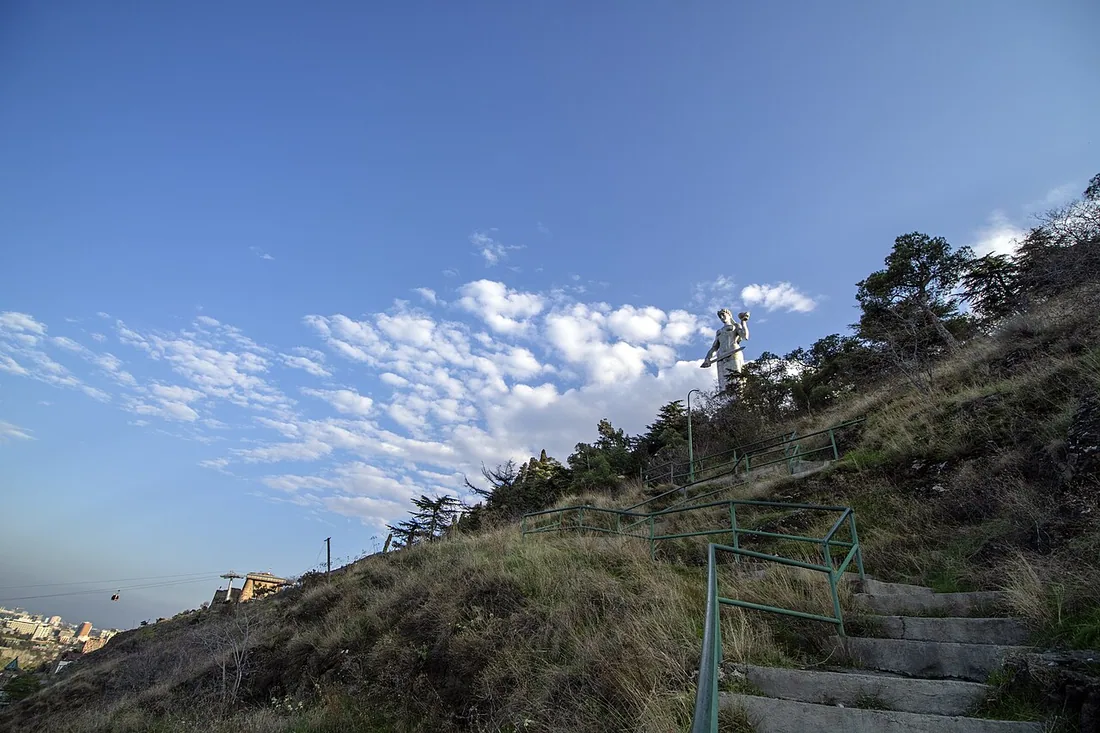
The statue costs nothing to visit; the cable car from Rike Park is paid, most easily with a Metromoney transport card, which is sold at the lower station. It runs into the evening but can stop in strong wind. Sunset draws the crowds, while at eight in the morning you may have the ridge almost to yourself. Railings along the drop are patchy, so keep children close, and wear shoes with grip: the path is uneven and in winter parts of it ice over. Water and coffee are sold near the upper station; the toilets are down in Rike Park.
How to get there from Tbilisi
You cannot drive up to the statue, and in Sololaki's narrow one-way lanes you would not want to try. Park in a paid lot by Europe Square or Rike Park on the left bank, about 3 km and fifteen minutes from Freedom Square in normal traffic, and ride the cable car from Rike Park up to Narikala; the statue is a short walk west along the ridge. Alternatively leave the car in the centre and climb on foot from the Betlemi quarter: steep steps and lanes, but a fine approach. Asphalt everywhere; an economy car is entirely sufficient, and the real challenge is parking, not the road.
Click a marker for details. Coloured lines are ready-made road trips.
Nearby places
Narikala Fortress
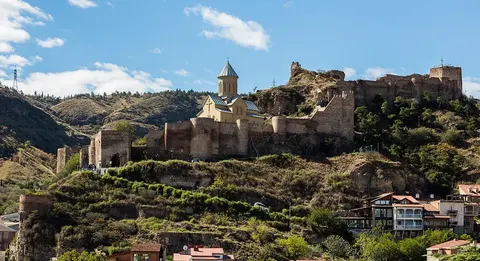
Sixteen centuries of wall on the Sololaki ridge above the Old Town: Tbilisi's citadel, its oldest silhouette and its widest view.
Tbilisi Botanical Garden
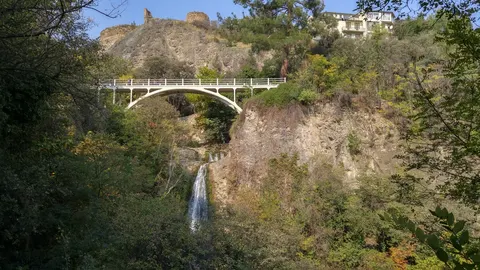
A gorge garden behind the walls of Narikala, where the city falls silent within minutes and one path follows a stream to a waterfall.
Betlemi Quarter and the Stairs
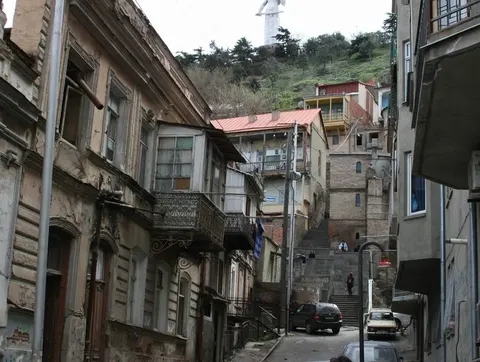
A street that turns into a stone stair below Narikala: two Bethlehem churches, a Sasanian-era fire temple and washing lines over old Tbilisi.
Abanotubani and the Sulphur Baths
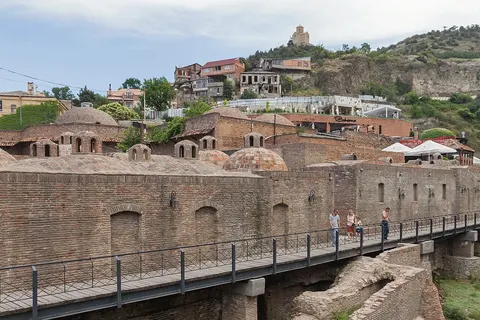
Brick domes breathing sulphur at the foot of Narikala: the warm springs that gave Tbilisi its name, still filling private stone pools by the hour.
Best car for this trip
Guides
- Driving in Georgia: What the Distances Actually Cost You Georgia is a small country with slow roads. Here is what 267 measured drives from Tbilisi say about how long y
Pickup locations
Car Rental in Tbilisi — 1 km (straight line)