
Gogia Fortress (Borjomi)
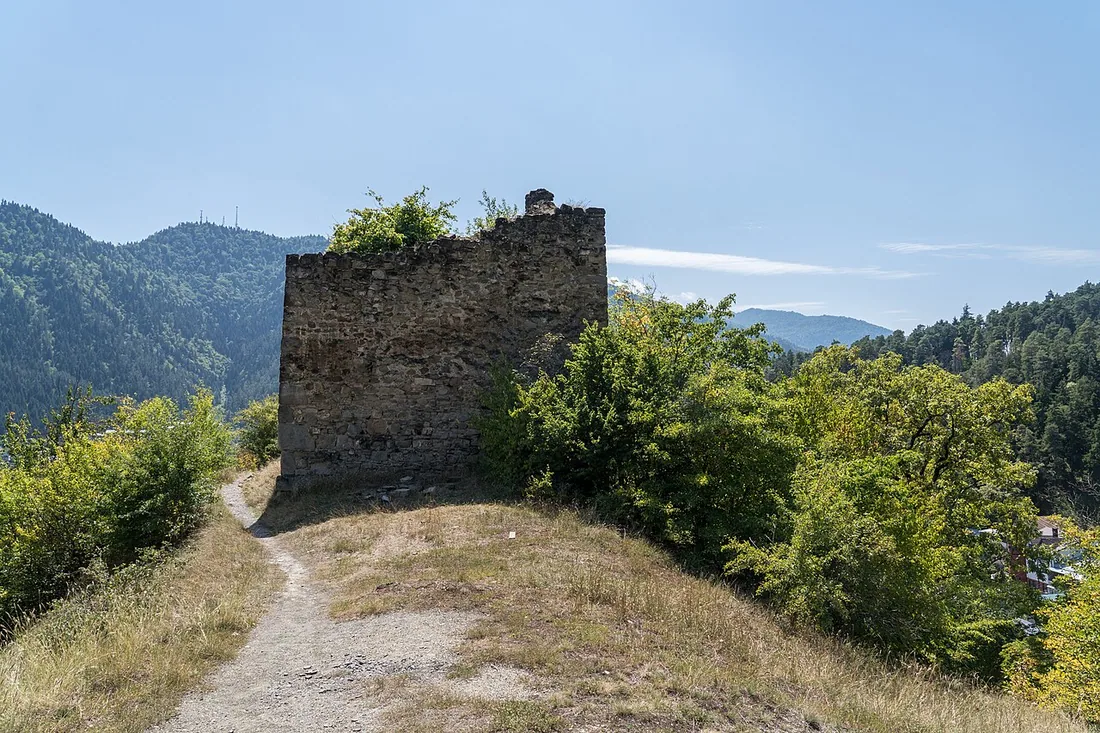
A square stone tower on the ridge above Borjomi, a 10–20-minute climb from the centre, with the whole spa valley laid out at your feet.
- Time needed
- 1 h
- From Tbilisi
- 160 km · 2:20
- Road
- Paved
- Car needed
- Economy class
- Season
- All year
- Entry
- free
Before Borjomi was a spa it was a checkpoint, and Gogia's tower is still standing guard over the road.
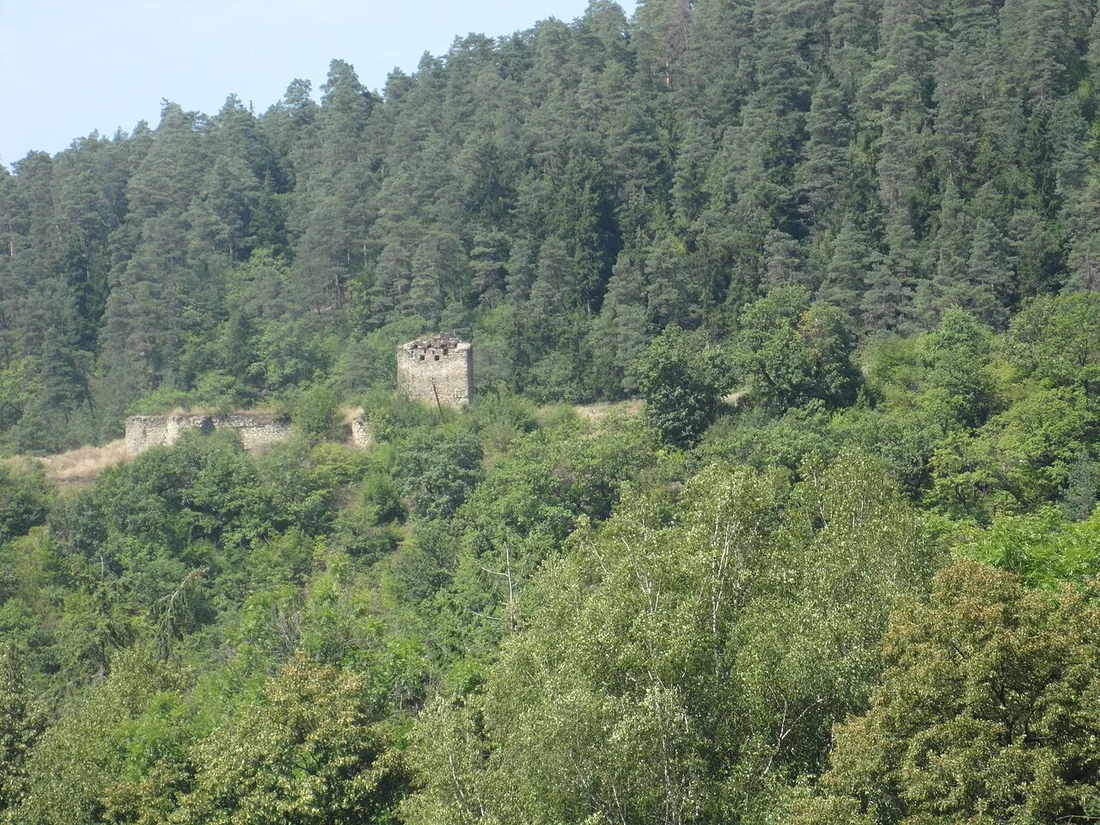
In the Middle Ages this stretch of the Mtkvari gorge belonged to the province of Tori, a crossroads where the routes to western, eastern and southern Georgia parted. Three forts — Gogia, Petra and Sali — still look down on the town from its hills, and Gogia is the nearest. Tradition credits its building to a local lord, Gogia Avalishvili; the Avalishvilis held the gorge from the 16th century into the 19th. Georgian specialists date the masonry to two periods, the 10th–14th and the 17th–18th centuries.
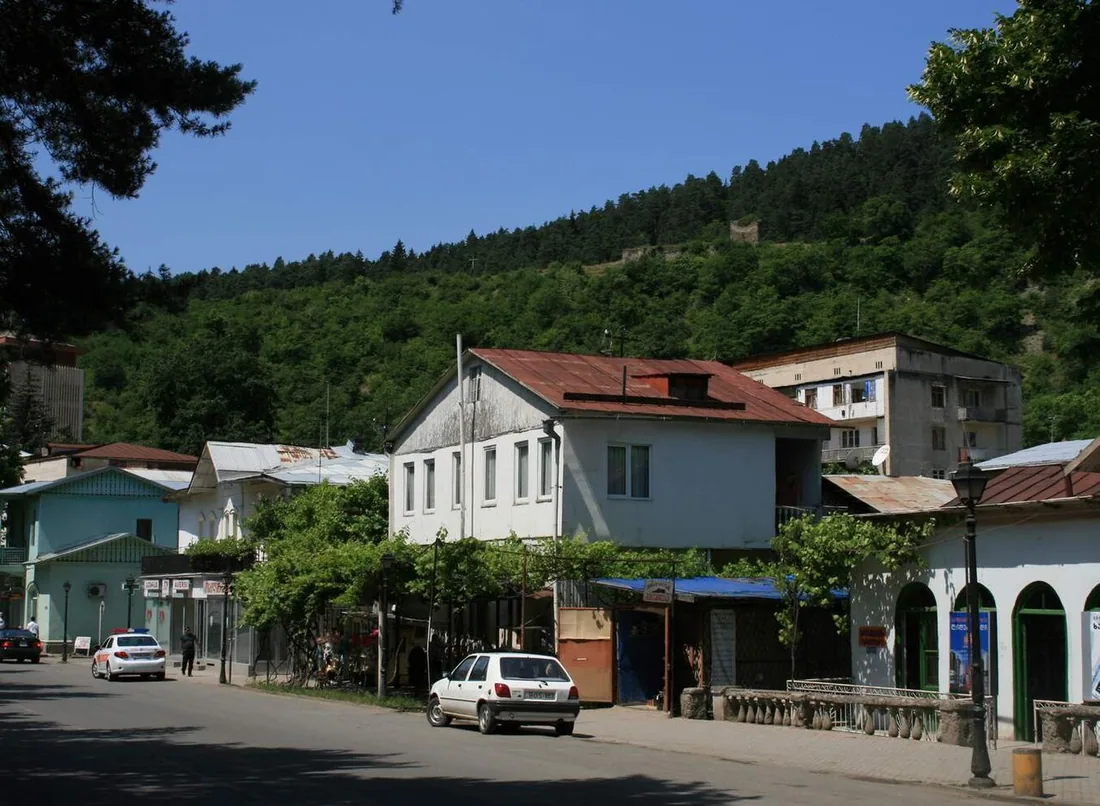
What stands today is small but genuine. A square, two-storey tower of rough fieldstone rises about eight metres, with a single doorway and gun loops cut through its walls; a second tower and the curtain wall have crumbled into the slope. An information board stands beside it. Below, the town unrolls along the river: the roofs of the old resort quarter, the green mass of the park, the railway threading the valley.
The fort saw real fire late in its long life. During the Russo-Ottoman war, on 21 July 1828, an Ottoman force attacked the Russian outpost stationed here. A forty-man detachment of Kartli militia under Staff Captain Prince Vezirishvili drove them back — a stand the historian Vasily Potto counted among the militia's finest episodes.
Legend tells a darker story. Two feuding brothers were brought to a great feast in the fortress to make peace, and they did — until the wine had its say, the quarrel flared again, and they killed each other.
Climb up in the evening, when the valley fills with shadow and this tower is the last thing the sun lets go of.
Practical advice
Free and always open. The path starts near the Borjomi Museum of Local Lore — the fortress sits almost directly above it — and takes 10–20 minutes: steep in places but not technical, so ordinary shoes will do, though it turns muddy after rain. There is no water, toilet or café at the top; everything is back down in town. Late afternoon brings the softest light over the valley. On foot it pairs easily with the museum, the Central Park and Likani.
How to get there from Tbilisi
From Tbilisi take the S1 (E60) west for about 120 km to the Khashuri junction, then turn south onto the S8 into the Borjomi gorge — 160 km and about 2 h 20 min in all, asphalt the whole way. Fuel is easy to find on the S1 and in Borjomi itself. Leave the car in the centre, near the museum: no road climbs to the fortress, only the footpath. Any economy car is fine. The S8 is a main road open year-round, but after heavy snow winter tyres are worth having.
Click a marker for details. Coloured lines are ready-made road trips.
Nearby places
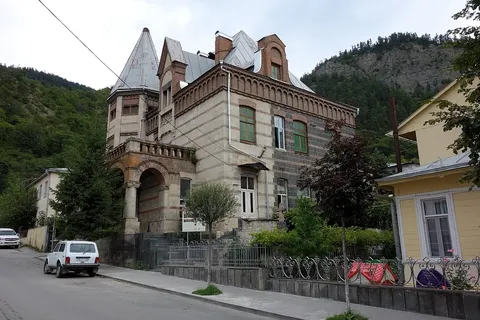
Borjomi Museum of Local Lore
The Romanov estate's old chancellery, a pseudo-Gothic house that now keeps palace tableware, the mineral-water story and the valley's wildlife.
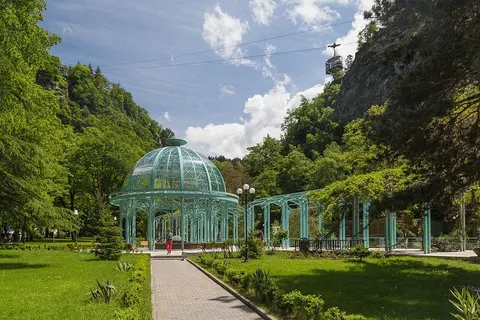
Borjomi Central Park and Mineral Springs
A 19th-century spa park in a narrow wooded gorge, where you fill your own bottle with salty, faintly warm Borjomi water straight from the spring.
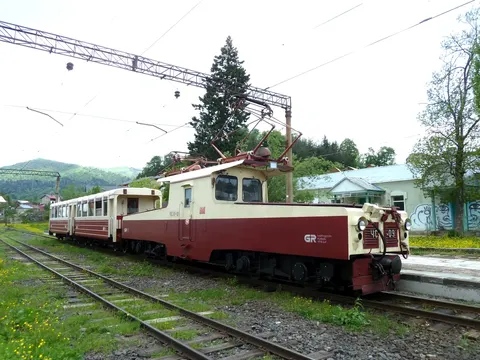
The Kukushka narrow-gauge railway and the Tsagveri bridge
A 37-kilometre, 900-mm line of 1902 climbing from Borjomi to Bakuriani over a lattice bridge that tradition credits to Gustave Eiffel.
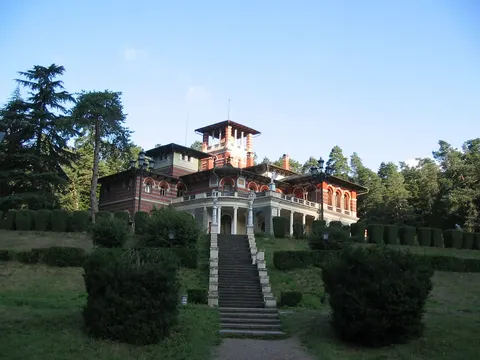
Likani Palace (the Romanov summer residence)
The Romanovs' red-brick summer palace on the Mtkvari just outside Borjomi, lit in 1898 by what is called the first hydroelectric plant in the Russian Empire.
Best car for this trip
Guides
- Driving in Georgia: What the Distances Actually Cost You Georgia is a small country with slow roads. Here is what 267 measured drives from Tbilisi say about how long y
Pickup locations
Car Rental in Kutaisi — 73 km (straight line)
Booking and enquiries
The easiest way to reach these places is by car — you pick the route and the stops.