
Dusheti
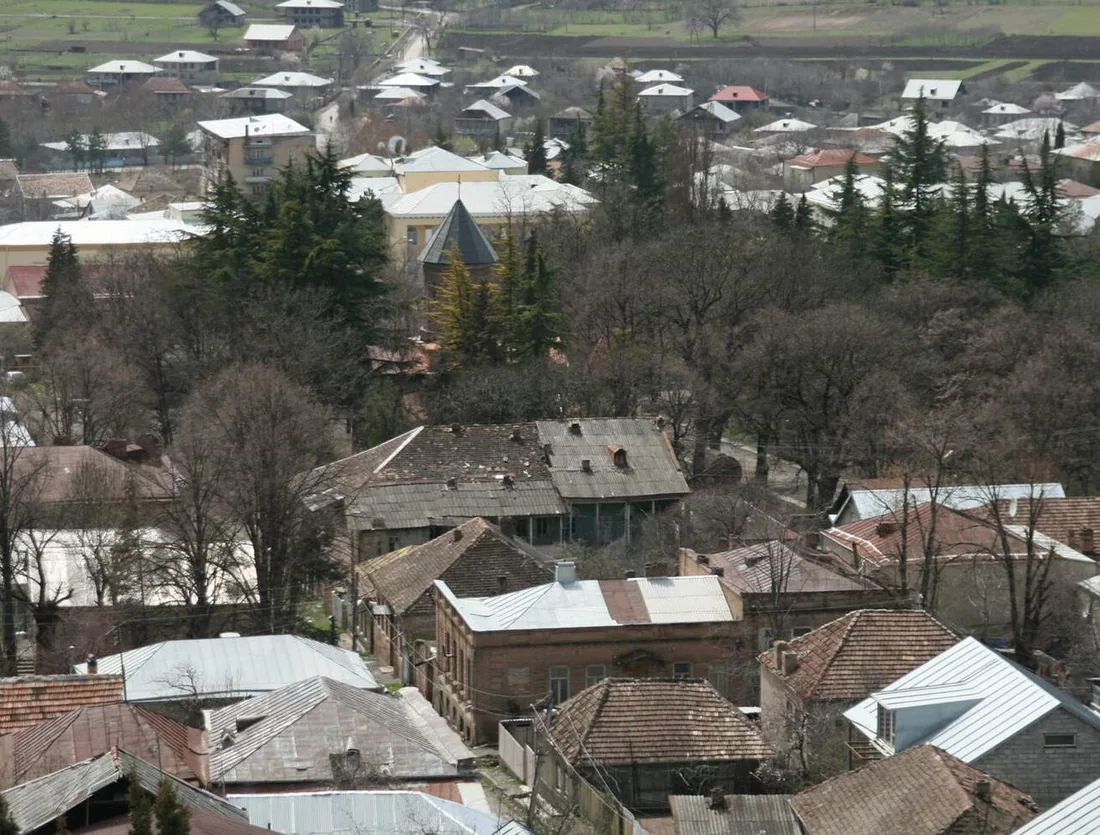
Old seat of the dukes of Aragvi, where Giorgi Saakadze once hid from assassins: today a khinkali and fuel stop on the road to the mountains.
- Time needed
- 1 h
- From Tbilisi
- 55 km · 1:00
- Road
- Paved
- Car needed
- Economy class
- Season
- All year
- Entry
- free
Dusheti enters history with an apology: in 1215 a scribe living here as a recluse finished copying a Gospel book and asked his readers to forgive his mistakes.
That note, later found by the scholar Marie Brosset in a manuscript at a monastery in Samegrelo, is the town's first written mention, although coins of Queen Tamar and Lasha-Giorgi dug up here show that people lived in the valley long before. At the end of the 14th century Timur's armies burned the villages of the Aragvi.
Dusheti's great age came in the 17th century, when it was the residence of the eristavis, or dukes, of Aragvi, highland lords who more than once defied the crown. In 1612 Giorgi Saakadze, condemned to death by King Luarsab II, slipped his assassins, collected his wife and children from Noste and found shelter here with his father-in-law, Duke Nugzar. The ducal court also nurtured letters: Kvipriane Samtavneli and Otar Eristavi grew up in its tradition. Defiance had its price. King Rostom burned the town in 1635, and George XI ravaged it again in 1688.
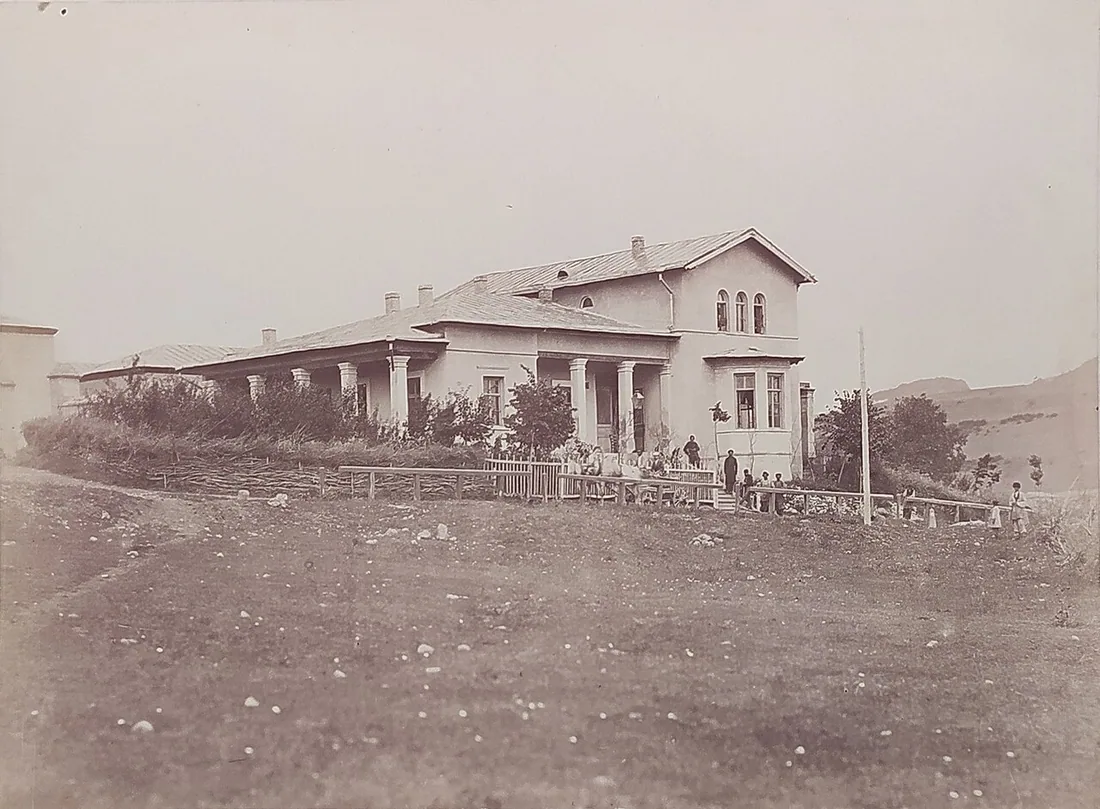
The duchy was abolished in 1743. In 1756 Erekle II declared Dusheti a town and entrusted the Aragvi valley to his son Vakhtang-Almaskhan, who settled here, invited Armenian traders and planted gardens. Under Russian rule it became a district centre in 1802, and in 1846 it gave Georgia Alexander Roinashvili, the country's first professional photographer.
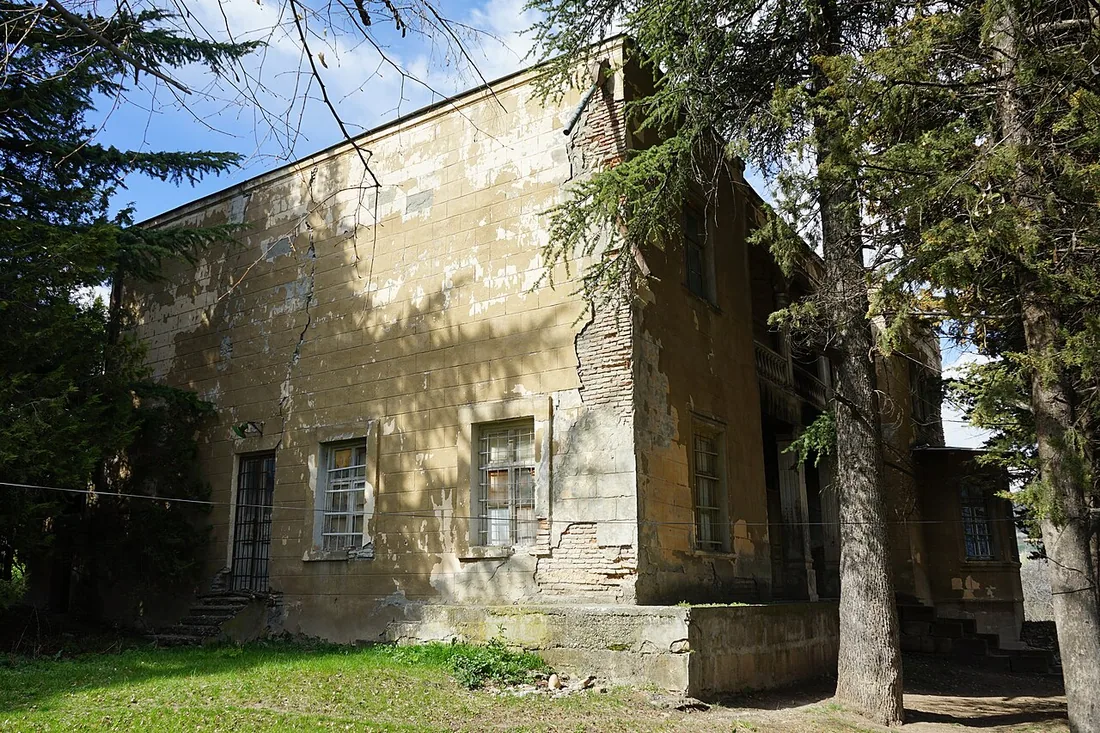
Little of the ducal town survives. Look instead for the small 9th–10th-century Church of St George with its fresco fragments, the 17th-century Karangozishvili tower on the edge of town, and the Chilashvili family's fortified hall of 1798–1801. Then do what Dusheti is known for, and order khinkali.
Practical advice
Dusheti is a working municipal town, not a museum piece, and wandering it costs nothing. The local history museum, founded in 1949, keeps finds from the district ranging from the Early Bronze Age to the late Middle Ages; check opening hours locally. The central park is itself a listed heritage site and a shady break in summer. Fuel stations, banks, pharmacies and guesthouses make this the natural base before the Khevsureti road or the climb to Gudauri. Khinkali are the local pride: order them by the piece and eat them by hand. An hour is enough.
How to get there from Tbilisi
55 km, about an hour, paved all the way. Leave Tbilisi on the S1 and turn north at Mtskheta onto the S3, the Georgian Military Highway. After about 19 km on the S3, take the Sh65 into town; the centre is up to 5 km off the main road. Any economy car will do, in any season. Heading on? Rejoin the S3: the Khevsureti road (Sh26, for Barisakho and Shatili) leaves it a little further north at Zhinvali, and Ananuri Fortress is about 15 km away. If you are bound for Khevsureti, fill the tank here or at Zhinvali.
Click a marker for details. Coloured lines are ready-made road trips.
Nearby places
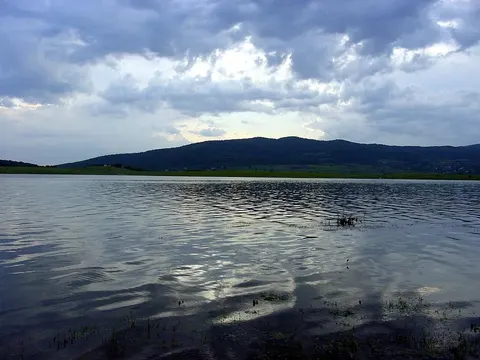
Bazaleti Lake
A small, warm lake south of Dusheti, where folklore keeps a golden cradle on the bottom and Ilia Chavchavadze set it to verse in 1883.
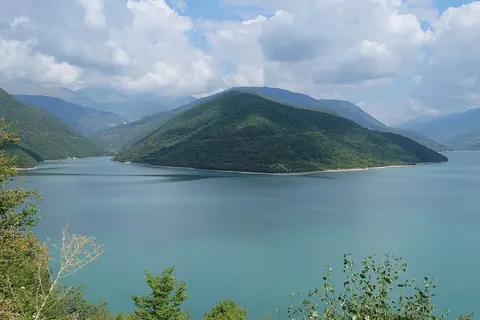
Zhinvali Reservoir
Tbilisi's drinking water in a long turquoise lake, laid over a drowned medieval town, with the Military Highway running along its shore.
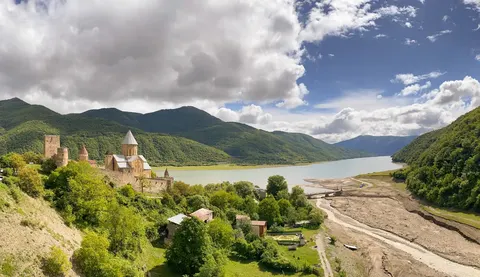
Ananuri Fortress
Two castles, two churches and a tower with a terrible past above the Zhinvali reservoir — the first great stop on the road to Kazbegi.
Best car for this trip
Guides
- Driving in Georgia: What the Distances Actually Cost You Georgia is a small country with slow roads. Here is what 267 measured drives from Tbilisi say about how long y
Pickup locations
Car Rental in Tbilisi — 44 km (straight line)
Booking and enquiries
The easiest way to reach these places is by car — you pick the route and the stops.