
Bazaleti Lake
A small, warm lake south of Dusheti, where folklore keeps a golden cradle on the bottom and Ilia Chavchavadze set it to verse in 1883.
- Time needed
- 2 h
- From Tbilisi
- 51 km · 1:00
- Road
- Paved
- Car needed
- Economy class
- Season
- May–October
- Entry
- free
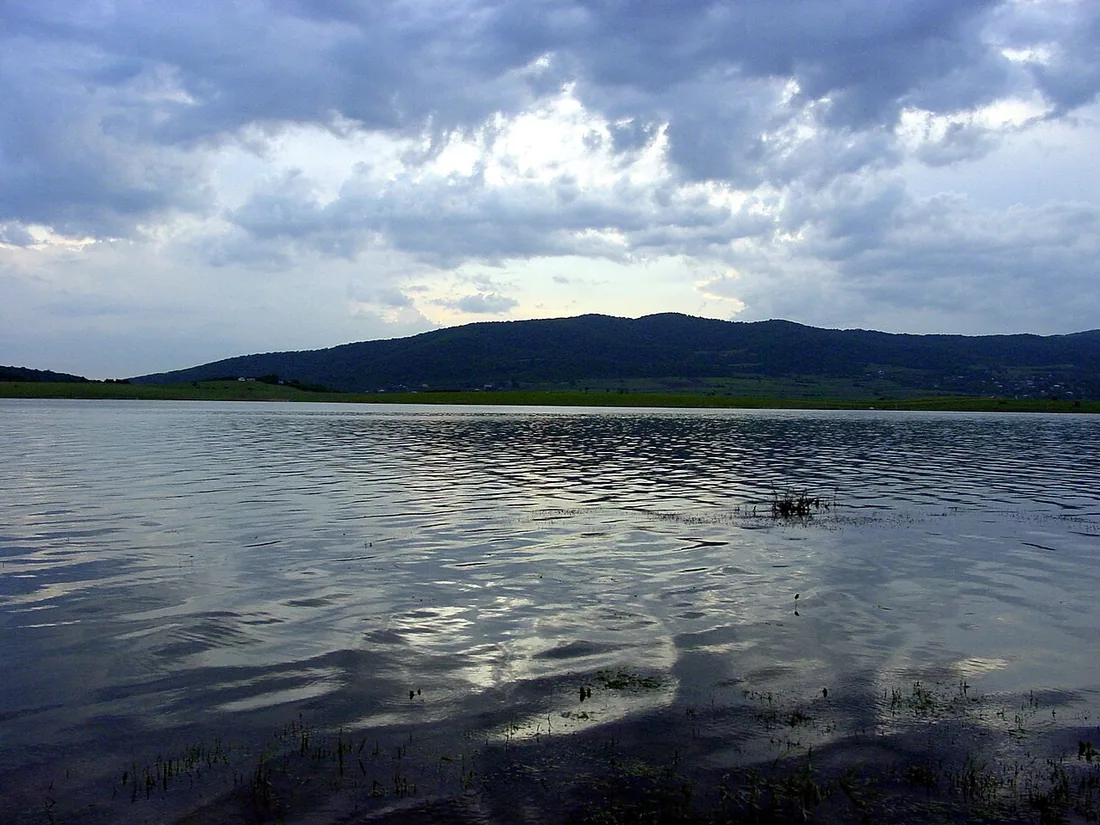
Somewhere beneath this small green-brown lake, the story goes, a golden cradle rests on the bed, and a child sleeps in it.
Bazaleti lies at 878 metres on a low plateau five kilometres south of Dusheti: 1.2 square kilometres of water that no river feeds. Georgian sources call it shallow: it warms to around 25°C in July and freezes over in January and February. Reeds crowd the southern and western shores, and anglers sit out the afternoons waiting for carp and barbel.
These banks have known worse than mosquitoes. In autumn 1626 King Teimuraz I's army met the rebel noble Giorgi Saakadze here. Saakadze's line broke, his comrade Davit Gogrishvili fell, and Saakadze himself fled to the Ottoman Empire, never to see Georgia again. A flourishing medieval town once stood on these shores.
The cradle belongs to folklore; some say the lake itself is the tears of the child's mother. On 14 July 1883 Ilia Chavchavadze gave the legend its lasting shape in the poem "Lake Bazaleti": beneath the water an evergreen garden blooms, sirens circle the cradle, Queen Tamar is said to have set it there, and the nation's tears spread the lake over it like a tent. Chavchavadze leaves the child unnamed, one "whose name may not be spoken", and no Georgian reader under Russian rule needed it spelled out.
Locals tell an earthier tale too: a bull that drowned in the lake was later found in a well in a neighbouring village, proof, they insist, that the water slips away underground.
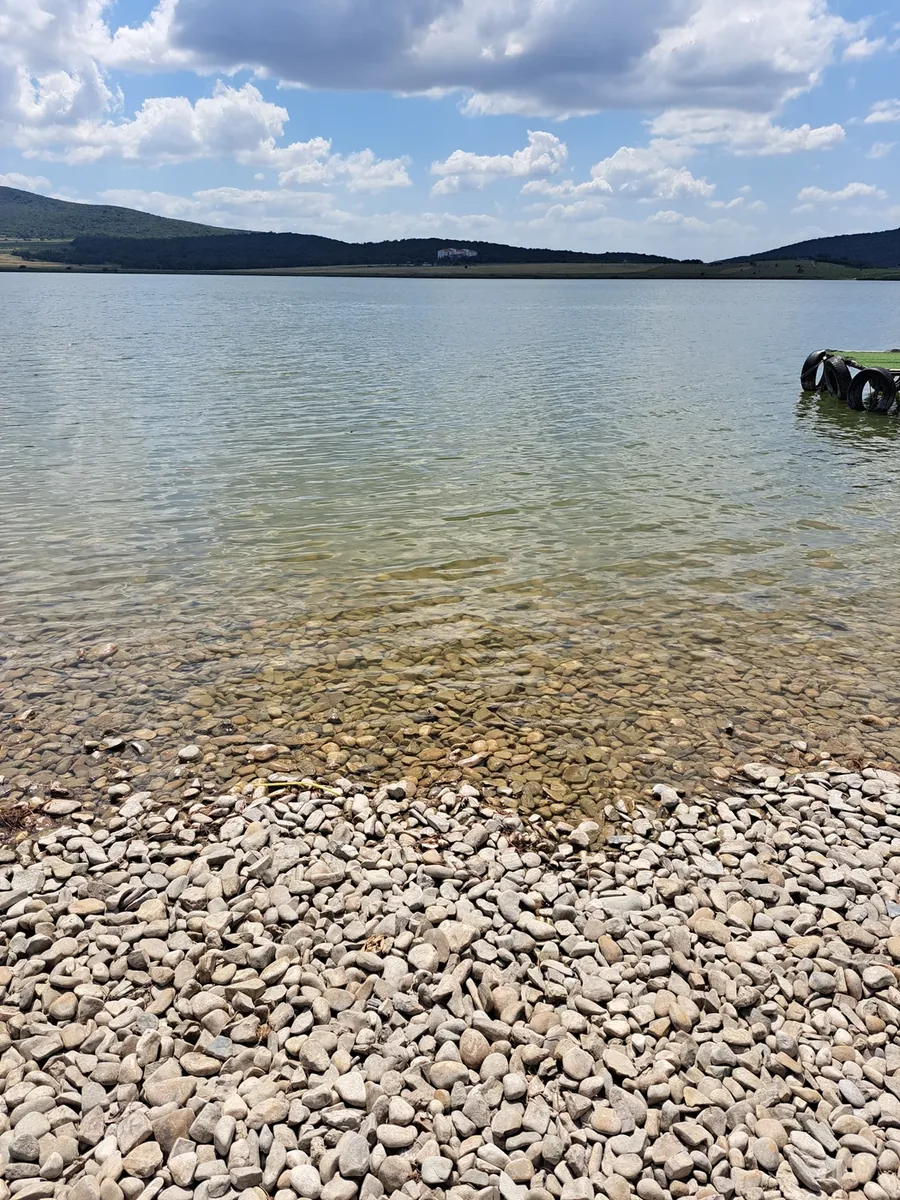
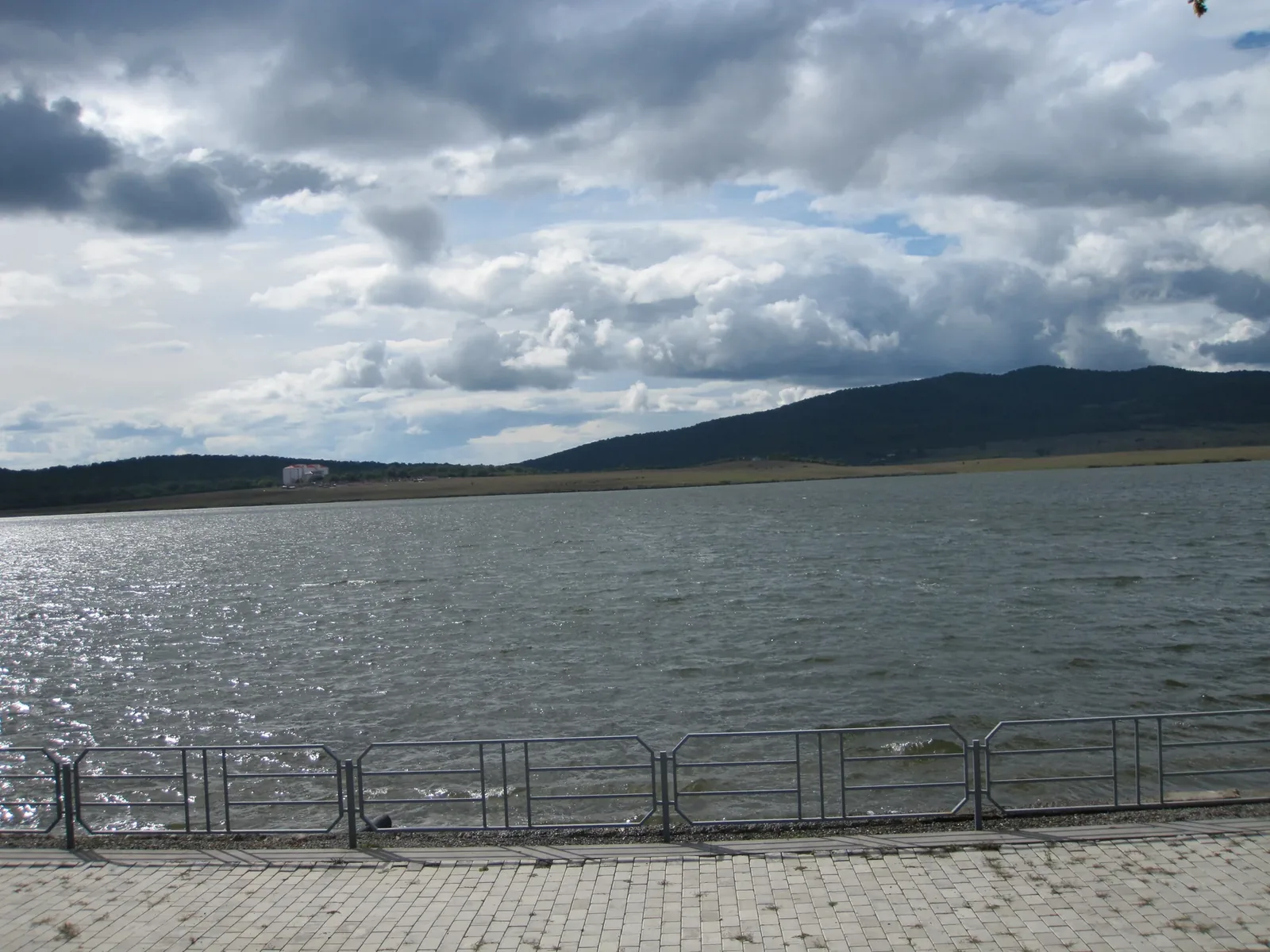
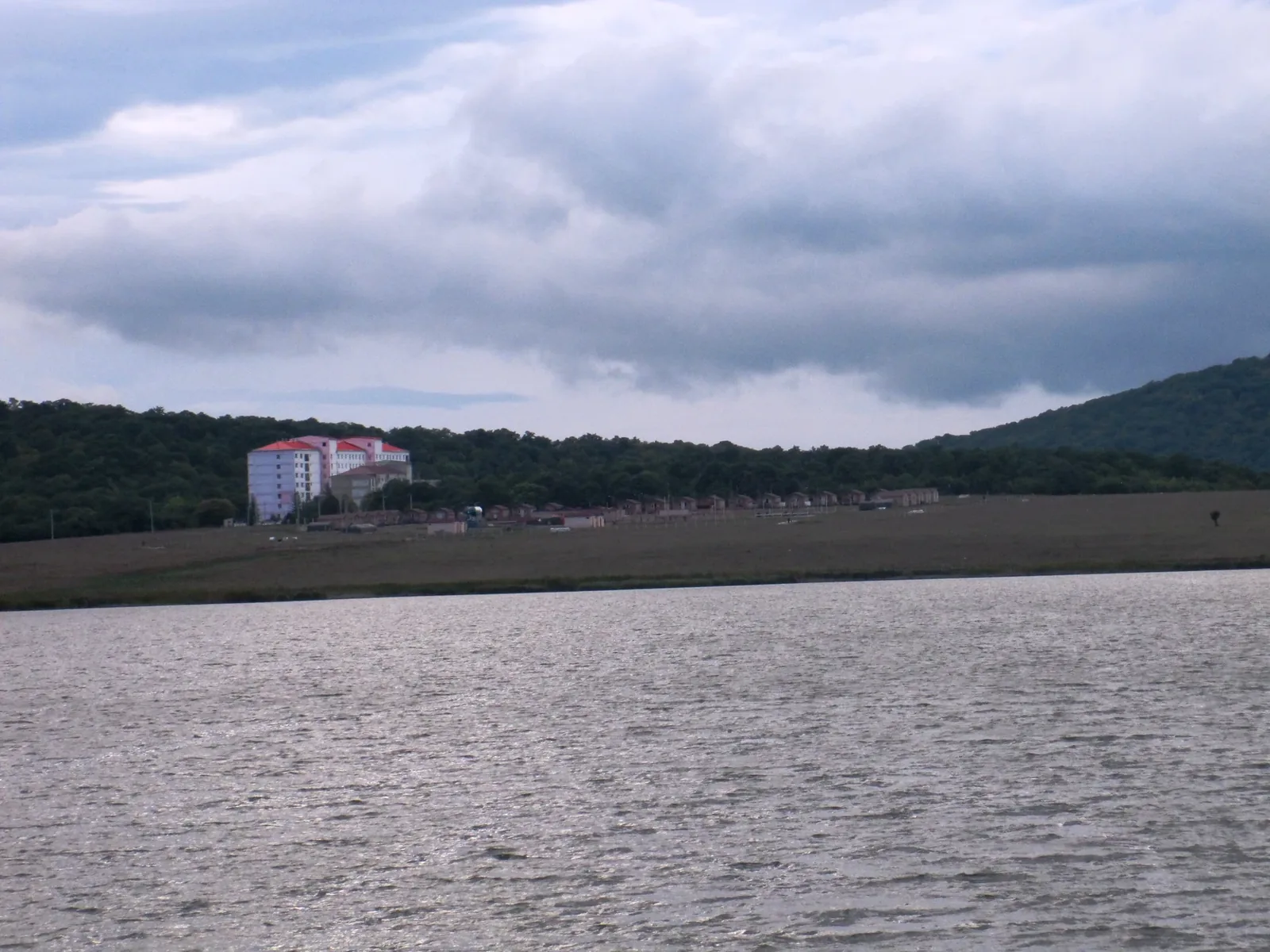
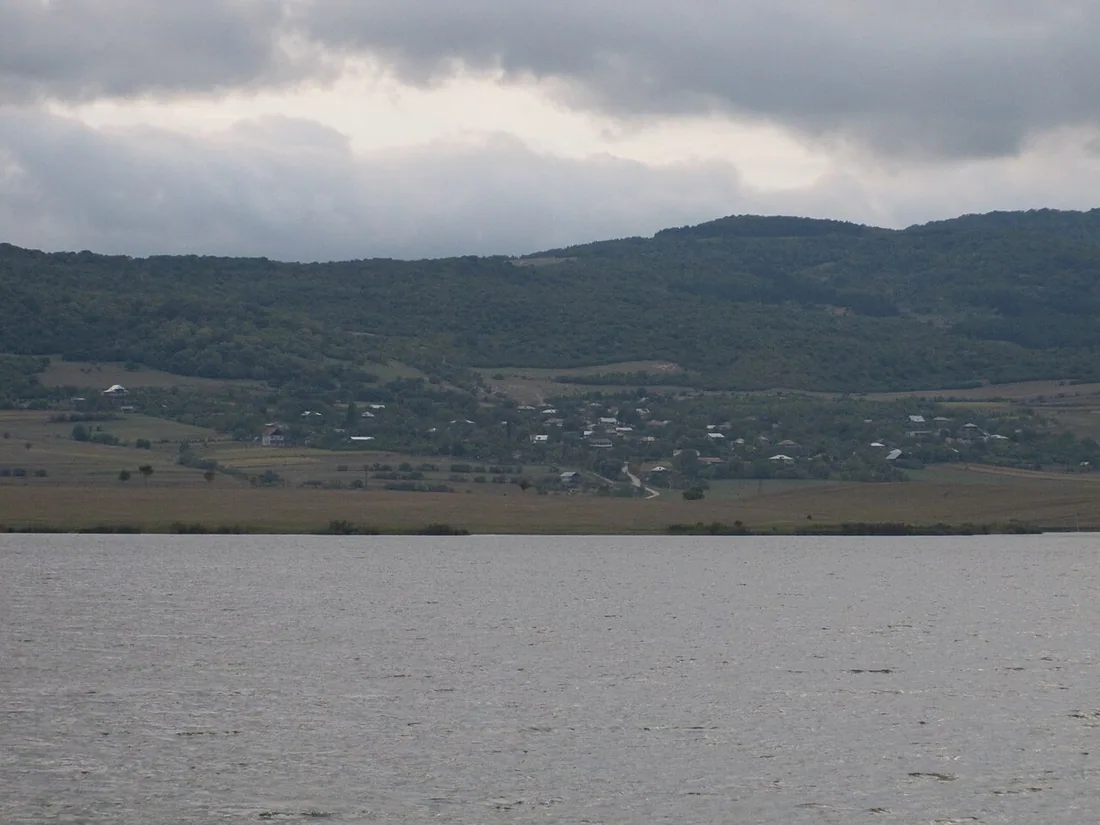
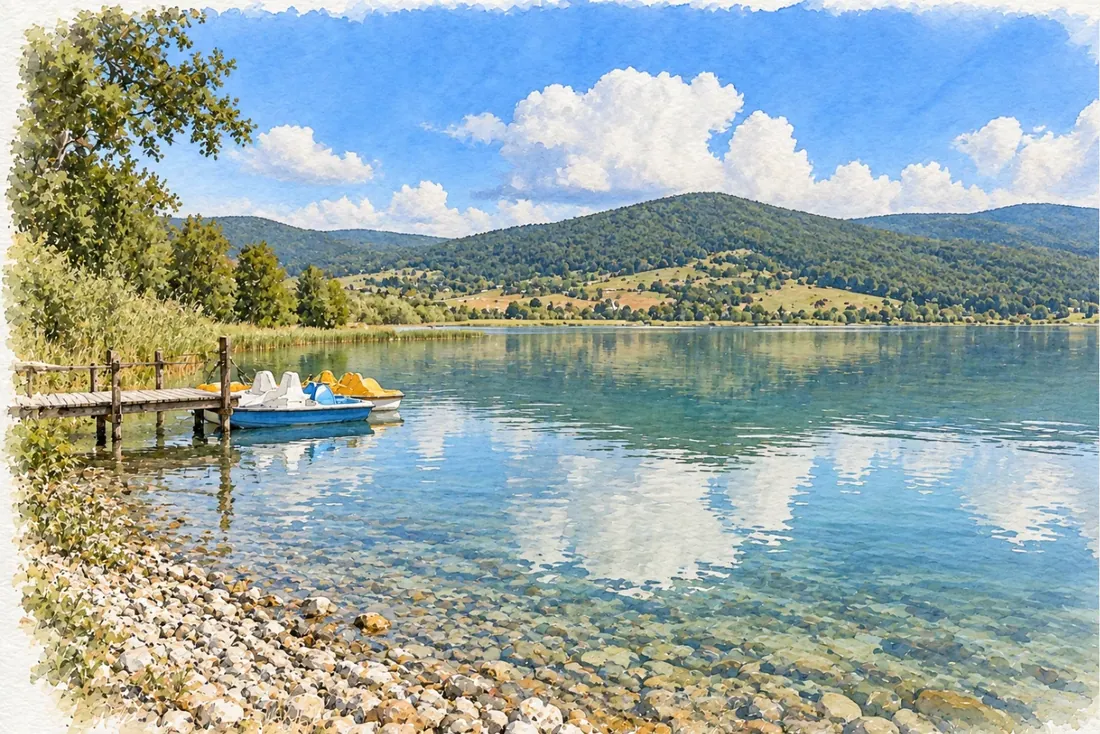
Today the eastern shore has a resort, cafés and a small beach; the far side keeps its reeds and pasture. Swim a few strokes out on a still July evening and you will catch yourself looking down.
Gallery
Practical advice
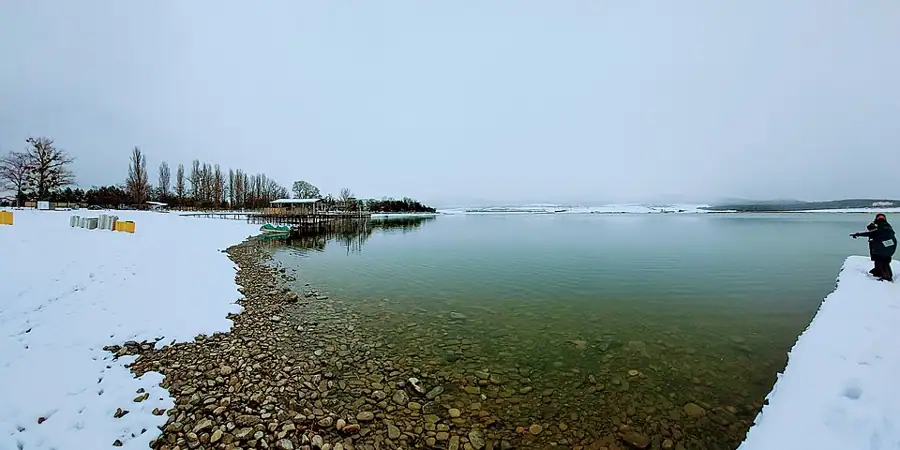
Two hours covers a swim and lunch. There are no lifeguards; the bottom shelves gently but is soft and weedy in places, and from late spring mosquitoes rise at dusk. Toilets and changing cabins belong to the cafés, so a coffee is your entry ticket. On July and August weekends the little beach is full by noon; a weekday morning is far calmer. In January and February the lake is frozen: a fine place for a walk, but almost everything on the shore is shut, and the ice is not for walking on.
How to get there from Tbilisi
Leave Tbilisi on the S1 towards Mtskheta, then turn north onto the Georgian Military Highway (S3/E117) and carry on past Natakhtari. About 16 km beyond the junction, short of Dusheti, turn left onto the Dusheti road (Sh65) and follow the signs to the lake. It is roughly 51 km and an hour from central Tbilisi, asphalt all the way, the last few kilometres narrower and patched. An economy car is fine year round; on winter mornings watch for ice on the side road. Parking on the eastern shore is free and informal. Fill up in Natakhtari or Dusheti, because outside summer almost nothing at the lake is open.
Click a marker for details. Coloured lines are ready-made road trips.
Nearby places
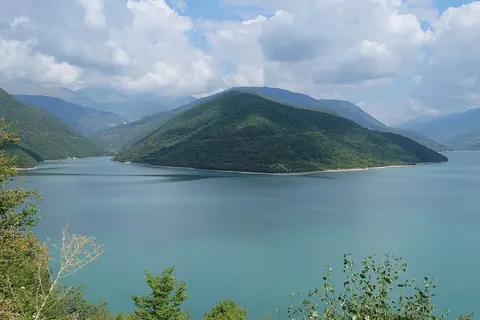
Zhinvali Reservoir
Tbilisi's drinking water in a long turquoise lake, laid over a drowned medieval town, with the Military Highway running along its shore.
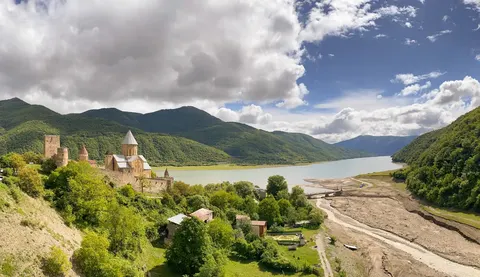
Ananuri Fortress
Two castles, two churches and a tower with a terrible past above the Zhinvali reservoir — the first great stop on the road to Kazbegi.
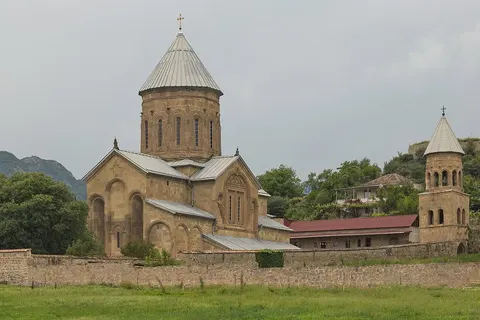
Samtavro Monastery
Where Nino lived among the brambles and Georgia's first Christian king lies buried: a working convent five minutes up the street from Svetitskhoveli.
Best car for this trip
Guides
- The Best Time to Visit Georgia, Counted Month by Month Georgia does not have one season. It has two countries: a 60% country from November to April and a 99% country
- Driving in Georgia: What the Distances Actually Cost You Georgia is a small country with slow roads. Here is what 267 measured drives from Tbilisi say about how long y
Pickup locations
Car Rental in Tbilisi — 40 km (straight line)
Booking and enquiries
The easiest way to reach these places is by car — you pick the route and the stops.