
Batumi Archaeological Museum
Greek and Colchian graves from Pichvnari, coins from Gonio and a room of gold: Adjara's deep past on two floors of a grey stone building.
- Time needed
- 1 h
- From Tbilisi
- 370 km · 5:30
- Road
- Paved
- Car needed
- Economy class
- Season
- All year
- Entry
- ~5 ₾
Long before Gonio had its Roman walls, Greeks and Colchians were living, trading and burying their dead side by side on this coast, and this museum keeps what they left behind.
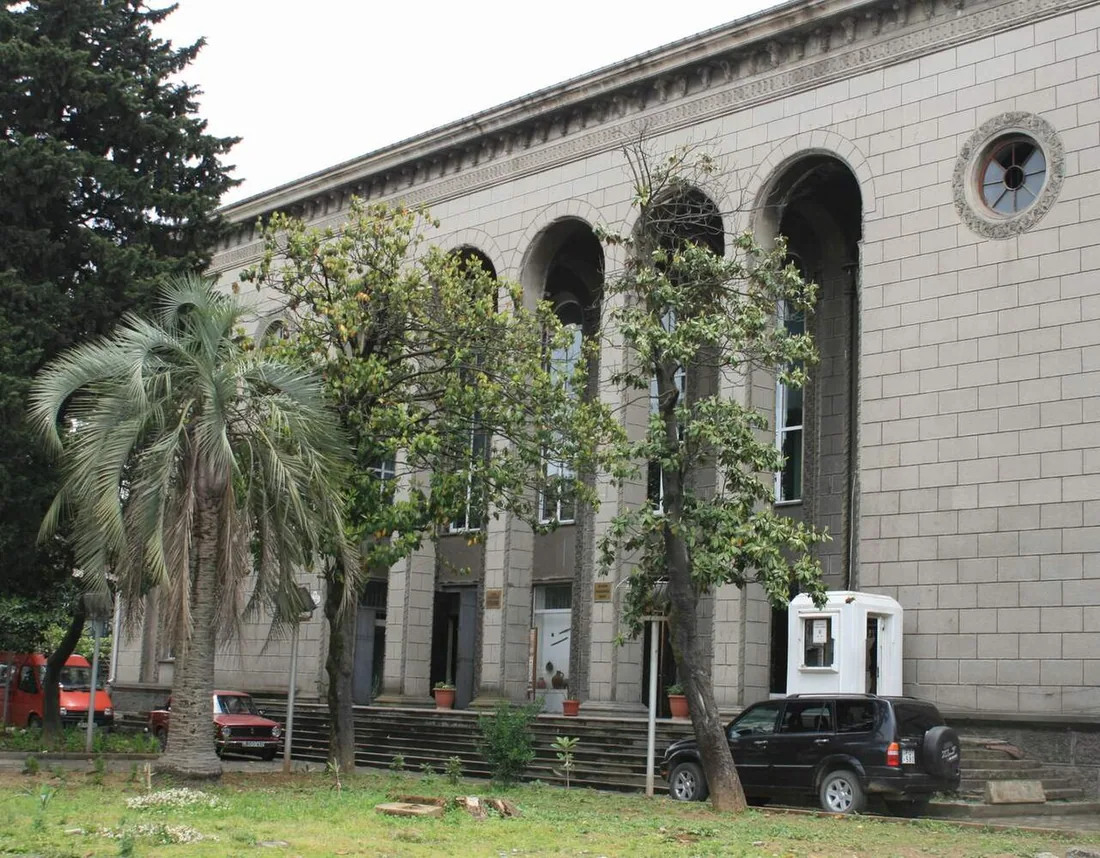
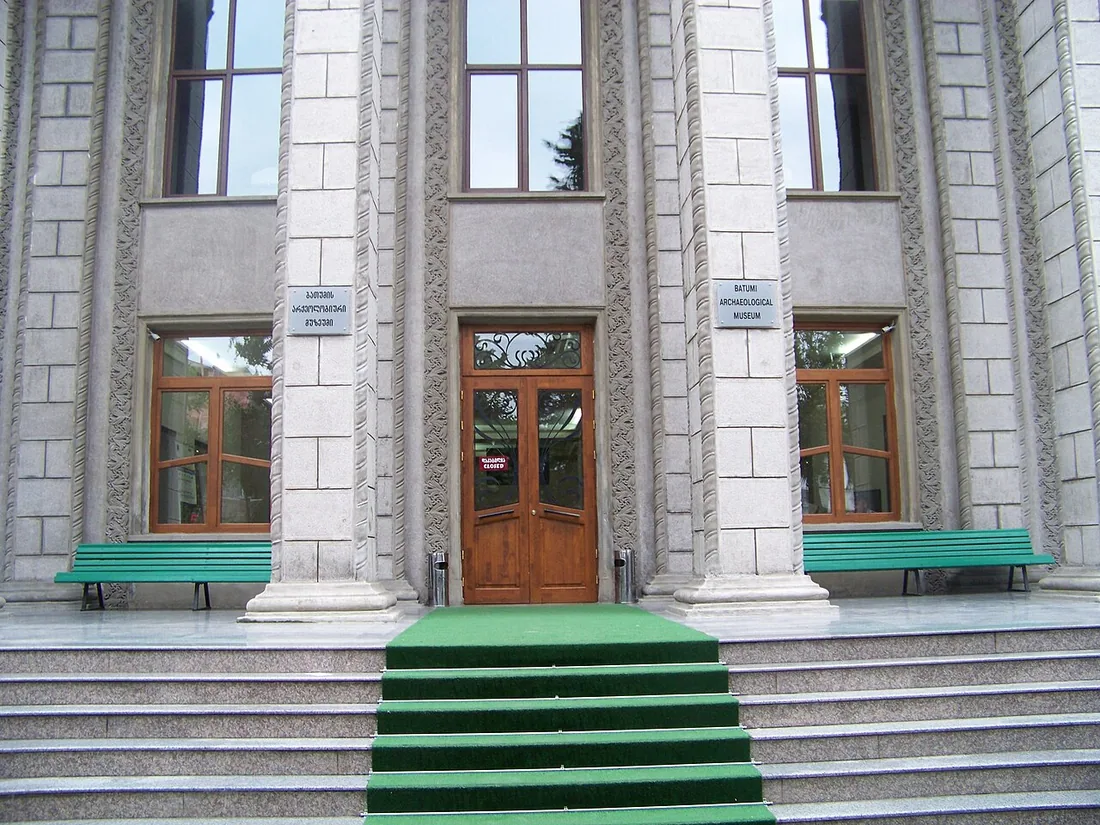
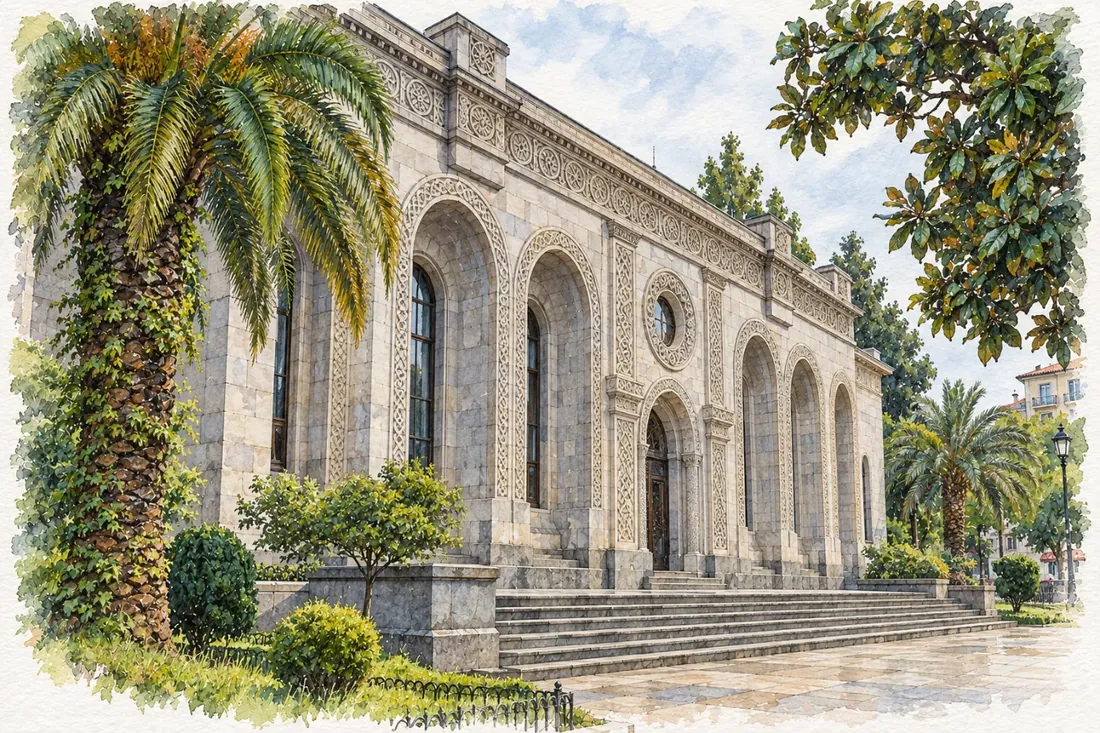
Archaeologists have been digging in Adjara for more than a century, but the collection went on public show only in 1994. Its permanent exhibition, opened at the end of 2007, fills two floors of a grey stone building on Chavchavadze Street and walks through Adjara's past epoch by epoch.
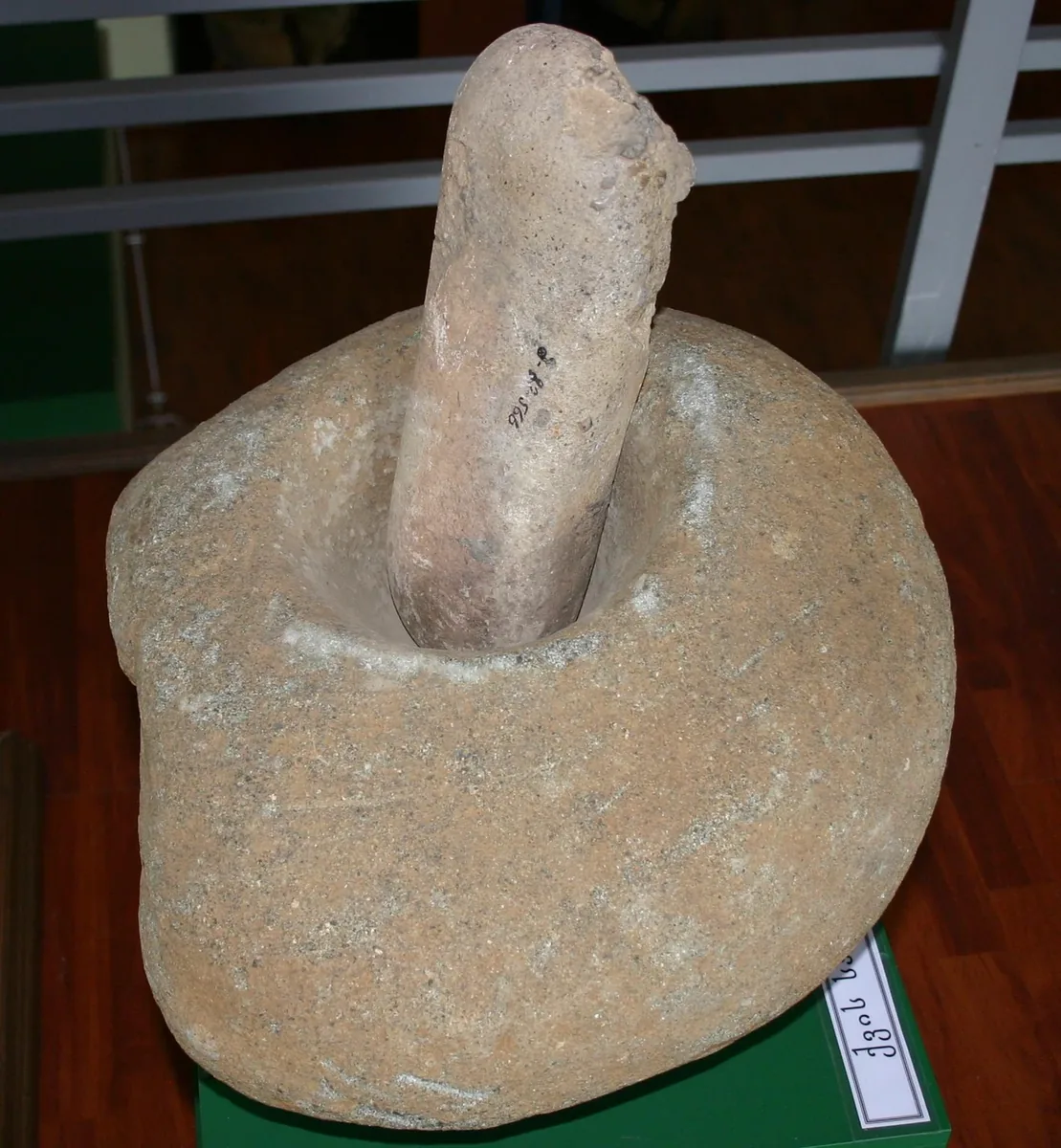
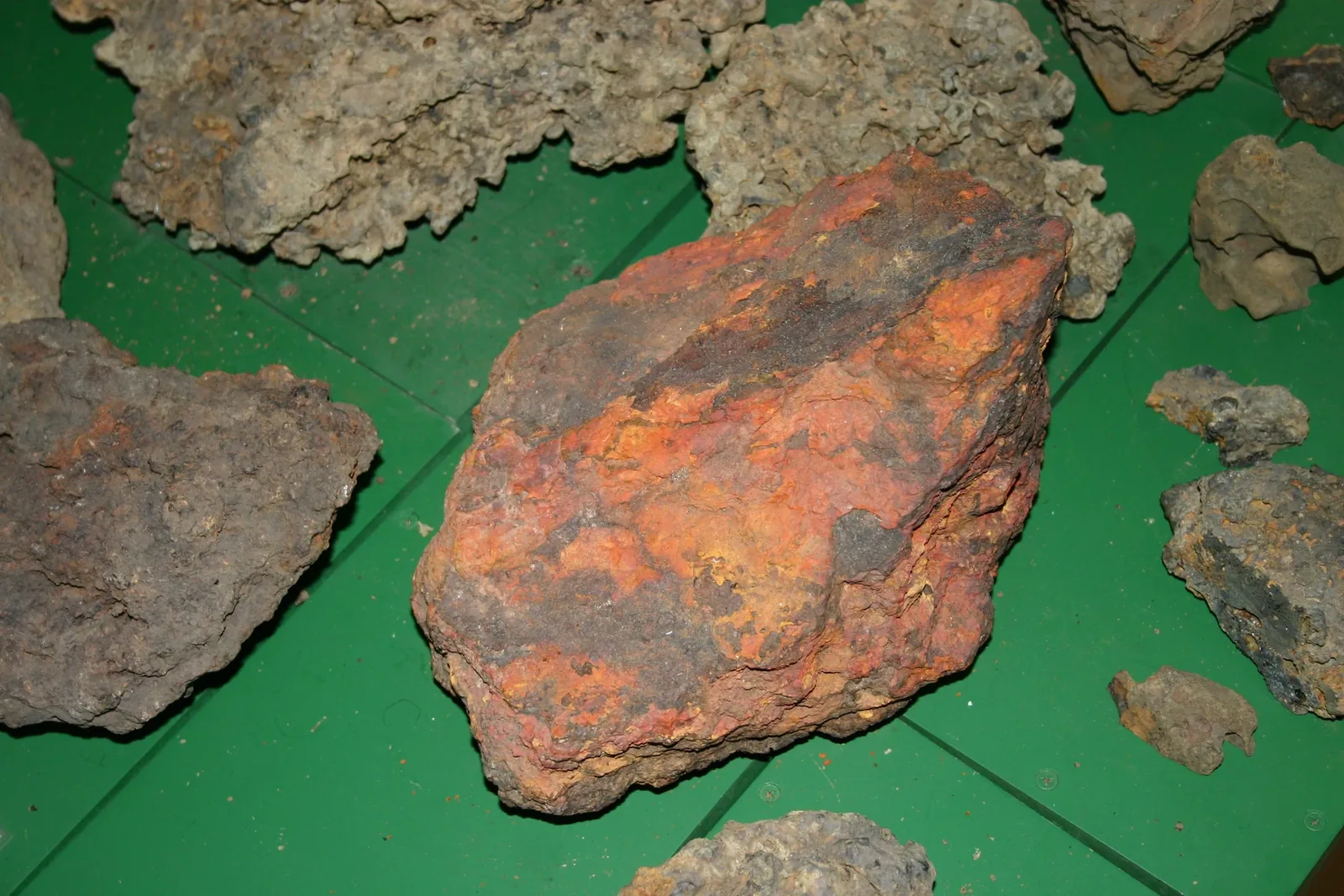
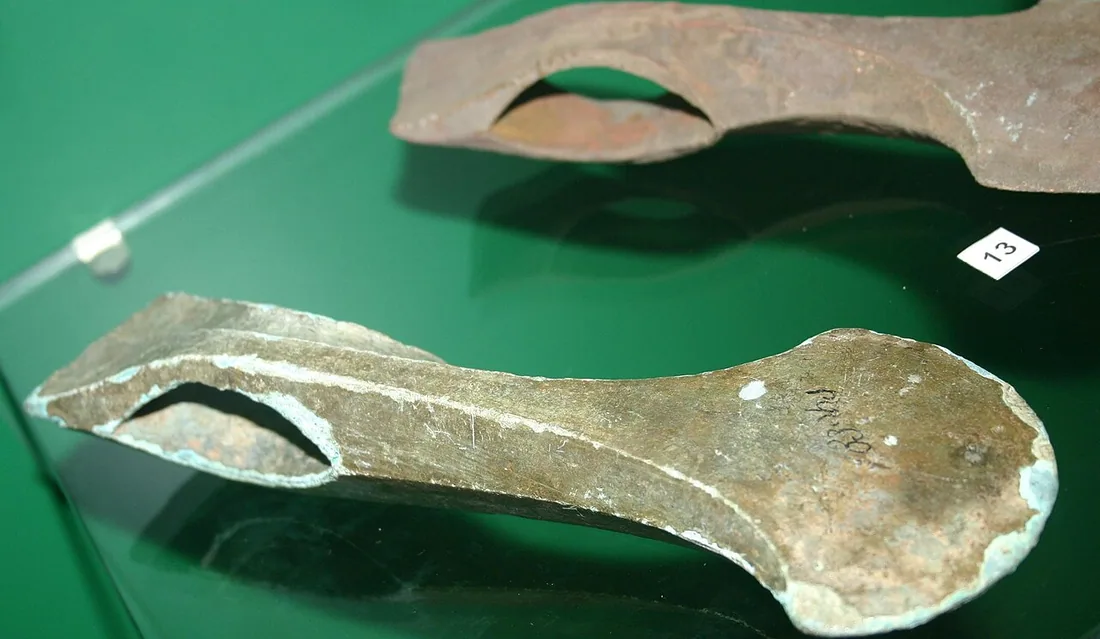
Upstairs is the deep past: Stone Age tools and the Iron Age culture of the Colchians. Downstairs the story reaches the sea. Much of it comes from Pichvnari, ten kilometres north of Kobuleti, where in the fifth and fourth centuries BC Greeks and Colchians kept separate cemeteries, two communities with two rites, before the graves began to mingle in the Hellenistic age. Since 1998 the site has been excavated by this museum together with Oxford's Ashmolean.
Worth slowing down for: - the Gold Fund: gold coins and jewellery - Greek signet rings cut with Hermes, Aphrodite and Eros - coins from Gonio-Apsaros, including a hoard found beside one of the fortress walls, and a sculpted Serapis
Of all the Pichvnari burials, one lingers longer than the gold: a Greek infant laid inside an amphora, its side broken open for the burial and closed again with the same shards. The same cemetery yielded a small glass kohl-tube, probably made in Achaemenid Iran, that reached a Black Sea grave, archaeologists think, by way of eastern Georgia.
Come here before Gonio or Petra. Walls are far easier to read once you have seen what was found inside them.
Gallery
Practical advice
Allow an hour. The entrance is up a broad flight of steps and the display is on two floors, so visitors who use a wheelchair should call ahead. Ask at the desk about an English-speaking guide, and check before photographing, as rules can vary. Admission costs a few lari. There is no café to rely on inside, but the surrounding streets are full of them. On a wet Batumi day, and there are many between autumn and spring, this is the best hour you can spend indoors; the Adjara Art Museum is a ten-minute walk away.
How to get there from Tbilisi
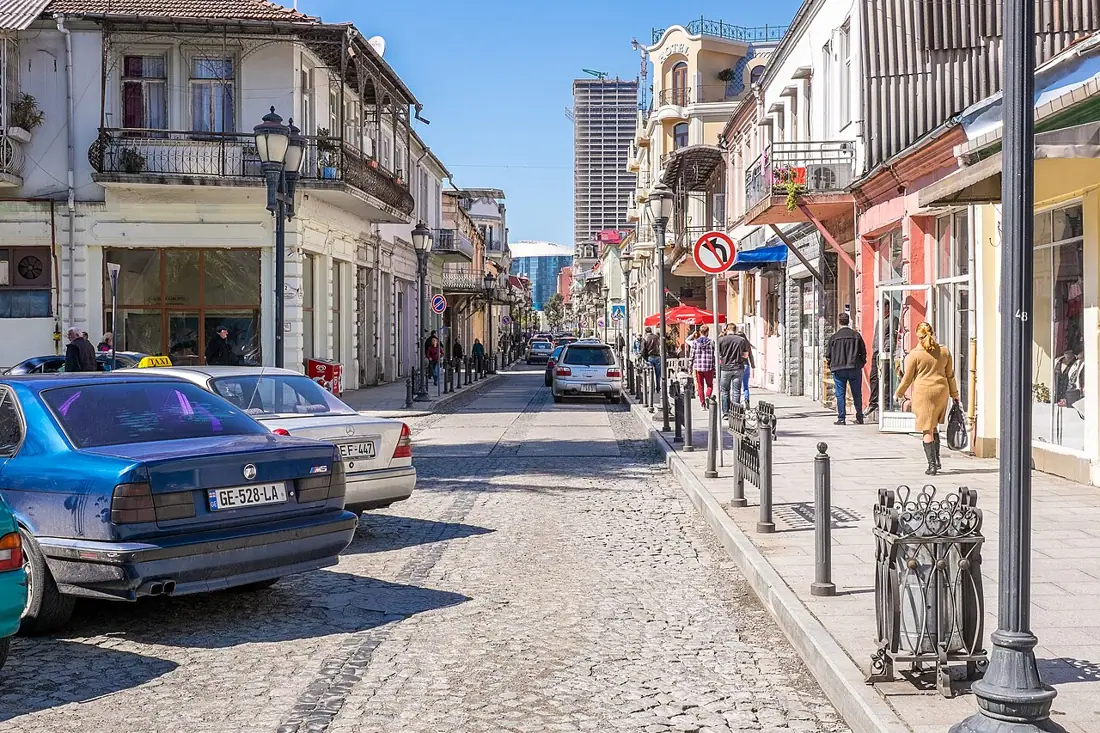
From Tbilisi take the S1 (E60) west past Kutaisi to Samtredia, the S12 (E692) through Lanchkhuti to the coast at Grigoleti, then the S2 (E70) south through Kobuleti into Batumi: 370 km and about five and a half hours, asphalt all the way. Pichvnari itself lies by the coast road ten kilometres north of Kobuleti, if you want to see the ground before the finds. The museum stands at 77 Ilia Chavchavadze Street, about a kilometre inland from the boulevard. Street parking is paid and usually findable by day. Fuel is plentiful along the route. An economy car is all you need.
Click a marker for details. Coloured lines are ready-made road trips.
Nearby places
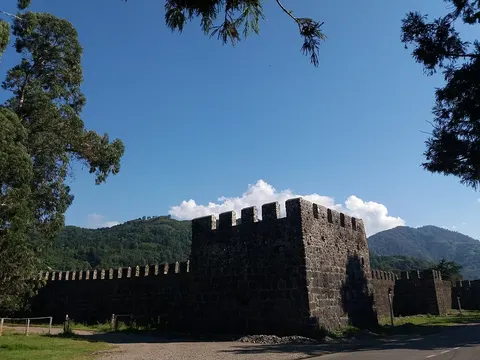
Gonio-Apsaros Fortress
A Roman fort at the mouth of the Chorokhi: walls of dressed blocks, Ottoman patching, and two graves no one can prove.
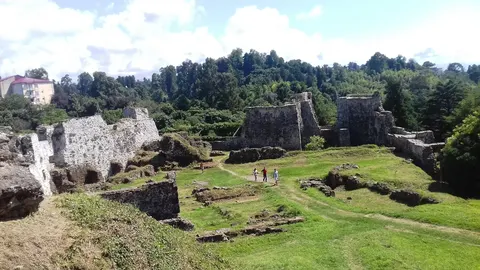
Petra Fortress, Tsikhisdziri
Justinian's 6th-century fortress-city on two rocky hills above the sea at Tsikhisdziri, fought over through the whole of the Lazic War.
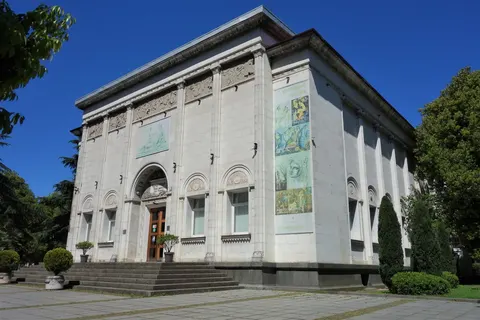
Adjara Art Museum
Pirosmani, Kakabadze and Gudiashvili in a white Stalin-era palace on Gorgiladze Street, which until 1998 was a museum of the revolution.
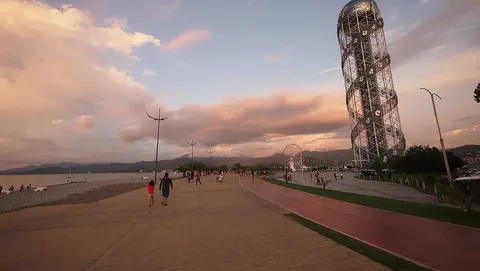
Batumi Boulevard and Old Town
A seafront promenade planted on bare sand in 1881, and an old town built on oil money, with iron balconies and a Gothic Revival cathedral.
Best car for this trip
Guides
- Driving in Georgia: What the Distances Actually Cost You Georgia is a small country with slow roads. Here is what 267 measured drives from Tbilisi say about how long y
Pickup locations
Car Rental in Batumi — 1 km (straight line)