
Gonio-Apsaros Fortress
A Roman fort at the mouth of the Chorokhi: walls of dressed blocks, Ottoman patching, and two graves no one can prove.
- Time needed
- 1.5 h
- From Tbilisi
- 385 km · 5:50
- Road
- Paved
- Car needed
- Economy class
- Season
- All year
- Entry
- ~15 ₾
"We came to Apsaros, where five cohorts are stationed": the Roman writer Arrian gave this fort one dry line, and its walls still bear him out.
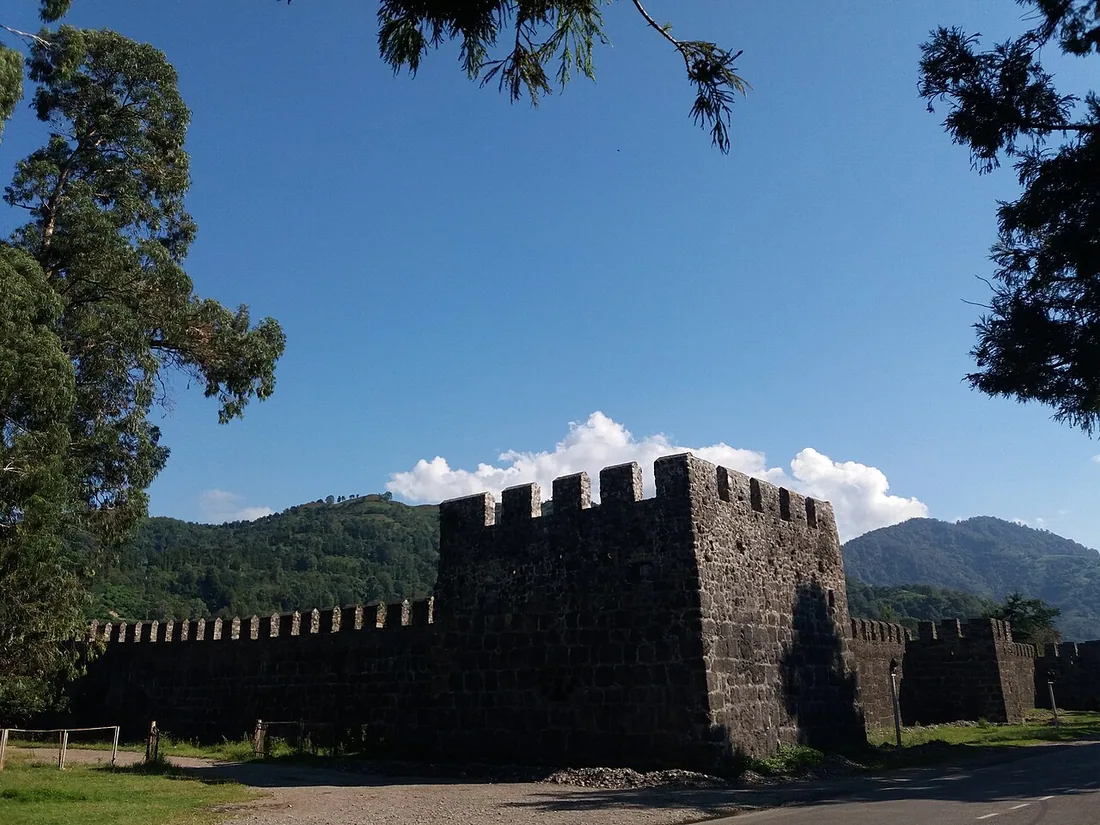
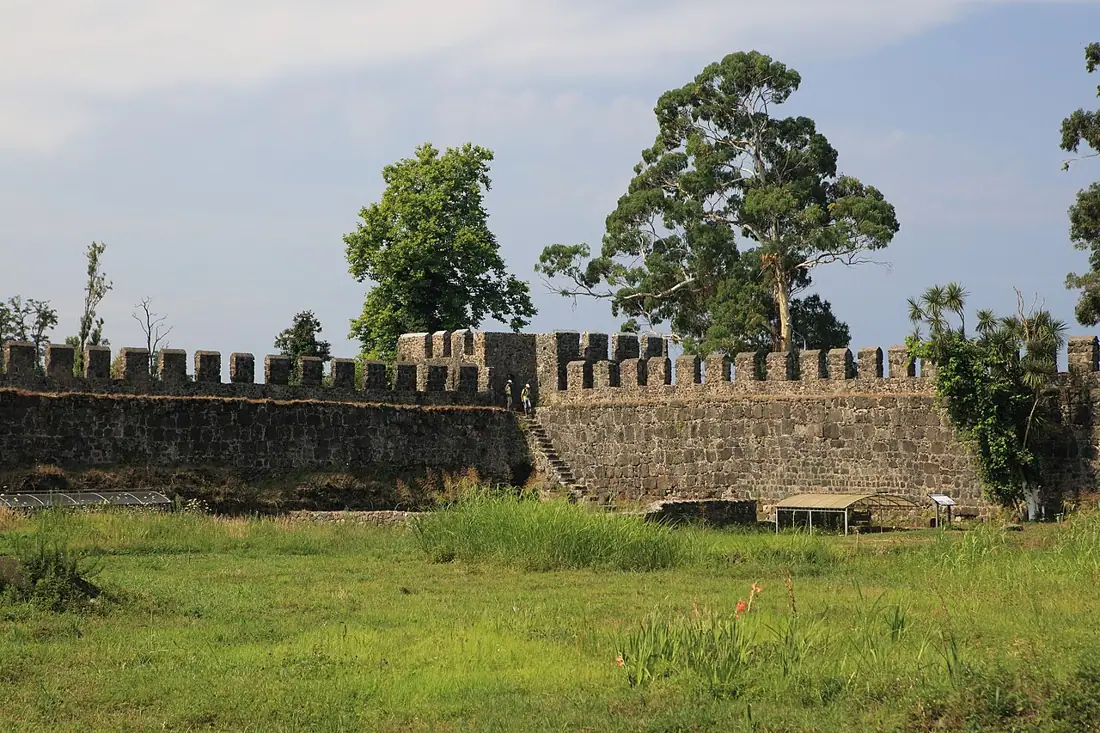
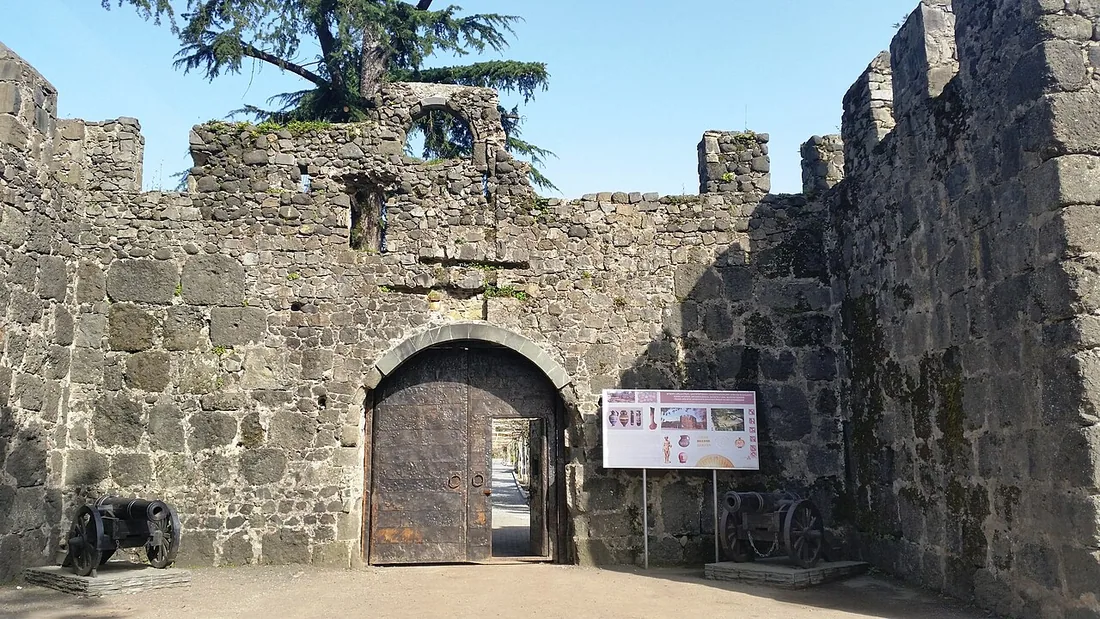
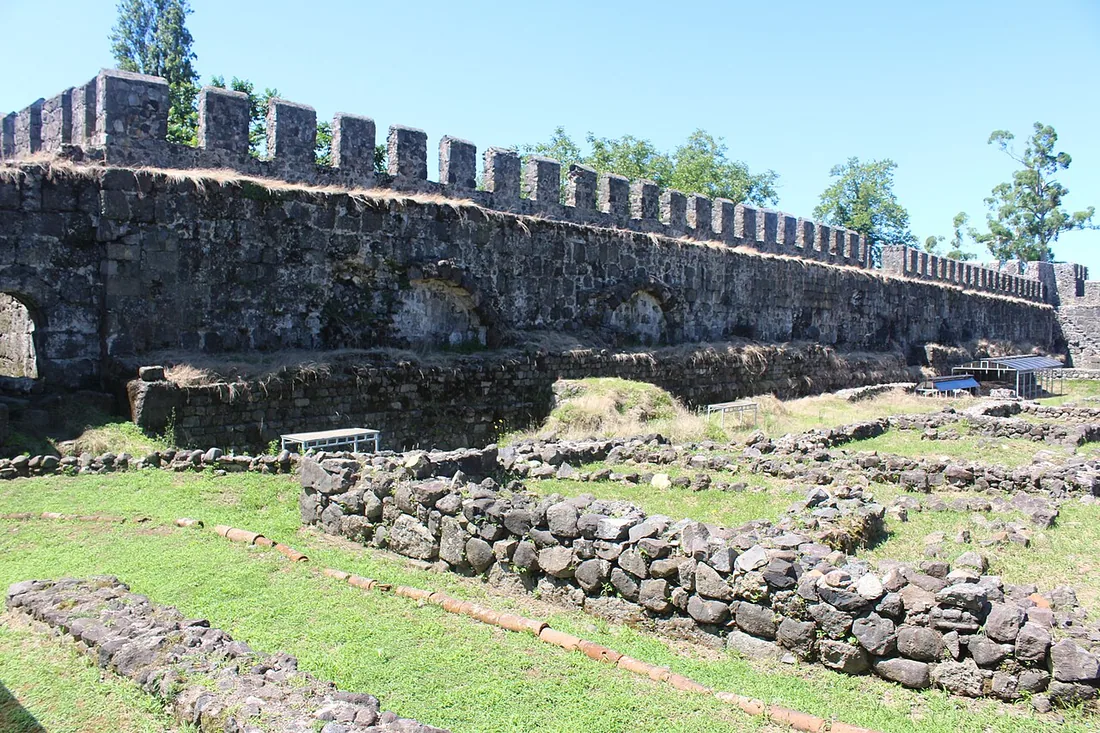
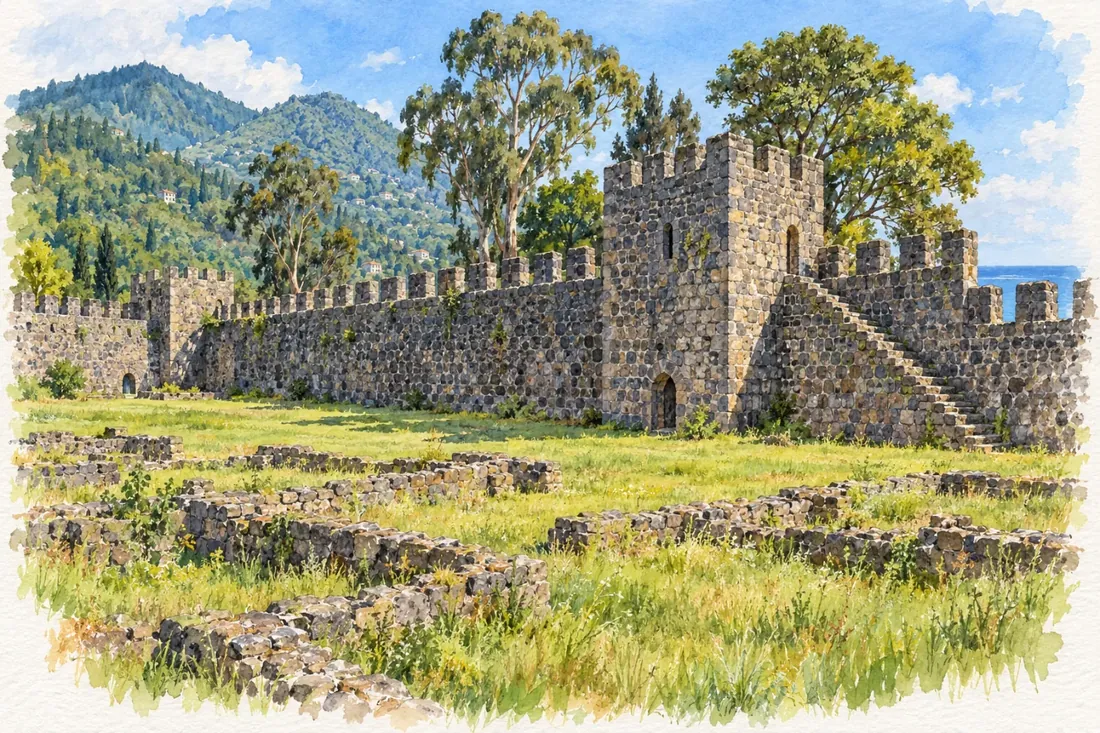
Pliny the Elder mentions Apsaros in the 1st century AD, and the Romans built the fort around the 70s AD to guard the left bank of the Chorokhi where it meets the Black Sea. It is a near-rectangle, 228 by 195 metres, built with four gates and 22 towers, of which 18 survive. Look closely and the wall tells its own biography in layers: at the bottom, huge, finely dressed blocks, some around 80 centimetres high; higher up, rough river cobbles laid by the Ottomans after they took Gonio in 1547. They held it until 1878.
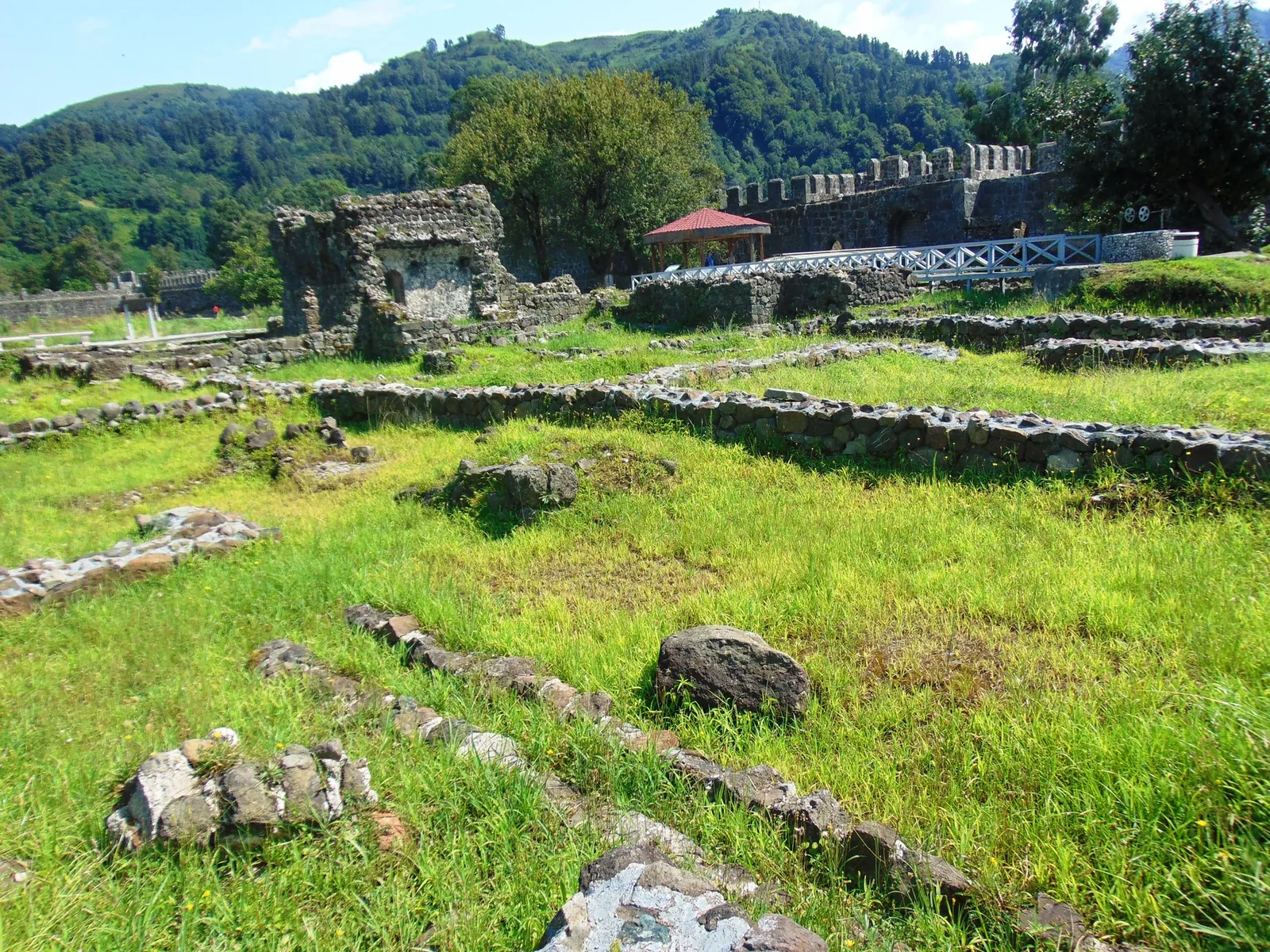
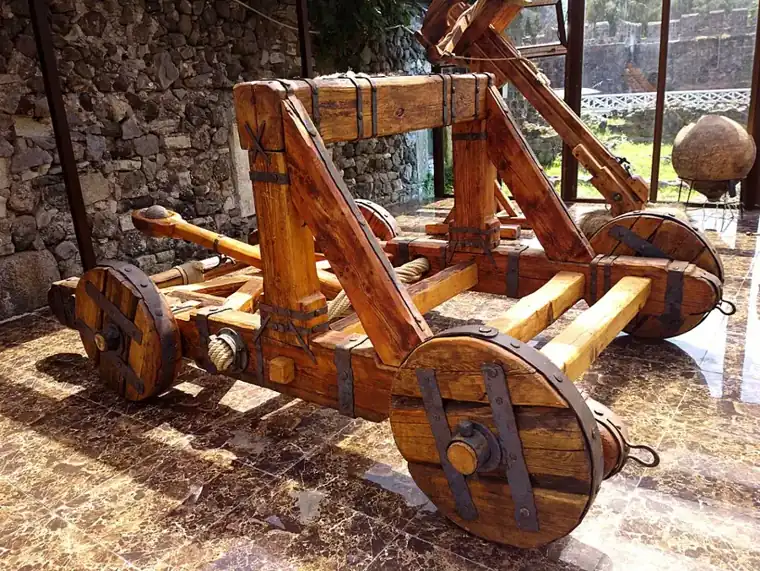
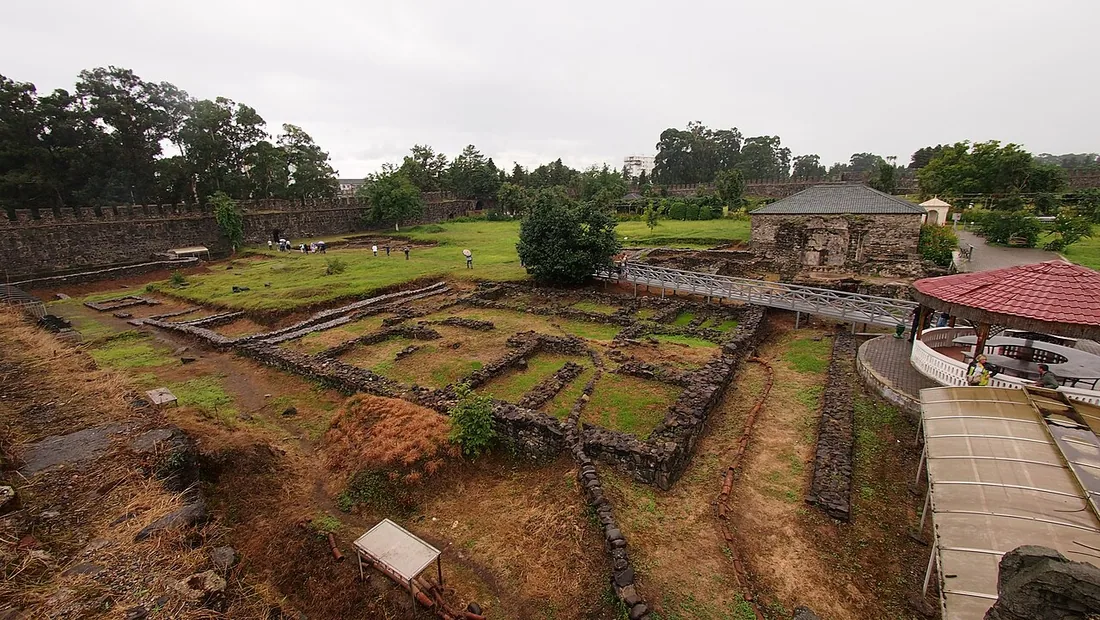
Inside the circuit lies a grassy yard cut by trenches. Excavations running since 1995 have exposed a bath house from the second half of the 1st century, barracks, the praetorium, water pipes and drains. A museum-reserve has operated here since 1994, holding finds from before Christ to the 1880s.
Gonio has two legends, and both are graves. Arrian recorded that the place was once called Apsyrtos, because Medea and Jason were said to have treacherously killed her brother Apsyrtus here, and that locals still pointed out his tomb. Today's tradition places another grave inside the walls: that of the Apostle Matthias. Digging near the supposed site is prohibited, so the claim cannot be tested.
Two graves, neither provable, inside a wall you can lay your hand on: that is Gonio in a sentence.
Gallery
Practical advice
An hour and a half is enough. There is almost no shade inside, and a summer midday here is hot and humid, so come in the morning or late afternoon with a hat and water. Closed shoes are better on the grass and around the trenches. Tickets are sold at the gate and prices change from time to time. The Sarpi border crossing is only a few kilometres away, so carry a passport or ID card, although the fortress itself needs no permit. Park at the roadside by the entrance. Cafés, shops and an ATM are in Gonio village, and the sea is about ten minutes' walk.
How to get there from Tbilisi
From Tbilisi it is about 385 km, five hours fifty. Take the E60 to Samtredia, then the S12 to the coast and south through Kobuleti to Batumi. From Batumi follow the Sarpi road south, past the airport and across the Chorokhi bridge: 12 km from the centre, twenty to twenty-five minutes, and the fortress rises right beside the road on your left. It is good asphalt throughout and an economy car is entirely sufficient. Fill up in Batumi or Gonio; there is no need to drive on towards the border crossing itself.
Click a marker for details. Coloured lines are ready-made road trips.
Nearby places
Kvariati
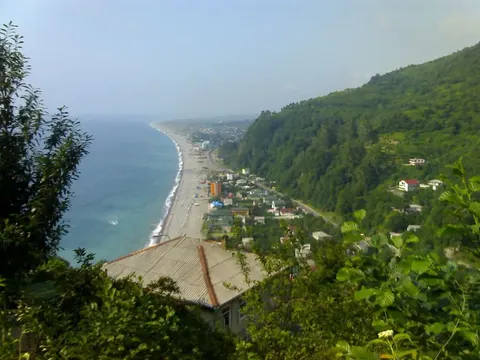
Batumi's southernmost beach: a kilometre of pebbles and clear water where the mountains crowd down to the sea.
Sarpi and the Border
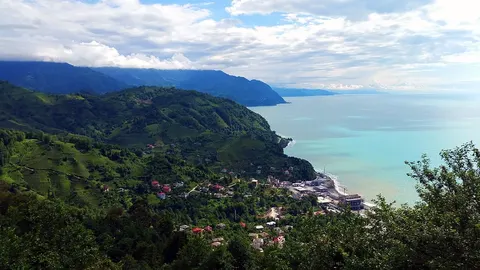
Georgia's last village on the Black Sea: a Laz settlement cut in two in 1921, deep clear water, and a sunset straight into open sea.
Batumi Boulevard and Old Town
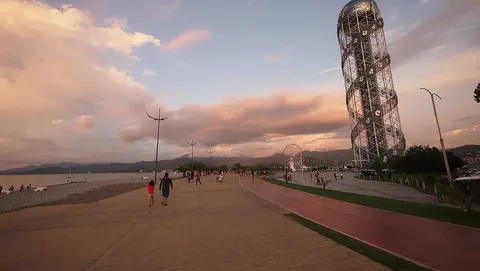
A seafront promenade planted on bare sand in 1881, and an old town built on oil money, with iron balconies and a Gothic Revival cathedral.
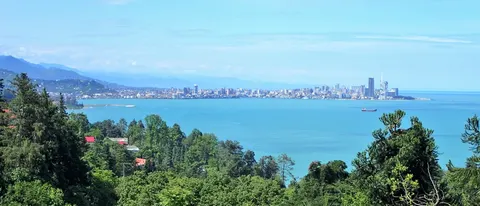
Batumi Botanical Garden
Nine floristic worlds on Green Cape above the sea, in the garden where Georgia's tea, citrus and eucalyptus began.
Part of these road trips
- Black Sea and Adjara 4 days · 880 km
- Batumi Coast — Two Family Days 2 days · 55 km
Best car for this trip
Guides
- Driving in Georgia: What the Distances Actually Cost You Georgia is a small country with slow roads. Here is what 267 measured drives from Tbilisi say about how long y
Pickup locations
Car Rental at Batumi Airport — 5 km (straight line)