
Petra Fortress, Tsikhisdziri
Justinian's 6th-century fortress-city on two rocky hills above the sea at Tsikhisdziri, fought over through the whole of the Lazic War.
- Time needed
- 1 h
- From Tbilisi
- 355 km · 5:20
- Road
- Paved
- Car needed
- Economy class
- Season
- All year
- Entry
- ~15 ₾
In 541 the Persian king Khosrow I took Petra not over its walls but from beneath them, through a tunnel his men had dug in secret.
The fortress-city was still new. A law of Justinian mentions it in 535; it was named Petra Pia Justiniana in the emperor's honour and built through the efforts of John Tzibus, a Roman official who then took control of Lazica's imports, salt among them. Its Greek name, ‘rock’, fitted the site: sea and cliffs on every side, and a single narrow approach closed by a wall with two towers.
Tzibus's monopoly turned the Lazi against Rome, and their king Gubazes secretly called in Persia. After the tunnel, the Persians held Petra against a Roman–Lazi siege in 548–549. In 551 a new Roman–Lazi army came under the general Bessas; after more than a year the city fell, and he razed its fortress so that Persia could never use it again. Archaeology adds a quieter sequel: the walls were repaired and kept in use into the 7th century and beyond.
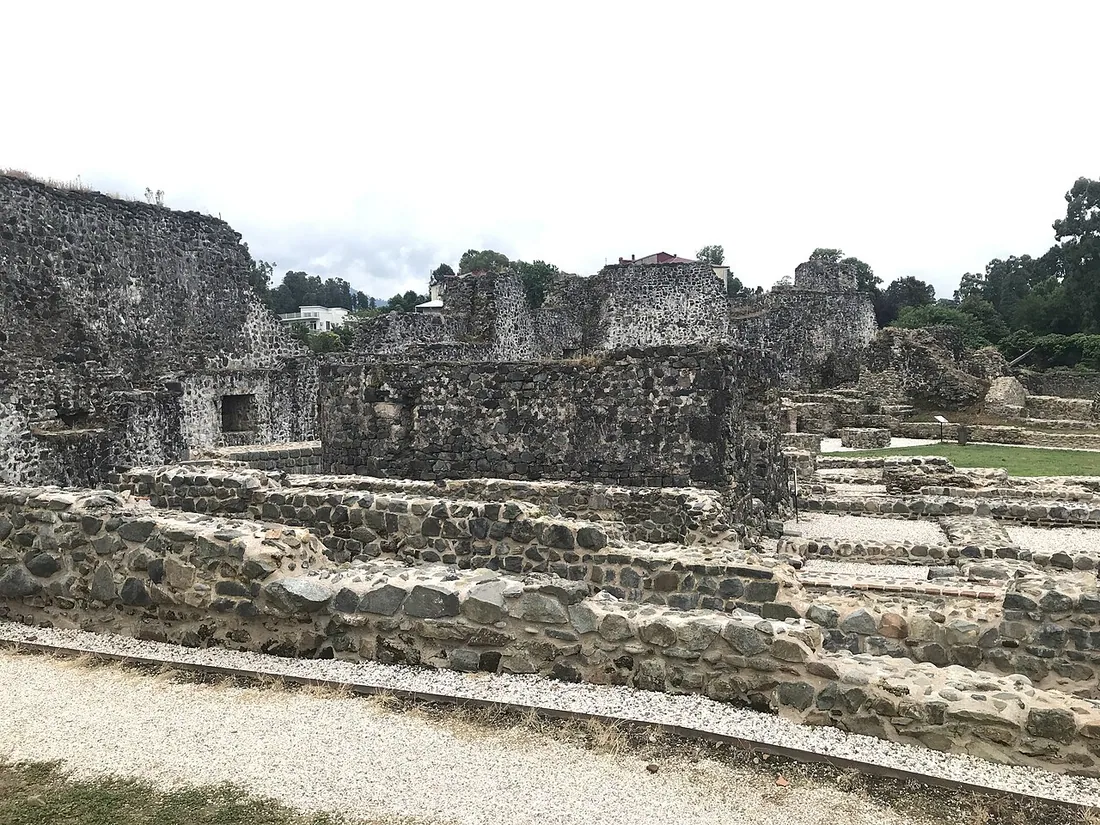
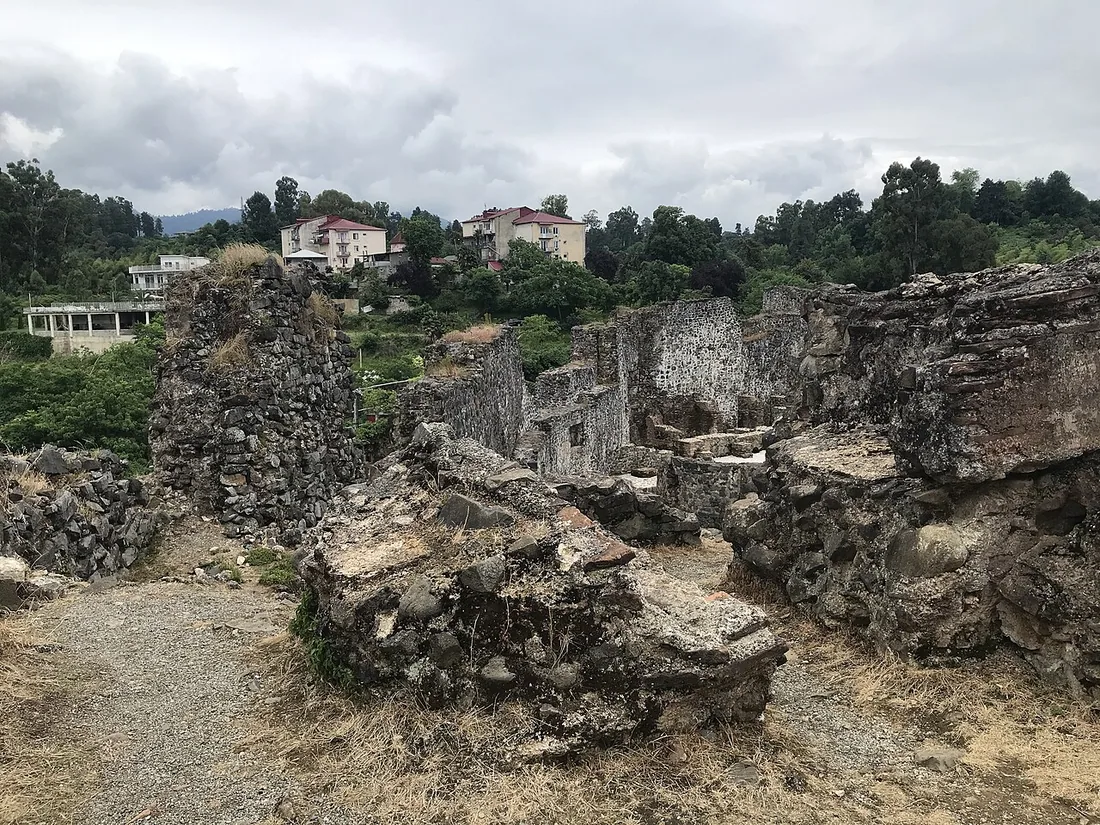
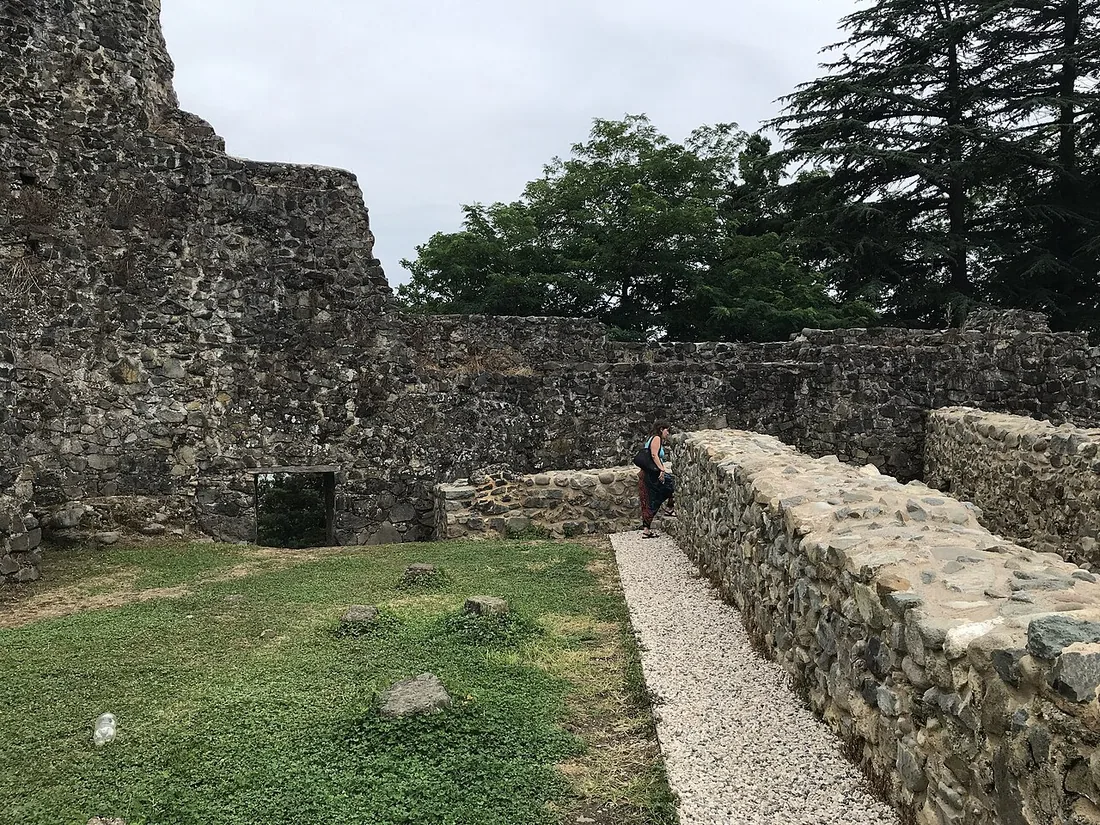
Today the site is the Tsikhisdziri–Petra archaeological museum-reserve, a citadel roughly 200 by 100 metres spread over two rocky hills by the sea. Look for: - the foundations of a large 6th-century three-aisled basilica with a narthex and mosaic floor, probably a bishop's church - a bath house and a water cistern - a cemetery of more than 300 graves nearby
Most scholars, from Patriarch Dositheos of Jerusalem in the 1670s to Simon Janashia in 1949, identify these ruins with the Petra of Procopius; a few still doubt it.
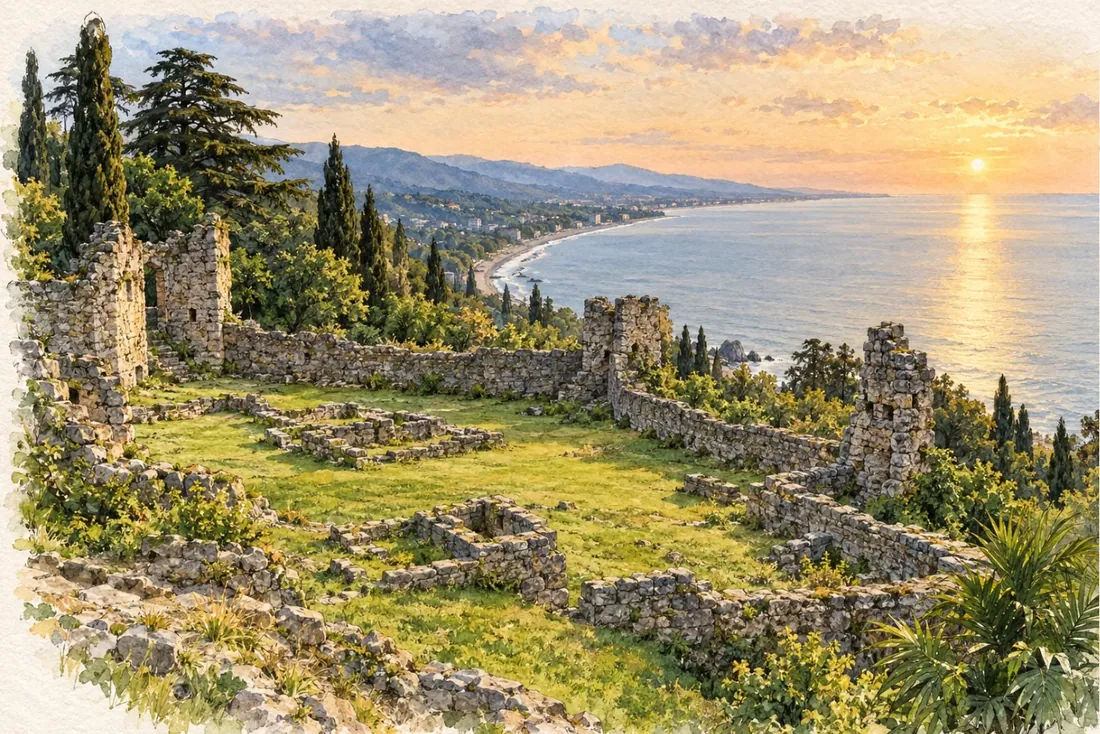
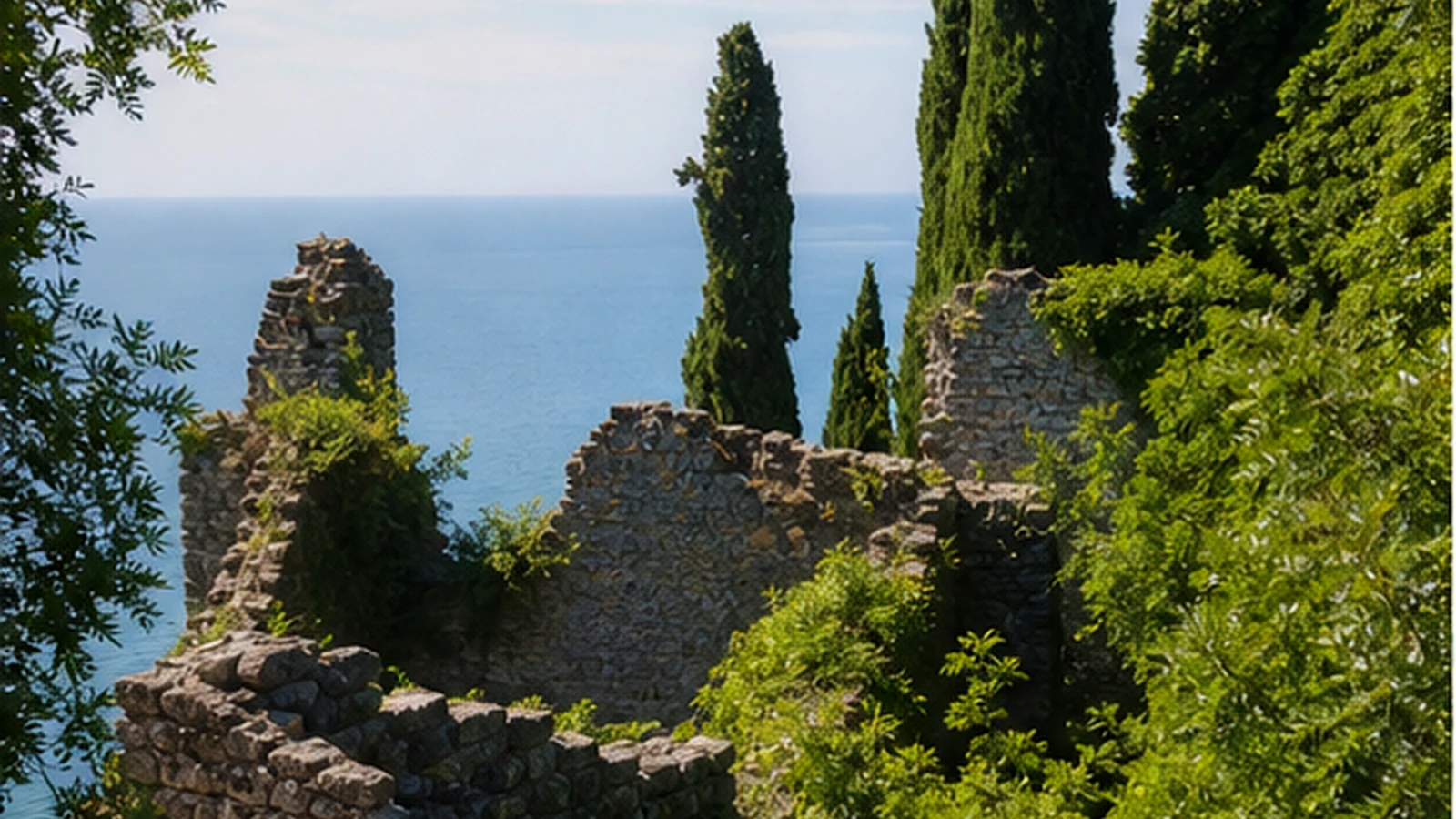
Climb the upper hill late in the day: the sea below, the Batumi road threading the shore, and underfoot a city that an emperor built, a king took from below and its own army pulled down.
Gallery
Practical advice
Petra is a ticketed museum-reserve, open 10:00–18:00: 15 GEL for foreign visitors, 10 GEL for Georgian adults, and 35 GEL for a guided tour in a foreign language. An hour is enough. The paths over the rock are stony, steep in places and slick after rain, so wear closed shoes. There is little shade; avoid summer middays and come in the late afternoon, when the light over the sea is best. Park in the marked area beside the main road. Cafés line the road towards Kobuleti, and the nearest cash machines are in Kobuleti, ten minutes away.
How to get there from Tbilisi
About 355 km and five hours twenty from Tbilisi. Take the S1 (E60) past Gori and Khashuri, over the Rikoti Pass and past Kutaisi to Samtredia, then the S12 through Lanchkhuti to Grigoleti and the S2 south along the coast through Kobuleti. Tsikhisdziri lies right on the S2 between Kobuleti and Batumi, about 17 km short of Batumi, so there is no detour. It is asphalt all the way, and an economy car is all you need. Fuel up in Kobuleti or at the station on the main road nearby.
Click a marker for details. Coloured lines are ready-made road trips.
Nearby places
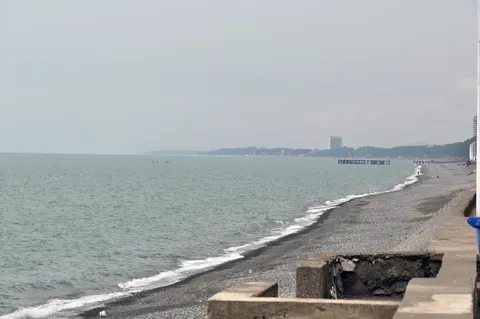
Kobuleti Beach and Protected Areas
A long, unhurried beach town north of Batumi, with a rain-fed Ramsar peat bog behind it where sundew traps insects on the moss.
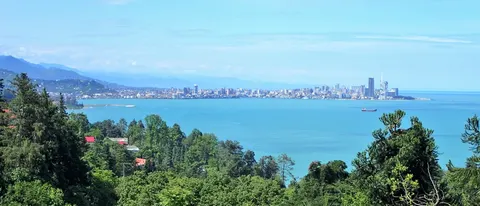
Batumi Botanical Garden
Nine floristic worlds on Green Cape above the sea, in the garden where Georgia's tea, citrus and eucalyptus began.
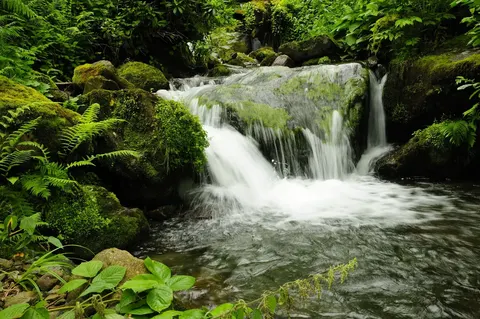
Mtirala National Park
UNESCO-listed Colchic rainforest on the ridge behind Batumi: a 28-metre waterfall, moss on every stone, and some of the heaviest rain in Georgia.
Best car for this trip
Guides
- Driving in Georgia: What the Distances Actually Cost You Georgia is a small country with slow roads. Here is what 267 measured drives from Tbilisi say about how long y
Pickup locations
Car Rental in Batumi — 17 km (straight line)