
Barakoni Church
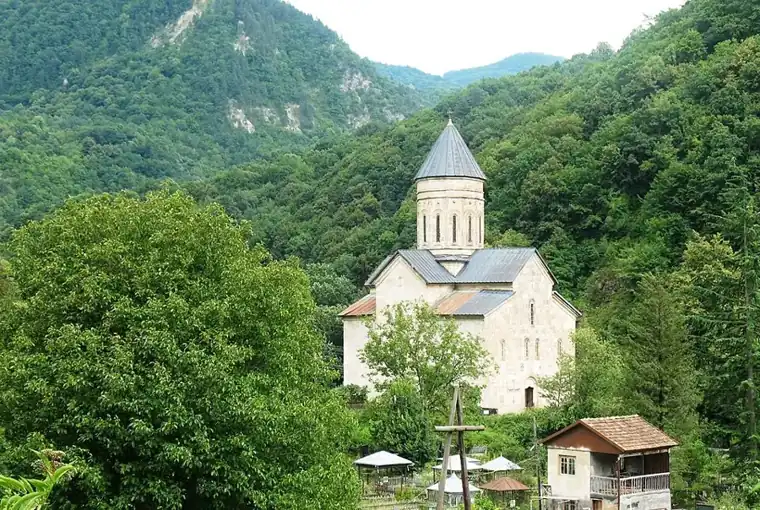
Built in 1753 for Duke Rostom of Racha on a cliff where the Lukhuni meets the Rioni — one of the last great domed churches of old Georgia.
- Time needed
- 1 h
- From Tbilisi
- 319 km · 5:30
- Road
- Paved
- Car needed
- Economy class
- Season
- All year
- Entry
- free
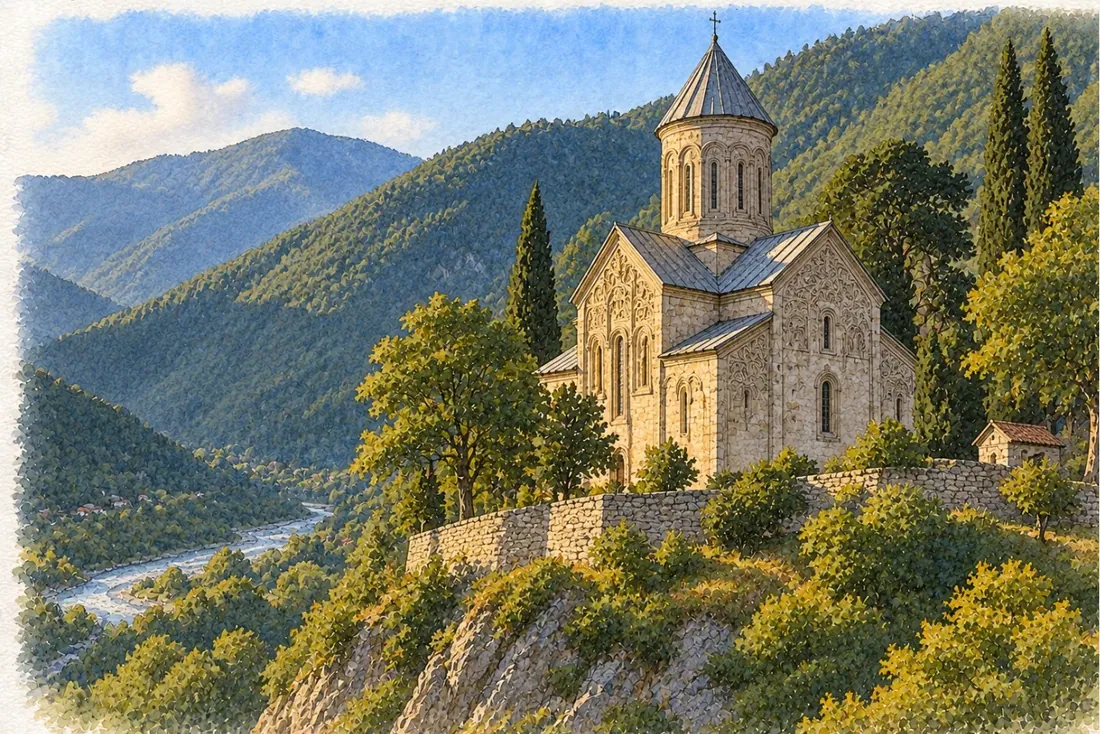
Barakoni is where the long story of the Georgian domed church draws to its close. It was raised in 1753 at Tsesi, on a steep cliff above the point where the Lukhuni runs into the Rioni, by order of Rostom, Duke (eristavi) of Racha (ruled 1750–1769). Its builder, Avtandil Shulavreli, is named in the inscription on the east front — a rarity in a country whose church architects usually went unrecorded. Standing at the meeting of two rivers, it is often likened to Svetitskhoveli in Mtskheta.
Rostom did not build on empty ground. North-west of the church stood the court chapel of the first duke of Racha, Rati son of Liparit: a single-nave basilica of tuff with an alabaster chancel screen. Only its foundation stones remain.
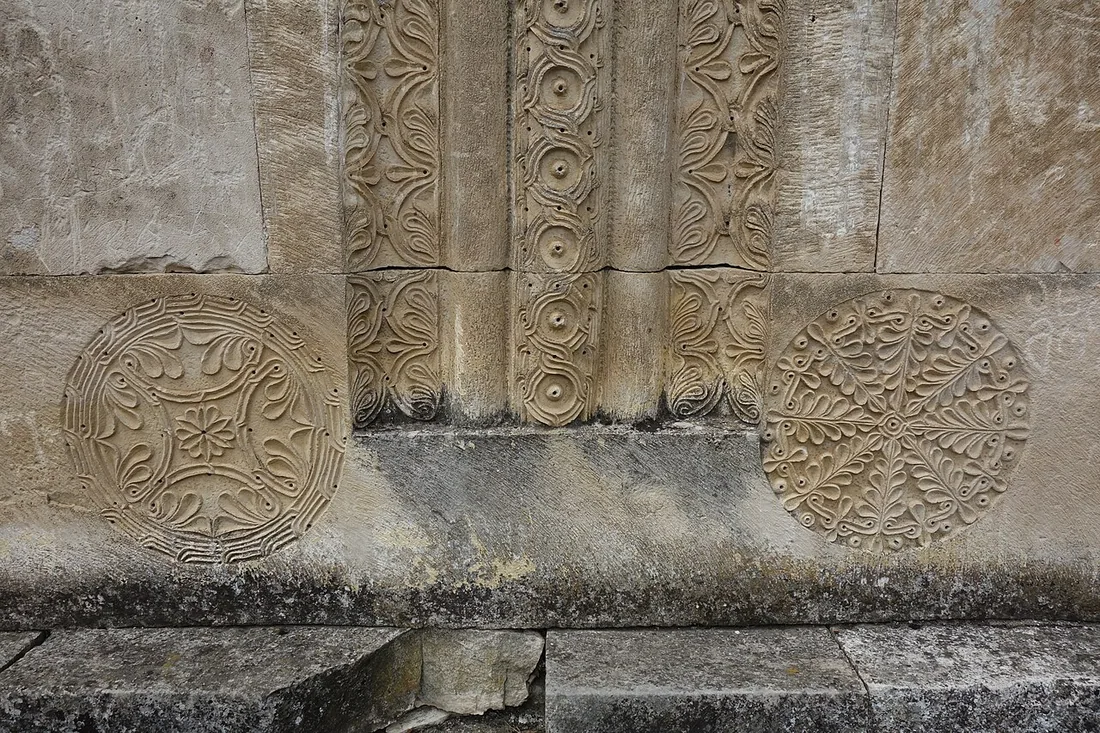
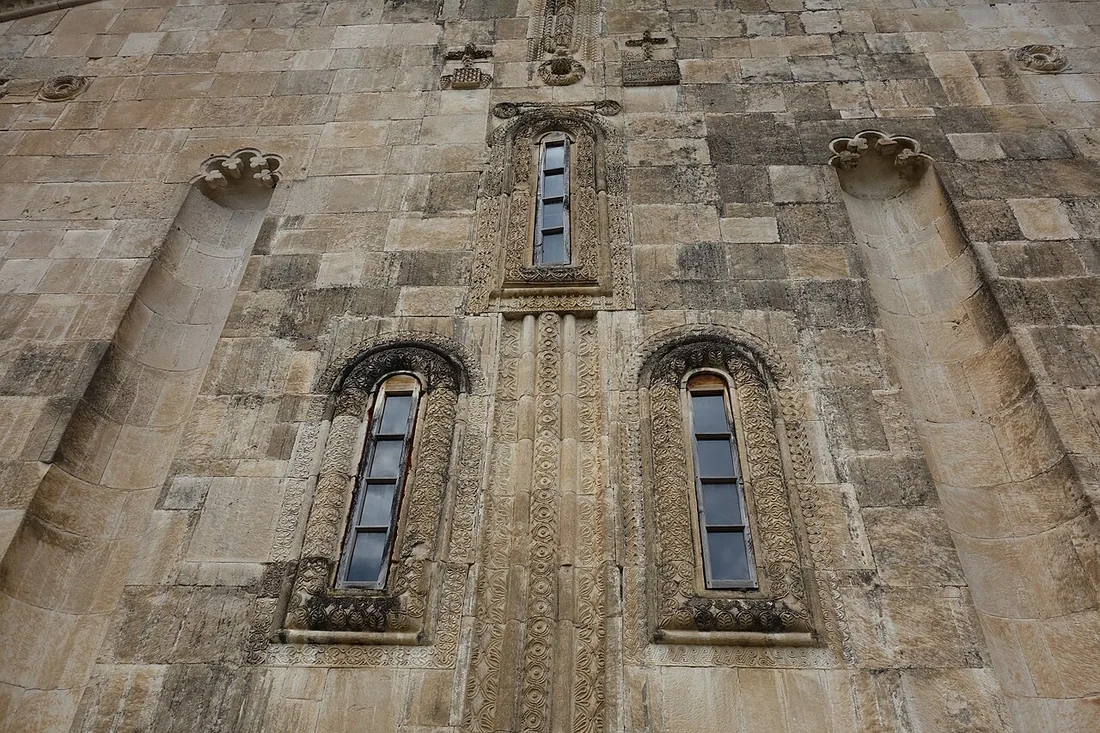
The new church is a plain rectangle without annexes, its dome carried on the corners of the sanctuary and two piers. It is built of pale stone from Itsa, and the facades are thick with carving — geometric and plant motifs around the windows and on the drum, the oldest-looking of them in the niches of the east front. The Georgian Soviet Encyclopedia was cooler than today's visitors: its entry calls the ornament lavish but says it sits on the walls rather than growing out of them. The dome, once roofed in zinc, now wears copper.
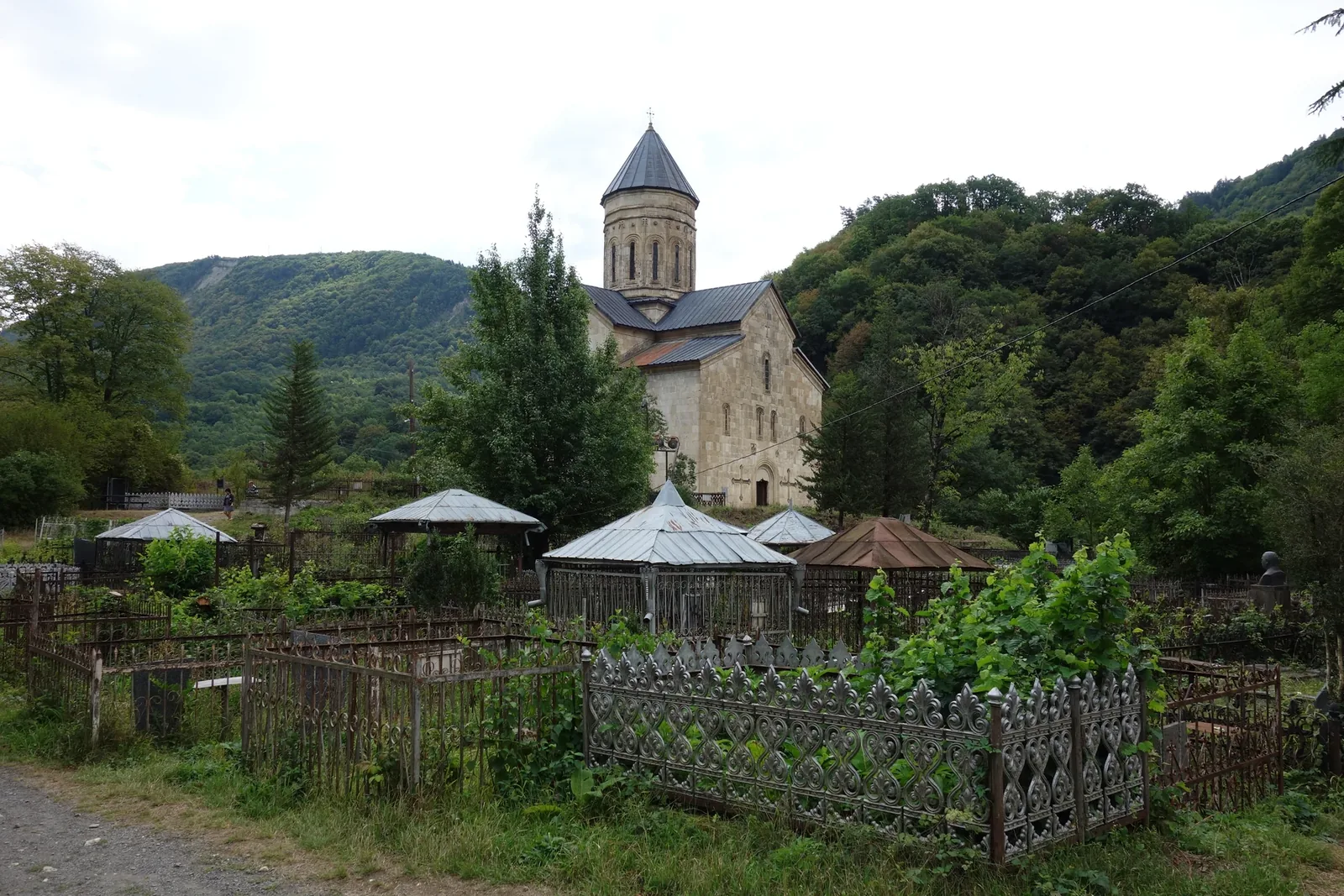
Rostom's end was bitter. In 1769 King Solomon I of Imereti defeated him and abolished the duchy. The Bolsheviks later closed and desecrated the church, and the 1991 earthquake damaged it slightly before a quick repair. Today it is a working church again, with the village cemetery in its yard.
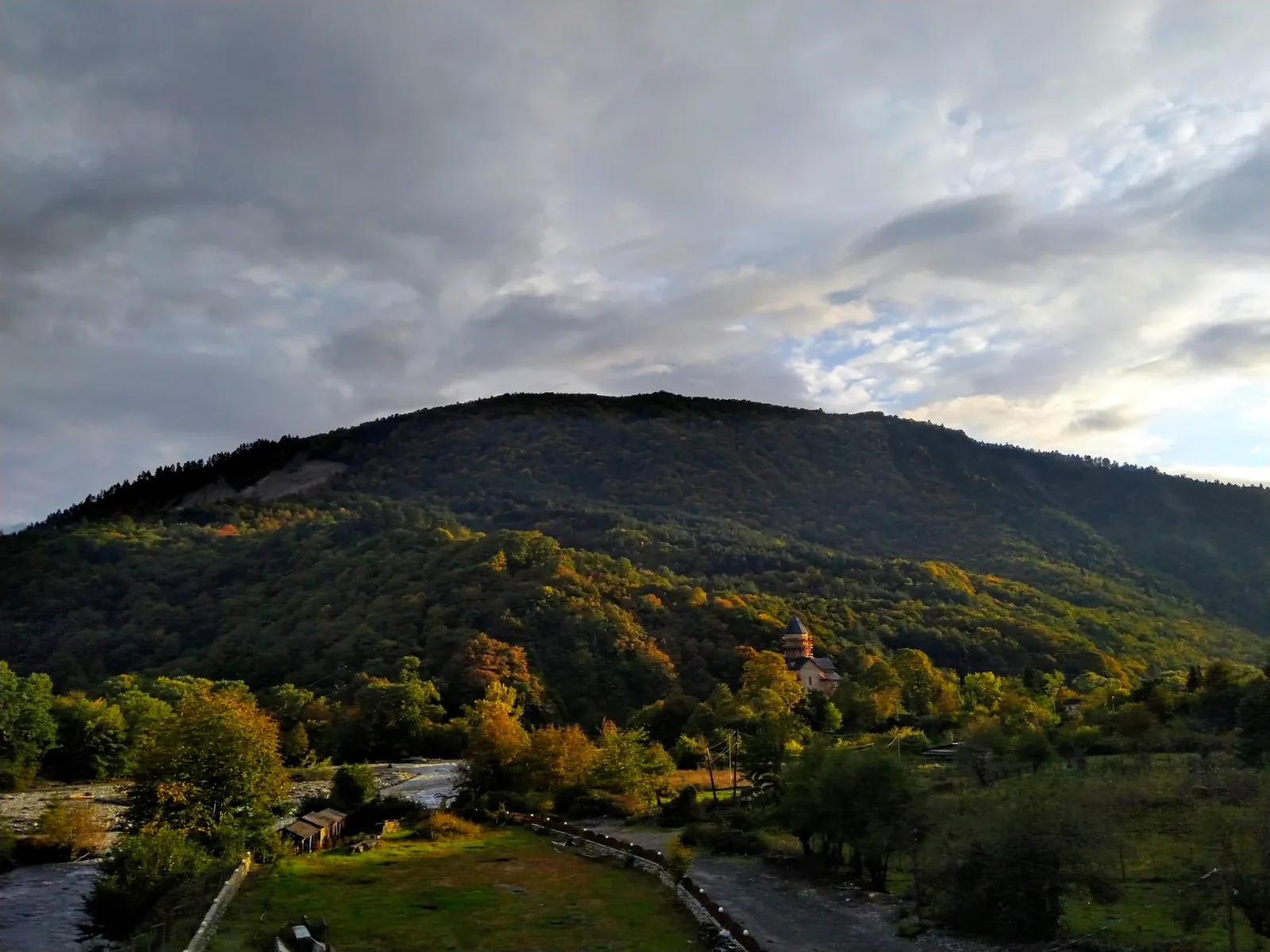
In 1939 the poet K. Chichinadze saw it 'gleaming white, like a swan settled in young wheat'. Look up from the road in low evening light and you will see what he meant.
Gallery
Practical advice
Half an hour to an hour is enough. You can drive up to the churchyard, where parking is free and rarely busy. The church is usually open; if not, ask in the village. Dress modestly — headscarves and skirts for women, no shorts for anyone — and remember that the yard is also the village cemetery. Walk right round the outside: the carving is the reason to come, and the builder's inscription is on the east front. There are no toilets or cafés; the nearest are in Ambrolauri, 7 km away. At 660 metres the site is open all year.
How to get there from Tbilisi
From Ambrolauri follow the Sh16 east towards Oni for about 7 km — ten minutes. From Tbilisi the whole run is about 319 km and five and a half hours: the S1 (E60) to Kutaisi, then the Sh17 through Tkibuli and over the Nakerala pass to Ambrolauri. The road is asphalt all the way and in good condition. The church stands on a steep rocky spur above the Rioni and shows itself well before you reach it; the turning up is short and paved. Fill up in Ambrolauri, as there is nothing before Oni. An economy car is entirely sufficient.
Click a marker for details. Coloured lines are ready-made road trips.
Nearby places
Ambrolauri
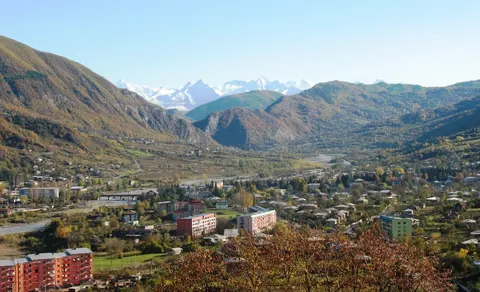
Georgia's smallest regional capital, astride the Rioni at 550 metres: a princely tower, a fine-arts museum, Racha's table and your last easy fuel.
Nikortsminda Cathedral
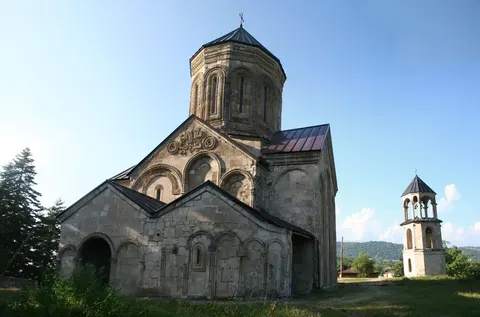
Bagrat III's cathedral of 1010–1014 in Racha, its facades carved with the Transfiguration, the Second Coming and a bestiary of real and fabulous beasts.
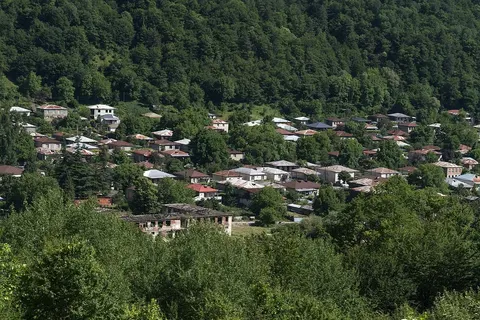
Oni
Racha's old ducal seat on the Rioni: a honey-stone synagogue, a museum of 14,000 objects and the last cash machine before the high valleys.
Part of these road trips
- Racha in Two Days — Churches, Lake and Mountain Villages 2 days · 330 km
- Racha Wine and Mountain Cuisine 4 days · 560 km
- Three Days of Racha-Lechkhumi Heritage 3 days · 470 km
Best car for this trip
Guides
- Driving in Georgia: What the Distances Actually Cost You Georgia is a small country with slow roads. Here is what 267 measured drives from Tbilisi say about how long y
Pickup locations
Car Rental in Kutaisi — 52 km (straight line)
Booking and enquiries
The easiest way to reach these places is by car — you pick the route and the stops.