
Ajameti Managed Reserve
A great lowland oak wood between Baghdati and Zestaponi, protected since 1935 and a refuge for the relict Imeretian oak and zelkova.
- Time needed
- 2 h
- From Tbilisi
- 205 km · 3:00
- Road
- Paved
- Car needed
- Economy class
- Season
- All year
- Entry
- free
Ajameti is the oak wood from which, in 1935, Georgia took the axe away.
Fifteen kilometres from Kutaisi, in the municipalities of Baghdati and Zestaponi, the reserve joins two blocks of lowland forest. The larger, the Ajameti oak wood proper, covers 3,742 hectares between the Kvirila and the Khanistskali, both left-bank tributaries of the Rioni. The Vartsikhe massif, 1,106 hectares on the left bank of the Khanistskali, was added in 1946 to save two survivors of the Tertiary: the Imeretian oak and the zelkova, both now on Georgia's Red List.
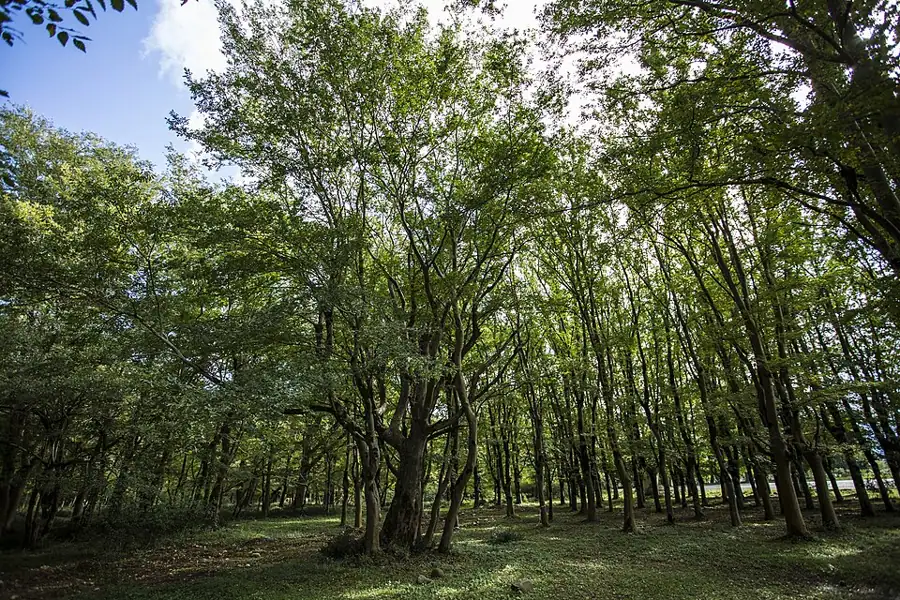
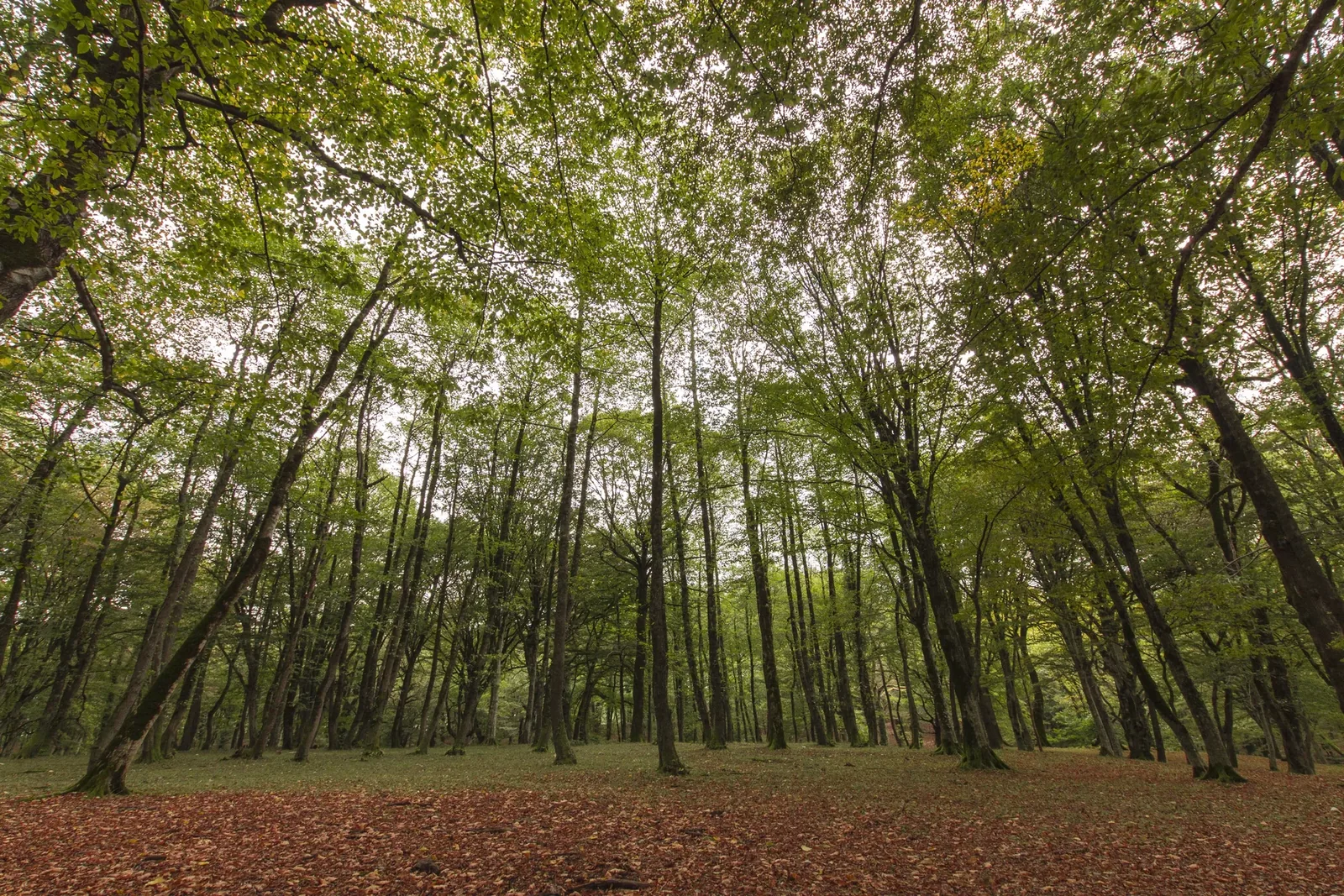
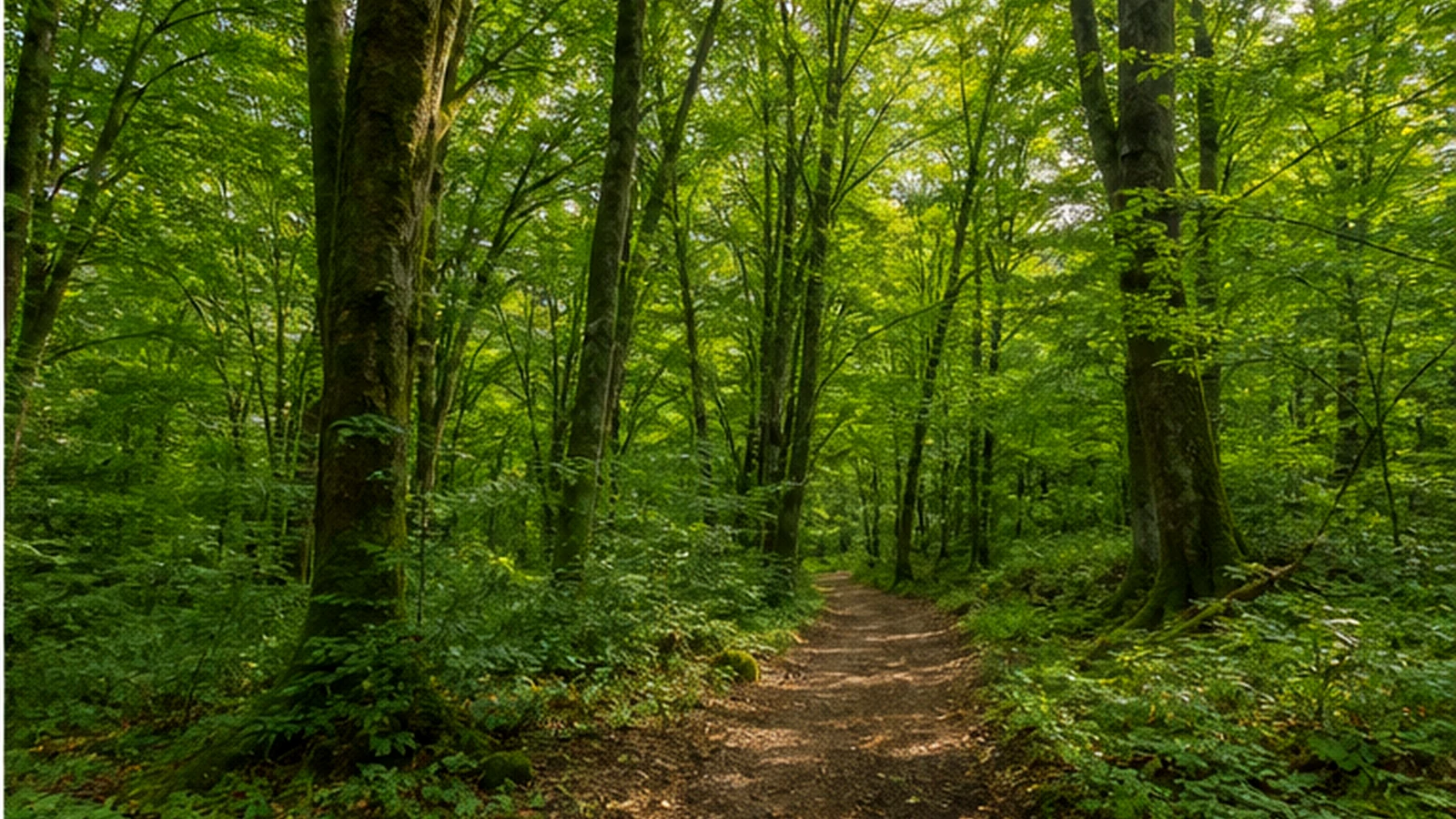
Oak rules almost everything here: some 4,723 hectares are oak forest, with only small patches of hornbeam. Some trees are 120 to 200 years old, their trunks grey and deeply furrowed, the canopy closing high overhead. Beneath them grow about sixty woody species, among them rhododendron, medlar, sweetbriar and hawthorn, while the rarities include Pastukhov's ivy, Colchic hazel, wych elm and wingnut.
The wood is quieter than it is empty. Roe deer, foxes, pine martens, badgers, squirrels and dormice live here. More than sixty bird species have been recorded, though only 21 nest in the oaks; the rest pass through or come for the winter. Grass snakes and dice snakes hunt along the damp margins, and noctule bats and the Caucasian otter are protected in their own right.
Do not come for a view. There is no waterfall, no cliff, no summit: only level ground, dappled light and the long patience of oaks. Ajameti performs nothing. It simply goes on being a forest, and in lowland Imereti that has become a rare thing.
Gallery
Practical advice
Two hours on foot is plenty. The ground is flat, but earth paths hold mud long after rain, so wear waterproof shoes. From late spring ticks and mosquitoes are out: long trousers, closed shoes and repellent. The canopy keeps it cool even in July. Bring water and food, and do not count on a café or shop at the forest edge. Stay on the paths: one oak looks much like the next, and landmarks are few. Early morning is best for birdsong and for roe deer at the edges of clearings.
How to get there from Tbilisi
From Tbilisi follow the S1 (E60) west to Zestaponi (about 186 km), then take the Sh54 towards Baghdati. The forest begins a few kilometres off this road; follow the Agency of Protected Areas signs along narrow local lanes. In all it is about 205 km and three hours. The road is asphalt all the way, narrowing and patched on the final stretch. Fill up in Zestaponi or Baghdati. Parking is informal, wherever there is room at the forest edge. An economy car is quite enough; after heavy rain, take the last lane slowly.
Click a marker for details. Coloured lines are ready-made road trips.
Nearby places
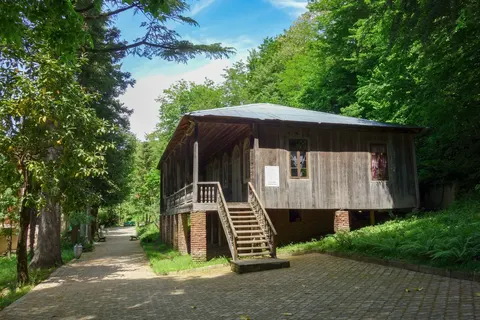
Baghdati — Mayakovsky House-Museum
The forester’s house in Baghdati where Vladimir Mayakovsky, the loudest poet of the Russian avant-garde, was born and learned Georgian.
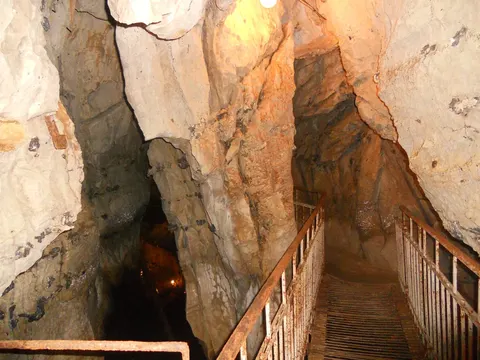
Navenakhevi Cave
A 250-metre karst cave near Terjola, four halls over two floors, ending in a seven-metre-thick column of stone that seals the way on.
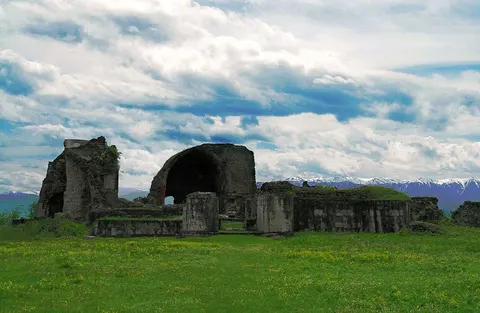
Geguti Palace
Brick ruins of George III's great palace on the Rioni plain south of Kutaisi, where in 1191 rebel nobles crowned a rival to Queen Tamar.
Best car for this trip
Guides
- Driving in Georgia: What the Distances Actually Cost You Georgia is a small country with slow roads. Here is what 267 measured drives from Tbilisi say about how long y
Pickup locations
Car Rental in Kutaisi — 18 km (straight line)