Zedazeni Monastery
A 6th-century monastery on a wooded ridge above Mtskheta, with the Mtkvari and Aragvi valleys spread out below.
- Time needed
- 1.5 h
- From Tbilisi
- 40 km · 1:00
- Road
- Unpaved sections
- Car needed
- Crossover / SUV
- Season
- May–October
- Entry
- free
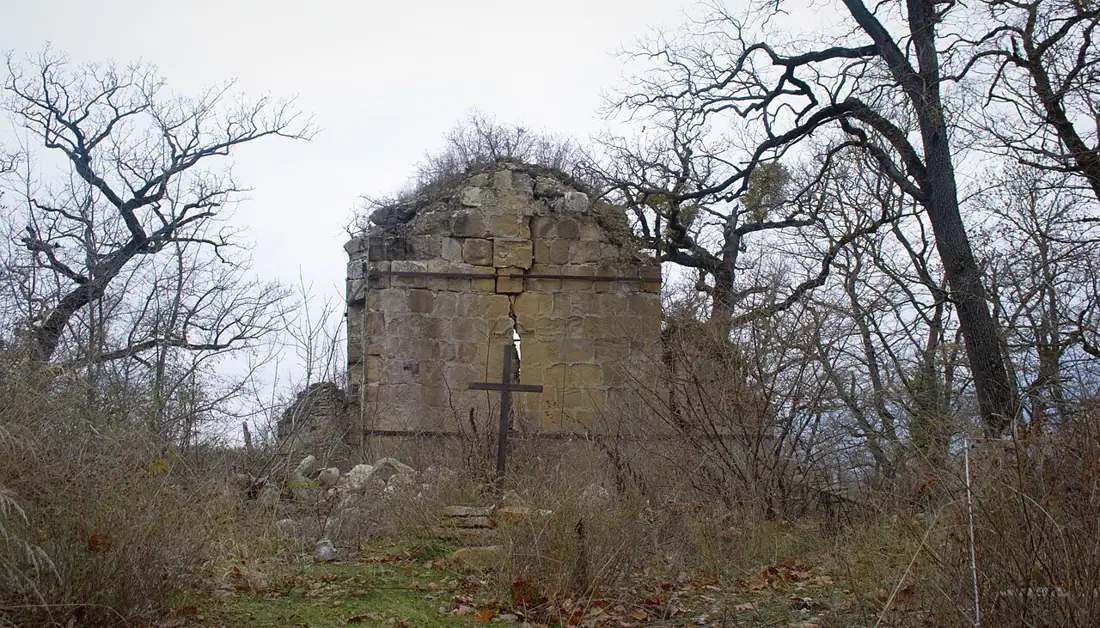
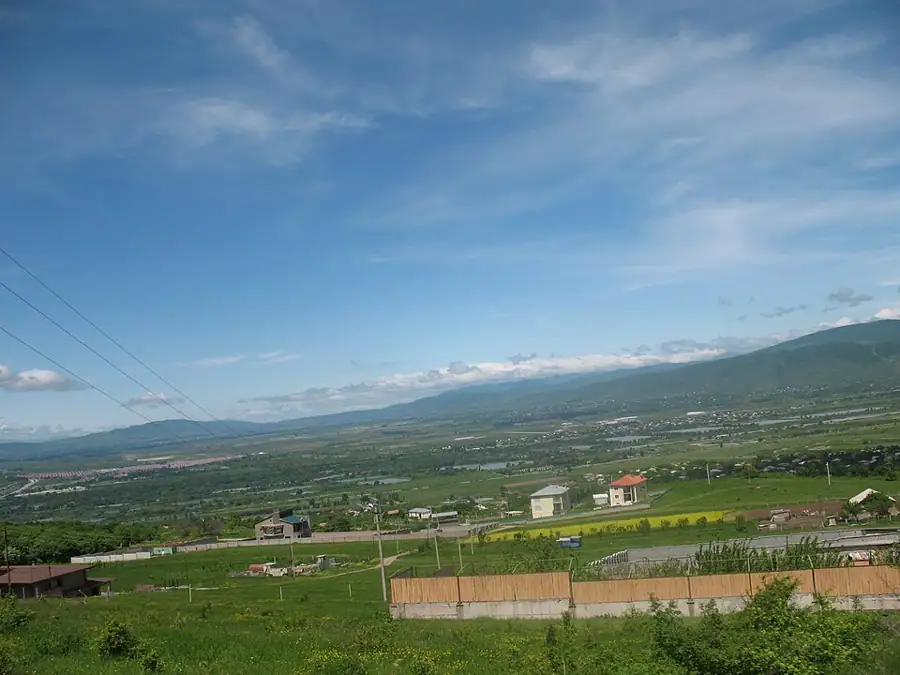
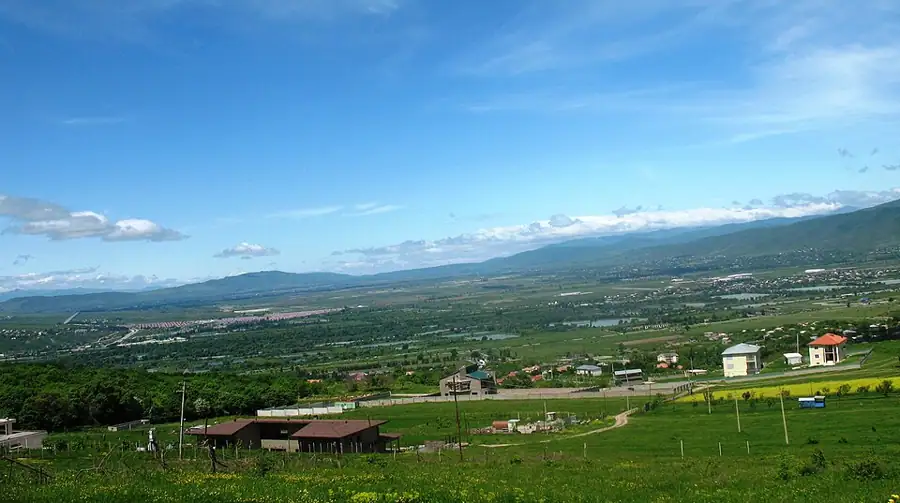
Zedazeni is a 6th-century monastery on a wooded ridge, and the climb is worth making partly for the view and partly for the silence. From the terrace in front of the church the Mtkvari and Aragvi valleys open below, Mtskheta is a pale smudge to the west, and on a clear morning the snow line of the Greater Caucasus stands along the northern horizon.
The name comes from Zaden, a pagan deity whose idol is said to have stood on this hill before Christianity. Around 545 John, leader of the Thirteen Assyrian Fathers, settled on exactly that spot — the choice was not accidental — and the place has been called Zedazeni, "above Zaden", ever since. John's disciples scattered across Kartli and Kakheti and founded the monasteries that still define this part of Georgia, Shio-Mgvime and Alaverdi among them.
The main church is an 8th-century three-nave basilica raised over John's grave, which lies under the floor at the east end. It is plain to the point of severity: undressed stone, small windows, almost no carving. Around it stand:
-
the remains of a curtain wall and a corner tower on the exposed side
-
a two-storey bell tower and the ruined cells of the monks
-
a spring below the church, associated with John and still used by pilgrims
The monastery was abandoned for long stretches and rebuilt several times; monks returned in the 1990s, so parts of the enclosure are now closed to visitors. The forest on the way up is beech and hornbeam and deserves a stop of its own in October, when the whole ridge turns copper. Bring binoculars: on a clear day the view north picks out the Gudauri slopes and, beyond them, the snow of the main range, while the Aragvi threads silver through the haze below.
Practical advice
Ninety minutes on site is ample, but allow extra for the drive — the last five kilometres are slow. Shoulders and knees covered; wraps and scarves are kept at the gate. There is no shop, no café and no reliable toilet, so bring water. The terrace has no railing and the drop is real, so keep children close. On the monastery's feast day in May the narrow road fills with parked cars; on almost any other day you may have the place to yourself. Mist can close the view completely, which is a good argument for going in the morning.
How to get there from Tbilisi
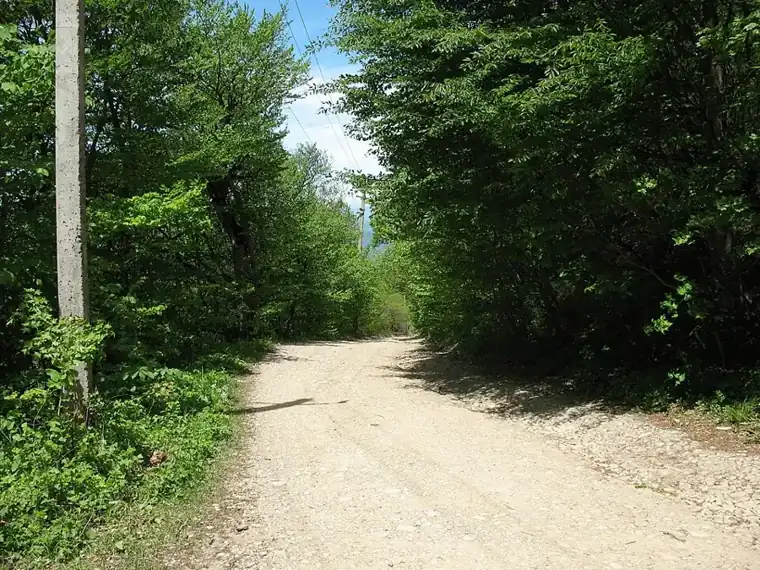
Leave Tbilisi northwards on the Military Highway or the E60 and turn east towards Saguramo before Mtskheta, then follow the signs up to Zedazeni — about 40 km, an hour including the climb. The valley road is asphalt; the final five kilometres are a steep, broken mix of old concrete and gravel with tight hairpins and no barriers. A normal car gets up in dry weather if you are patient, but an SUV is the sensible choice and after rain or snow it is the only one. Park at the top by the wall. The last fuel is in Mtskheta or Saguramo.
Click a marker for details. Coloured lines are ready-made road trips.
Nearby places
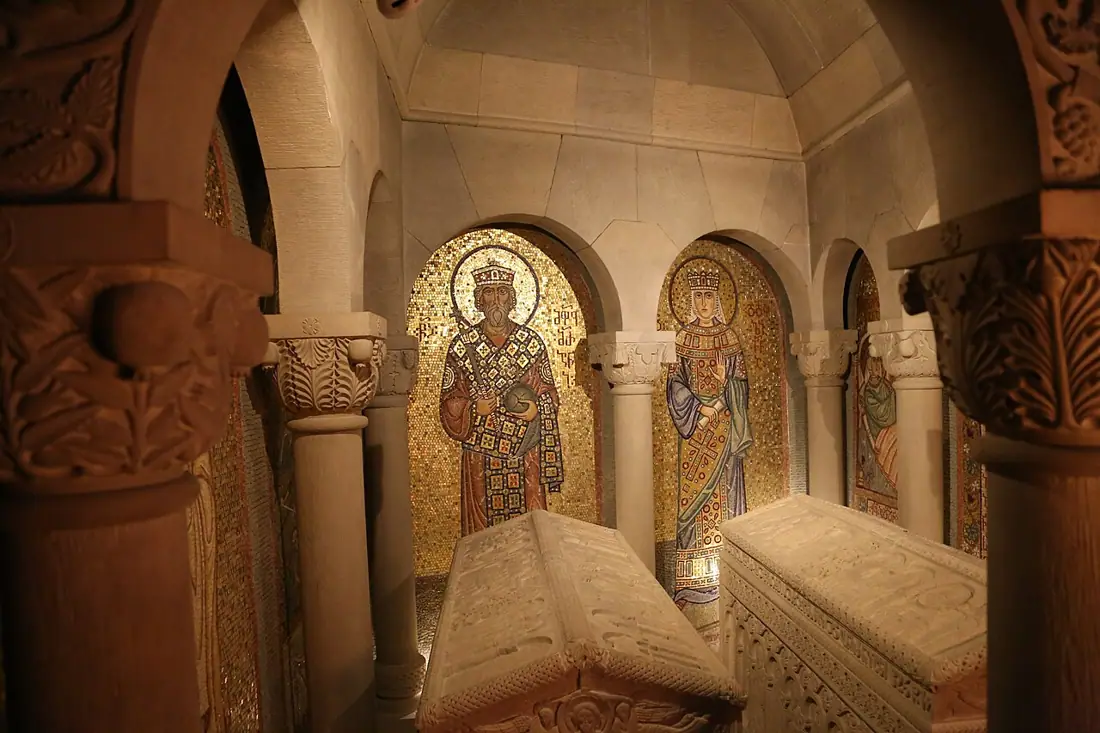 Monastery
Samtavro Monastery
The quieter half of Mtskheta's UNESCO ensemble — a working nunnery holding the graves of Georgia's first Christian king and queen.
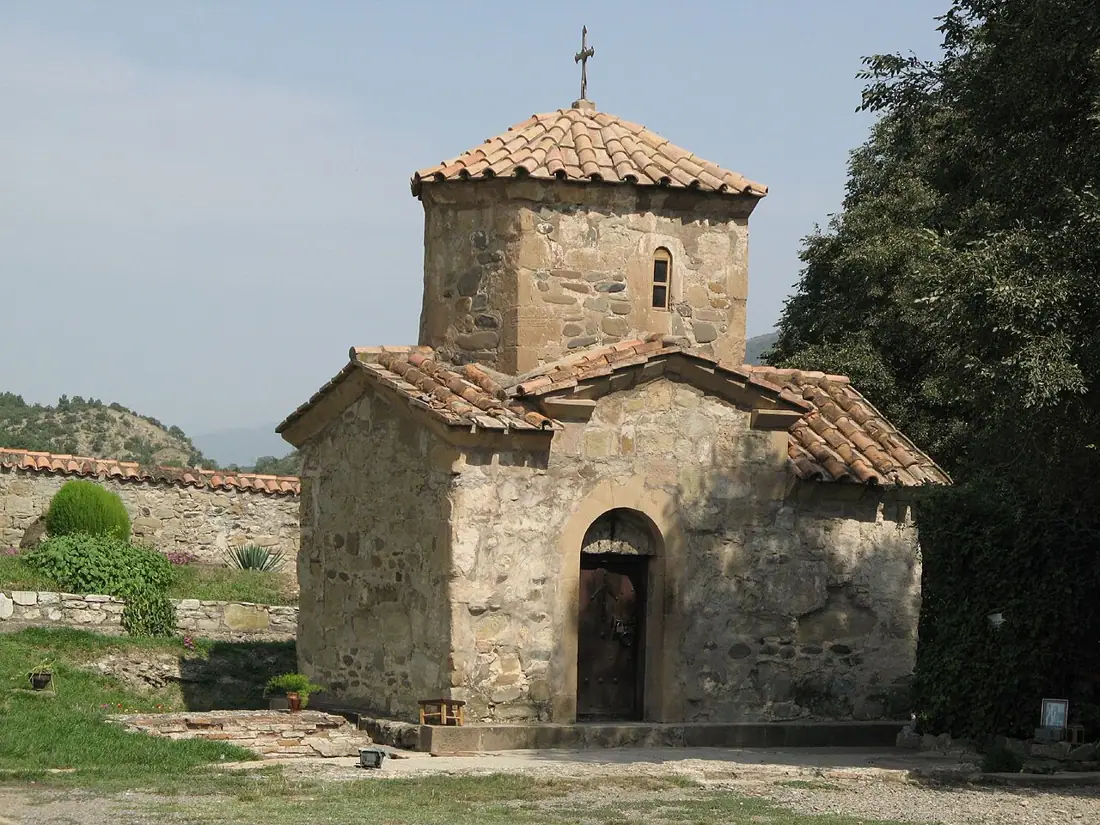 Monastery
Svetitskhoveli Cathedral
The 11th-century cathedral of Mtskheta, said to hold the robe of Christ — the mother church of Georgian Orthodoxy.
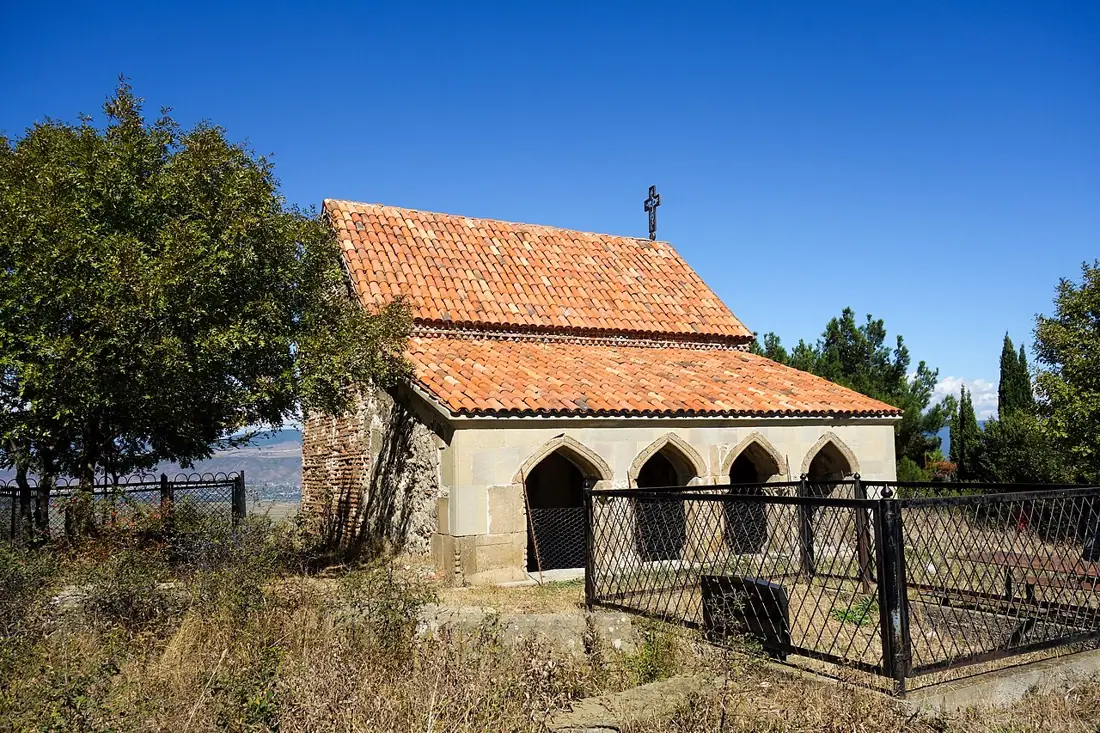 Monastery
Shio-Mgvime Monastery
A 6th-century monastery in a dry limestone canyon, built around the cave where the Assyrian father Shio lived and died.
Booking and enquiries
This site is informational — there is no online payment. Call or email us to book.