Zarzma Monastery
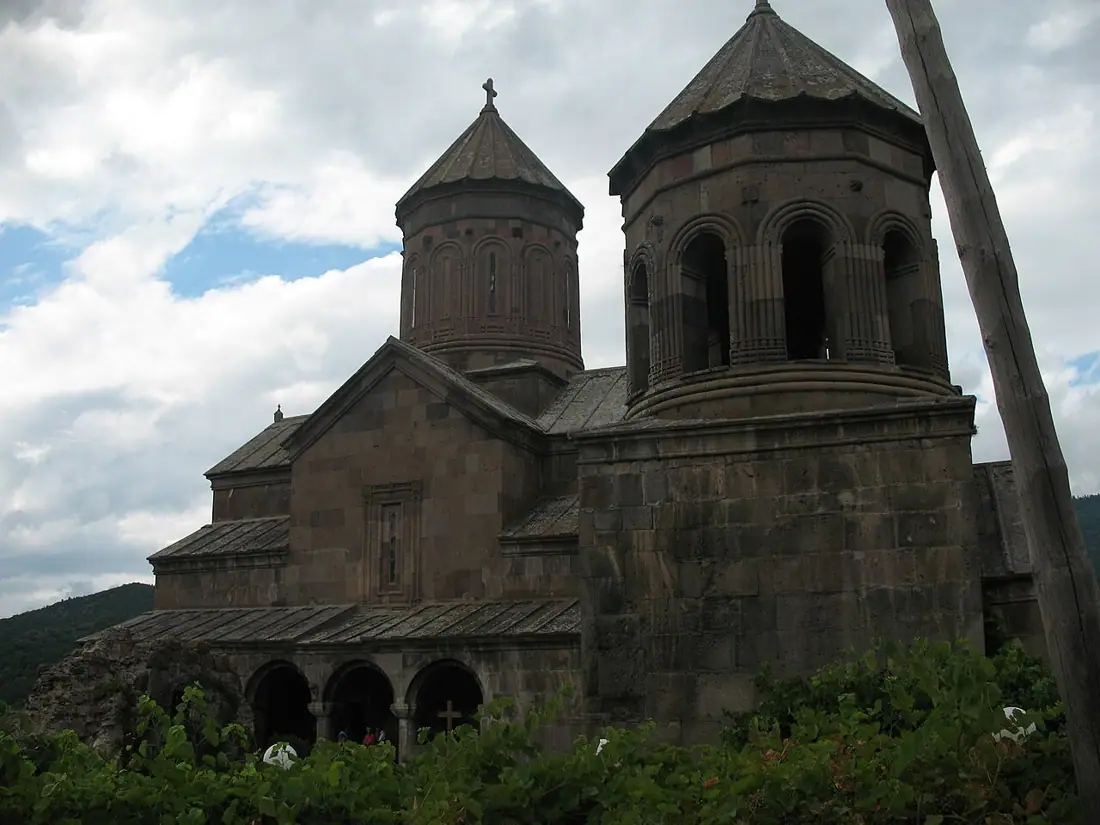
A 14th-century church in the Kvabliani valley above Adigeni, with Jaqeli family portraits and an early bell tower.
- Time needed
- 1.5 h
- From Tbilisi
- 235 km · 3:55
- Road
- Mostly paved
- Car needed
- Crossover / SUV
- Season
- All year
- Entry
- free
Zarzma is the principal monastery of the western corner of Samtskhe, above Adigeni in the Kvabliani valley, at about 1,250 metres on the line where forest gives way to hay meadow.
Tradition places its foundation in the 9th century by St Serapion of Zarzma. His Life was written in the 10th century by Basil of Zarzma, and the text is a significant work of Georgian hagiography: it is unusual to know a monastery's founding story from a source so close to the event.
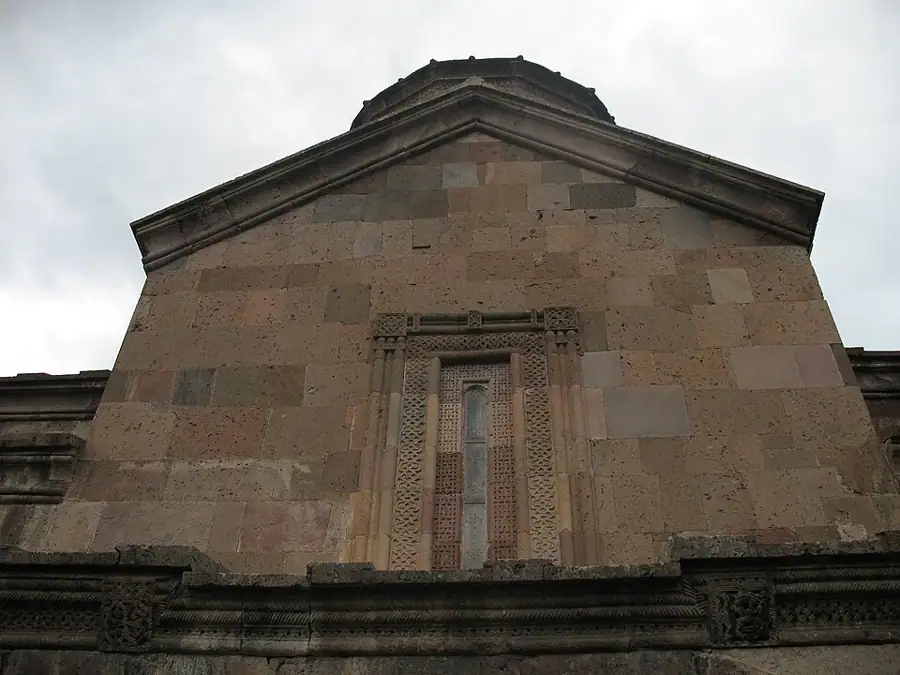
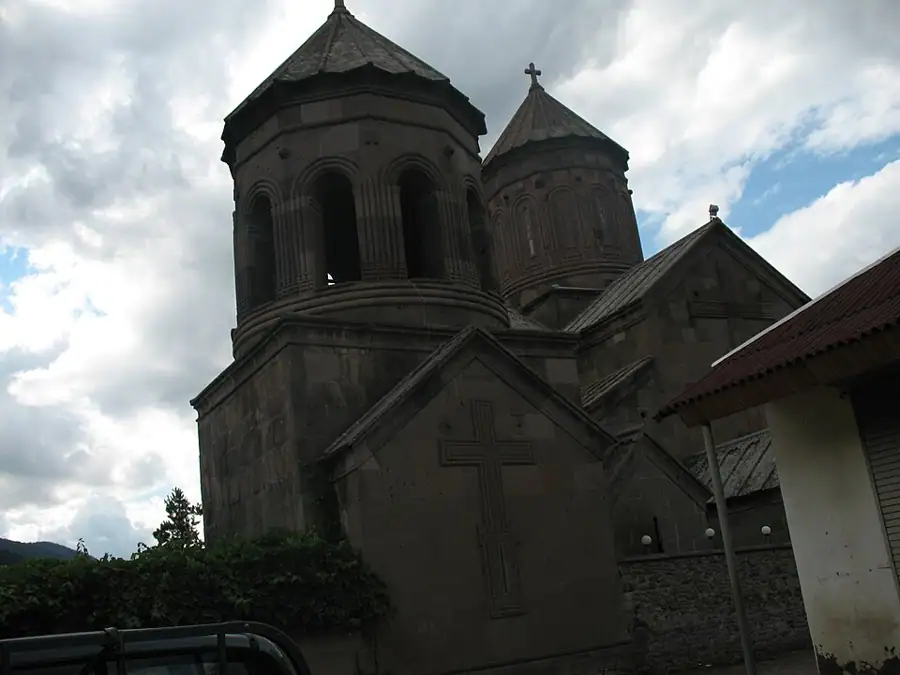
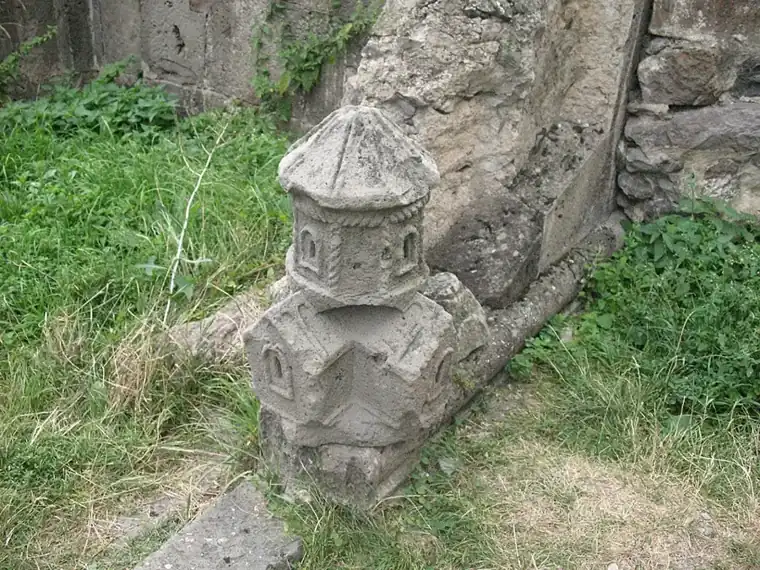
The church of the Transfiguration standing today dates from the early 14th century and was built under the patronage of Beka Jaqeli, atabeg of Samtskhe. It is a domed cross-plan building with a clean, almost severe stone exterior. Inside are wall paintings of the 14th to 16th centuries, among them portraits of the Jaqeli family, the people who governed this province for more than two hundred years.
In the yard stands a separate bell tower, one of the earliest surviving in Georgia, dating from the 14th century and carrying rich carving around its openings. Many visitors remember it better than the church itself.
A Transfiguration icon of the late 9th century that came from Zarzma is now in the Georgian National Museum, among the oldest surviving works of Georgian icon painting.
The look of the valley today goes back to one specific date. In 1944 the Muslim Meskhetians were deported from the Kvabliani valley and dozens of villages emptied in a single night; the district was later resettled with families from Imereti, Racha and Adjara. That is why old stone houses and much newer village architecture stand side by side along the road.
The monastery emptied during the Ottoman centuries and was only re-established around the turn of the 20th century; it is active again today. The place is very quiet. Almost none of the traffic that reaches Akhaltsikhe comes this far, and even at weekends you are often alone in the yard.
Practical advice
An hour and a half is comfortable. The yard is grassy and slopes steeply, and it gets slippery after rain, so shoes with grip are better than smooth soles. The interior is lit by daylight only, so pick a clear middle of the day if you want to see the frescoes. Dress rules apply: headscarf and long skirt for women, long trousers for men, with wraps usually by the door. Buy food and water in Adigeni, as there is nothing at the monastery. The toilet is basic.
How to get there from Tbilisi
Drive from Tbilisi via Borjomi and Akhaltsikhe — the E60 to Khashuri, then south — 205 km to Akhaltsikhe, and from there roughly another thirty kilometres west towards Adigeni. The total is 235 km, close to four hours. The Akhaltsikhe-Adigeni road is asphalt, but the last few kilometres up to the monastery are narrow gravel with potholes in places. In dry weather an ordinary car will manage; after rain or snow, ground clearance matters. Refuel in Akhaltsikhe.
Click a marker for details. Coloured lines are ready-made road trips.
Nearby places
 Museum
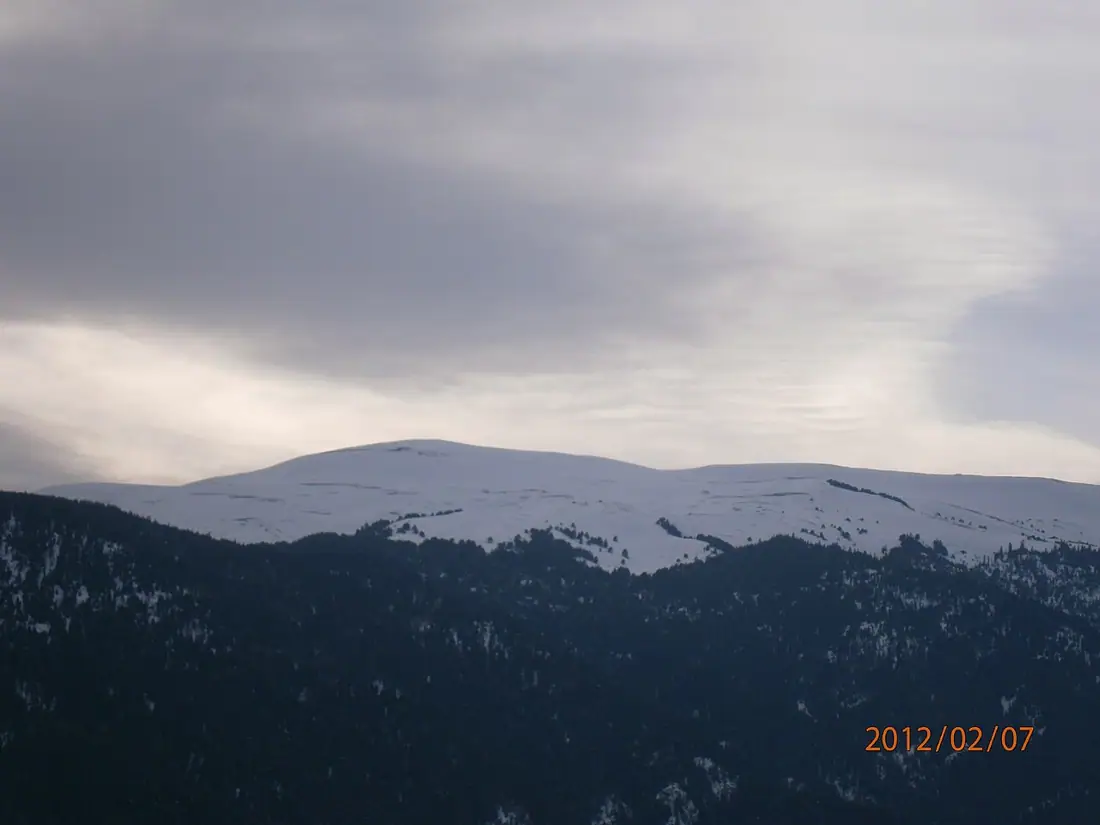
Abastumani Astrophysical Observatory
The first mountain observatory in the region, on Mount Kanobili above the old lung-cure resort of Abastumani.
 Fortress
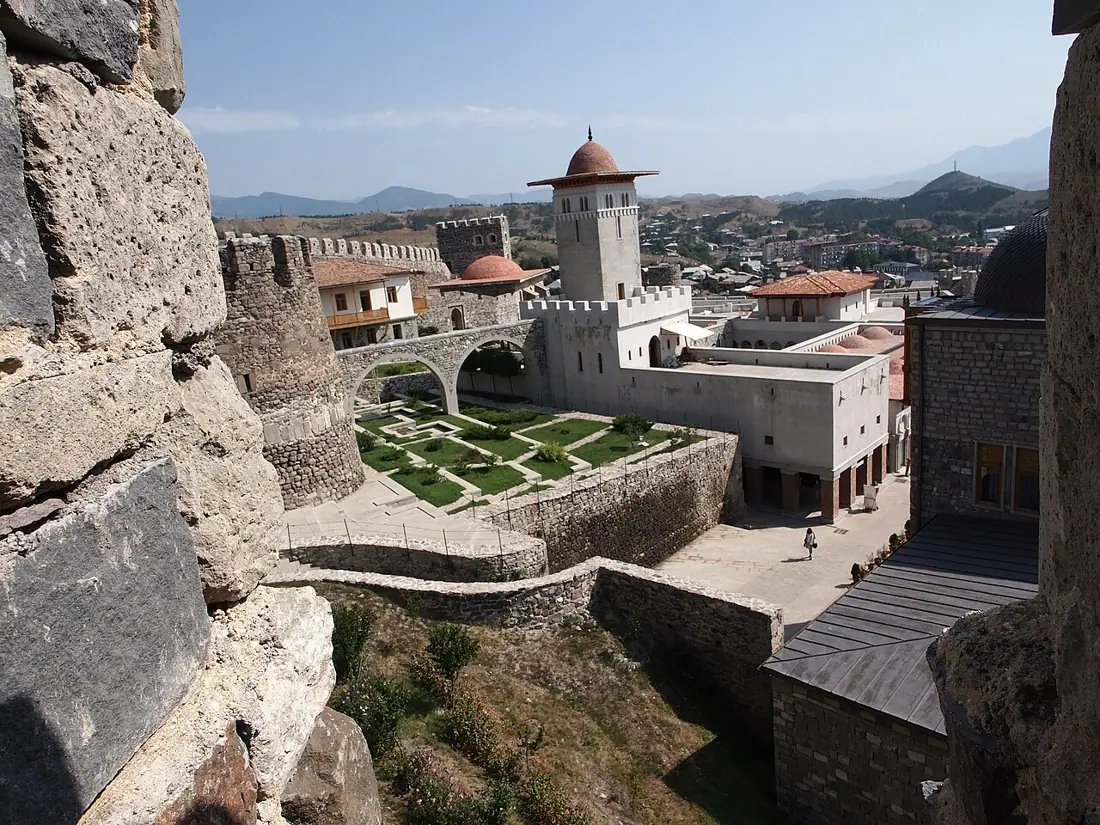
Rabati Castle (Akhaltsikhe)
A restored fortress-town in the heart of Akhaltsikhe where a mosque, a church and a synagogue share one courtyard.
 Monastery
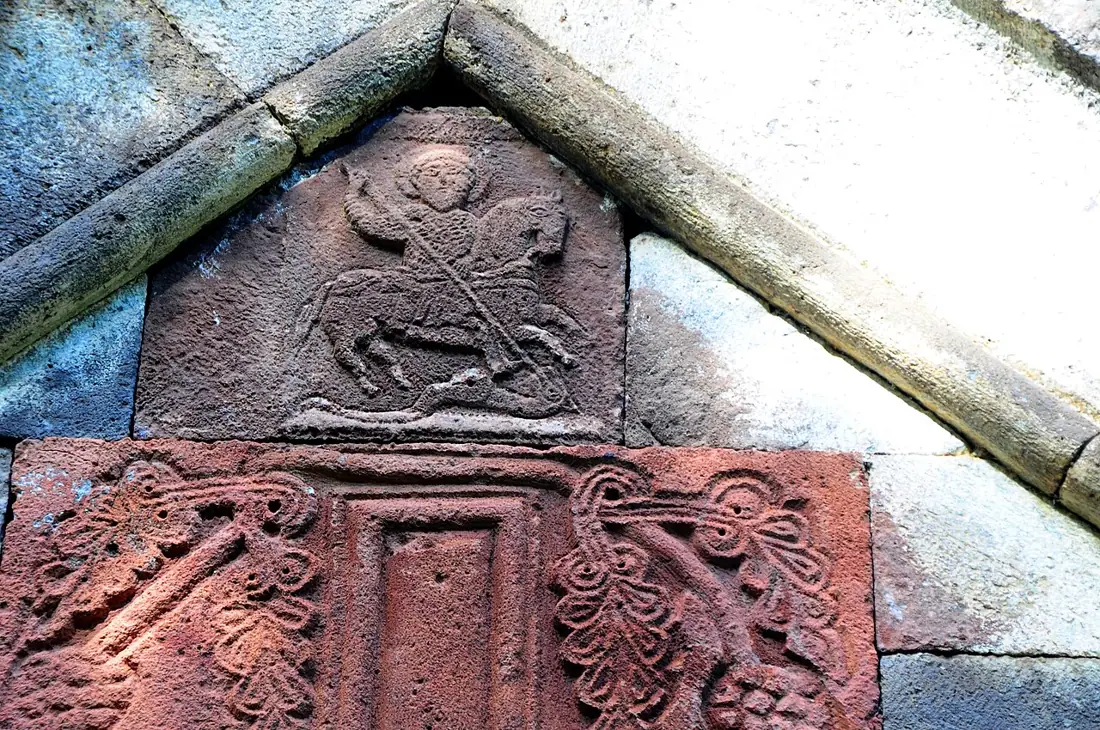
Sapara Monastery
An active monastery hidden on a cliff terrace near Akhaltsikhe, with 13th-century frescoes.
 Town
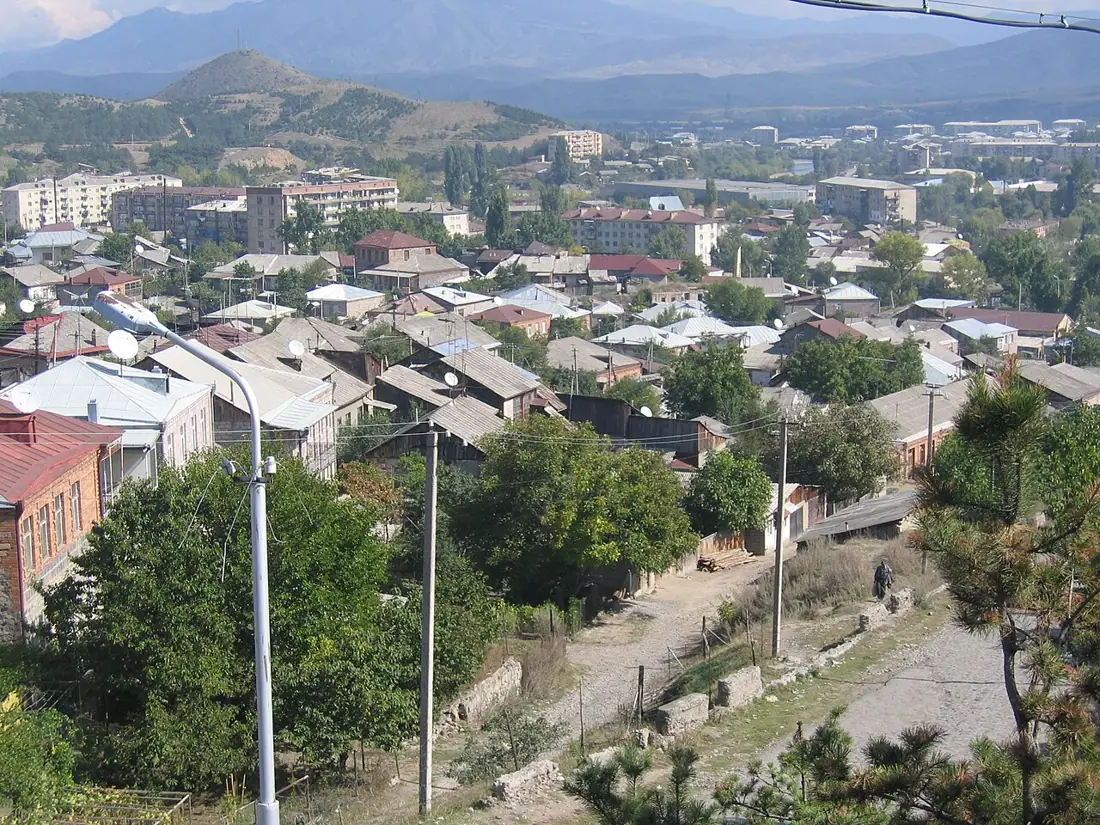
TownThe Jewish quarter and synagogues of Akhaltsikhe
Two surviving 19th-century synagogues and the streets of the old merchant quarter below the Rabati hill.
Booking and enquiries
This site is informational — there is no online payment. Call or email us to book.