The Jewish quarter and synagogues of Akhaltsikhe
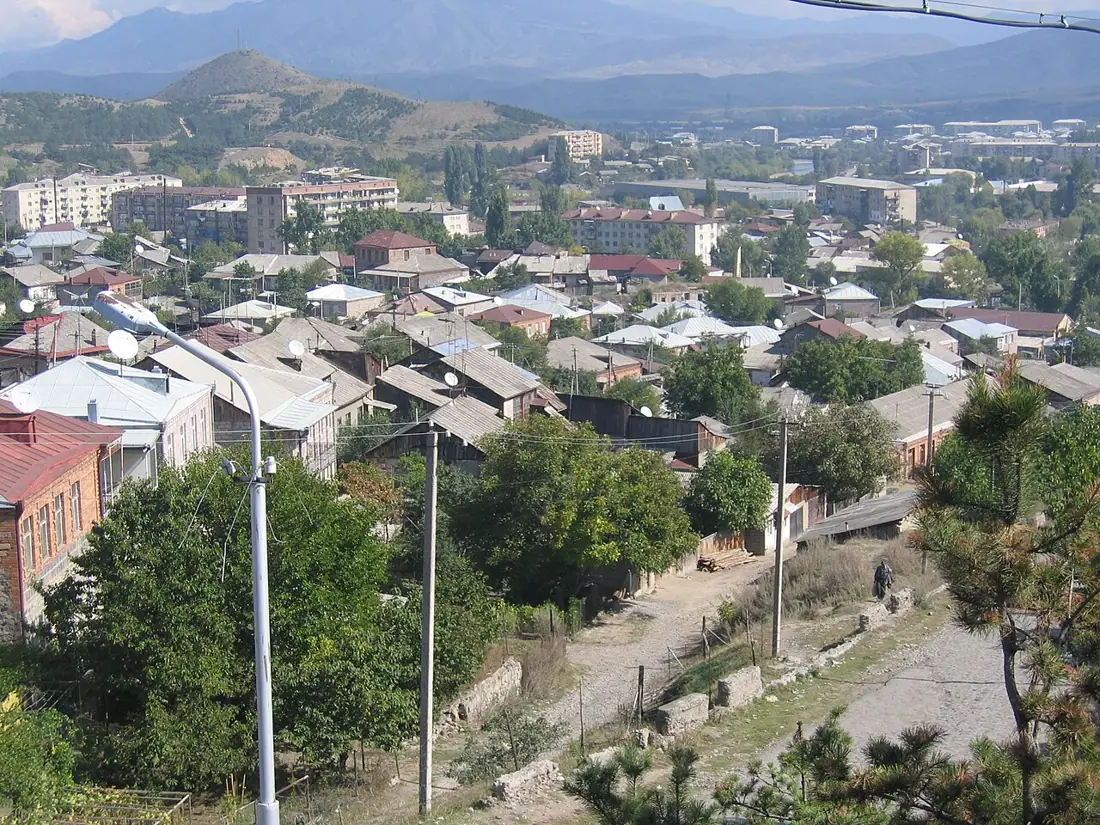
Two surviving 19th-century synagogues and the streets of the old merchant quarter below the Rabati hill.
- Time needed
- 1 h
- From Tbilisi
- 205 km · 3:20
- Road
- Paved
- Car needed
- Economy class
- Season
- All year
- Entry
- free
Akhaltsikhe held one of the largest Jewish communities in Georgia. The town sat on the Ottoman frontier and lived by trade; Jewish merchants were established here from at least the 18th century, and after 1828, when Akhaltsikhe passed to the Russian empire, the community grew further.
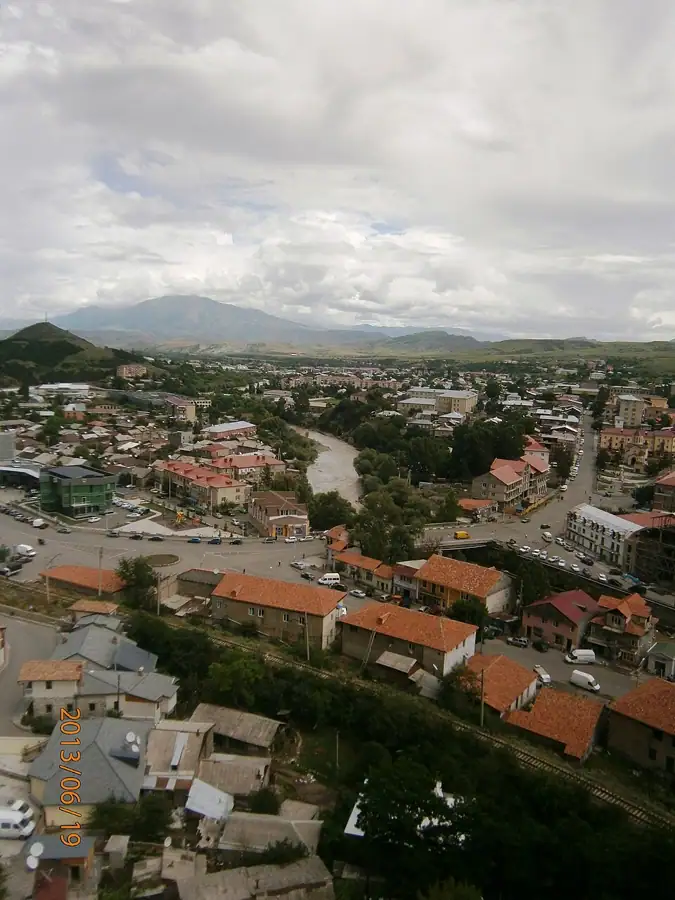
The old quarter lies below the Rabati hill on the left bank of the Potskhovi: narrow streets, low houses of stone and brick with wooden balconies, courtyards that run into one another. Two synagogues stand a few dozen metres apart — the Great Synagogue, built in 1863, and a second of 1902. They are among the oldest surviving synagogue buildings in the country: thick-walled stone halls with arched windows, painted ceilings and carved wooden Torah arks inside.
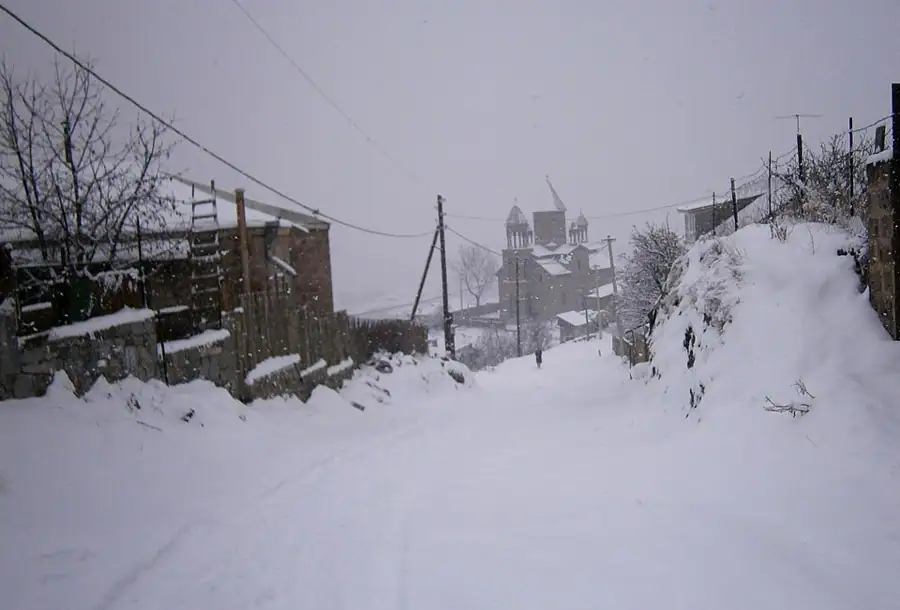
The quarter was never exclusively Jewish. After the war of 1828-29 tens of thousands of Armenian refugees from Erzurum were resettled in Akhaltsikhe, permanently changing the town's demography, and Georgian, Armenian and Jewish neighbours lived along the same streets. That is why a synagogue, an Armenian church and a Georgian church all stand within a few blocks of each other.
The community began to leave in the 1970s and had almost entirely emigrated to Israel by the end of the 1990s. Only a handful of Jewish families remain in the town today. One synagogue is looked after and opens from time to time; the other is usually locked, and getting in depends on finding a neighbour or a caretaker with the key.
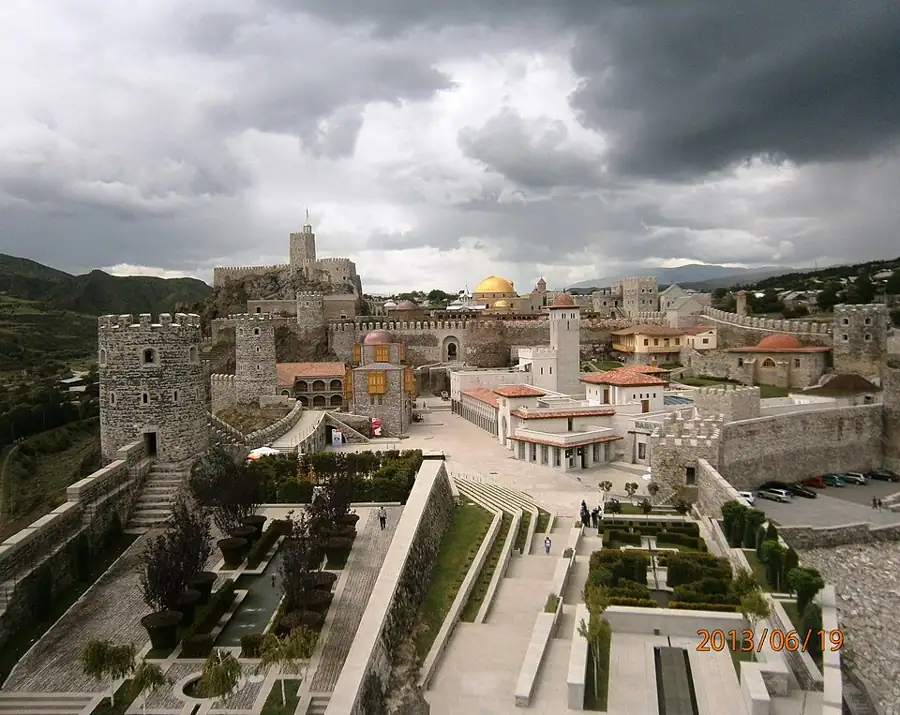
One thing is worth stating plainly. The restored Rabati castle also contains a building presented as a synagogue, but that is a modern reconstruction and part of the tourist complex. The real historical synagogues are down the hill on an ordinary residential street, with nothing to signpost them. That quietness, and the complete absence of presentation, is exactly what makes the walk worth taking.
Practical advice
An hour on foot covers the quarter. The synagogues are protected monuments rather than museums, so opening is not guaranteed; if the door is locked, ask at the neighbouring houses, since the key is often close by. Men need a head covering to go inside, and one is usually left by the door. The streets are narrow and parking is awkward, so it is easier to leave the car at the Rabati car park and walk down. Cafes and toilets are on the main street.
How to get there from Tbilisi
From Tbilisi take the E60 to Khashuri, then head south through Borjomi and Atskuri to Akhaltsikhe — 205 km, about three hours twenty. The road is asphalt the whole way and in good condition. In town follow the signs for Rabati castle; the Jewish quarter lies at the north-western foot of the castle hill, along the Potskhovi river. Leave the car in the large Rabati car park. Fuel is available in Borjomi and Akhaltsikhe. An economy car is entirely sufficient.
Click a marker for details. Coloured lines are ready-made road trips.
Nearby places
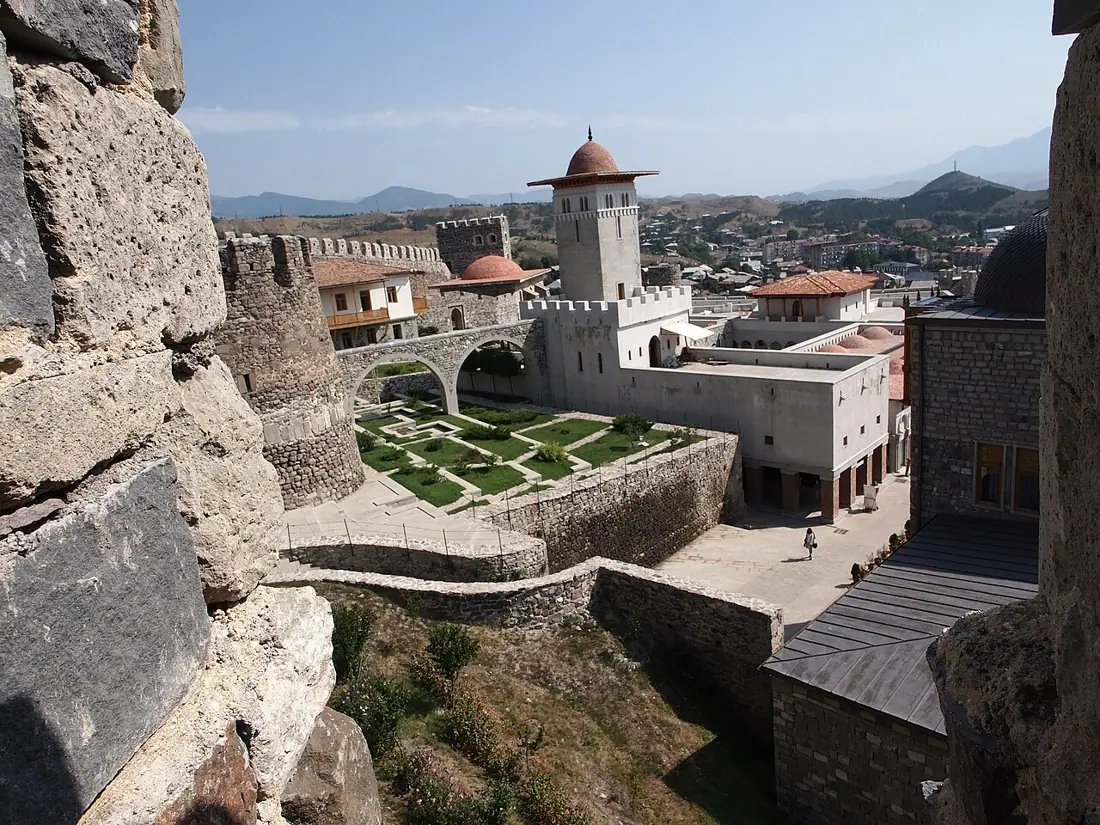 Fortress
Rabati Castle (Akhaltsikhe)
A restored fortress-town in the heart of Akhaltsikhe where a mosque, a church and a synagogue share one courtyard.
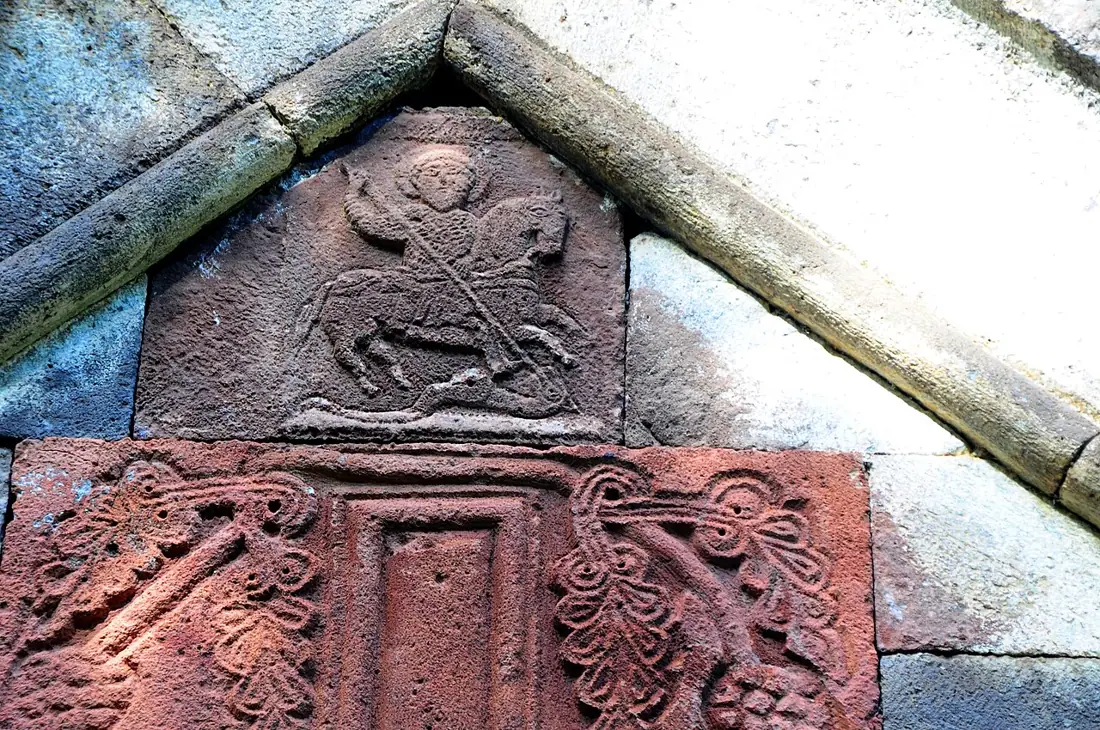 Monastery
Sapara Monastery
An active monastery hidden on a cliff terrace near Akhaltsikhe, with 13th-century frescoes.
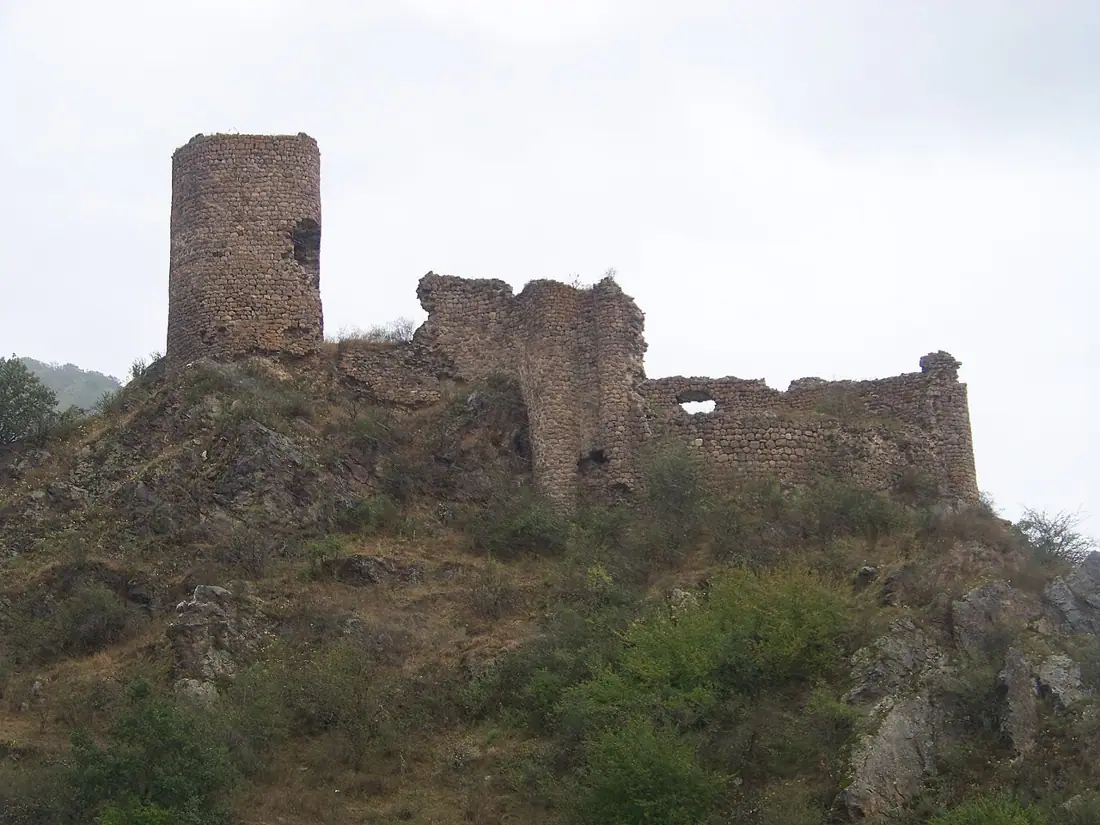 Fortress
Atskuri Fortress
An unrestored fortress on a rock at the narrowest point of the Mtkvari gorge, between Borjomi and Akhaltsikhe.
 Museum
Abastumani Astrophysical Observatory
The first mountain observatory in the region, on Mount Kanobili above the old lung-cure resort of Abastumani.
Booking and enquiries
This site is informational — there is no online payment. Call or email us to book.