Urbnisi Cathedral
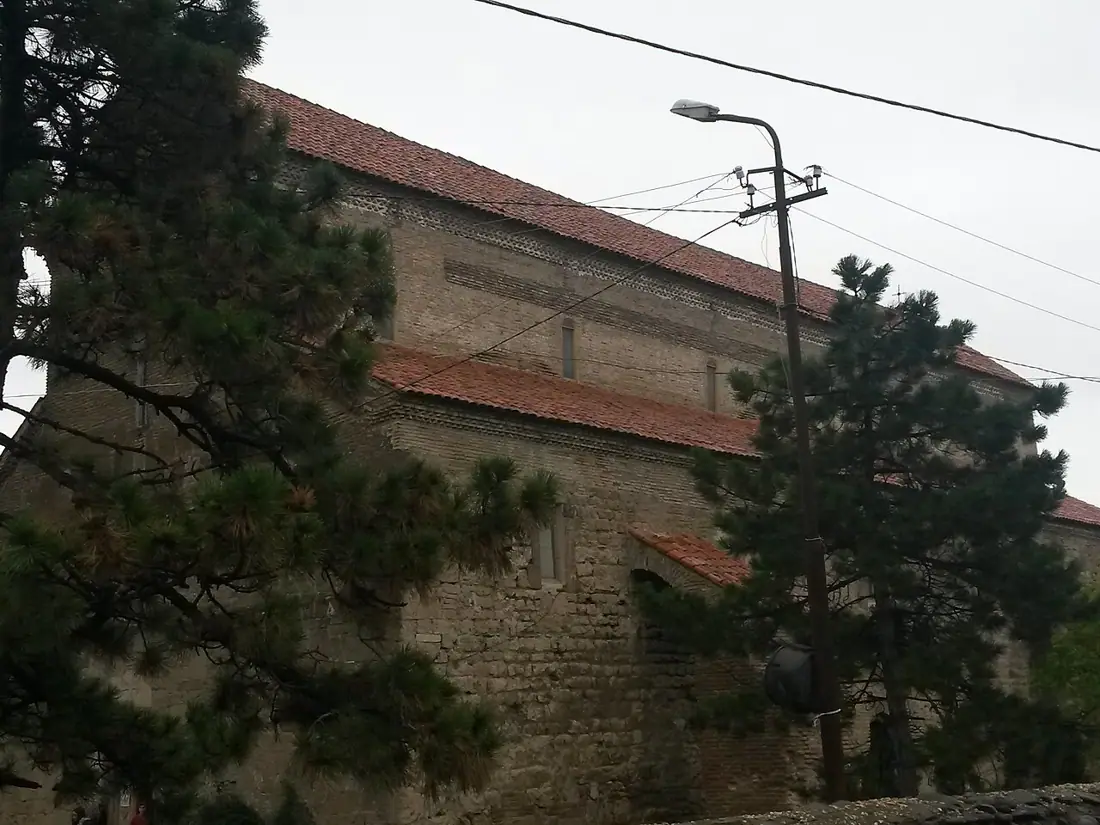
A three-aisled basilica of the 5th and 6th centuries in Kareli municipality, among the oldest surviving churches in Georgia.
- Time needed
- 1 h
- From Tbilisi
- 96 km · 1:20
- Road
- Paved
- Car needed
- Economy class
- Season
- All year
- Entry
- free
Urbnisi is one of those places where Georgian history begins much deeper than the church. The village sits on the left bank of the Mtkvari, and the Georgian chronicles name it among the oldest towns of Kartli. Archaeologists have uncovered a Hellenistic-period settlement here, with a street grid and craft quarters. The town was destroyed repeatedly — by the Arabs, later by Timur — and never rebuilt at its old scale.
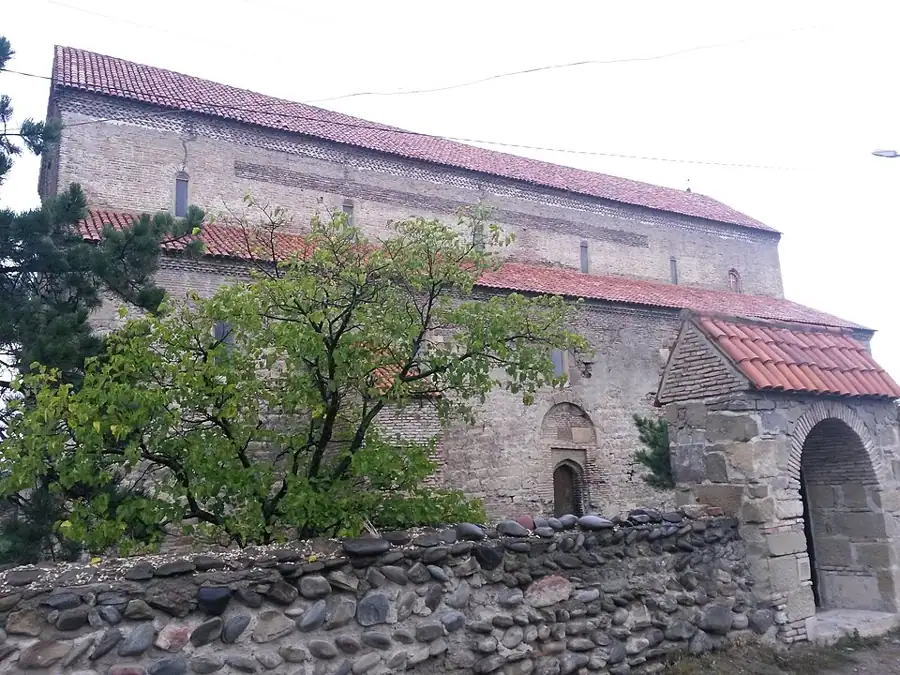
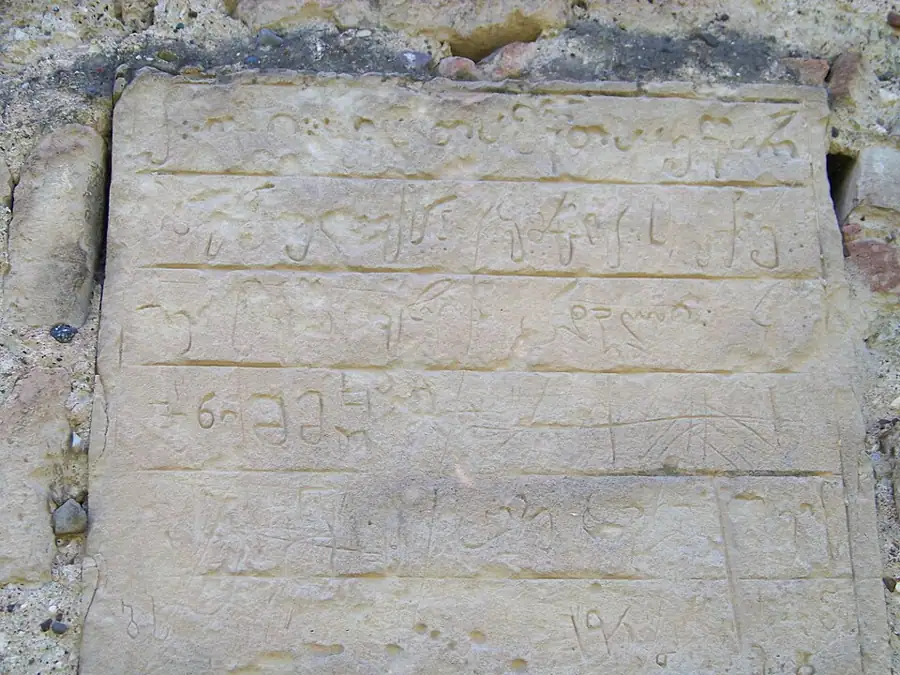
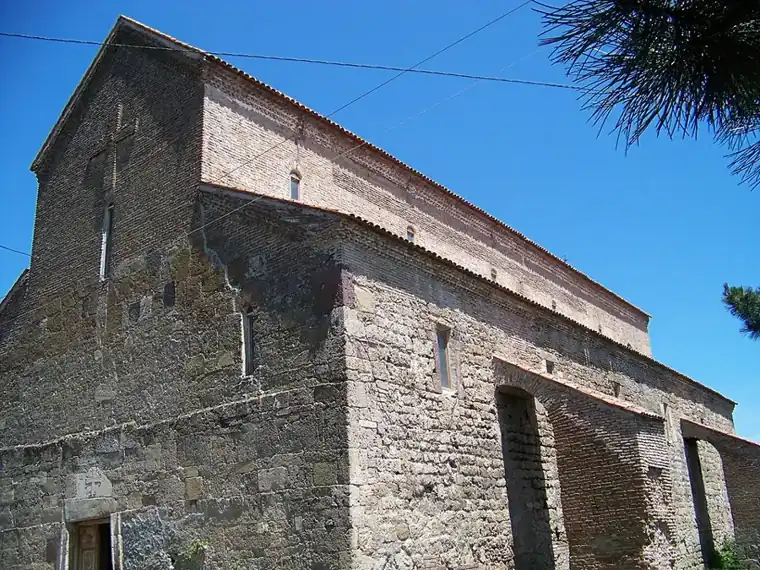
The cathedral, known as the Sioni, is a three-aisled basilica whose core belongs to the 5th and 6th centuries. That puts it in the same generation as Bolnisi Sioni: the first surviving layer of Georgian Christian architecture. The plan is plain — three aisles, two rows of piers, an apse at the east. Substantial rebuilding in the 10th and 17th centuries means the walls now mix stone and brick from different eras, and that mixture is legible and interesting in itself.
A wall and a bell tower enclose the church. The yard is large and quiet, with old trees. Inside, the space is low and wide, an entirely different sensation from the vertical pull of later domed churches, and closer to the way a late antique congregation would have experienced a building.
In 1103 David the Builder convened a church council here and in neighbouring Ruisi. It removed corrupt bishops, brought the church under royal authority and cleared the political ground for the unification of Georgia. That places Urbnisi on the medieval political map as much as the architectural one.
Gallery
Practical advice
An hour is enough, and it pairs naturally with Ruisi a few kilometres away; both fit comfortably into one outing. The church is in use, dress rules apply and scarves are kept by the door. The yard is flat and easy for older visitors. Toilets are basic. The village has a small shop but no cafe, so eat in Gori or Kareli. In summer the trees in the yard give good shade; in winter the interior is genuinely cold.
How to get there from Tbilisi
Take the E60 west from Tbilisi towards Gori, continue past Gori towards Kareli and turn off at the sign for Urbnisi — 96 km in all, roughly an hour and twenty minutes. The main road is fast dual carriageway; the last five kilometres are narrow village asphalt with potholes on the bends. Refuel in Gori or Kareli. There is a gravel area in front of the enclosure where you can leave the car for nothing. An economy car is sufficient all year round.
Click a marker for details. Coloured lines are ready-made road trips.
Nearby places
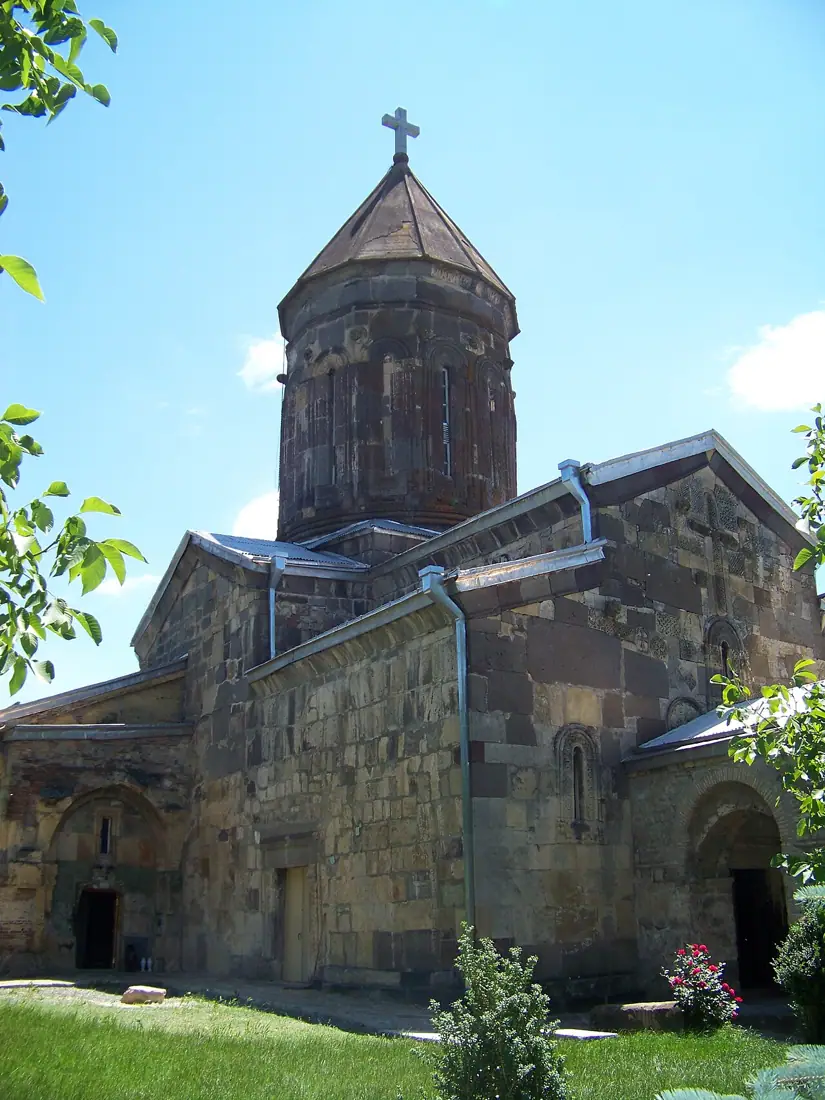 Monastery
Ruisi Cathedral
A large domed cathedral in Kareli municipality, site of the most consequential church council in Georgian history, held in 1103.
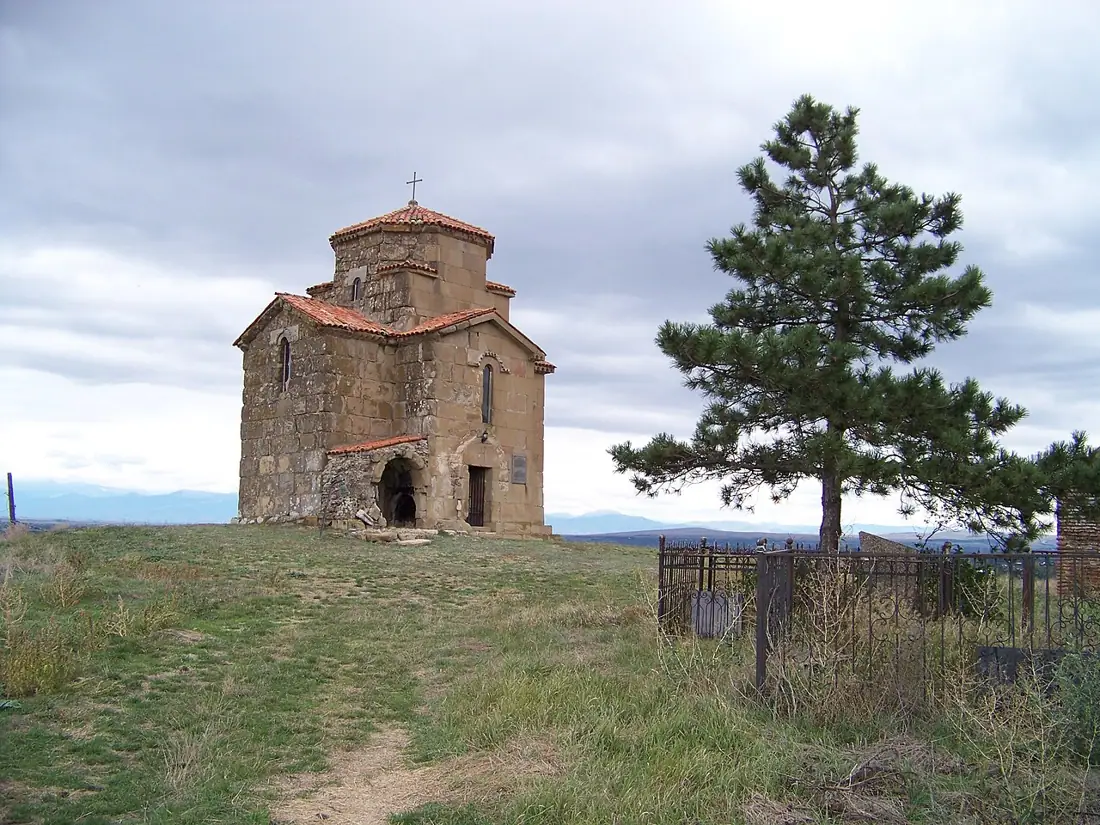 Monastery
Samtsevrisi Church of St George
A small 7th-century free-cross church on a hill above the Mtkvari plain, remarkable for the purity of its geometry.
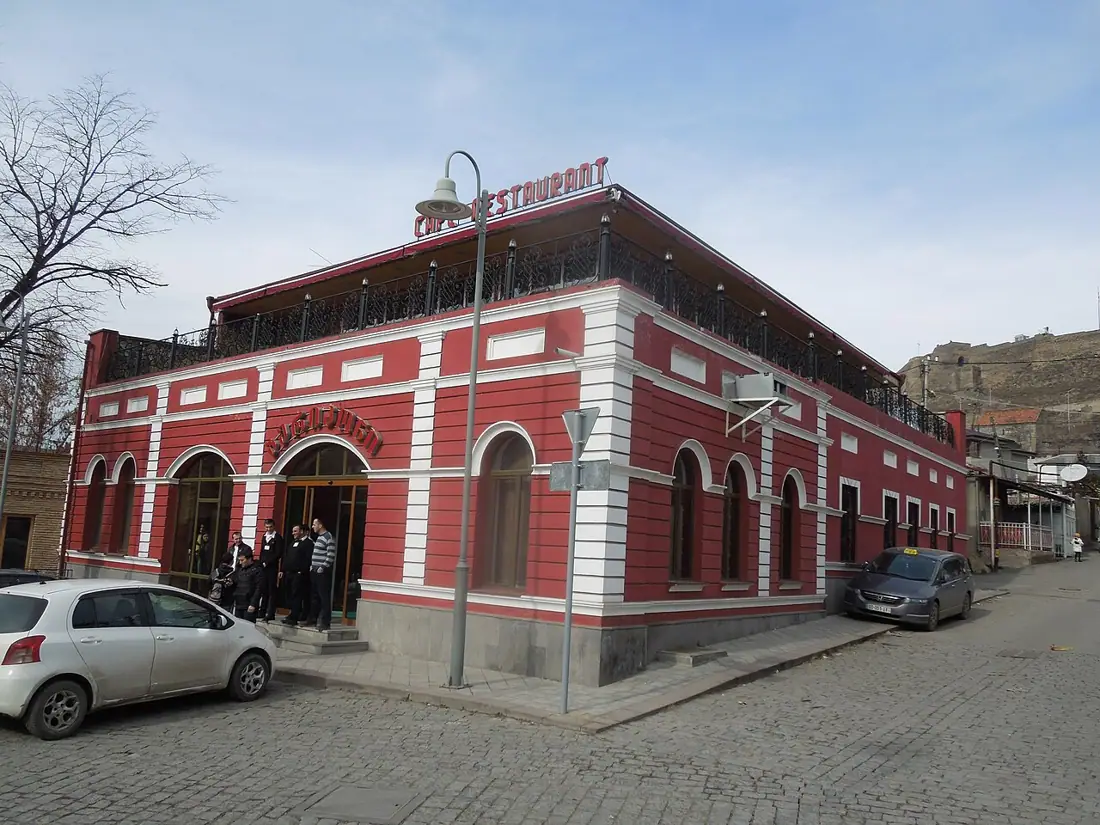 Town
TownGori: Fortress and Stalin Museum
The capital of Shida Kartli — a medieval citadel on its hill and the most contested museum of the Soviet era.
Booking and enquiries
This site is informational — there is no online payment. Call or email us to book.