Ruisi Cathedral
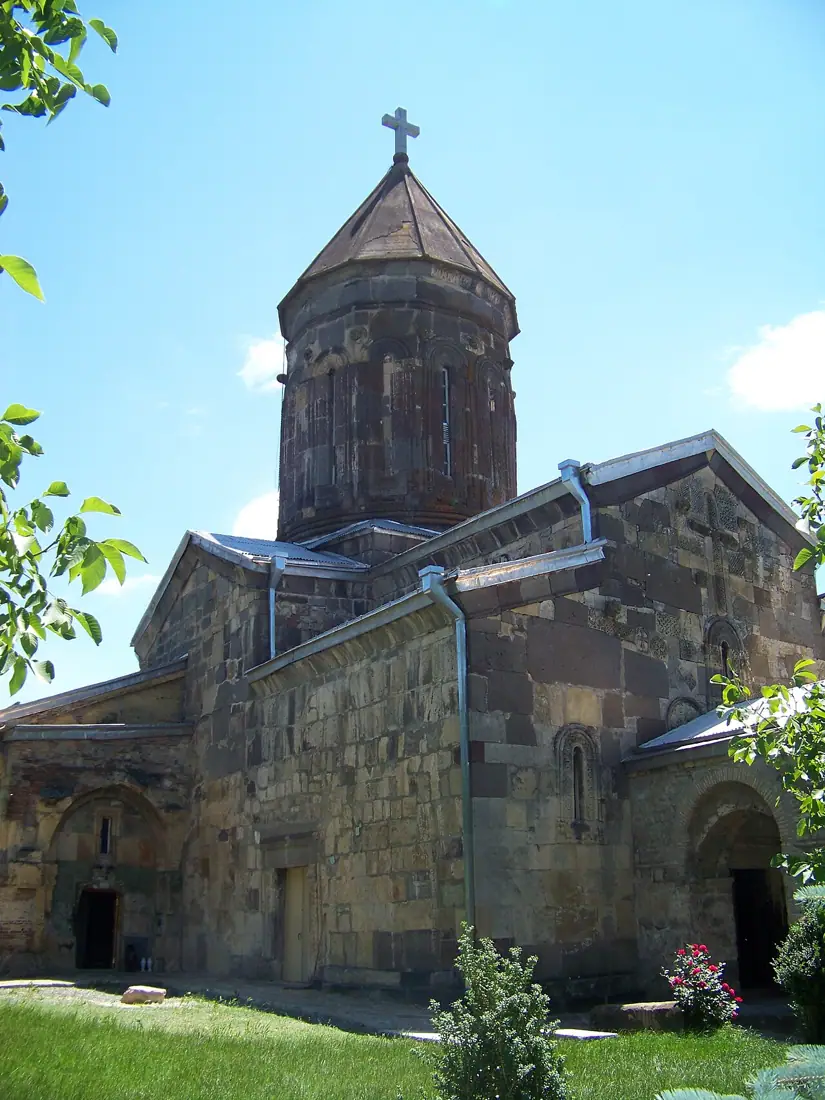
A large domed cathedral in Kareli municipality, site of the most consequential church council in Georgian history, held in 1103.
- Time needed
- 1 h
- From Tbilisi
- 99 km · 1:20
- Road
- Paved
- Car needed
- Economy class
- Season
- All year
- Entry
- free
Ruisi is remembered for one decision. In 1103, when David the Builder was still a young king and the country was pulled apart by its own nobles, he convened a church council here and in neighbouring Urbnisi. The Ruisi-Urbnisi council removed bishops who had bought their sees or inherited them through family, laid down new rules of clerical discipline, and brought the church firmly under royal authority. It was not merely a religious reform: it freed David's hand against the feudal lords.
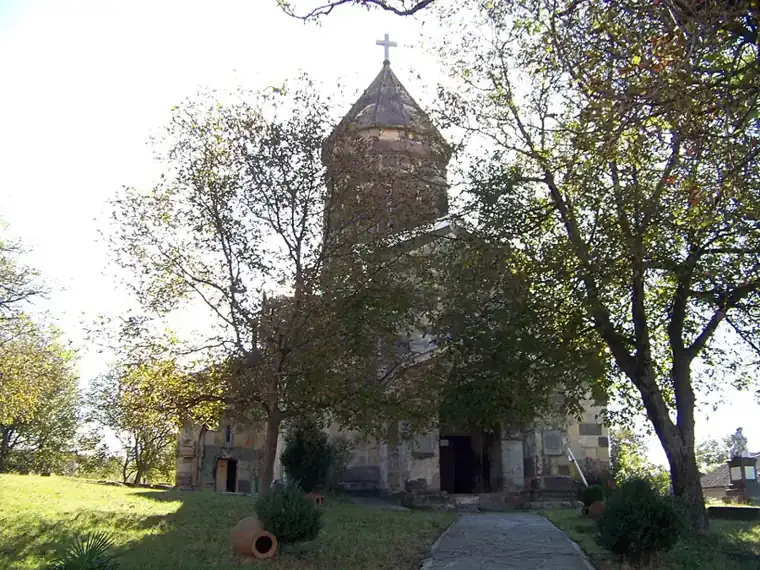
The building you see is not the one that hosted the council. Its core is 8th or 9th century, but it was rebuilt almost entirely in the 16th and 17th centuries and repaired again in the 19th. The result is a massive, broad domed church, heavier and less refined than Ertatsminda or Samtavisi, but impressive in sheer scale. Different centuries of stonework are clearly readable in the walls, with courses changing colour and size partway up.
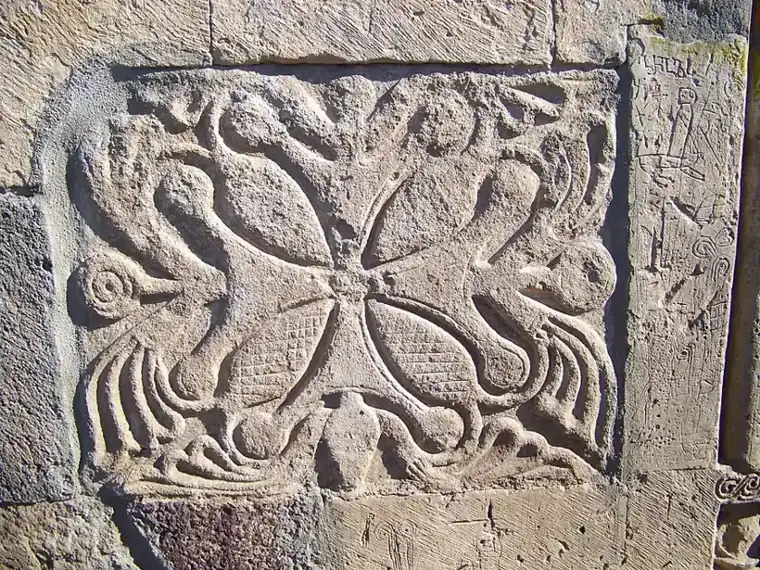
The yard is wide, with an enclosure wall and a bell tower. Inside, the decoration is largely late, with only slight traces of older painting. The cathedral is in active use and functions as a real centre for the village, busy on Sundays rather than kept as a monument.
Ruisi and Urbnisi are eight kilometres apart, and seeing them together makes far more sense than seeing either alone: one an early basilica, the other a late domed church, both carrying the history of the same council.
Practical advice
Fifty minutes covers it. Plan it with Urbnisi — eight kilometres away, so one outing takes in both. The cathedral is in use and dress rules apply. The yard is flat with few steps. Toilets are basic and there is no cafe, though the village has a small shop. If the door is locked, finding the priest or keyholder in the village is straightforward. In winter the interior is cold and damp, so dress warmly.
How to get there from Tbilisi
Take the E60 west from Tbilisi towards Gori, then continue towards Kareli; the sign for Ruisi turns you north off the main road. Ninety-nine kilometres in total, about an hour and twenty minutes. The dual carriageway is fast, but the final four kilometres are a narrow village road shared with livestock, so slow down. Fuel is available in Gori and Kareli. There is an open square in front of the cathedral and parking is free. An economy car is enough all year round.
Click a marker for details. Coloured lines are ready-made road trips.
Nearby places
 Monastery
Urbnisi Cathedral
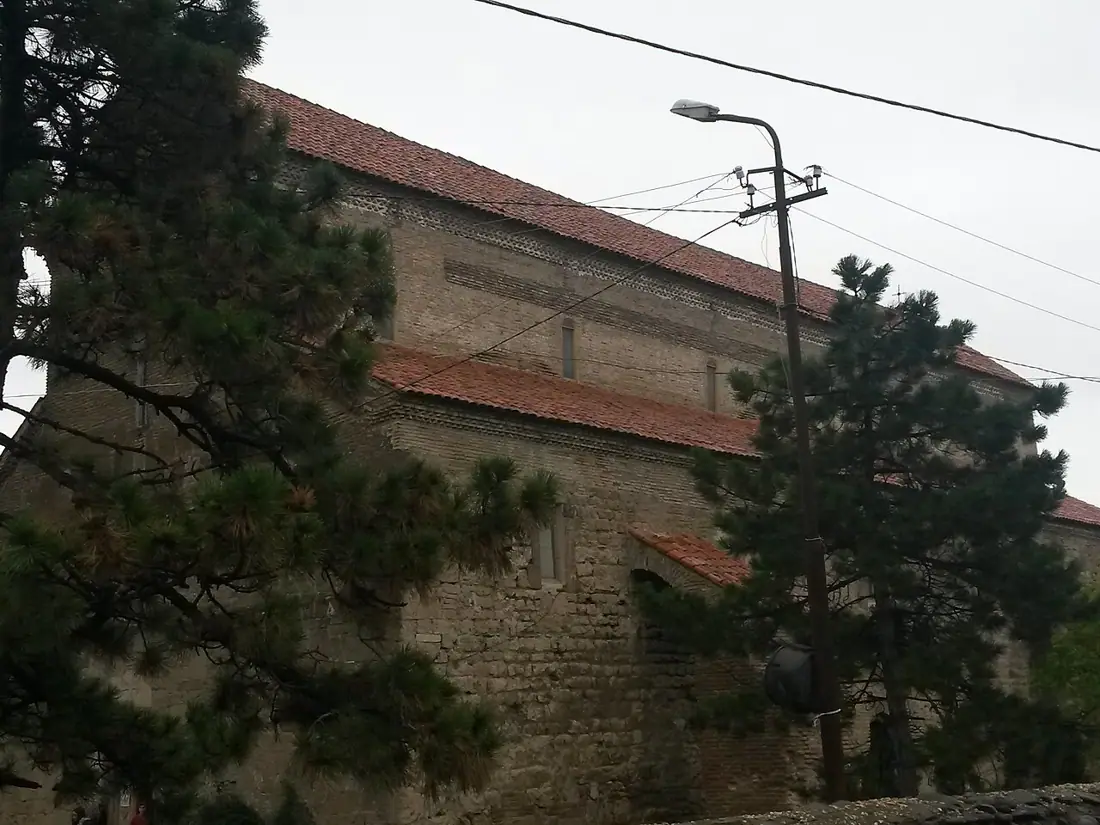
A three-aisled basilica of the 5th and 6th centuries in Kareli municipality, among the oldest surviving churches in Georgia.
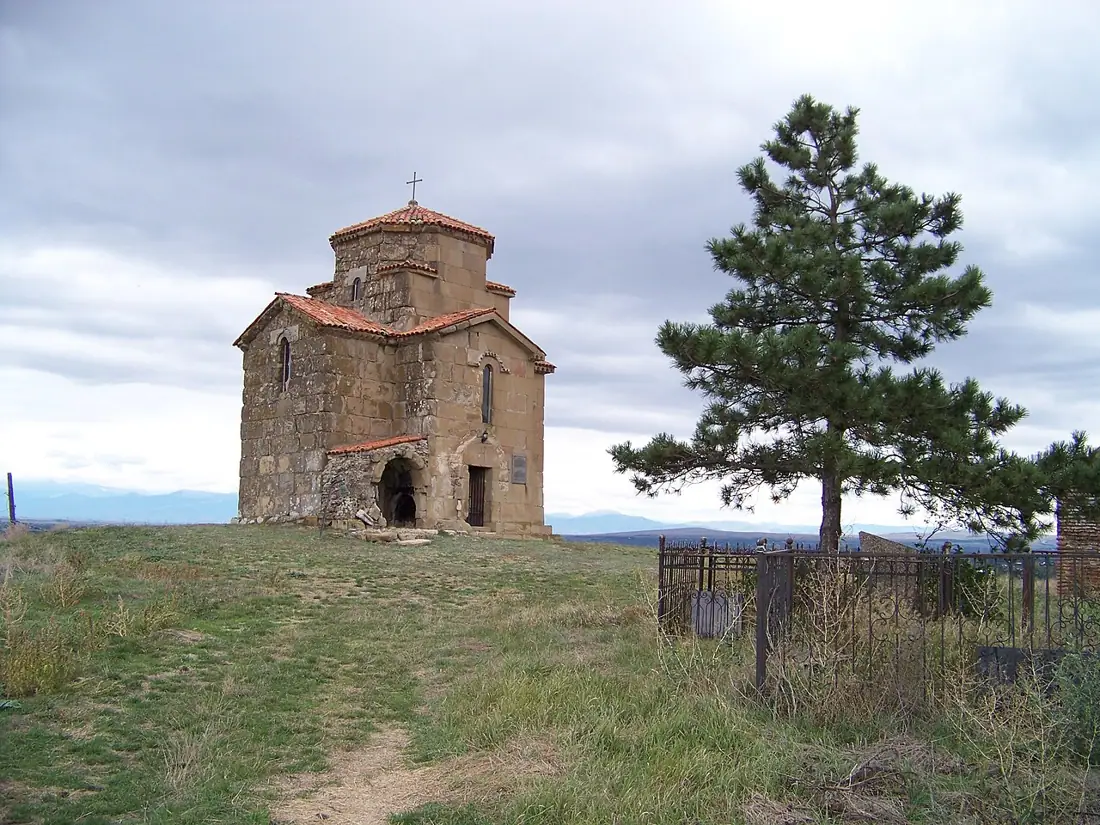 Monastery
Samtsevrisi Church of St George
A small 7th-century free-cross church on a hill above the Mtkvari plain, remarkable for the purity of its geometry.
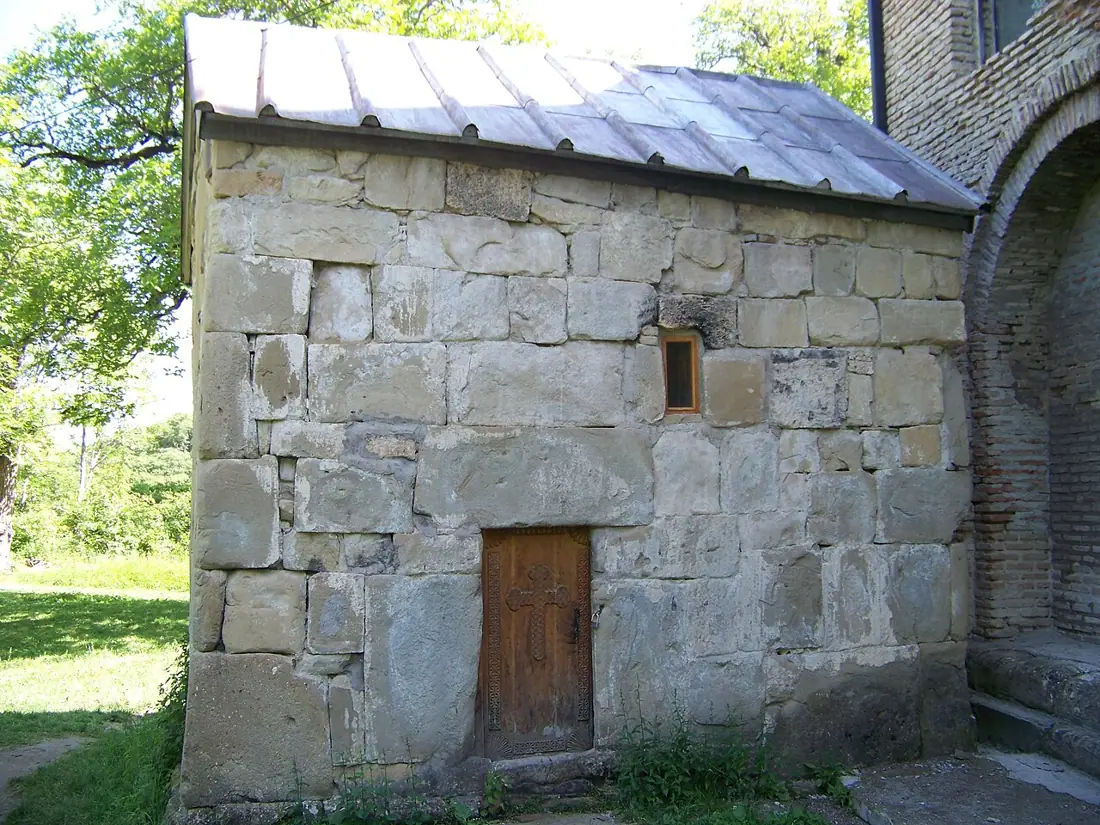 Monastery
Kintsvisi Monastery
A 13th-century monastery in the woods, home to the Angel of Kintsvisi — the best-known fresco in Georgian art.
Booking and enquiries
This site is informational — there is no online payment. Call or email us to book.