Ujarma Fortress
A royal fortress on a ridge above the Iori river where King Vakhtang Gorgasali died — only 45 km from Tbilisi.
- Time needed
- 1 h
- From Tbilisi
- 45 km · 0:55
- Road
- Paved
- Car needed
- Economy class
- Season
- All year
- Entry
- free
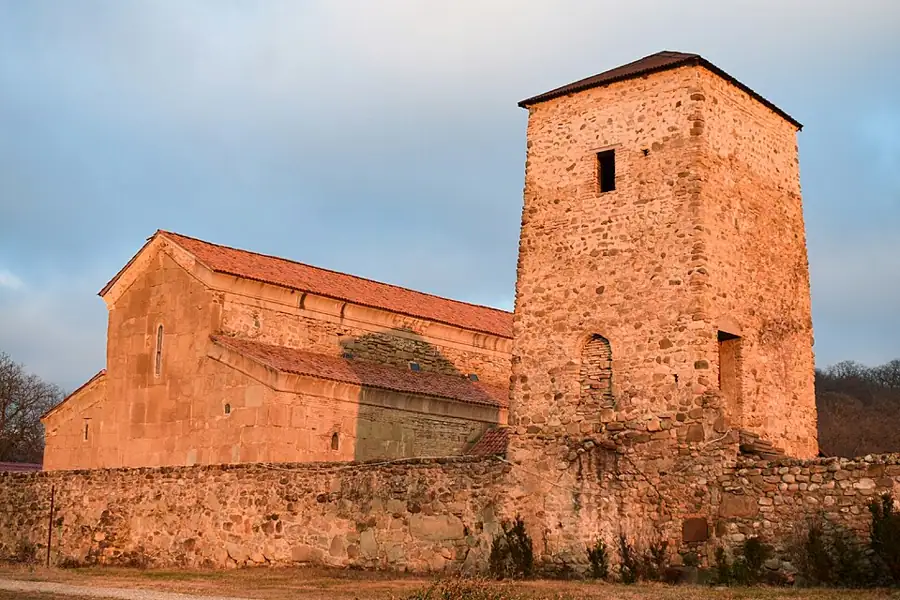
Ujarma is the first serious stop in Kakheti, less than an hour from Tbilisi. The fortress runs along a rocky ridge directly above the Iori, and from the road below it looks as though the hill has been given a crown of walls.
The site is old. Georgian chronicles mention Ujarma from the 3rd century, and in the 5th King Vakhtang Gorgasali turned it into a royal residence — one of the principal courts of the kingdom before Tbilisi was founded. Tradition holds that Vakhtang died here of a wound taken in battle. Later the fortress guarded the eastern approaches of the Kakhetian kingdom and was destroyed and rebuilt more than once.
What survives is easy to walk:
-
The long curtain wall with towers, following the ridge on both flanks
-
The citadel at the highest point, from which the valley reads clearly in both directions
-
The Jvarpatiosani church, a small domed building of the 10th century, partly reconstructed
Restoration in recent decades is very visible in places: new courses of stone sit against old ones in a different colour, and purists find it heavy-handed. The practical result is that you can walk the walls without risk, which is rarely true of Georgian fortresses this size.
The landscape below is dry and open — grey slopes above the Iori, scattered trees, and the Tsiv-Gombori range in the distance. Spring brings a short flush of green and poppies among the stones; by July everything is bleached and the middle of the day is genuinely hot. Late afternoon light on the east-facing walls is the best of the day.
Ujarma is also a good first lesson in how Georgian fortresses were sited. Not on a summit, where water is impossible and supply worse, but on a spur with a river below and a road that has no choice but to pass underneath it.
Gallery
Practical advice
An hour is enough. The path from the car park up to the citadel is gravel, about ten minutes, and steep in places — proper shoes rather than sandals. There are no railings along the wall tops, so keep children well back from the edges. Shade is minimal and there is no water on site, so carry your own. Entry is free and the gate stands open; there is no ticket office and no guide. Toilets and a cafe are down at the roadside in the village below.
How to get there from Tbilisi
Leave Tbilisi eastwards past Vaziani and Sartichala and follow the old Kakheti road towards Gombori. It is 45 km and about 55 minutes. The road is asphalt throughout and in good condition. The fortress appears on the left, standing above the road, and the turning is clearly marked with a small free car park at the end of it. Fuel is available in Sartichala. An economy car is entirely sufficient all year round, and the site can be combined with the Gombori Pass on the way to Telavi.
Click a marker for details. Coloured lines are ready-made road trips.
Nearby places
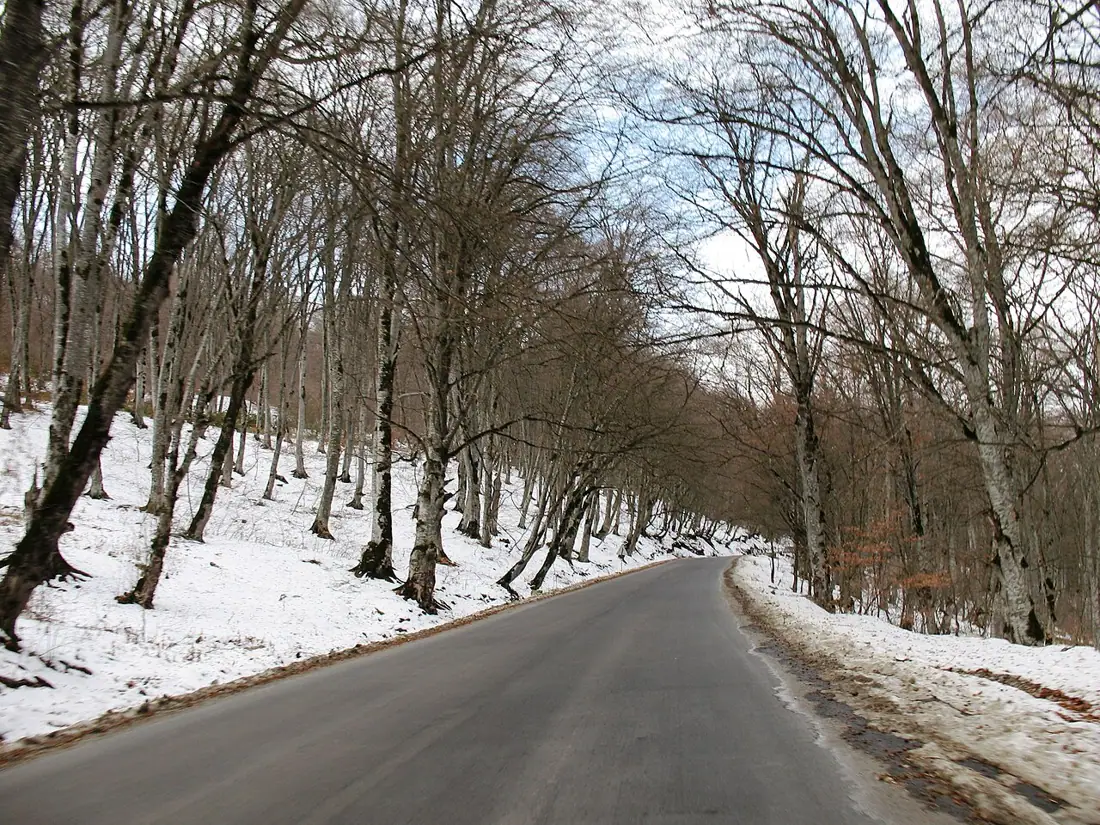 Mountain
Gombori Pass
A forested pass at 1,620 m where the Alazani plain and the Greater Caucasus open up in a single turn.
 Monastery
Ninotsminda Cathedral
A roofless 6th-century tetraconch near Sagarejo — one of the oldest large churches in Georgia and a ruin worth the detour.
Manavi Fortress
The ruined stronghold of the Kakhetian kings above Manavi village, looking out over the Iori plateau and its vineyards.