Ninotsminda Cathedral
A roofless 6th-century tetraconch near Sagarejo — one of the oldest large churches in Georgia and a ruin worth the detour.
- Time needed
- 1 h
- From Tbilisi
- 56 km · 1:05
- Road
- Paved
- Car needed
- Economy class
- Season
- All year
- Entry
- free
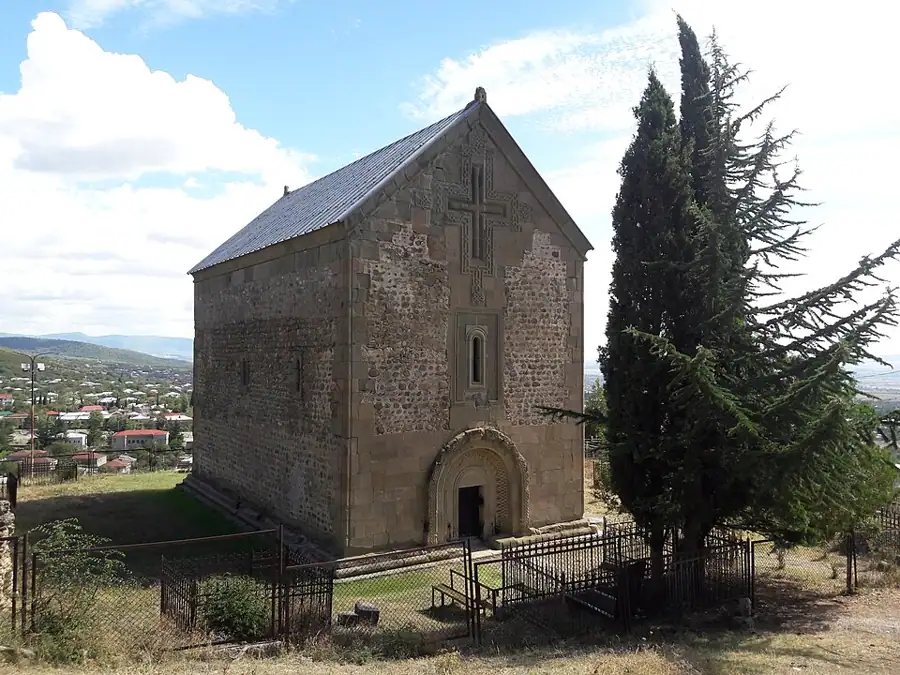
Ninotsminda is one of those rare monuments that is more impressive as a ruin than many churches are intact. It stands in the village of the same name a few kilometres east of Sagarejo, within sight of the main Kakheti road, and most travellers drive straight past it.
The cathedral dates from the second half of the 6th century and is a tetraconch: four apses arranged around a central space, with niches in the corners. This is the same architectural idea realised at Jvari above Mtskheta, but Ninotsminda is larger and a decade or two earlier. For the history of the Georgian domed church, this is close to the starting point.
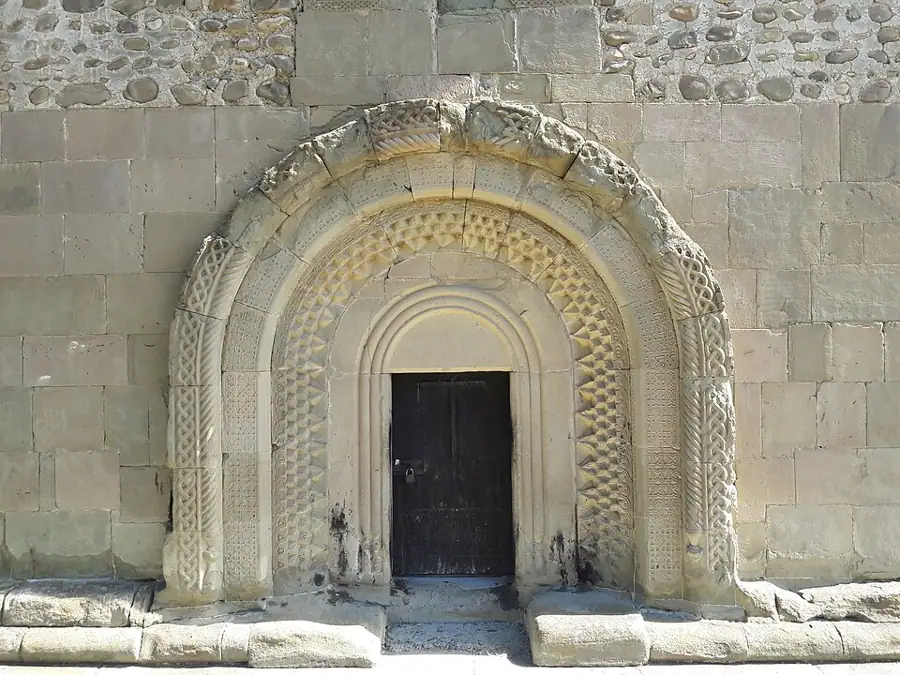
The dome came down in the earthquake of 1824 and was never rebuilt. What stands now are the tall apse walls, open to the sky, with fragments of carving on the exterior and patches of 16th-century painting inside that weather a little further every winter. Walking into the space is a strange experience: the walls are unmistakably a church, the ceiling is weather.
Two other things share the enclosure:
-
The bell tower, a three-storey structure of the 16th century that doubled as the bishop's residence
-
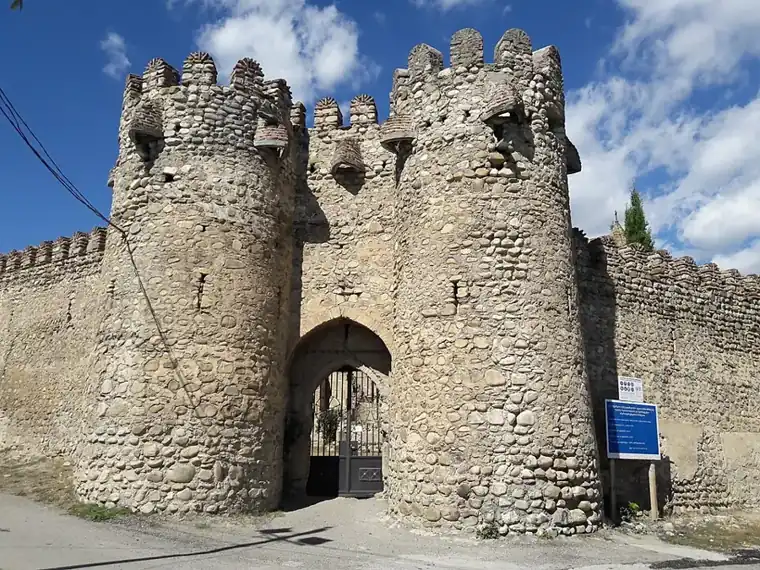
The enclosure wall and remains of the episcopal buildings — Ninotsminda was a bishop's seat for centuries, and its bishops carried real political weight in Kakheti
The site is maintained but not made over. Coaches rarely stop, since most groups head straight for Telavi or Sighnaghi. Late afternoon is the time to come: the sun drops inside the shell of the apses and turns the stone warm, and the swallows nesting in the wall cavities come out to feed.
The stone is a warm local tuff that holds late light unusually well, which is part of why the ruin photographs better than it has any right to.
Practical advice
An hour covers the enclosure and the bell tower. The ground among the ruins is uneven and strewn with fallen stone, so wear closed shoes. Entry is free and there is no ticket desk, but the gate is occasionally locked, in which case someone in the village holds the key and will open it. Shade is limited. Toilets and shops are in Sagarejo, five kilometres west. Services are still held at the altar on some days, so keep your voice down if you find people praying.
How to get there from Tbilisi
Take the Kakheti highway east from Tbilisi towards Sagarejo, 52 km of fast asphalt. Continue about four kilometres past the town and turn left into Ninotsminda village; the cathedral walls are visible from the road. Total 56 km, roughly an hour and five minutes. The final stretch is narrow village asphalt, patched and uneven but perfectly passable. Fuel is available in Sagarejo. An economy car is sufficient, and the site combines easily with Manavi or with the drive on to David Gareja.
Click a marker for details. Coloured lines are ready-made road trips.
Nearby places
Manavi Fortress
The ruined stronghold of the Kakhetian kings above Manavi village, looking out over the Iori plateau and its vineyards.
 Fortress
Ujarma Fortress
A royal fortress on a ridge above the Iori river where King Vakhtang Gorgasali died — only 45 km from Tbilisi.
 Monastery
David Gareja
Sixth-century cave monasteries carved into a semi-desert ridge — the most unusual landscape in Georgia.