Ubisa Monastery
A 9th-century monastery of St George in the Dzirula valley, holding an almost complete cycle of 14th-century frescoes.
- Time needed
- 1 h
- From Tbilisi
- 170 km · 2:30
- Road
- Paved
- Car needed
- Economy class
- Season
- All year
- Entry
- free
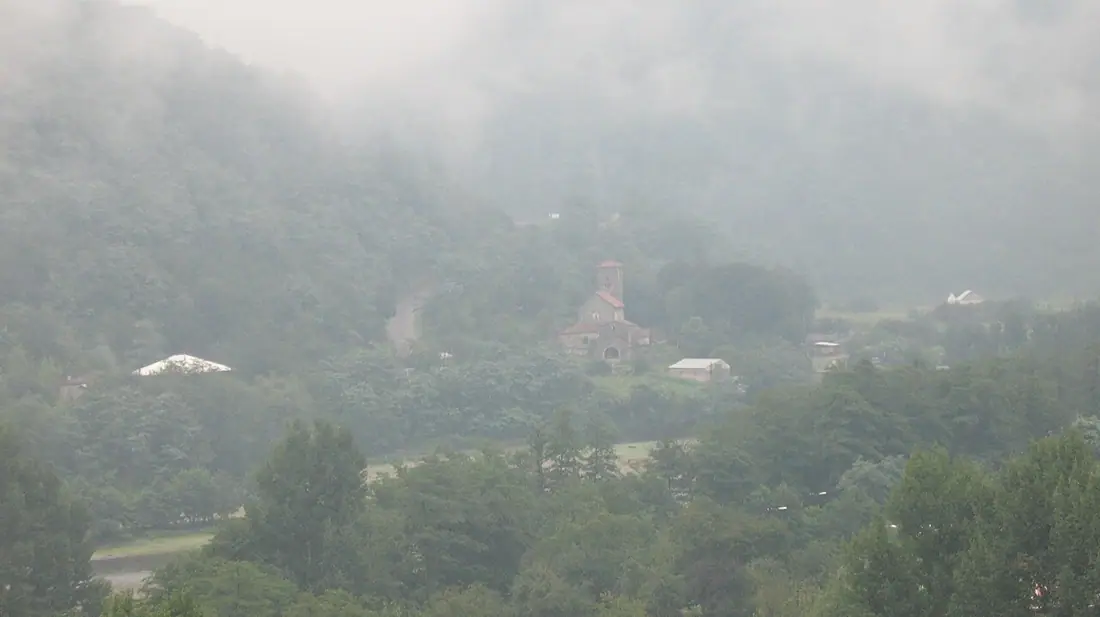
Ubisa is one of the places where medieval Georgian painting survived nearly intact. The monastery sits on a wooded slope in the Dzirula valley north-west of Kharagauli, and is barely visible from the road.
The church of St George was founded in the 9th century by Grigol Khandzteli. It is a small single-nave barrel-vaulted basilica, plain from outside, with the apse hidden inside the thickness of the east wall and open porches added later on the south and west. In the yard stands a four-storey tower whose inscription gives an exact date, 1141, and names its builder, Simon Chkondideli, in the reign of King Demetrius I. Fragments of the enclosure wall are also 12th century.
The reason to come is inside. The whole interior was painted at the end of the 14th century; inscriptions credit the master Gerasime and his pupil Damiane, the painter. The programme includes:
-
Christ in Glory on the vault, and a Deesis
-
the Last Supper and the Nativity, in unusually crowded compositions
-
a cycle from the life of St George, to whom the church is dedicated
-
the Ancient of Days, a rare subject
Specialists read Damiane's work as a meeting of Byzantine, Serbian and Russian currents, but the elongated figures and the calm, almost withdrawn faces are entirely Georgian. The colour has darkened over six centuries, yet the storytelling is still easy to follow.
The church is a working monastery again; the monks keep bees and sell honey by the gate. Between the tower, the old walnut trees and the forest behind, the yard is very quiet — Ubisa is one of the few important sites in Imereti where tour buses rarely stop.
Gallery
Practical advice
An hour is enough, though the frescoes reward longer. It is dark inside and photography is not allowed without asking a monk first. Dress rules are enforced: women need a headscarf and long skirt, both kept by the door. The path through the yard is cobbled and slightly uphill, awkward with a pushchair. There is no cafe or shop here — the nearest are in Kharagauli or Zestaponi. A toilet stands in the corner of the yard. In winter the church is unheated and genuinely cold.
How to get there from Tbilisi
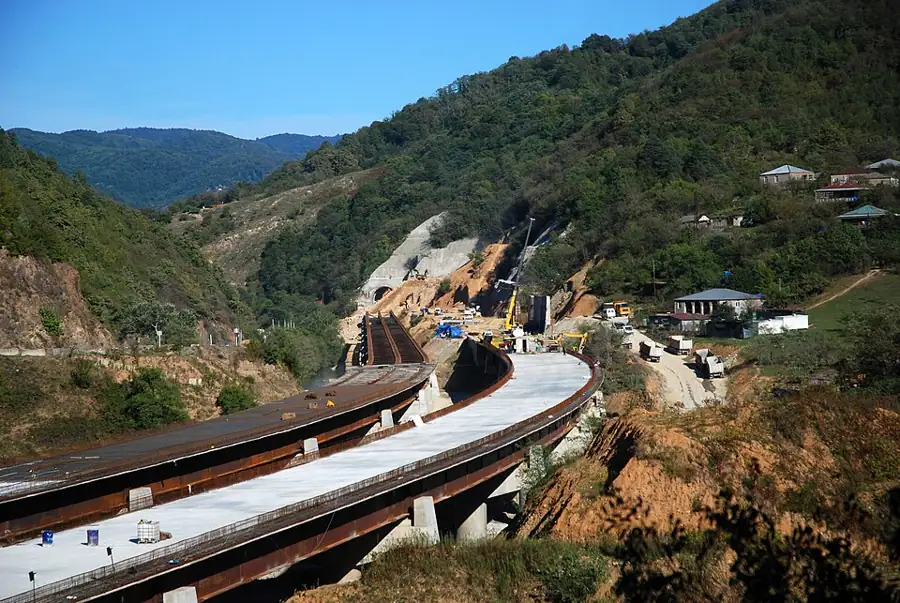
Take the E60 west from Tbilisi through Gori and Khashuri and over the rebuilt Rikoti section. After the pass the road drops into the Dzirula valley, and a sign for Ubisa sends you left onto the old road — about 170 km in total, two and a half hours. The last two kilometres are a narrow but paved village street. Refuel in Khashuri or Zestaponi. There is a small free car park by the monastery gate. An economy car is fine all year.
Click a marker for details. Coloured lines are ready-made road trips.
Nearby places
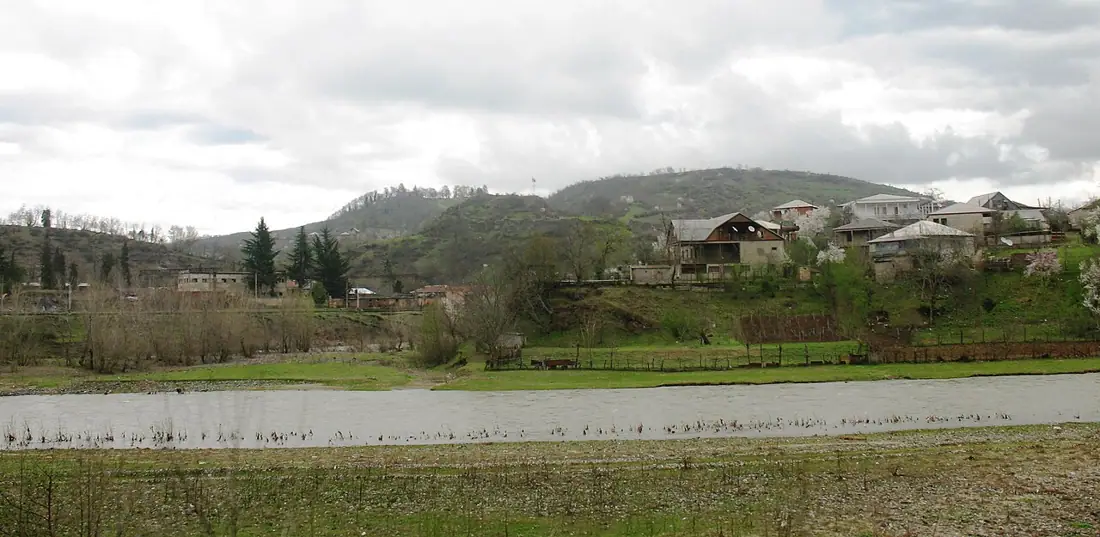 Fortress
Shorapani Fortress
The ruins of a fortress on the site of ancient Sarapana, at the meeting of the Dzirula and the Kvirila.
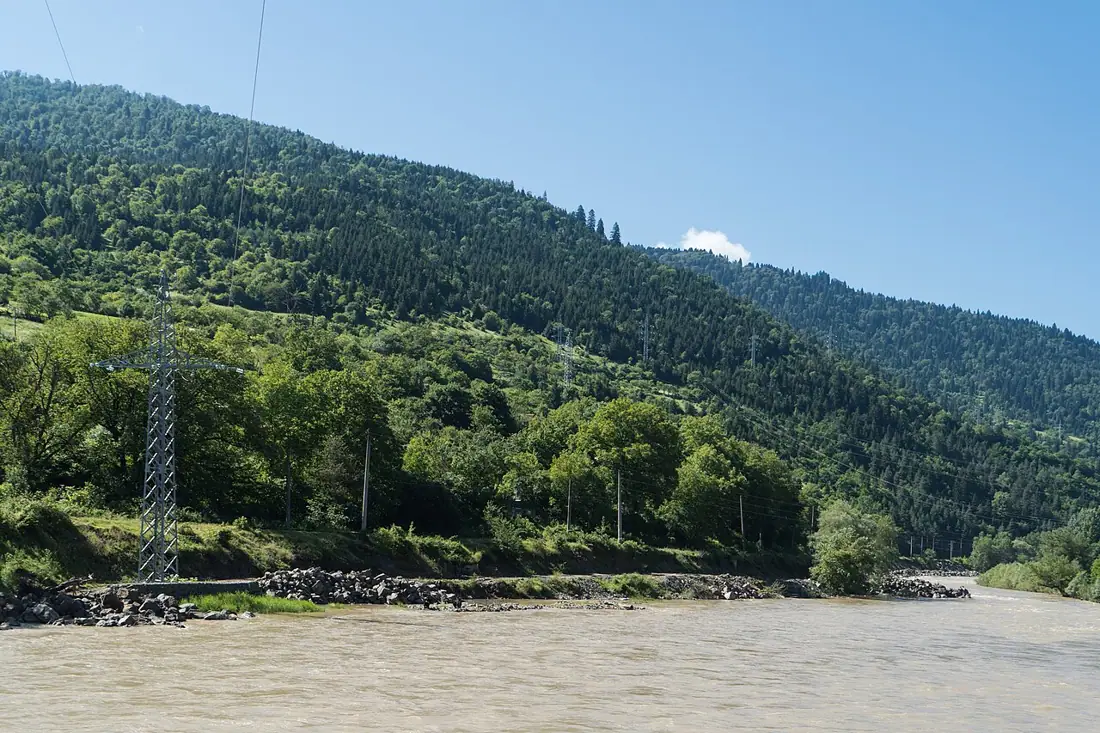 Spa resort
Nunisi
A very small forest spa in Kharagauli municipality, whose mineral water is used for skin conditions.
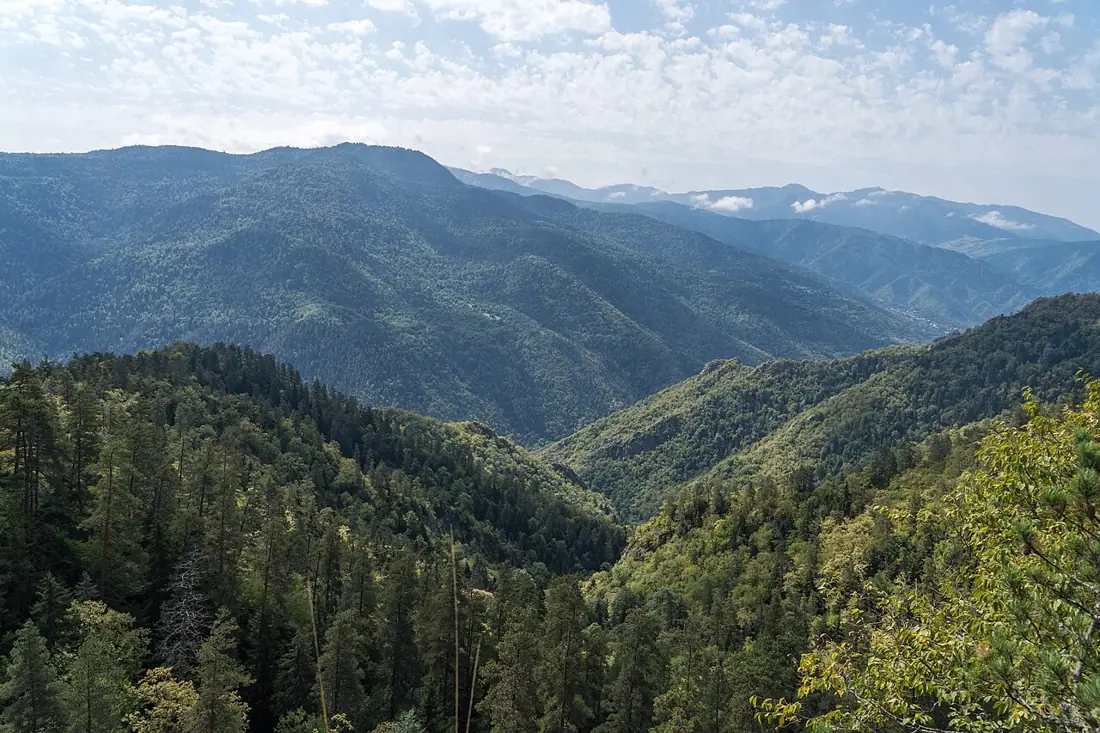 Nature
Borjomi-Kharagauli National Park
One of the largest protected forests in Europe, with marked trails, huts and multi-day treks.