Salkhino Dadiani Residence
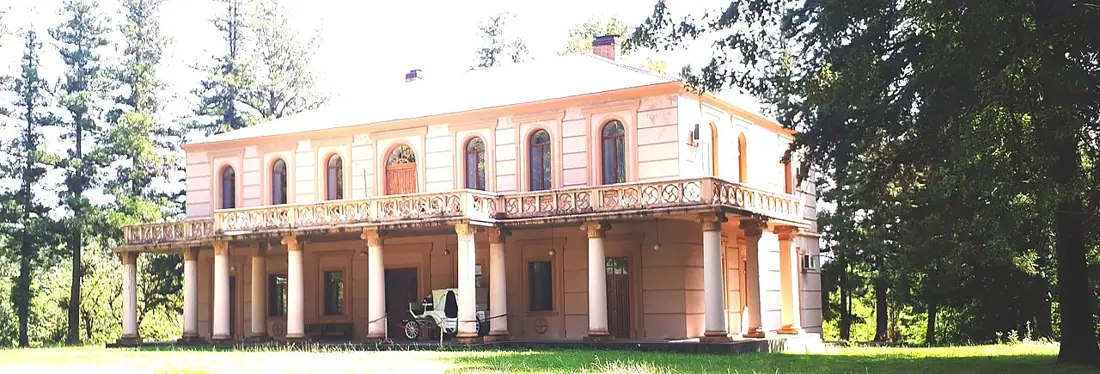
The Dadiani summer estate north of Martvili, with Ojaleshi vines trained up trees and a monastery in the grounds.
- Time needed
- 1 h
- From Tbilisi
- 312 km · 4:40
- Road
- Mostly paved
- Car needed
- Economy class
- Season
- All year
- Entry
- free
Salkhino is where the Dadiani spent their summers, and the name says exactly that. The village lies about eleven kilometres north of Martvili, on the first slopes of the Egrisi range, where the heat of the lowland begins to let go.
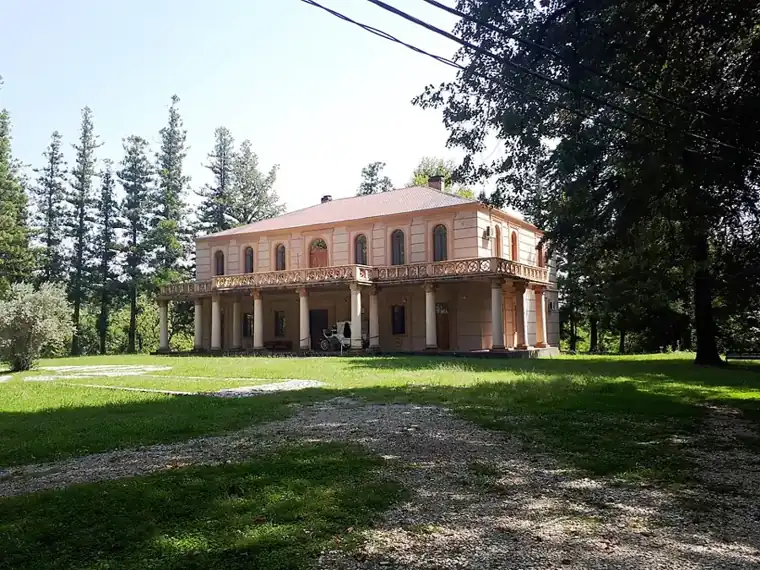
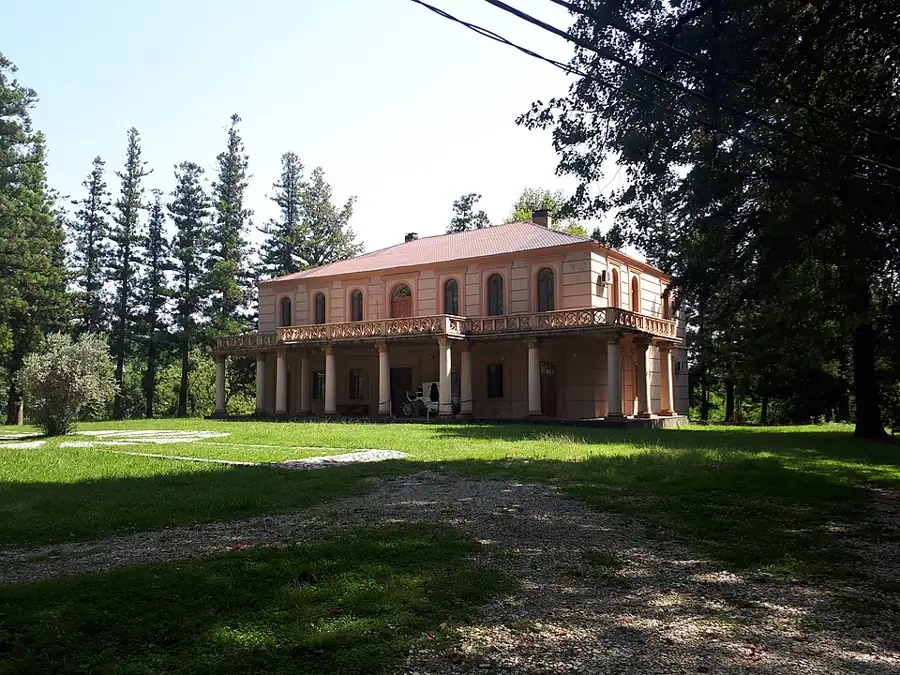
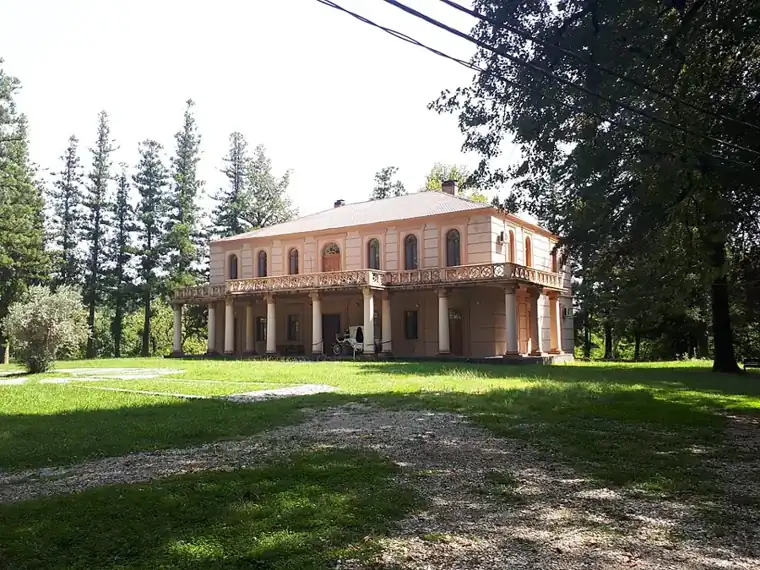
The residence was built in the nineteenth century. It is nothing like the palace at Zugdidi: a two-storey house with a veranda, closer to a country retreat than to a seat of government. That was the point. The family rested here rather than received here.
What Salkhino is really known for is wine. Ojaleshi, the red grape of Mingrelia, is grown here in the old way, trained high into alders and other trees so that air moves through the fruit in a very wet climate. The Dadiani planted it here systematically, and the wine from this estate went as far as the Russian imperial court. Vines are still worked, and some of them climb to the tops of the trees, which is a sight you will not easily find elsewhere.
Ojaleshi ripens very late, often into November, when other Georgian varieties are long picked. That is why it needs a warm autumn and a well-aired position, and a vine in a tree gives it both. The name is usually explained from the Mingrelian word for tree, which describes the method exactly.
The technique is disappearing. In farming terms training vines into trees is inefficient: yields are small and picking requires a ladder. That is precisely why Salkhino is worth the detour — here it is still alive rather than an exhibit.
In the grounds stands a church of the Dormition. The site is now a monastery, and that is the living part of it; the monks look after the vineyard too.
Be clear about what you will not get. The house is usually locked, there is no museum inside and no ticket desk, and restoration has come and gone over the years. If you want a furnished palace, go to Zugdidi.
People come here for something else: for vines in trees, for old timber, for the quiet round the church, and for the view that opens south from the slope across the plain. Late September and early October are best, when the harvest is in progress and the air is sweet.
The visit combines naturally with Martvili canyon and Balda in the same day; all three are within half an hour of one another.
Practical advice
An hour is enough. The grounds hold a working monastery, so dress rules apply, voices should stay low, and you should not wander into the vineyard without asking first. The house itself is often locked and getting inside is not guaranteed. The toilet is basic and there is no café, so bring food from Martvili. Paths are grassy and slippery after rain, and closed shoes help. During the vintage local people will often show you the trained vines themselves if you ask.
How to get there from Tbilisi
From Tbilisi follow the E60 to Samtredia and Abasha, then turn north for Martvili; from Martvili it is another eleven kilometres north to Salkhino. About 312 km in total, four hours forty. The main road is asphalt; the final stretch is narrow and broken in places, though a low car will manage in dry weather. Signposting is thin, so be ready to ask in the village. Refuel in Abasha or Martvili. In dry conditions an economy car is enough; after heavy rain the last kilometres are better in something higher.
Click a marker for details. Coloured lines are ready-made road trips.
Nearby places
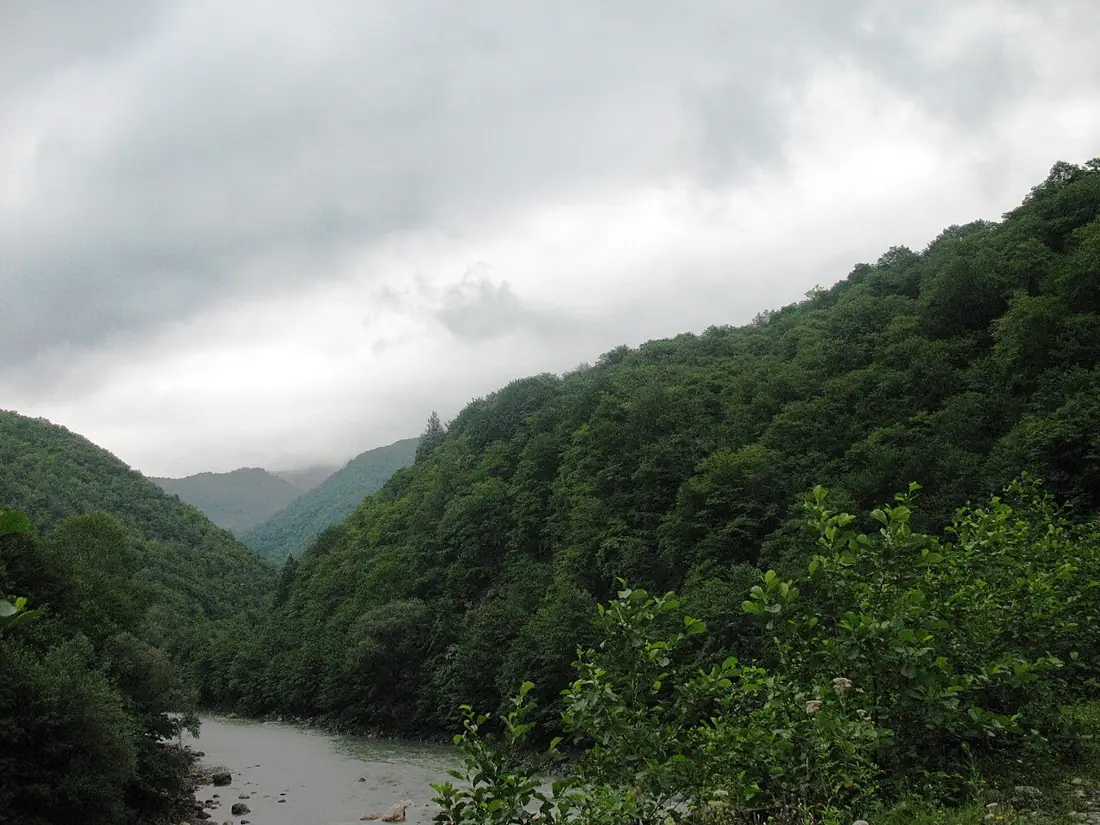 Canyon
Martvili Canyon
A turquoise river between limestone walls, with boardwalks and a short boat ride — Samegrelo's most visited natural site.
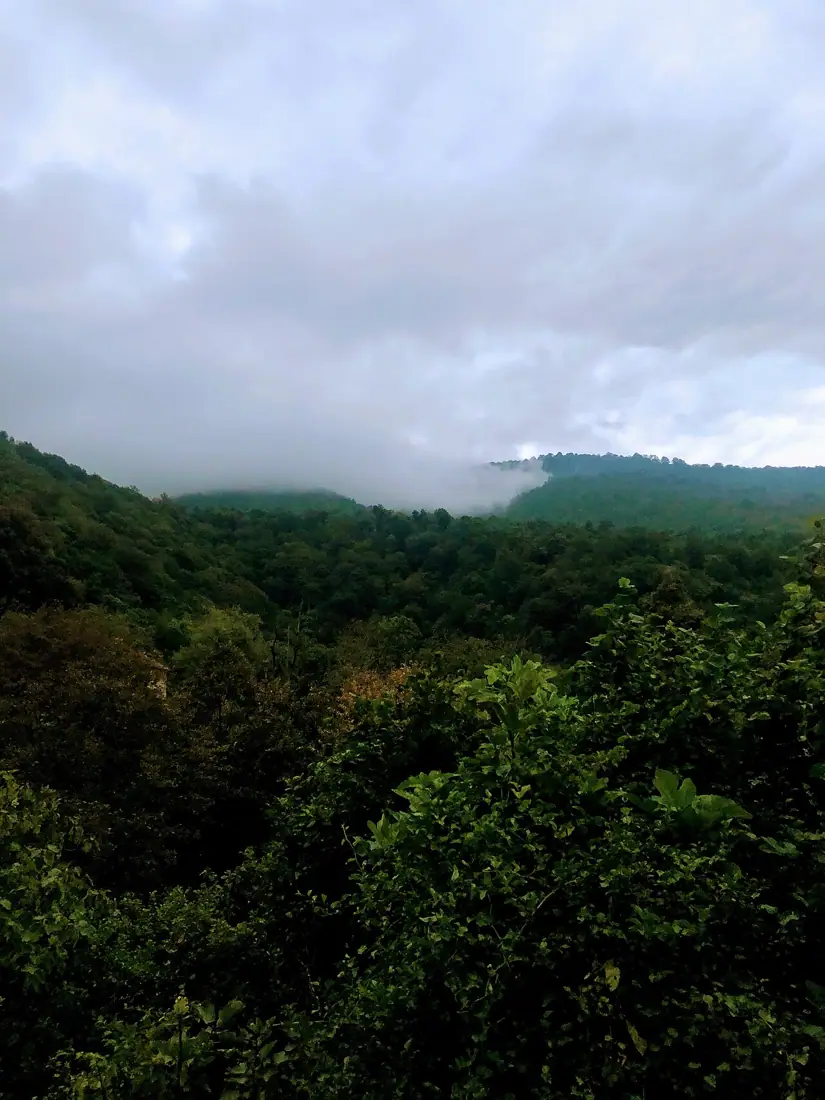 Canyon
Balda Canyon
A narrow limestone gorge north-east of Martvili with small waterfalls, travertine steps and no infrastructure at all.
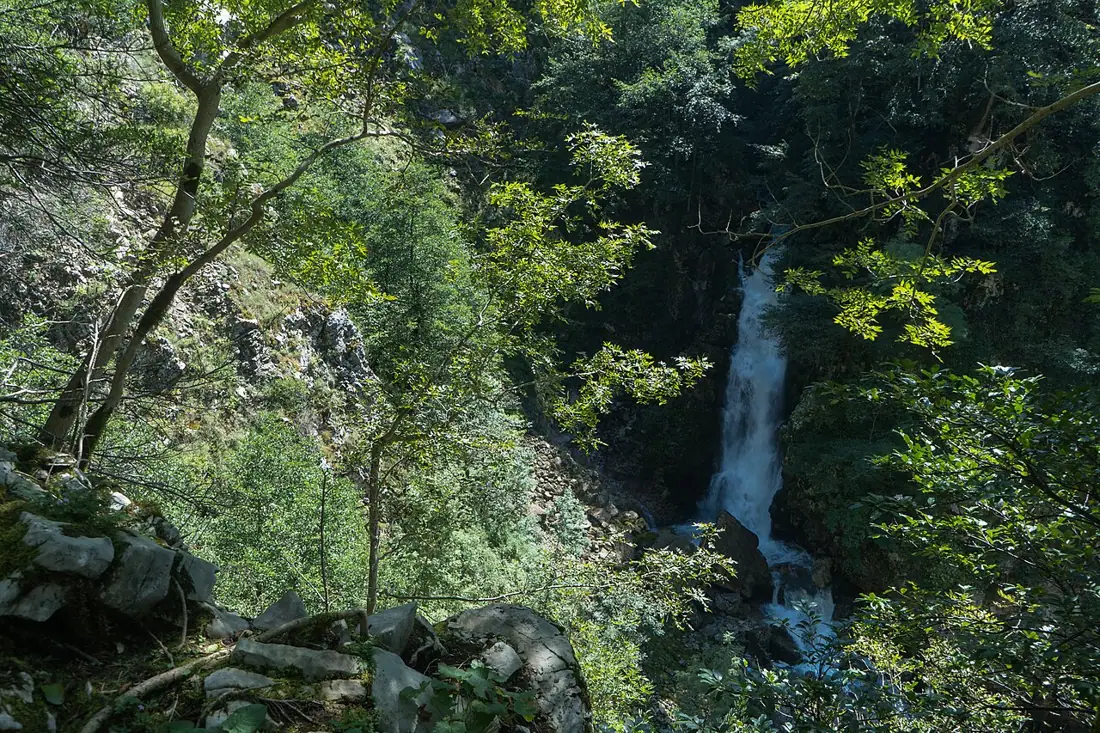 Waterfall
Oniore Waterfall
A karst waterfall north-east of Martvili, falling into a wooded limestone amphitheatre next to the Toba cave.
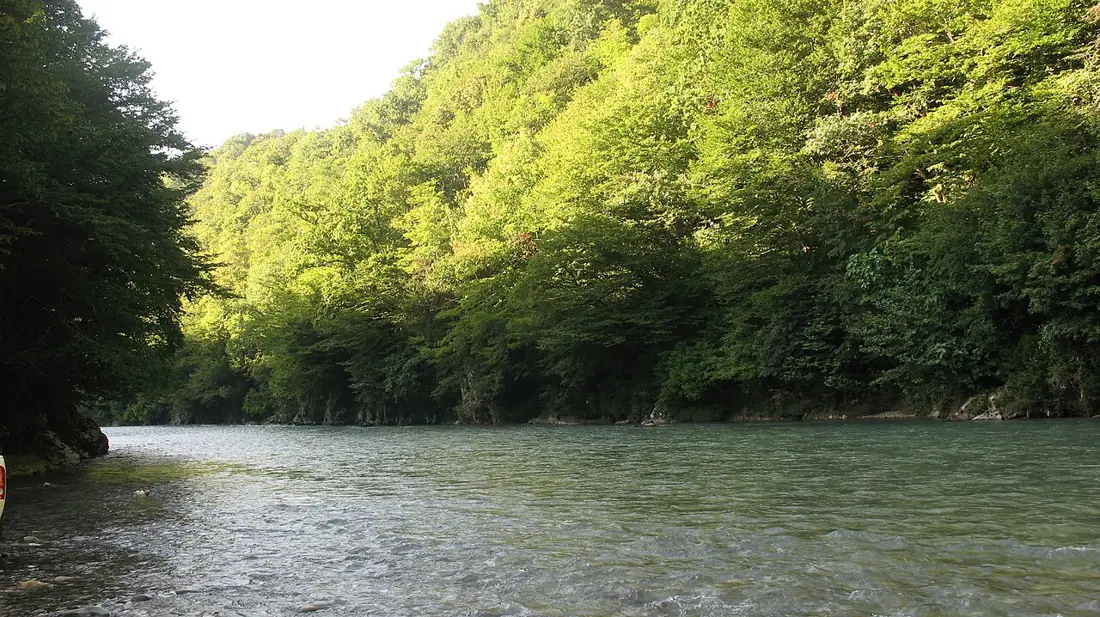 Archaeology
Nokalakevi (Archaeopolis)
A fortified city from the Lazic Wars above the Tekhuri river — walls, a secret tunnel and an active excavation.
Booking and enquiries
This site is informational — there is no online payment. Call or email us to book.