Oniore Waterfall
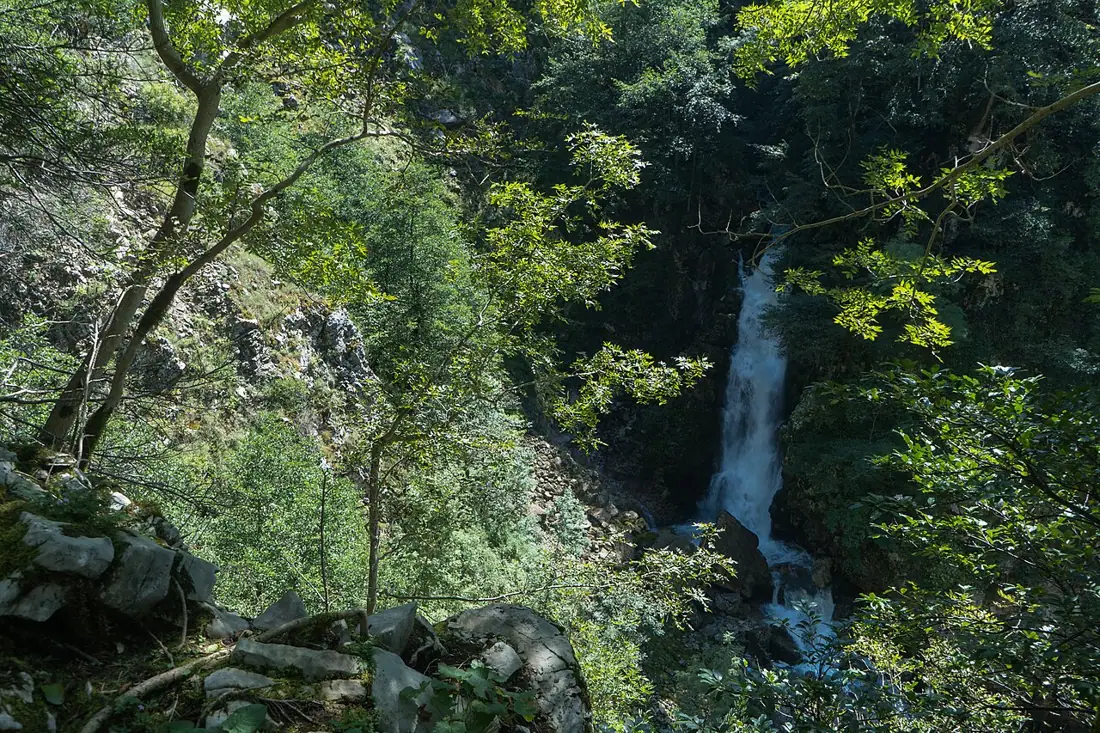
A karst waterfall north-east of Martvili, falling into a wooded limestone amphitheatre next to the Toba cave.
- Time needed
- 2 h
- From Tbilisi
- 318 km · 5:10
- Road
- Unpaved sections
- Car needed
- Crossover / SUV
- Season
- May–October
- Entry
- free
Oniore is one of those waterfalls nobody writes much about, which is exactly its merit. It lies north-east of Martvili in the wooded country around Toba, and it holds natural monument status jointly with the Toba First Cave.
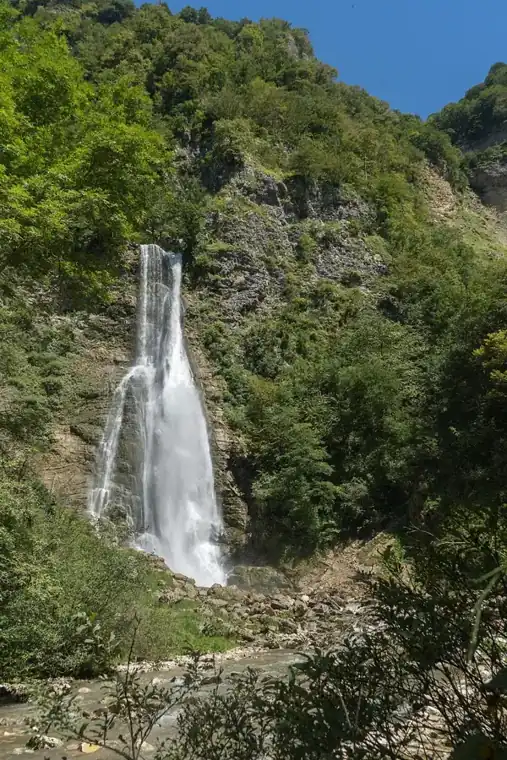
The water drops over a limestone lip into a mossy, shaded amphitheatre. The plunge pool is small, the walls are vertical and permanently wet, and there is a constant drift of spray in the air that keeps the place cool even in high summer. The limestone belongs to the Askhi massif, and the water itself emerges from an underground system rather than from a surface catchment.
That is textbook karst hydrology, and it has a practical consequence: the flow varies enormously. In spring and after heavy rain the fall is powerful and loud. By late August and September it can shrink to a thin ribbon. Anyone arriving in September expecting a torrent will be disappointed.
Some six hundred metres away is a second site, the Toba waterfall and the Arsen Okrojanashvili cave. Both fit into a single walk and are effectively one visit.
This corner holds the densest cluster of natural monuments in Georgia: Balda canyon, the Motena and Jortsku caves, the Abasha waterfall and the Ochkhomuri waterfall are all within half an hour.
The plateau above is honeycombed. Speleologists have mapped dozens of cavities in the Askhi limestone, and systems such as Motena and Jortsku carry water that eventually reappears in falls like this one. What you see is the visible end of a much larger piece of plumbing, most of which nobody ever looks at.
In May and June the forest is loud — birds, water and wind in the canopy. From late July the sound drops away and the shade fills with mosquitoes instead.
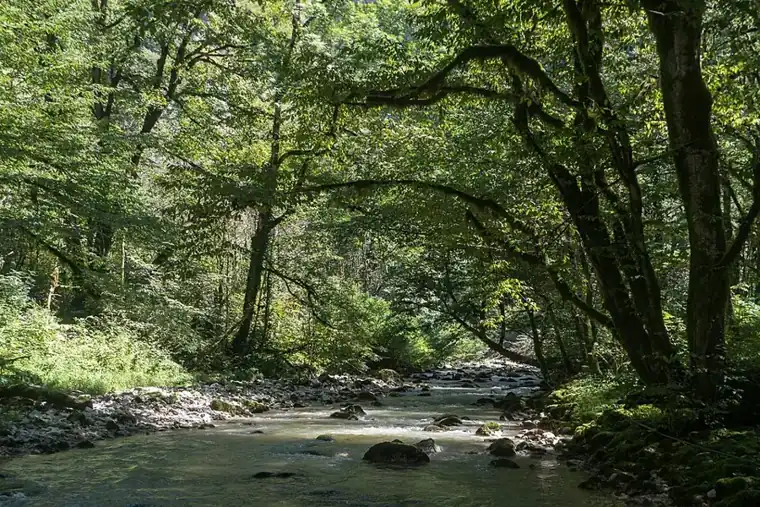
Infrastructure barely exists. The approach is a gravel forest road, followed by twenty to thirty minutes on foot through woodland over roots and clay. Signage is sparse and sometimes absent, so ask locally or carry a good offline map.
In exchange you get near-total solitude. Martvili canyon has a queue in summer; at Oniore you may spend the day alone.
May and June are the best months: the water is generous, the leaves are still light green and the insects have not yet arrived. Two hours, allowing for the walk in, the looking and the walk out, is enough.
Practical advice
Two hours is enough, three if you also visit Toba. The path is woodland clay, slippery after rain, so closed shoes with real grip are essential. The rocks at the base are permanently wet: swimming and scrambling on the lip are both bad ideas. The phone signal is weak, so download the route before you set out. There is no toilet, no water and no café — bring everything from Martvili. From June onwards take insect repellent, as the shaded forest holds mosquitoes all day.
How to get there from Tbilisi
From Tbilisi take the E60 through Samtredia and Abasha to Martvili, then head north-east towards Inchkhuri and Toba — about 318 km in all and five hours ten. Asphalt runs as far as Martvili; after that a gravel forest road begins, narrow and deeply rutted. In dry weather a raised car will manage and a low one will not; after rain it is four-wheel drive only. Leave the car where the footpath starts and walk from there. Refuel in Abasha or Martvili, as there is nothing beyond.
Click a marker for details. Coloured lines are ready-made road trips.
Nearby places
 Canyon
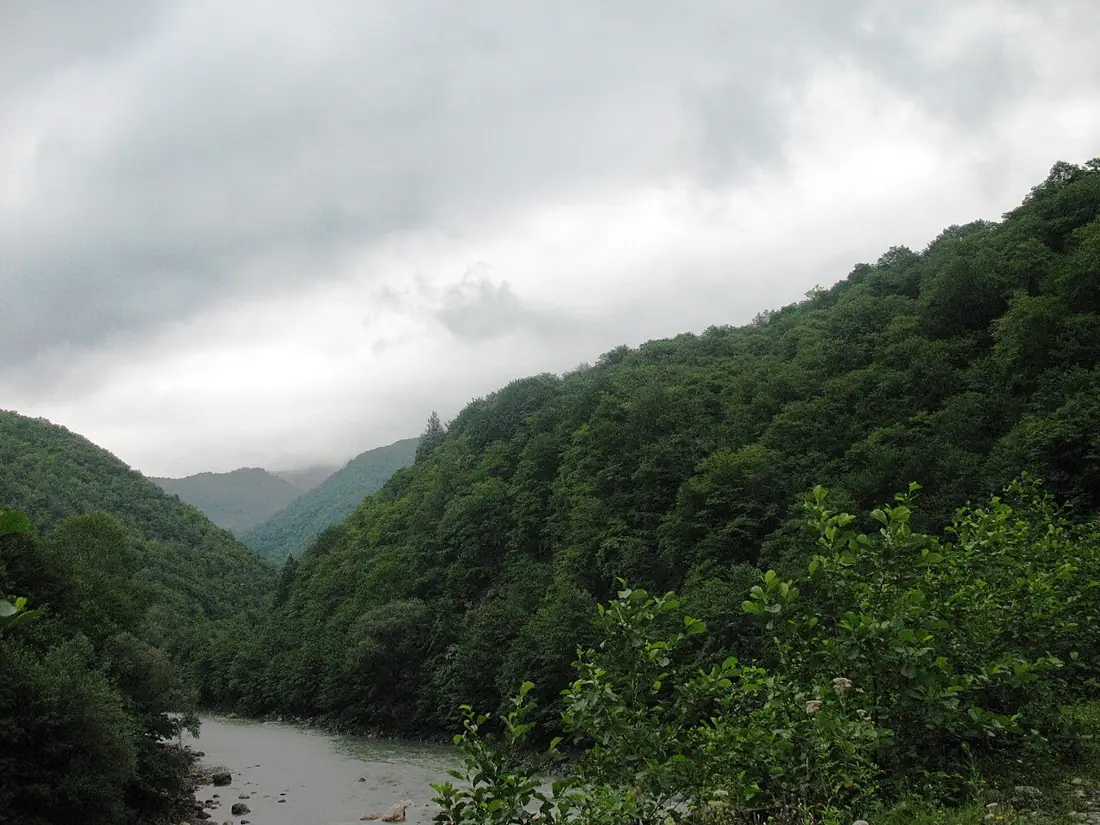
Balda Canyon
A narrow limestone gorge north-east of Martvili with small waterfalls, travertine steps and no infrastructure at all.
 Canyon
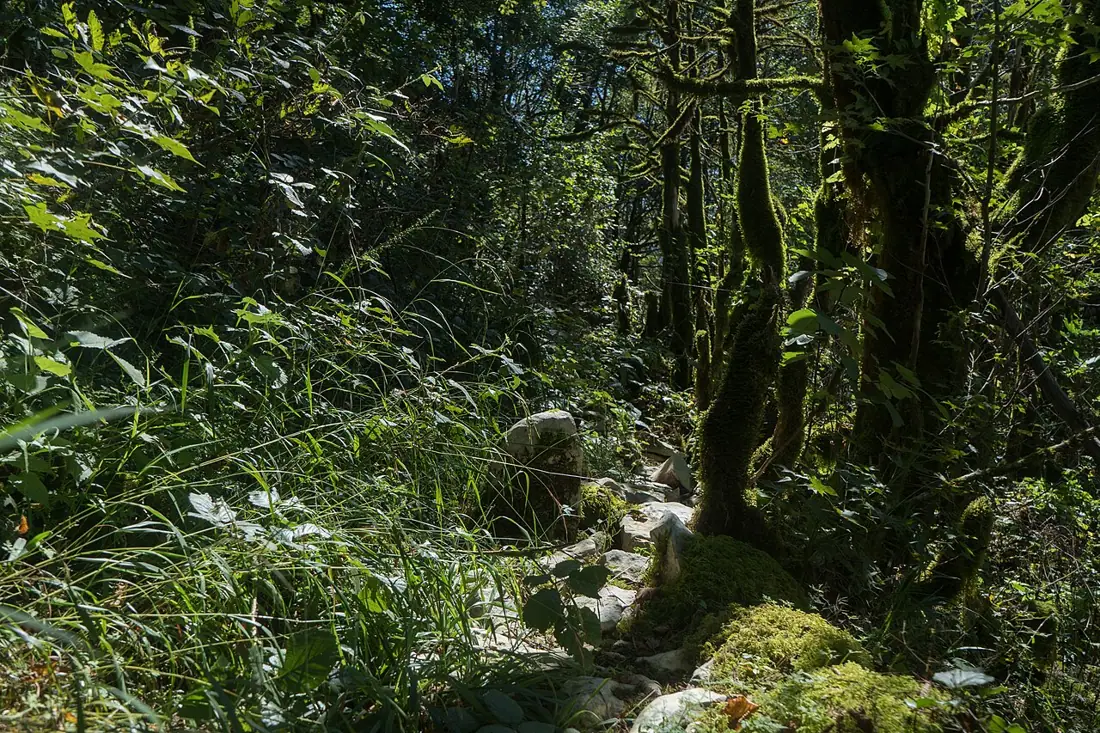
Martvili Canyon
A turquoise river between limestone walls, with boardwalks and a short boat ride — Samegrelo's most visited natural site.
 Waterfall
Kinchkha Waterfall
A cascade waterfall roughly a hundred metres high above Okatse, at the end of a gravel road.
 Museum
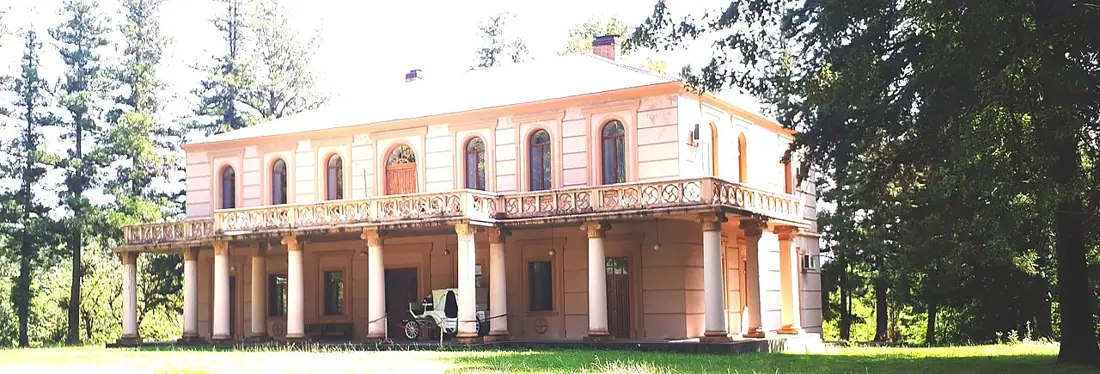
Salkhino Dadiani Residence
The Dadiani summer estate north of Martvili, with Ojaleshi vines trained up trees and a monastery in the grounds.
Booking and enquiries
This site is informational — there is no online payment. Call or email us to book.