Khvanchkara Wine Zone
The narrow right-bank vineyards between Tola and Sadmeli, where Georgia's best-known naturally semi-sweet red wine is made.
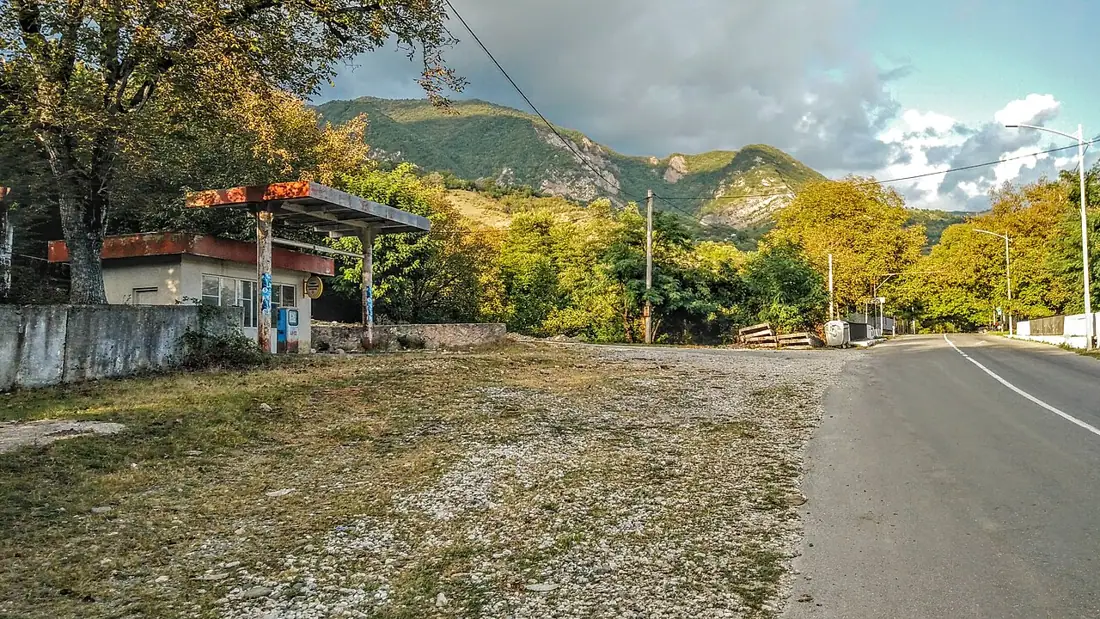
- Time needed
- 3 h
- From Tbilisi
- 315 km · 5:30
- Road
- Paved
- Car needed
- Economy class
- Season
- May–October
- Entry
- free
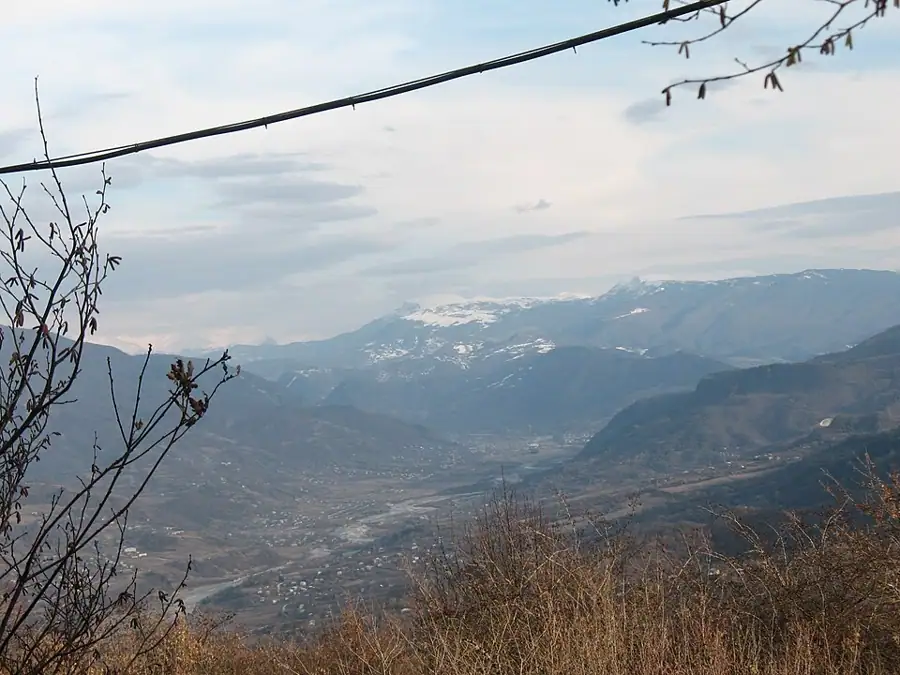
Khvanchkara is not a grape variety — it is a place. The wine takes its name from a small village downstream of Ambrolauri, and the controlled microzone is a thin strip on the right bank of the Rioni running roughly from Tola to Sadmeli, taking in Bugeuli, Dzirageuli, Abari and Chorjo. The whole appellation covers a few hundred hectares, which makes it one of the smallest wine zones in Georgia.
The wine is a blend of two local red varieties, Aleksandrouli and Mujuretuli, usually around two thirds to one third. Both ripen late, and picking often starts towards the end of October, when the nights are already cold. That cold is what makes the wine: fermentation stalls by itself at the natural temperature of the cellar, leaving residual sugar behind. The result is semi-sweet not by any addition but by climate, and this is precisely why it cannot be reproduced elsewhere.
Khvanchkara took shape on the Kipiani family estate at the end of the 19th century and won a medal in Belgium in 1907. Under the Soviet Union it became a scarce, half-mythical bottle, helped along by the story of Stalin's fondness for it. Today the name is used freely, and a great many bottles labelled Khvanchkara have never been anywhere near this valley.
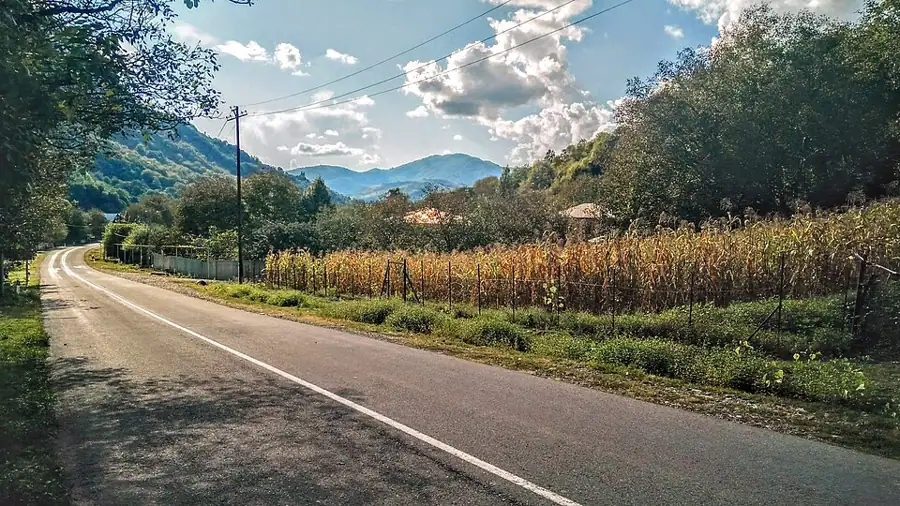
That is the argument for coming. A handful of family marani and two or three larger producers work in the valley, and after the harvest you can follow the whole cycle: vineyards climbing in narrow terraces above the road, qvevri sunk in the cellar floor, hams hanging on the wall for winter. Most cellars work by prior arrangement and few speak much English.
Late September and October are given over entirely to the harvest. From May to July the vines are green and the work quiet, but the cellars still open their doors.
Gallery

Practical advice
Three hours covers one cellar and a walk through the vineyards. Arrange the visit in advance — these are working family farms and cannot absorb unannounced guests. Bring a driver: tastings in Racha rarely stop at two glasses. Buy the bottle from the cellar itself rather than from a roadside kiosk, where the label means very little. October is harvest, so people are busy, but that is also when everything is visible. Toilets and food are in Ambrolauri only.
How to get there from Tbilisi
From Tbilisi take the E60 to Kutaisi, then head north via Tskaltubo and Alpana up the Rioni gorge — 315 km, five and a half hours. The road is asphalt throughout; the stretch between Alpana and Ambrolauri is narrow, follows the river closely and has poor sightlines through the bends. The villages sit on and just above the main road, and the turnings up to them are short but often gravel. Fuel at Kutaisi and Ambrolauri. An economy car is enough if the cellar is near the main road.
Click a marker for details. Coloured lines are ready-made road trips.
Nearby places
 Town
TownAmbrolauri
Georgia's smallest regional capital, on both banks of the Rioni — the practical base for Racha and the edge of the Khvanchkara wine zone.
 Monastery
Nikortsminda Cathedral
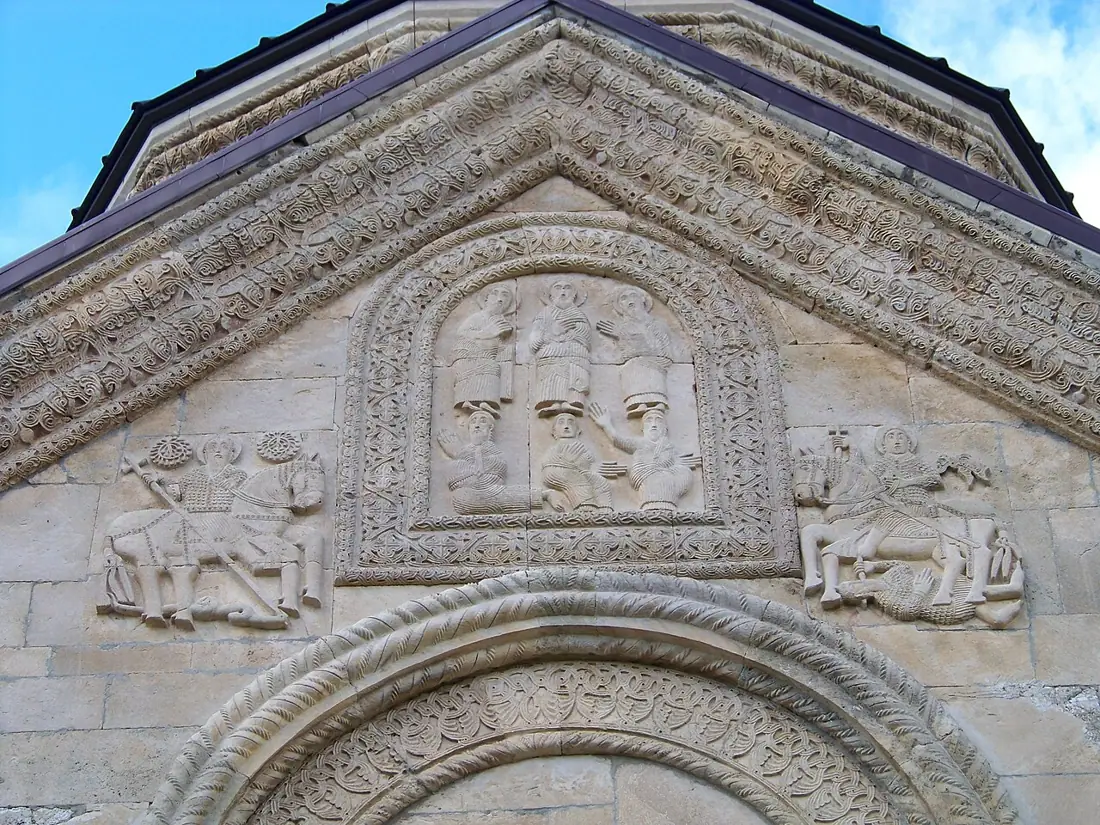
An 11th-century cathedral covered in exceptional stone carving, with late medieval frescoes inside.
 Town
TownTsageri and Lechkhumi
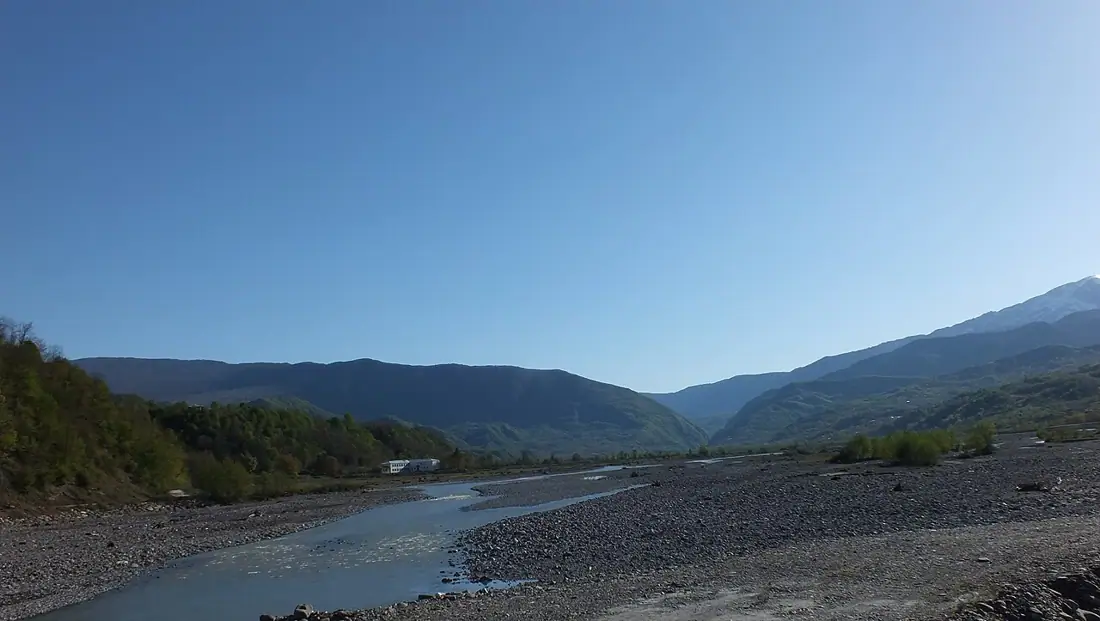
The centre of Lechkhumi in the Tskhenistskali valley — wine country, fortresses and the Lajanuri reservoir.
Booking and enquiries
This site is informational — there is no online payment. Call or email us to book.