Khirsa Monastery
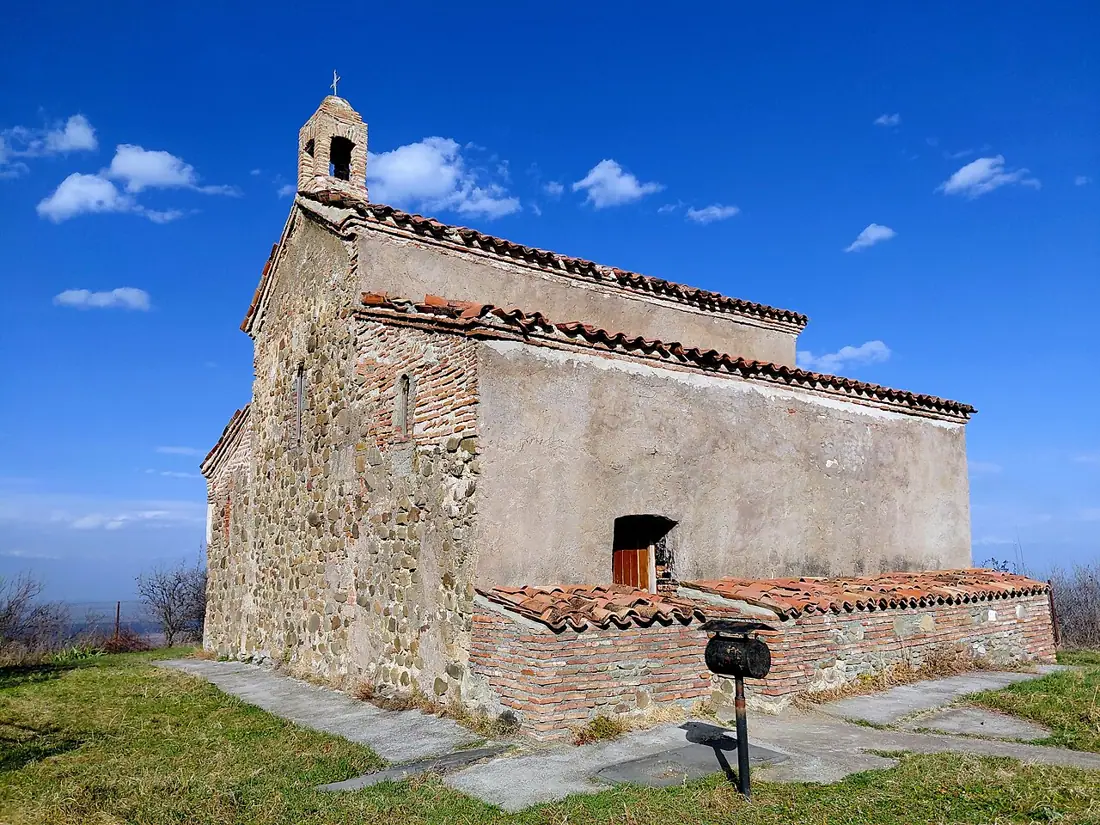
One of the monasteries founded by the Assyrian Fathers, walled and towered, above the plain near the village of Tibaani.
- Time needed
- 1 h
- From Tbilisi
- 122 km · 2:10
- Road
- Mostly paved
- Car needed
- Economy class
- Season
- All year
- Entry
- free
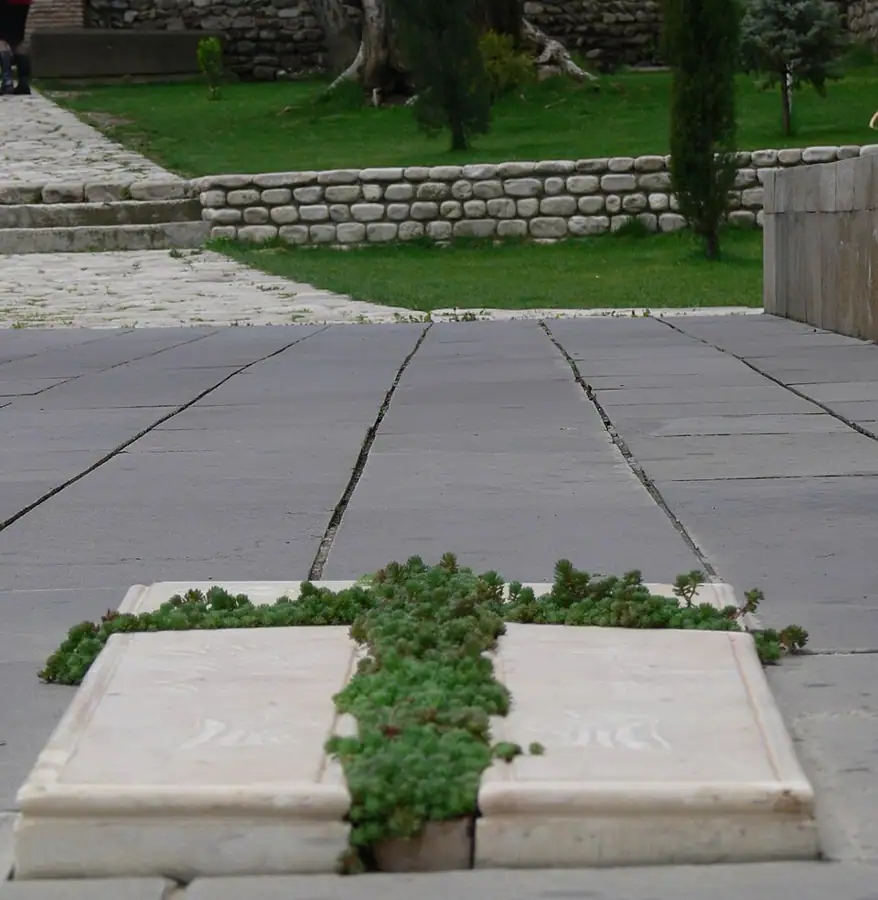
Khirsa is one of the thirteen foundations that established monastic life in Georgia in the 6th century. Its founder was Stephen of Khirsa, a member of the group known as the Assyrian Fathers who came from the Antioch region and settled here at the southern edge of the Alazani plain. His grave lies under the altar, and the monastery still keeps his feast.
The present church is largely a 16th and 17th-century rebuilding on 6th-century foundations. It is a three-nave basilica, plain and severe outside, with almost no carved ornament; the whole effect rests on proportion and on the texture of the stone. Inside, the space is narrow and tall, the piers heavy, and light comes from only a few small windows — which is why services here are lit mostly by candles even at midday.
The monastery sits inside a high enclosure wall with corner towers, and these are not decorative. Tibaani lay on the line of the Dagestani raids that plagued Kakheti for two centuries, and the community was attacked repeatedly; the monks sheltered in the towers.
Khirsa was a bishop's seat for centuries, and its bishops ranked high in the Kakhetian church. The Soviet period closed it; it reopened in the 1990s and is a working male monastery today, with a well-restored courtyard, a vineyard and a productive garden.
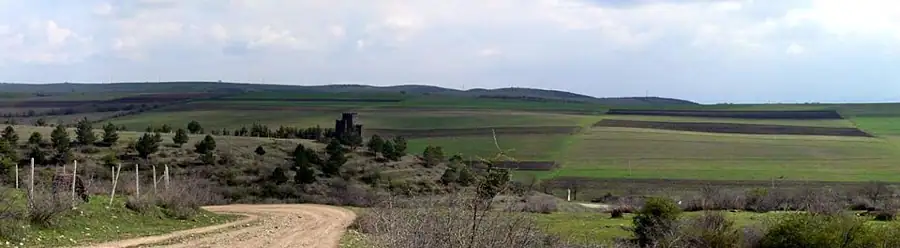
From the north corner of the wall the Alazani plain opens out, and on a clear day the Caucasus ridge closes the horizon. Sighnaghi is twenty minutes away, but almost nobody comes over.
The thirteen Assyrian Fathers are a hinge in Georgian church history. They arrived in the 540s and 550s, dispersed across the country and founded the monasteries that turned a recently converted kingdom into a monastic one. Khirsa, Alaverdi and Nekresi all belong to that same movement, and all three can be seen in a single day.
Gallery
Practical advice
An hour is enough. This is a working male monastery: women need a long skirt and a headscarf, men long trousers, and shorts will not get you through the gate. Wraps are sometimes available at the entrance. Photography in the courtyard is normally fine, inside the church it is not. There are toilets outside the wall but no cafe; the nearest are in Tsnori and Sighnaghi. The monks do not expect conversation, and quiet is the standing rule of the place.
How to get there from Tbilisi
Take the Kakheti highway from Tbilisi through Badiauri and Bakurtsikhe towards Tsnori — 110 km of good asphalt. Beyond Tsnori turn south-east on the Dedoplistskaro road and follow the monastery sign at Tibaani; the last three kilometres are narrow village asphalt, broken in places. Total 122 km, about two hours and ten minutes. Fuel is available in Tsnori. An economy car is sufficient, and Khirsa fits naturally into a day that also takes in Bodbe and Sighnaghi.
Click a marker for details. Coloured lines are ready-made road trips.
Nearby places
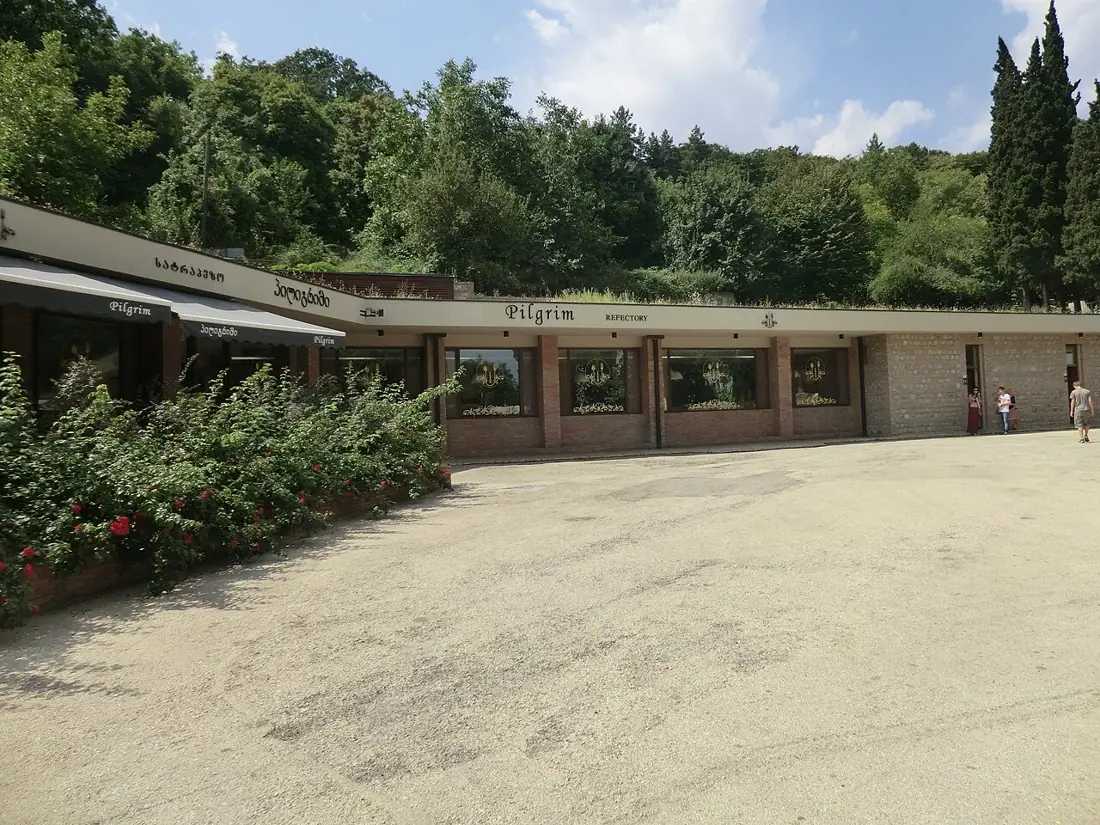 Monastery
Bodbe Monastery
The burial place of St Nino beside Sighnaghi — one of Kakheti's most visited shrines, with a cypress avenue and valley views.
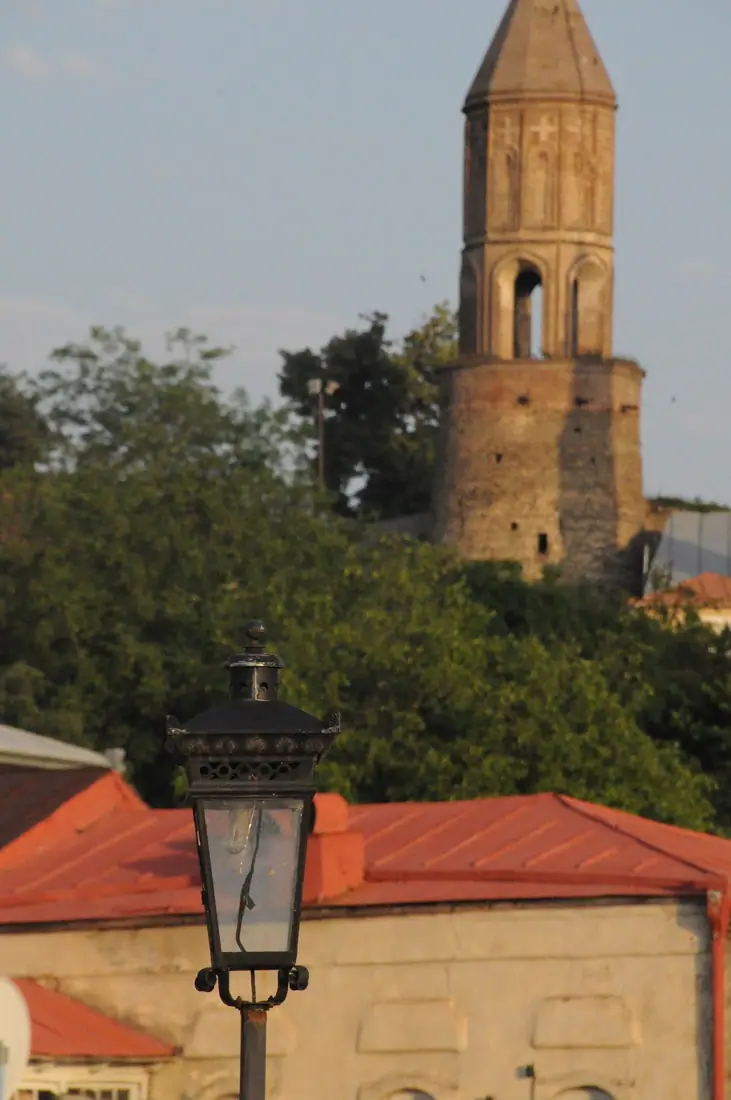 Town
TownSighnaghi
A small walled town on a ridge above the Alazani Valley, with the most photographed view in Kakheti.
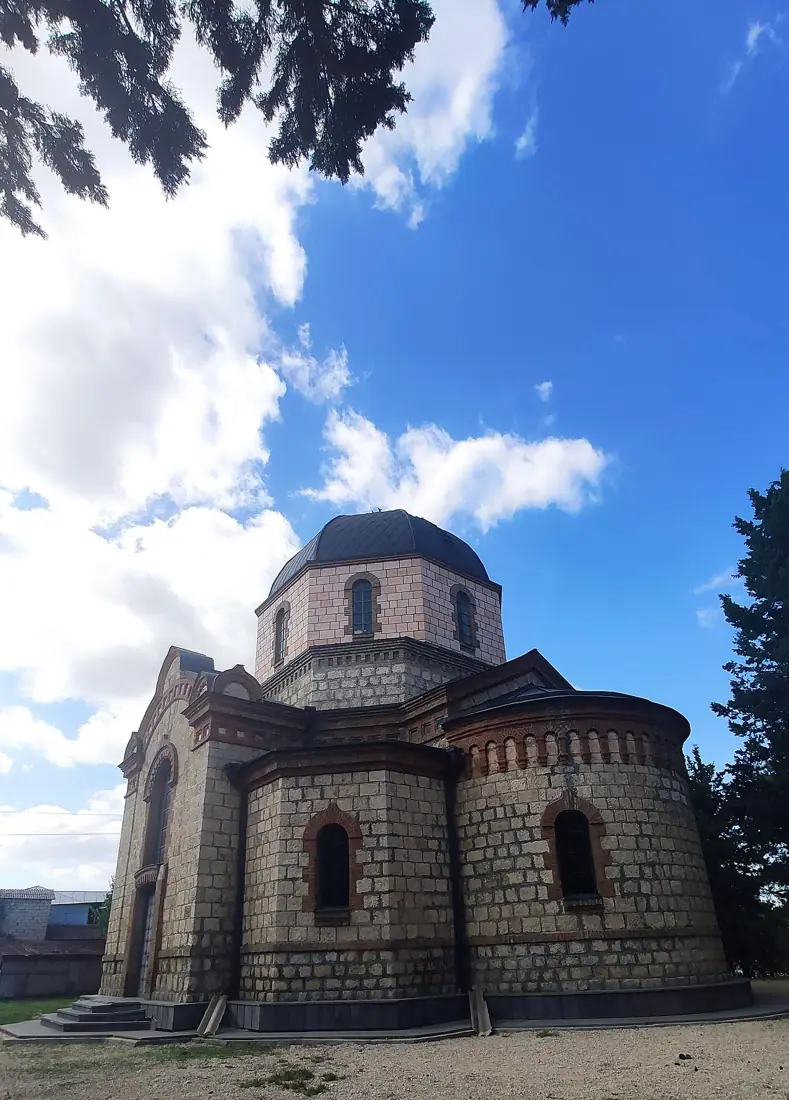 Fortress
Khornabuji Fortress
A medieval fortress on a steep isolated rock near Dedoplistskaro, commanding the southern edge of the Alazani plain.