The Green Monastery (Chitakhevi St George)
A small monastery founded in the 9th century, hidden near Borjomi in a moss-covered forest gorge.
- Time needed
- 1 h
- From Tbilisi
- 172 km · 2:35
- Road
- Mostly paved
- Car needed
- Economy class
- Season
- All year
- Entry
- free
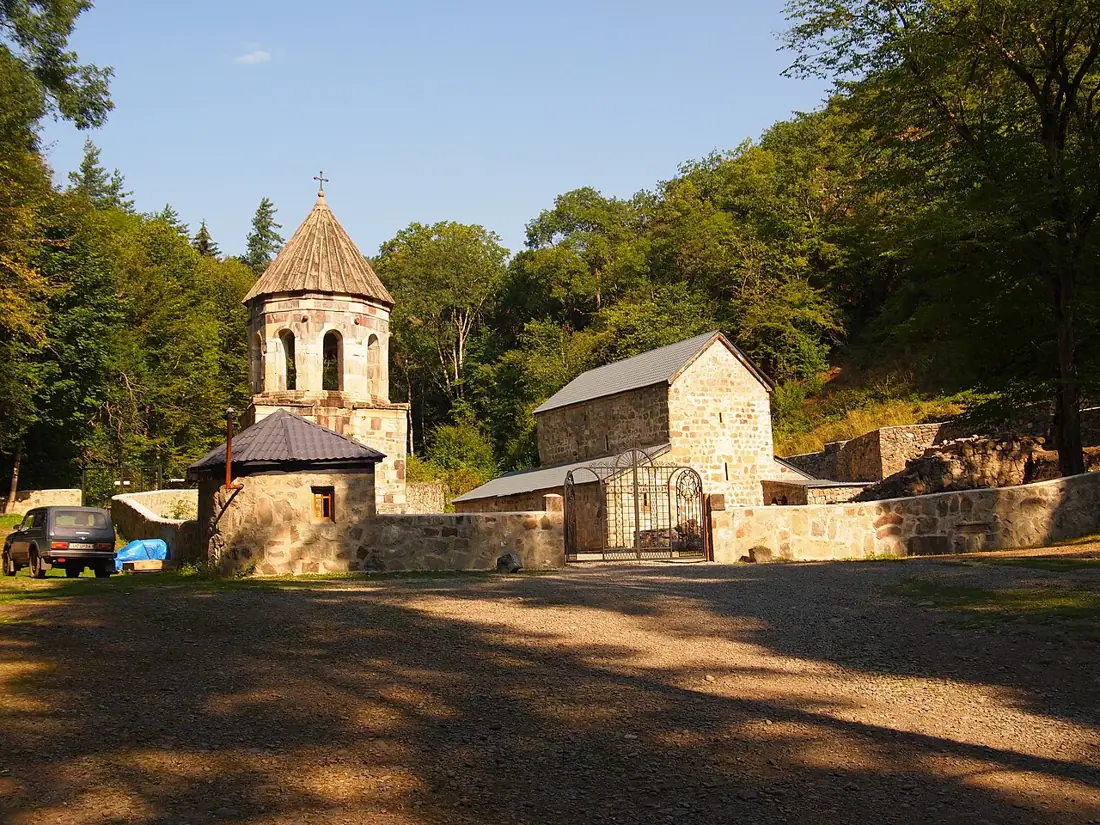
The Green Monastery is named for a colour, not a metaphor. In the narrow Chitakhevi gorge, where the stream runs right along the edge of the monastic yard, moss covers the stones, the walls and the tree trunks; sunlight filters through leaves and the whole place is sunk in green light. On a summer afternoon, when Borjomi is at thirty degrees, you want a sweater here.
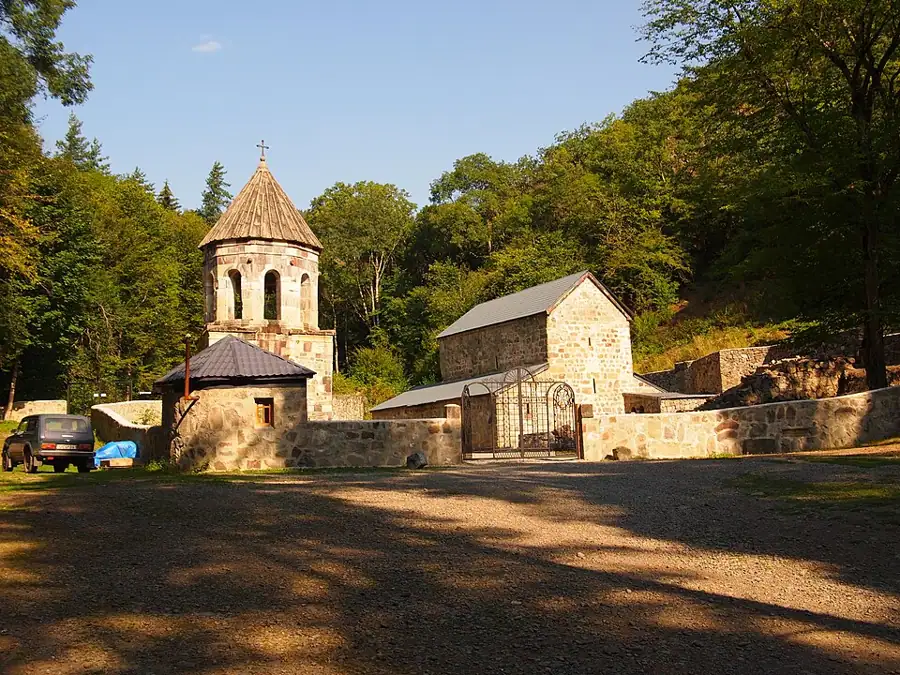
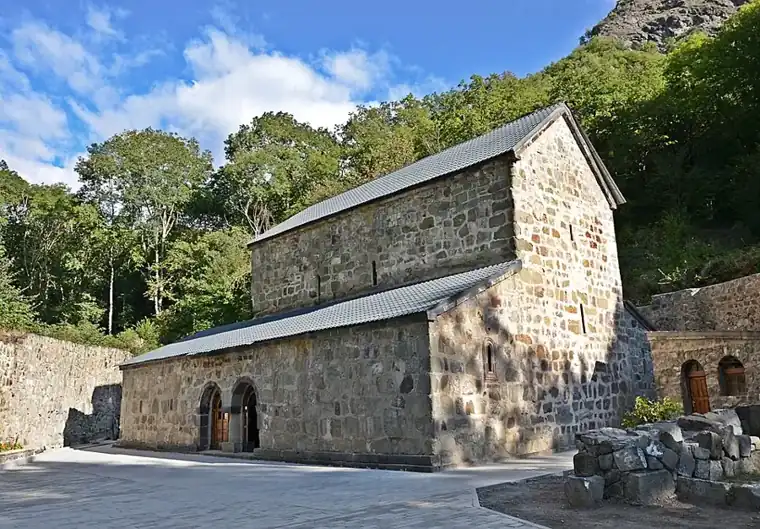
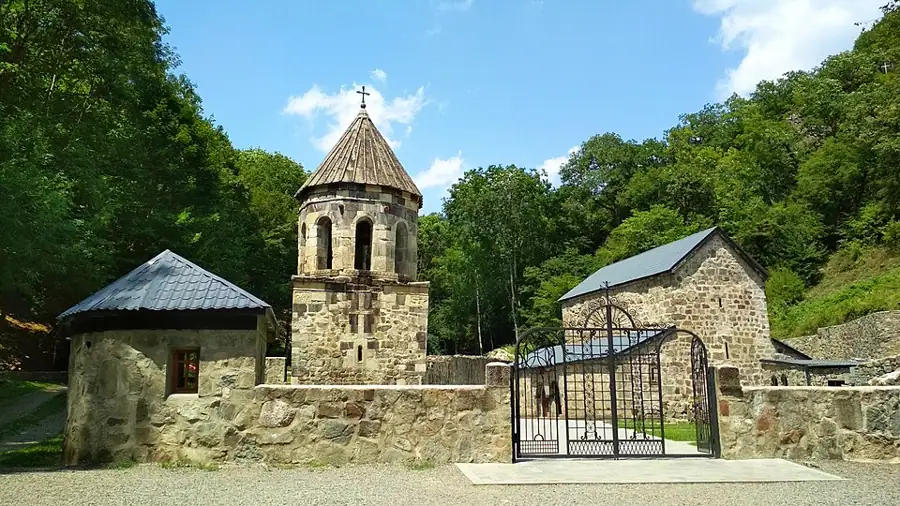
The community was founded in the 9th century, traditionally by two disciples of the Assyrian Fathers named Christopher and Theodore. The present church of St George is largely 15th century: a small, plain stone building with a free-standing bell tower that is the most elegant thing on the site. Almost no painting survives inside, and the interior is austere and dark.
The stones in the streambed are flecked with red, and local tradition holds that this is the blood of monks killed in the 16th century, when the army of Shah Tahmasp burned its way through the valley. The colour in fact comes from iron in the rock, but the history behind the legend is real enough: most of the monasteries of Samtskhe emptied in exactly that century and did not recover for four hundred years.
The gorge above the monastery continues as a forest track, and half an hour further up there is nothing but beech and the stream. It is one of the easiest ways near Borjomi to get a sense of what the gorge forest actually looks like without committing to a full national park route.
The monastery has been active again for the last twenty years, with a handful of monks who keep a garden and a few animals. The grounds are small: church, bell tower, two or three outbuildings and a wooden footbridge over the water. That modesty is the point. This is not a monument that demands three hours, but forty minutes that stay with you.
Gallery
Practical advice
An hour is more than enough. The last stretch is woodland path and gets slippery after rain, so ordinary shoes work and sandals do not. Entering the church requires a headscarf and long skirt for women; wraps are usually available at the door. The toilet is basic and there is no cafe or shop, so bring water. Mosquitoes are noticeable near the stream in summer. In winter the gorge sits in shade and ice lingers for weeks, so drive down carefully.
How to get there from Tbilisi
From Tbilisi take the E60 to Khashuri, continue to Borjomi, and then follow the Akhaltsikhe road for another nine kilometres or so. At the sign for Chitakhevi turn left and climb two kilometres up the side valley. The total is 172 km, two hours thirty-five. The main road is asphalt; the final stretch is narrow and partly gravel, but in dry weather an economy car handles it without trouble. There is parking in front of the monastery. Fuel in Borjomi.
Click a marker for details. Coloured lines are ready-made road trips.
Nearby places
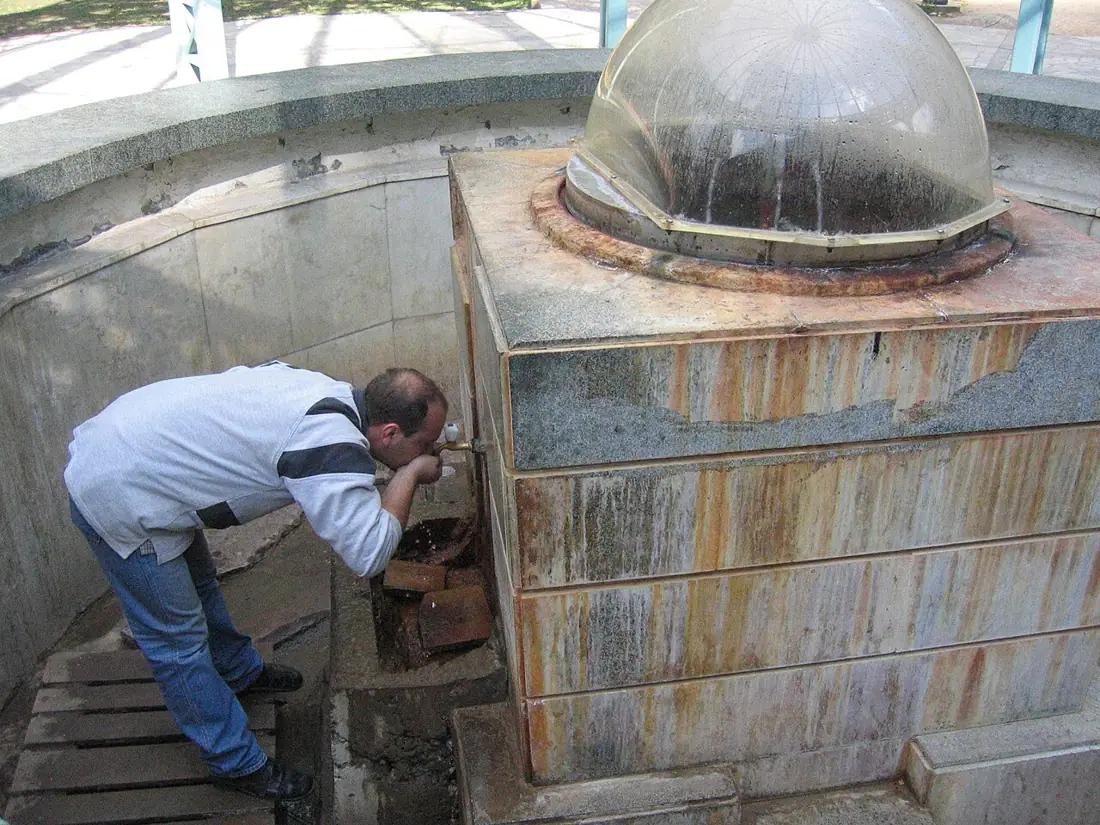 Spa resort
Borjomi Central Park and Mineral Springs
The historic spa park where you drink warm Borjomi water free, straight from the source.
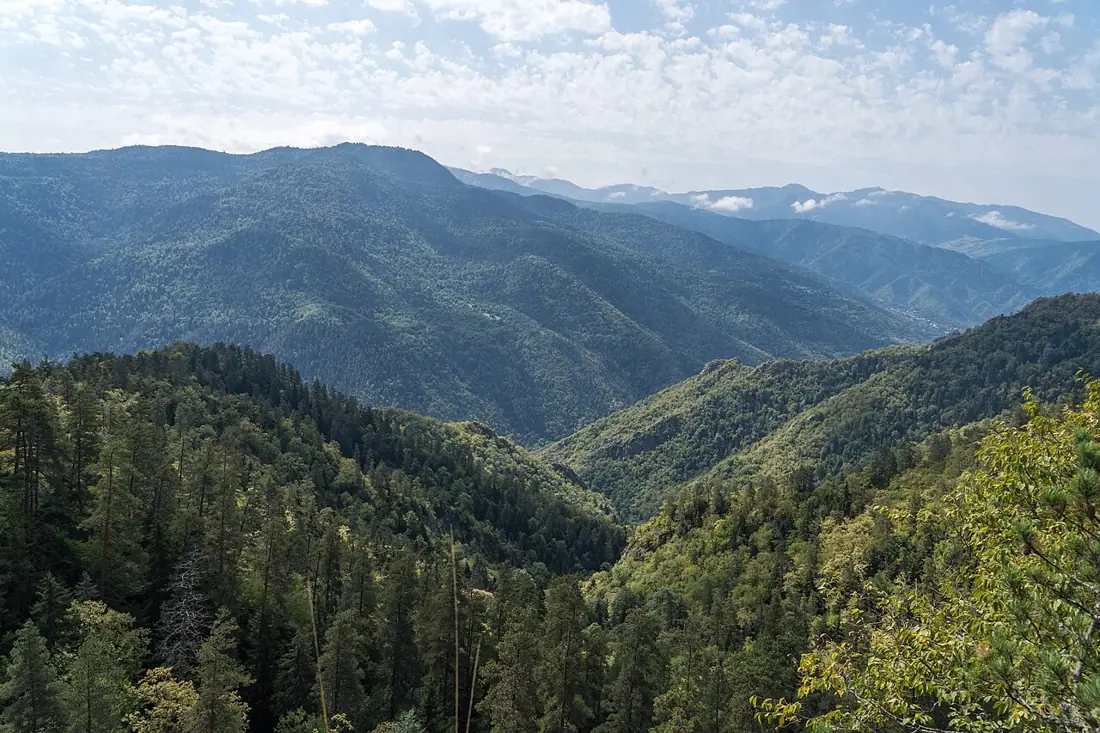 Nature
Borjomi-Kharagauli National Park
One of the largest protected forests in Europe, with marked trails, huts and multi-day treks.
 Museum
Likani Palace (the Romanov summer residence)
The Romanov palace on the bank of the Mtkvari near Borjomi, today a state residence of the president.
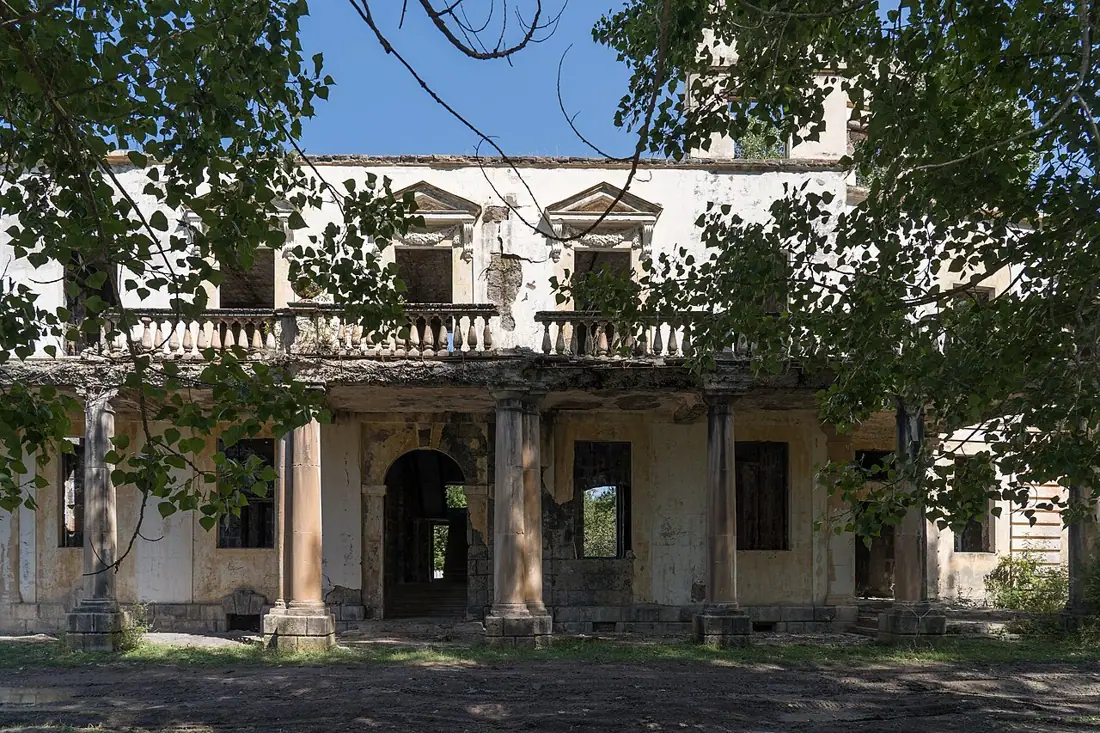 Monastery
Timotesubani Monastery
A brick church of Queen Tamar's reign off the Borjomi-Bakuriani road, holding an unusually complete 13th-century fresco cycle.
Booking and enquiries
This site is informational — there is no online payment. Call or email us to book.