Batsara Reserve
The largest natural yew grove in the world, hidden in a narrow river gorge north of Akhmeta.
- Time needed
- 6 h
- From Tbilisi
- 140 km · 2:50
- Road
- Unpaved sections
- Car needed
- Crossover / SUV
- Season
- May–October
- Entry
- ~5 ₾
Batsara holds the largest natural yew grove on earth, and that is not a local boast but a claim confirmed by botanists more than once. The reserve lies north of Akhmeta in the tight gorge of the Batsara river and has been protected since 1935.
Yew, Taxus baccata, grows slowly and lives a very long time. Some trees here are between 1,500 and 2,000 years old, reach 25 to 30 metres and approach two metres in trunk diameter. Almost nowhere in Europe survives at that scale, because yew was cut for centuries to make bows and furniture and was never given time to recover.
Walking into the grove is genuinely strange. Yew casts a dark, almost black shade; nothing much grows underneath, the ground is a mat of needles, and sound is absorbed rather than reflected. Even on a bright day the interior is dim, and the temperature drops a few degrees as you step in.
The gorge holds more than yew: sweet chestnut, hornbeam, Caucasian lime, ferns and thick moss on every fallen trunk. Roe deer are common, bear tracks turn up regularly, black stork nest along the water, and eagles work the ridges above.
This is a strict nature reserve rather than a park. Paths are minimal, there is essentially no infrastructure, and walking freely is not permitted. Entry is only with a permit and in the company of a ranger. That restriction is exactly why the grove is still intact, and it is worth accepting rather than resenting.
Numbers give some sense of what is being protected. The strict reserve covers roughly three thousand hectares, of which the yew occupies several hundred, and a single mature tree may carry well over a thousand growth rings. When a storm brings one down it is recorded as an event, not written off as ordinary loss.
Gallery
Practical advice
Arrange the permit in advance through the protected areas administration or the office in Akhmeta; simply arriving does not work. The route into the gorge runs 8 to 10 km each way and fills a full day. The path follows the riverbed and crosses it several times, so wet feet are guaranteed and boots that drain are better than boots that keep water out. Ticks are active from April to July. There is no mobile signal in the gorge. Do not go in alone.
How to get there from Tbilisi
From Tbilisi drive over the Gombori Pass to Telavi and then west to Akhmeta — 125 km of asphalt. From Akhmeta head north about 15 km to the mouth of the gorge; the last section is gravel and dirt and crosses the river at several fords. Total 140 km, about two hours fifty. High clearance is necessary, and after heavy rain the track may not be passable at all, so check locally before setting out. Fuel is available in Telavi and Akhmeta.
Click a marker for details. Coloured lines are ready-made road trips.
Nearby places
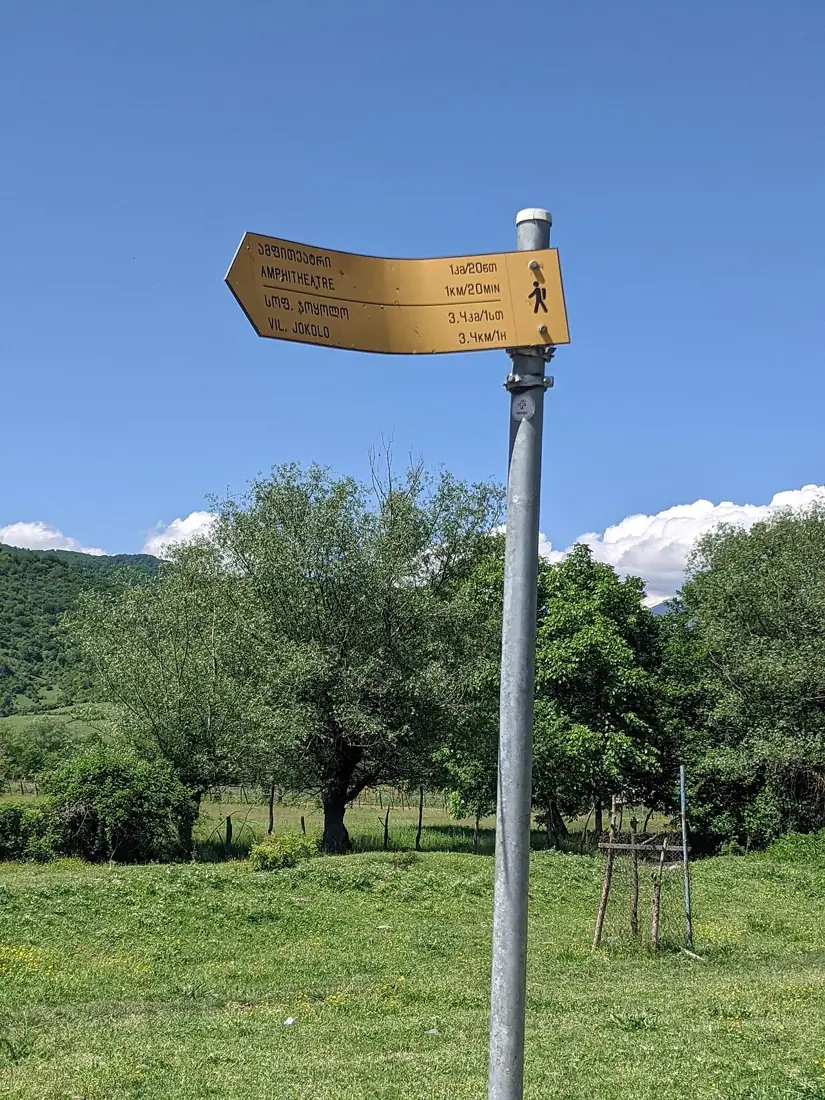 Nature
Pankisi Gorge
The upper Alazani valley north of Akhmeta, home to the Chechen-speaking Kists for nearly two centuries.
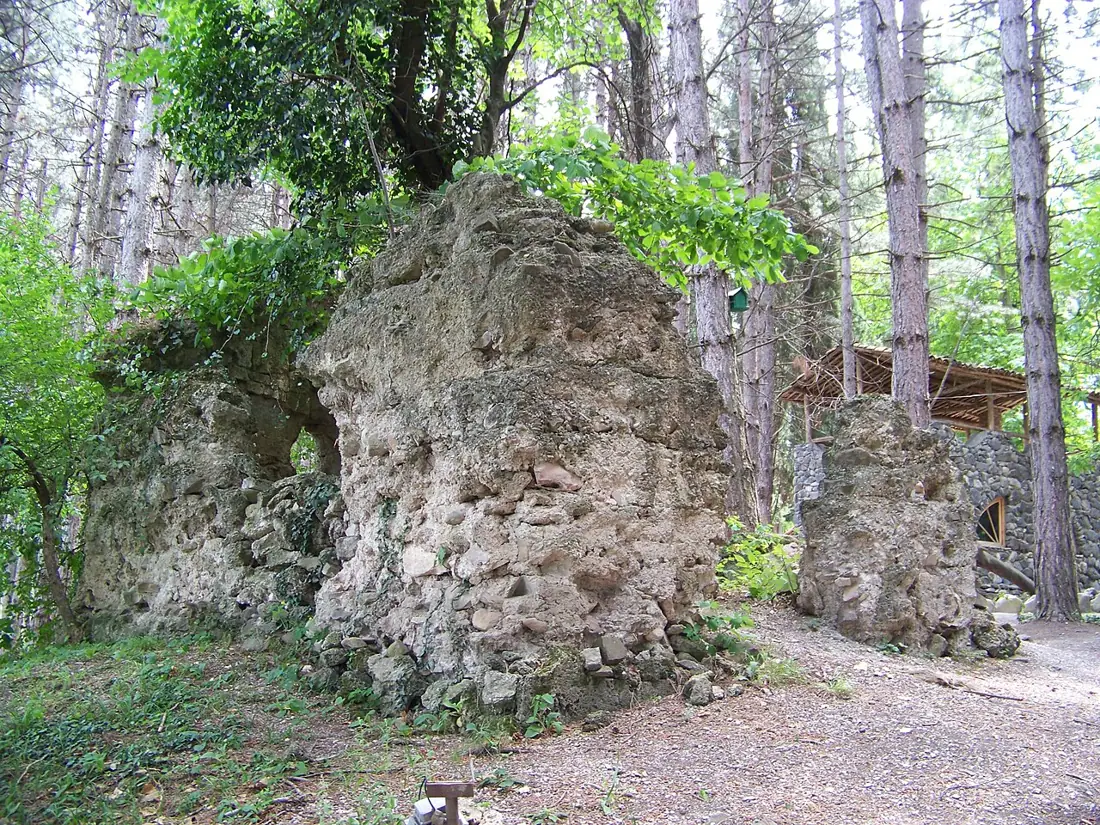 Fortress
Kvetera Fortress and Church
The remains of a fortified town on a wooded hill near Akhmeta, with a tiny 10th-century church under a blue tiled roof.
 Monastery
Alaverdi Cathedral
An eleventh-century cathedral rising fifty metres out of the Alazani plain — for centuries the tallest building in Georgia.