Barakoni Church
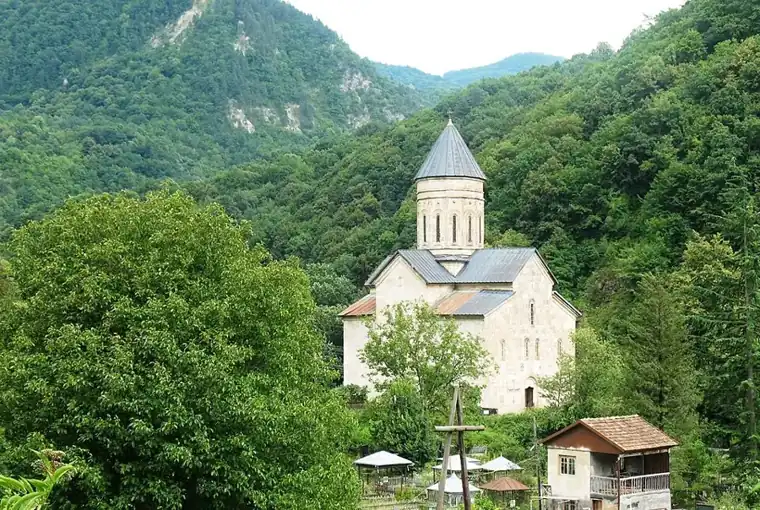
A domed church of 1753 at Tsesi, above the meeting of the Lukhuni and the Rioni — the last great work of medieval Georgian architecture.
- Time needed
- 1 h
- From Tbilisi
- 319 km · 5:30
- Road
- Paved
- Car needed
- Economy class
- Season
- All year
- Entry
- free
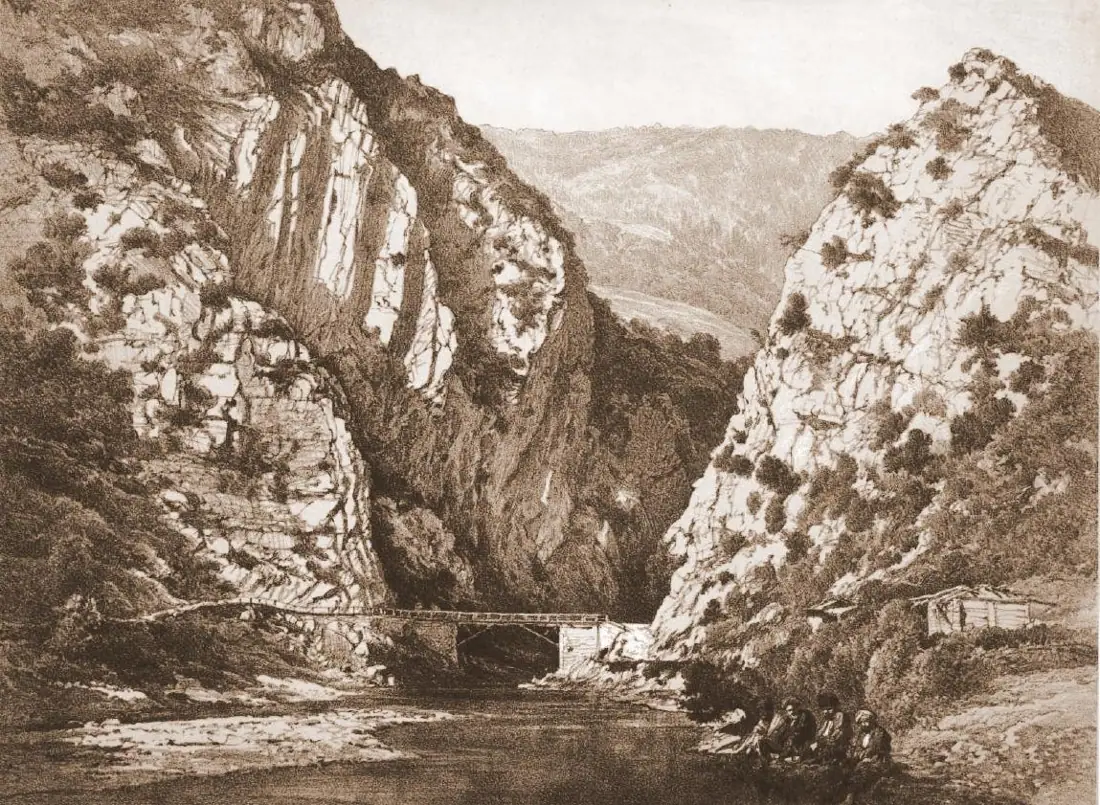
Barakoni is the church with which medieval Georgian architecture ends. It was built in 1753 in the village of Tsesi, above the point where the Lukhuni joins the Rioni, for Rostom, Duke of Racha. The builder, Avtandil Shulavreli, is named in the inscription on the east facade — a rarity in Georgia, where architects almost always remained anonymous.
The plan is a cross-in-square with a dome, austere and tall. Barakoni's defining quality is proportion: the drum of the dome is long and slender, and the facades are pulled together so tightly that the church reads as larger than it is. The stone is a pale yellow-grey that catches the light differently through the day; in the evening, as the sun drops towards the western end of the valley, the west front warms noticeably.
The decoration is carved, not painted. Around the windows, on the drum and at the ends of the cross arms there is deeply cut geometric and vegetal ornament, among the best Georgian stonework of the 17th and 18th centuries. Inside, by contrast, the church is almost bare: no frescoes survive, and the space is high, cold and severe.
The story ends unhappily. Rostom, who built Barakoni, lost his contest with King Solomon I of Imereti in 1769, and the dukedom of Racha was abolished. The church is the last substantial thing left from his rule.
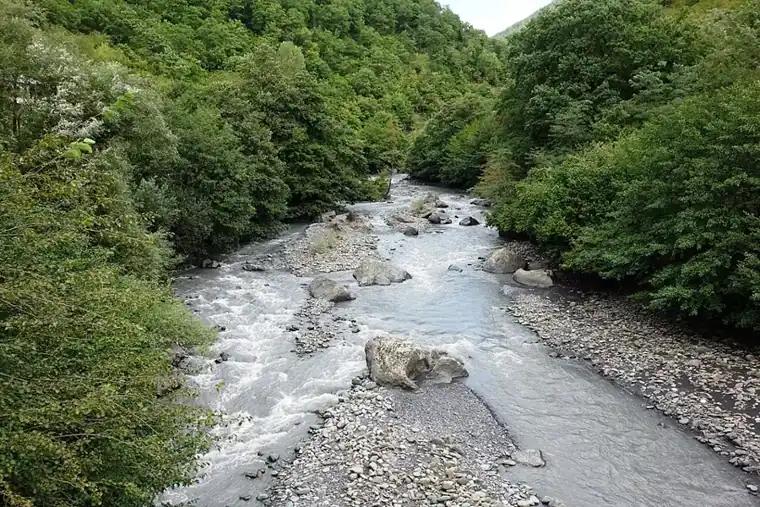
Barakoni is an active parish church. The yard is walled and well kept, with tall trees around it. In winter, with the leaves gone, the white stone stands out sharply against black branches; in spring the Rioni below runs loud and brown, and is best seen from the bridge a few hundred metres away.
Gallery
Practical advice
Half an hour to an hour is plenty. You can drive into the yard, and parking is free and usually empty. The church is normally open; if it is locked, the key is kept in a neighbouring house and is worth asking for. Dress rules apply and headscarves are left by the door. There are no toilets or cafes at the site — the nearest are in Ambrolauri, six kilometres away. The church sits low in the valley and is accessible all year, including winter.
How to get there from Tbilisi
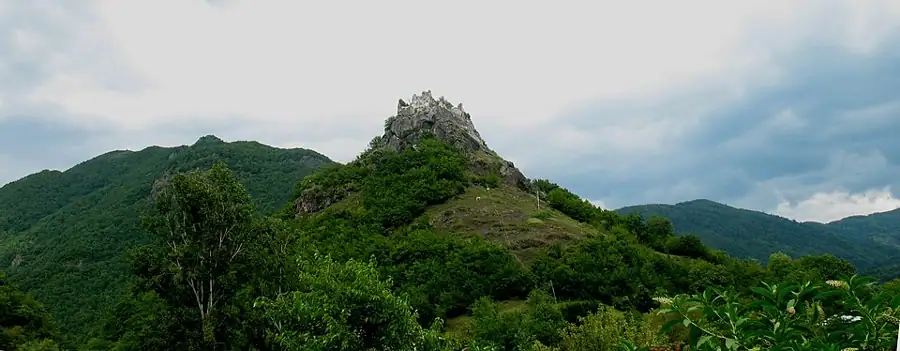
From Ambrolauri head north-east towards Oni — about six kilometres, ten minutes. From Tbilisi the total is 321 km via Kutaisi and the Nakerala pass, roughly five hours and forty minutes. The road is asphalt throughout and in good condition. The church stands on a steep rocky spur above the river, to the left of the main road and is visible from some distance; the turning is short and paved. Fill up in Ambrolauri, as there is nothing until Oni. An economy car is entirely sufficient.
Click a marker for details. Coloured lines are ready-made road trips.
Nearby places
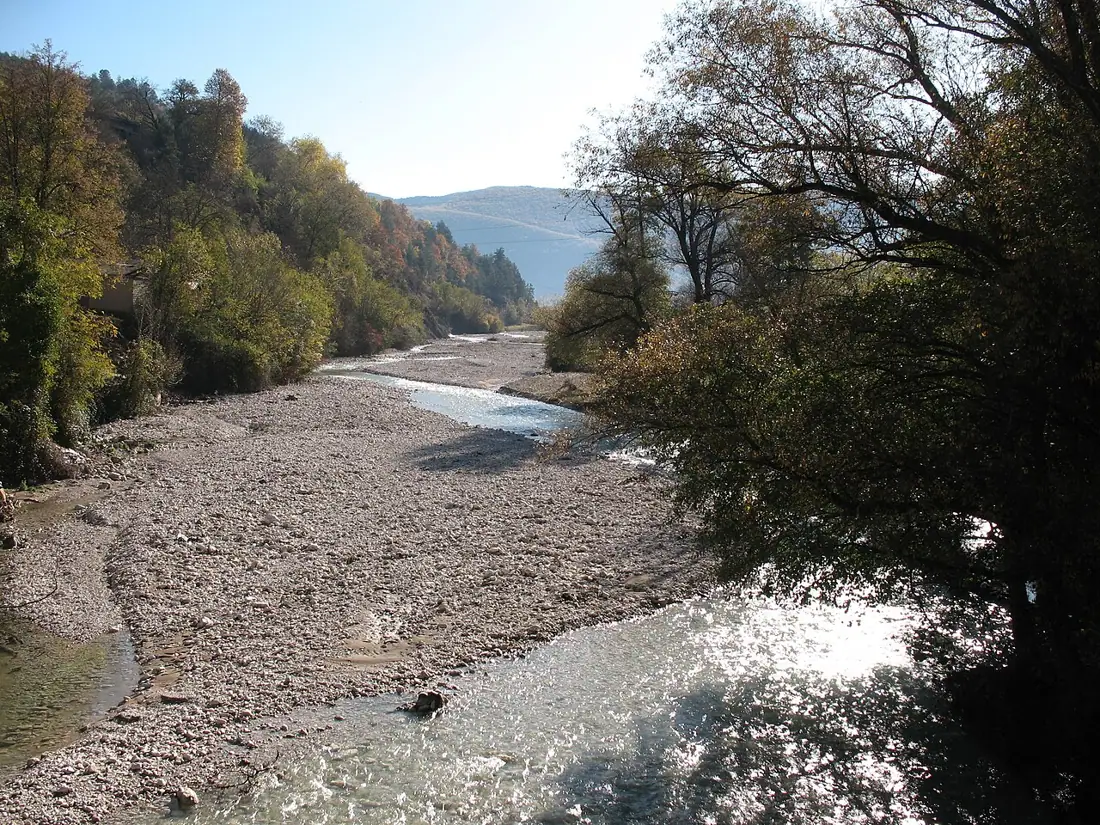 Town
TownAmbrolauri
Georgia's smallest regional capital, on both banks of the Rioni — the practical base for Racha and the edge of the Khvanchkara wine zone.
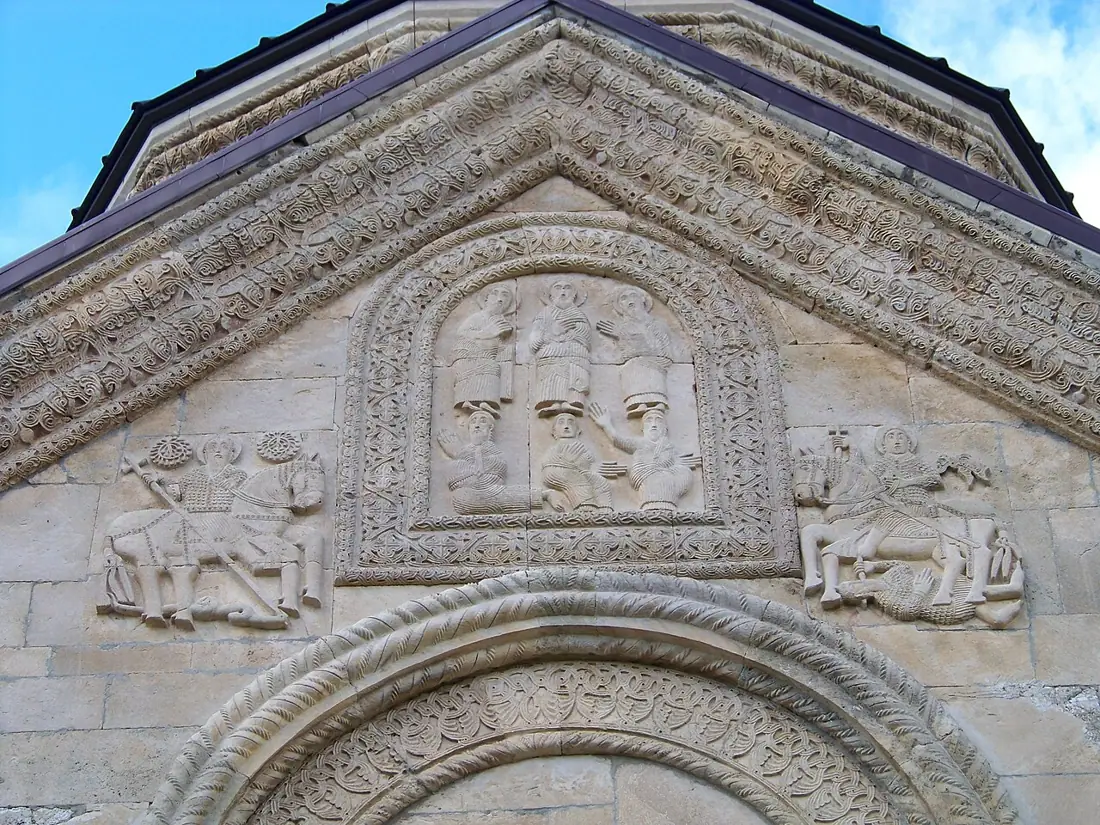 Monastery
Nikortsminda Cathedral
An 11th-century cathedral covered in exceptional stone carving, with late medieval frescoes inside.
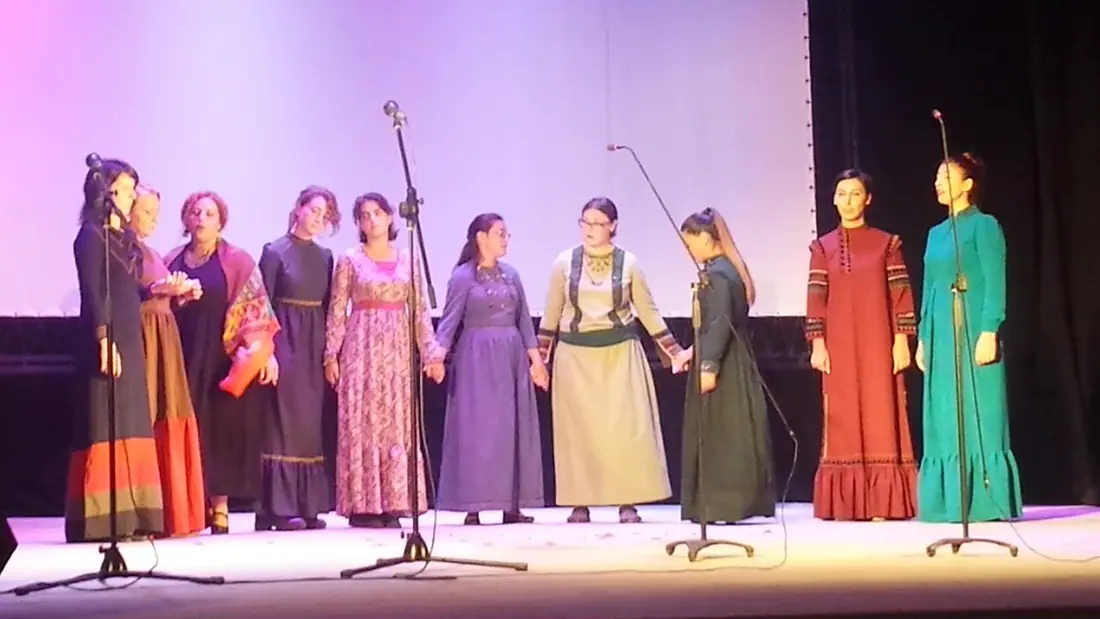 Town
TownOni
The main town of Upper Racha, on the Rioni at 830 metres — damaged by the 1991 earthquake and only half rebuilt.
Booking and enquiries
This site is informational — there is no online payment. Call or email us to book.