
Tskaltubo
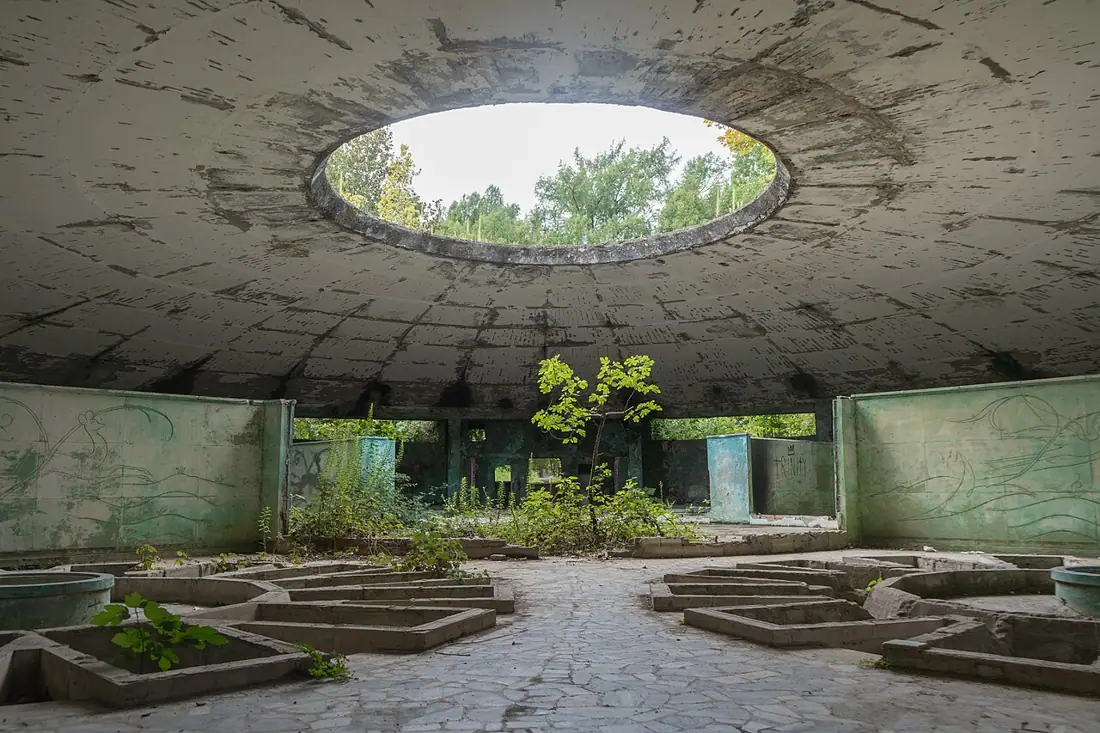
A Soviet spa town laid out in a ring around warm radon springs, where working bathhouses stand beside sanatoriums slowly turning into forest.
- Time needed
- 4 h
- From Tbilisi
- 245 km · 3:35
- Road
- Paved
- Car needed
- Economy class
- Season
- All year
- Entry
- free
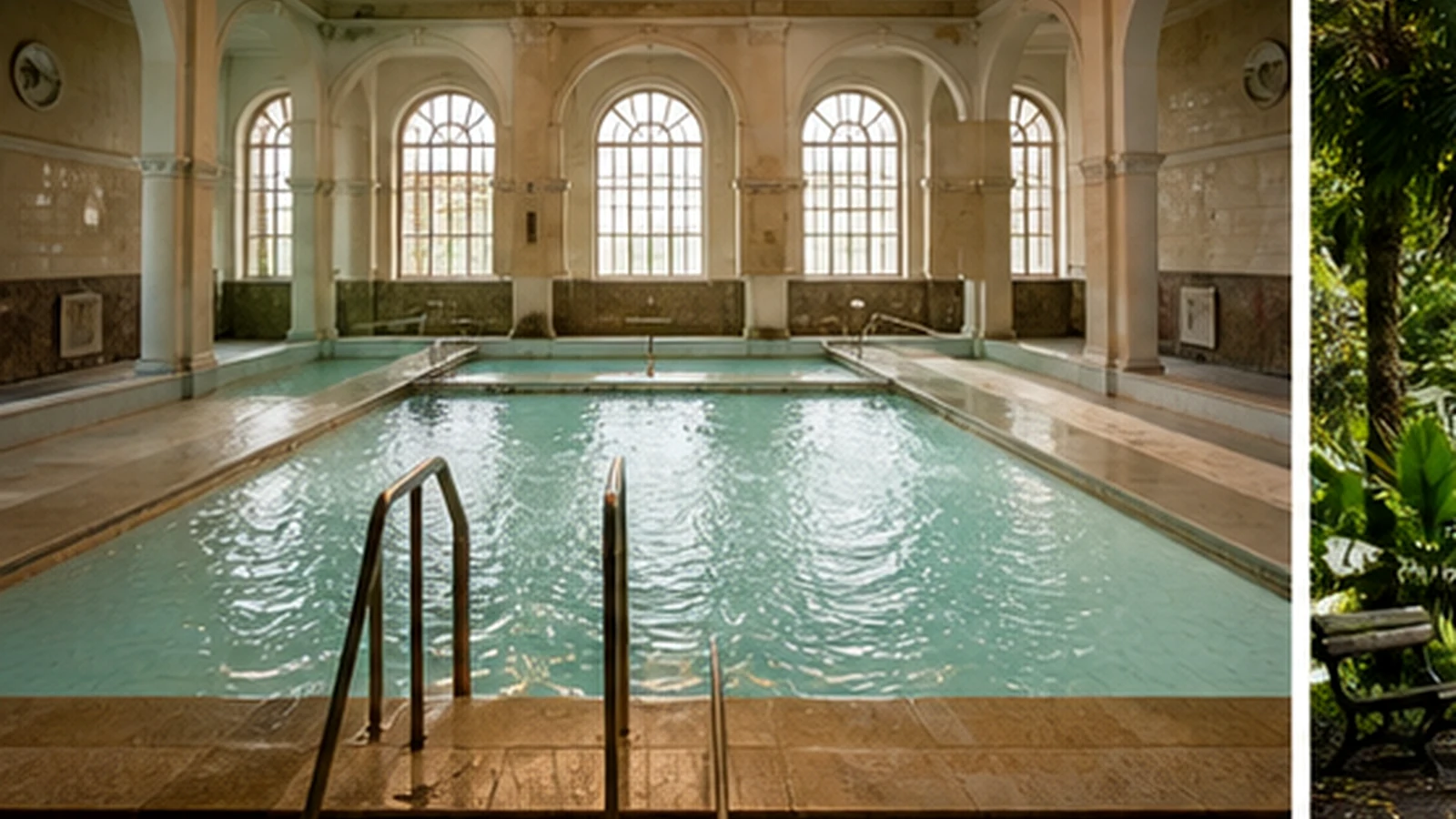
Tskaltubo's water leaves the ground at 33–35 °C, warm enough to bathe in as it is, and a whole Soviet town was drawn in a circle around it.
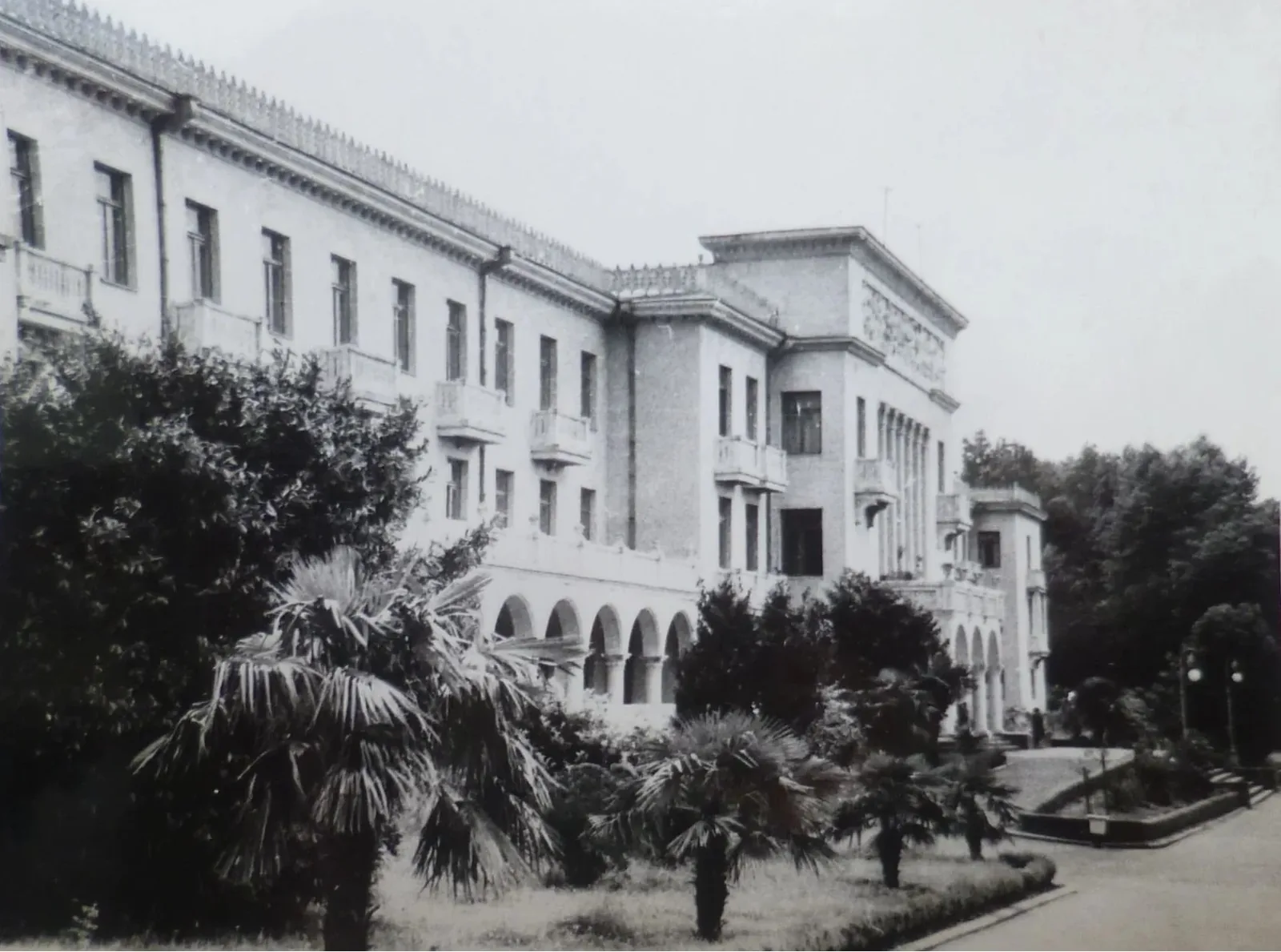
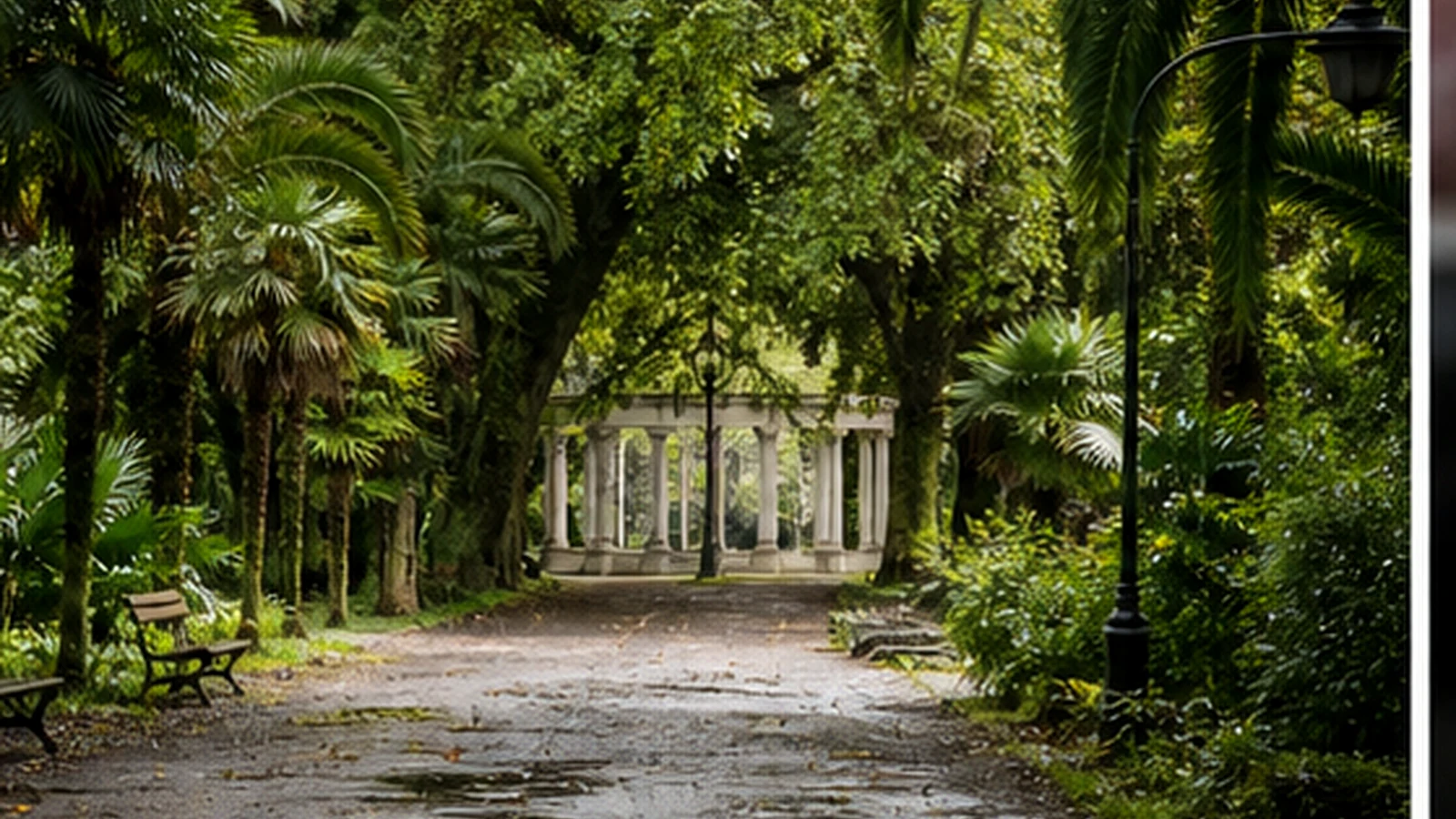
The springs were known long before Moscow took an interest. Georgian sources place them in the 7th–9th centuries, and in the 13th century a king granted the healing springs and baths to Iakob, abbot of Gelati. German naturalists wrote about them from 1782. The Soviets turned them into an industry. Building began in 1926, a 1931 decree made Tskaltubo a spa centre, and in 1950–51 the architects I. Zaalishvili and V. Kedia drew the plan you can still read on the map: a large park at the centre with the bathhouses, and the sanatoriums in a ring around it. Town status followed in 1953.
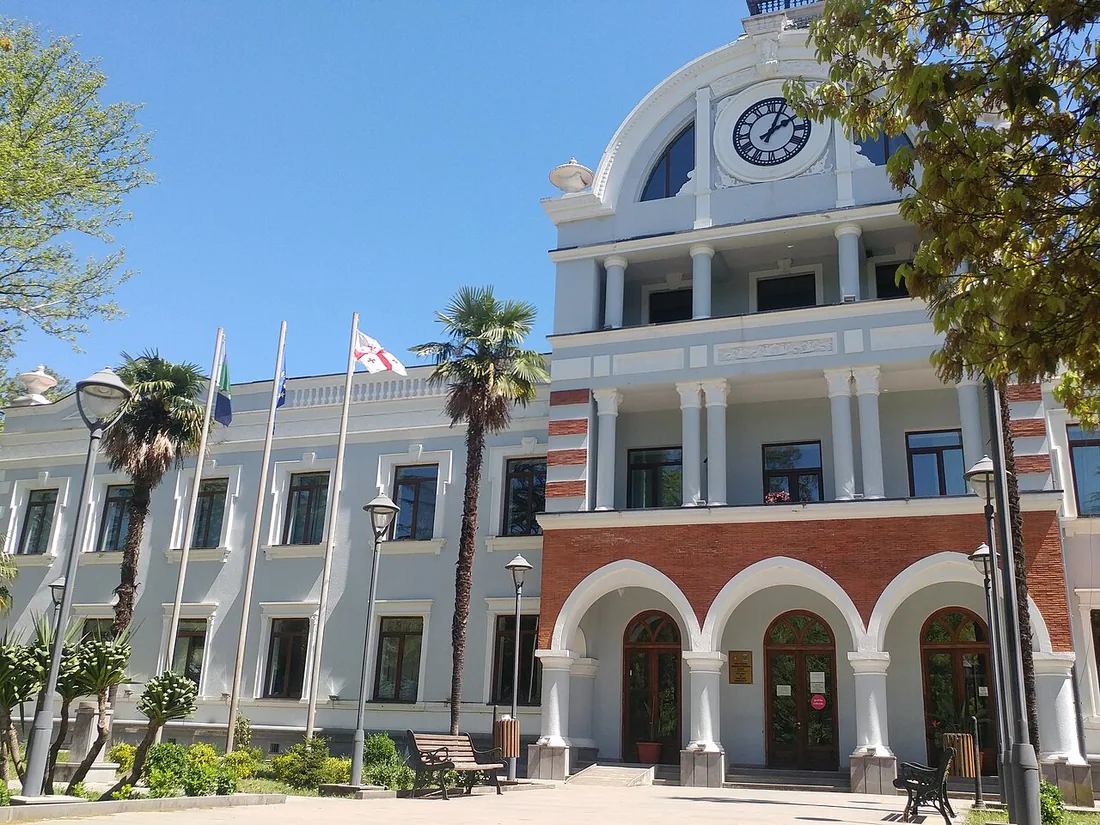
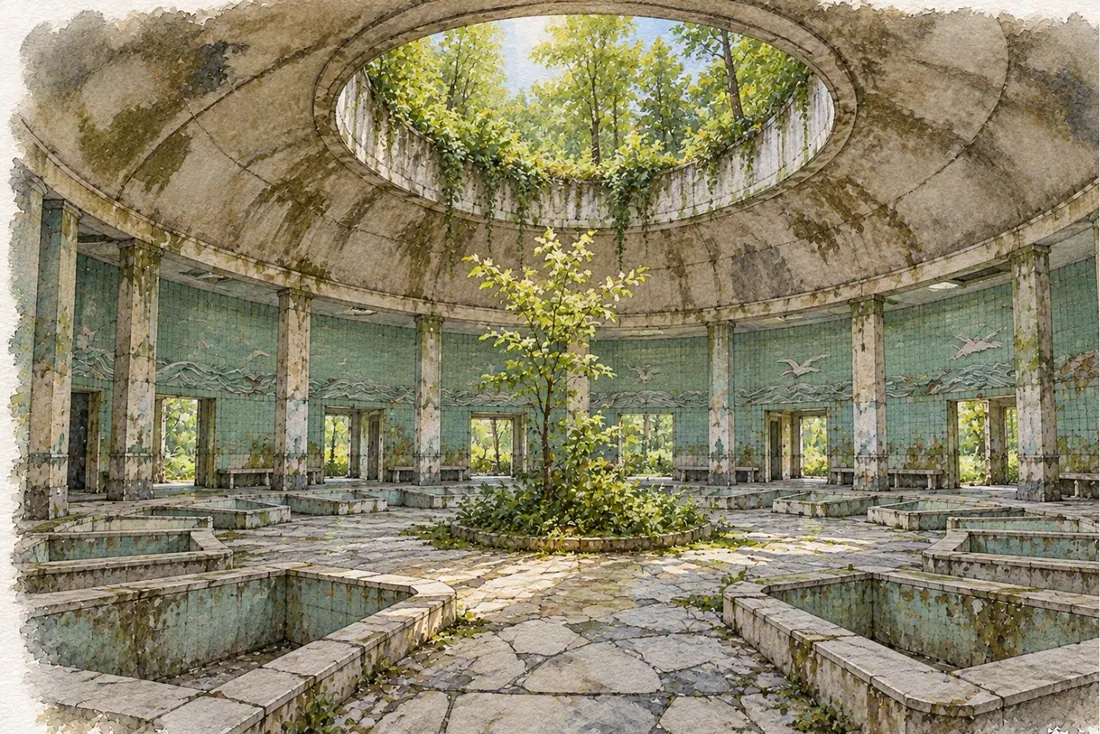
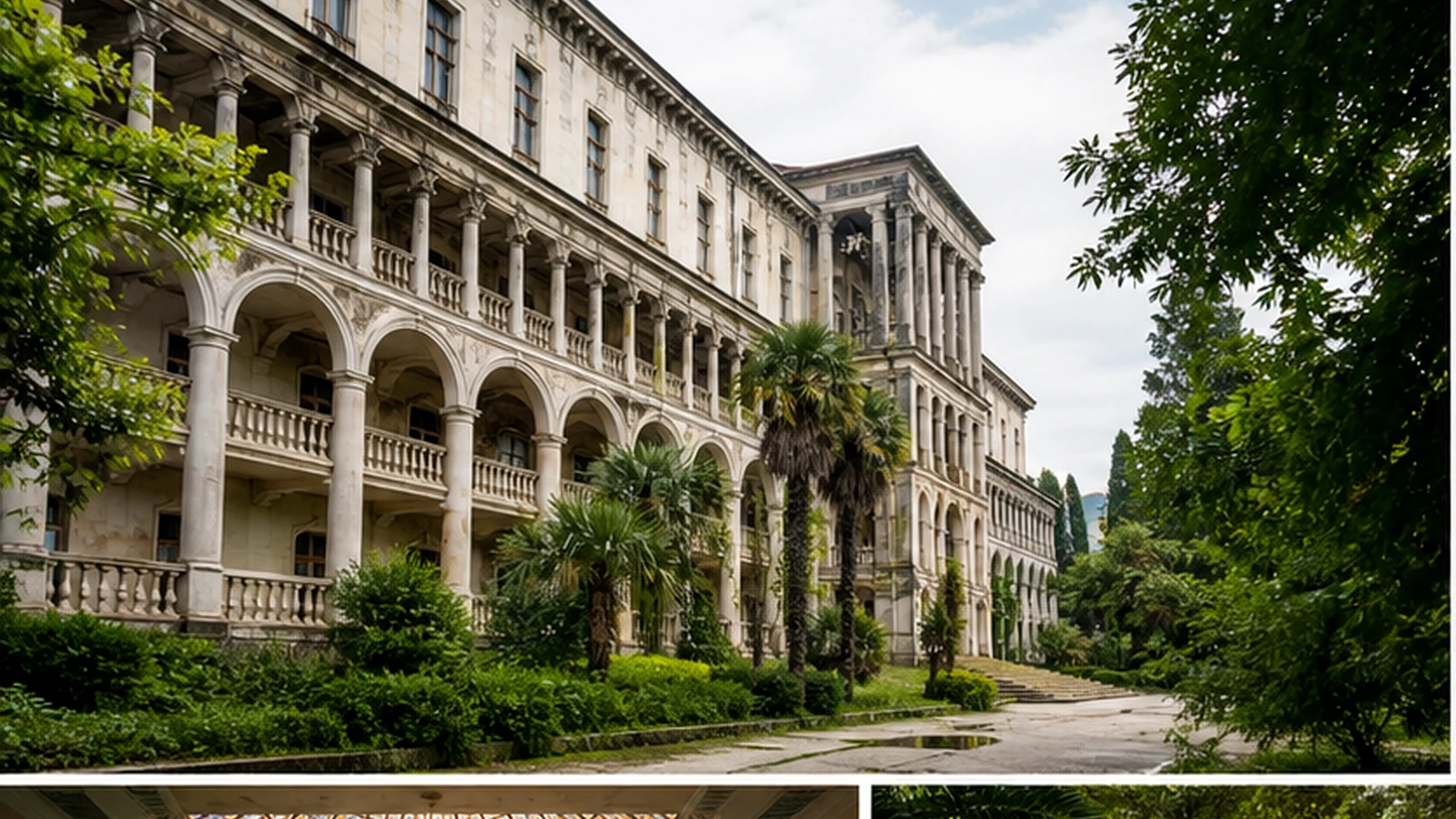
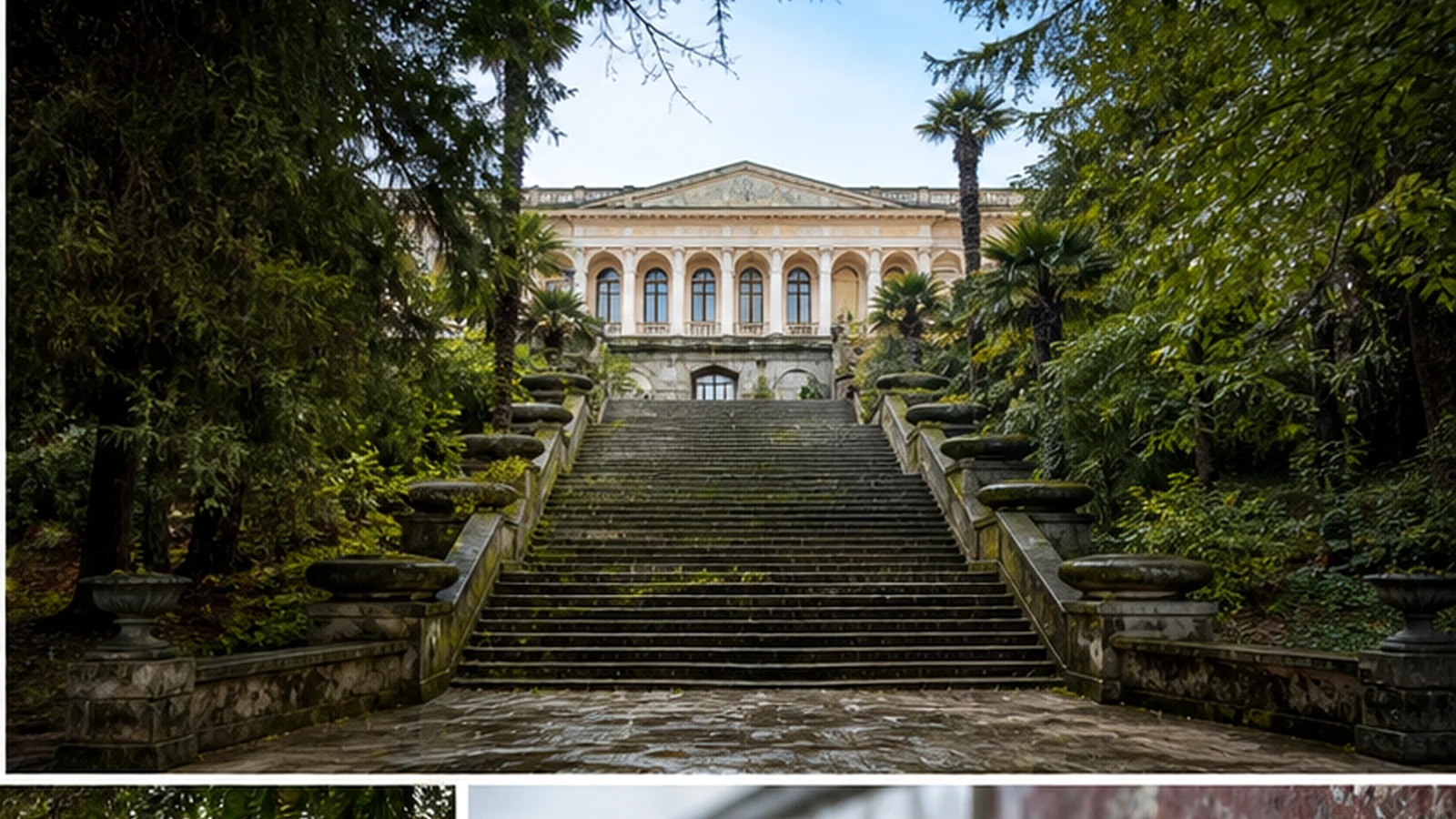
At its peak some 125,000 people a year came to soak. The sanatoriums mixed Stalinist classicism with Georgian ornament, and several were built by German prisoners of war. Bathhouse No. 6, built in 1950, is the largest still working. In Bathhouse No. 9 a frieze of Stalin survives above the private pool where he bathed.
Then the Union ended and the patients stopped coming. From 1993 the empty sanatoriums housed some 9,000 people displaced by the war in Abkhazia, and children grew up in halls built for convalescing Soviet workers.
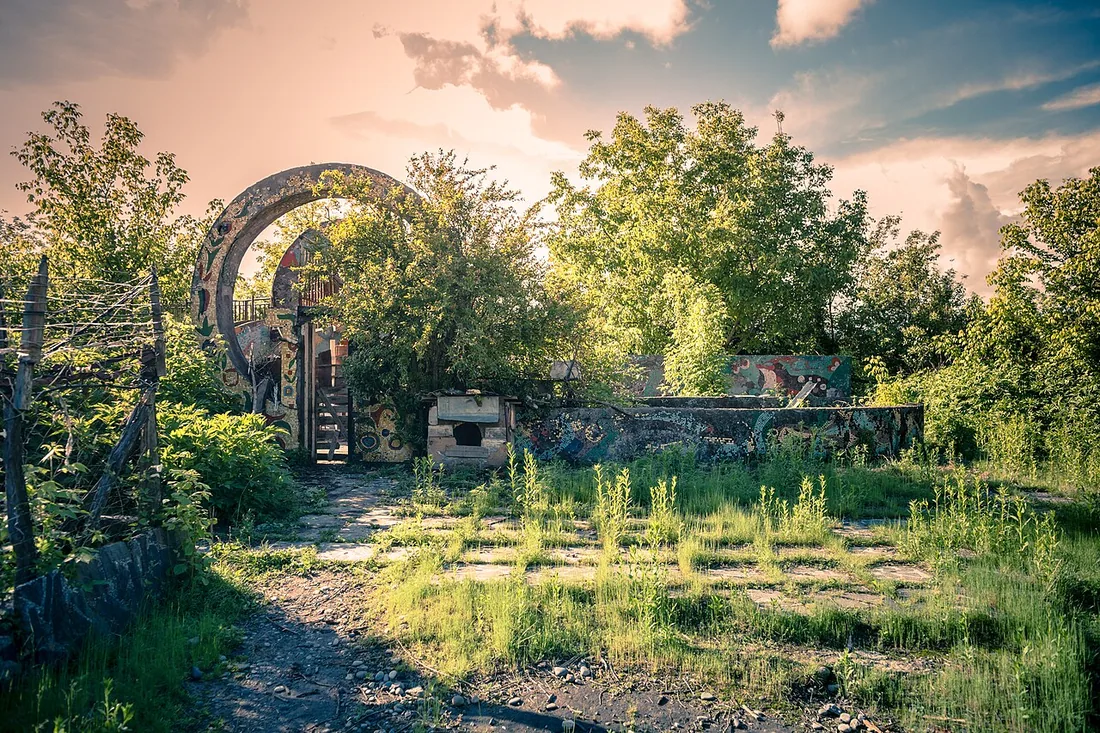
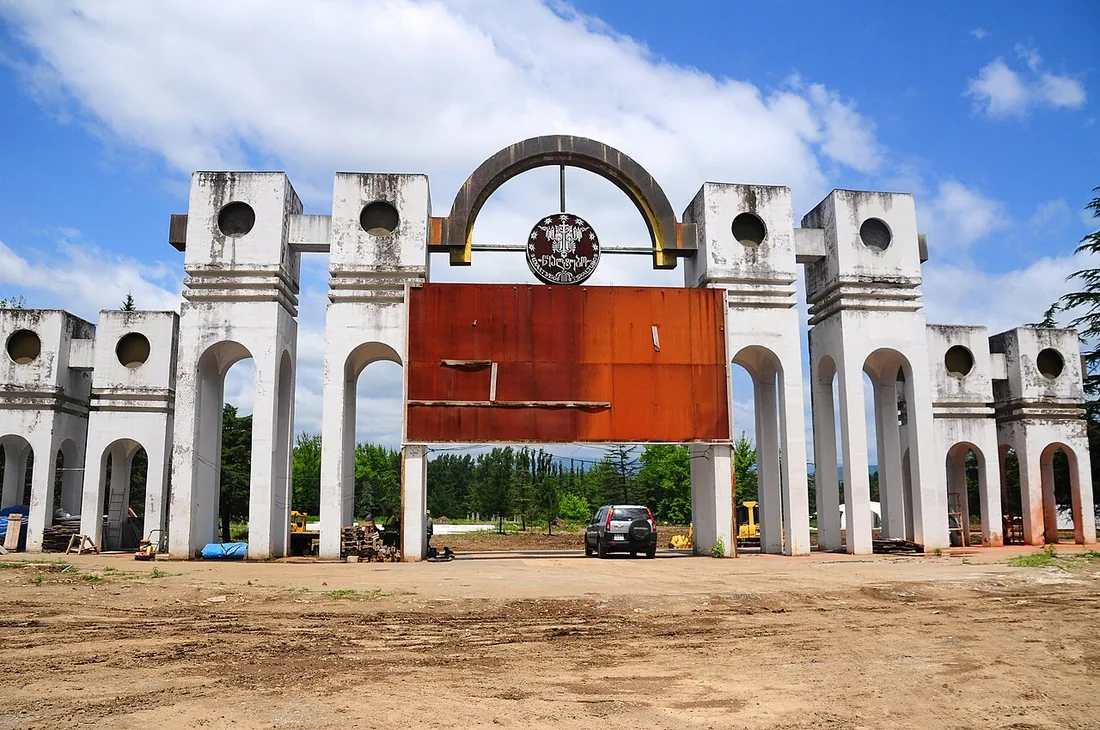
What you do here now is walk. Beyond the park the names read like a roll call of a vanished state: Metallurg, Medea, Imereti, Tbilisi, Meshakhte ('the Miner'). A few are being turned into hotels. Others stand open, their roofs gone and young trees rooting in the balconies.
Tskaltubo is a spa, a ruin and a building site all at once; come before it chooses.
Gallery
Practical advice
Give it half a day. Wear solid shoes and bring a torch: the ruins are no museum, with no lighting, missing floors and absent handrails, and some blocks are still lived in, so ask before you walk in and never climb the upper storeys alone. The park is free. At the working bathhouses ask about single sessions; a full cure lasts 20–24 days and involves a doctor. Cafés, an ATM and toilets are near the park. Summer is humid, with mosquitoes. Prometheus Cave is a few kilometres north.
How to get there from Tbilisi
From Tbilisi take the S1 (E60) west past Gori and Khashuri and over the Rikoti Pass to Kutaisi, about 220 km. From Kutaisi take the Sh15, the road towards Tsageri and Lentekhi, north-west for the last ten kilometres or so into Tskaltubo; it is signed and well surfaced. In total it is about 245 km and three and a half hours, all on asphalt, and an economy car is enough. Fuel up in Kutaisi. Parking around the central park is free, and at the sanatoriums you simply pull in at the kerb. Sataplia and Prometheus Cave are both within ten minutes' drive.
Click a marker for details. Coloured lines are ready-made road trips.
Nearby places
Prometheus Cave
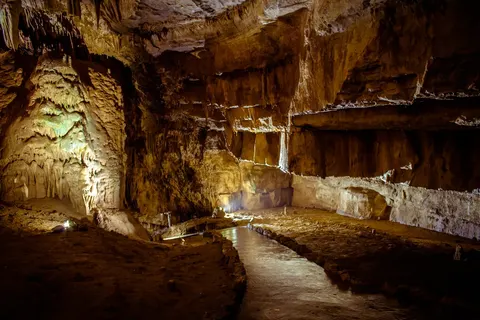
Six lit halls in the Imereti karst, found in 1984, guarded through the lean years by one villager, and, for a few lari more, left by boat on a hidden lake.
Sataplia Nature Reserve
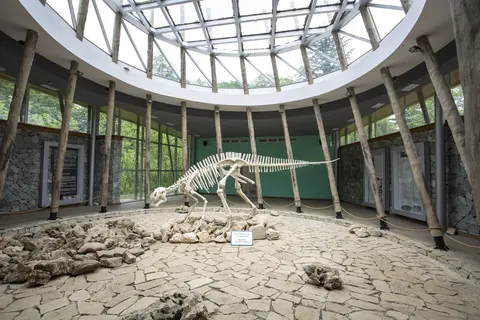
Some 200 dinosaur footprints in the rock, a dripping karst cave and a glass deck over Colchic forest, about ten kilometres from Kutaisi.
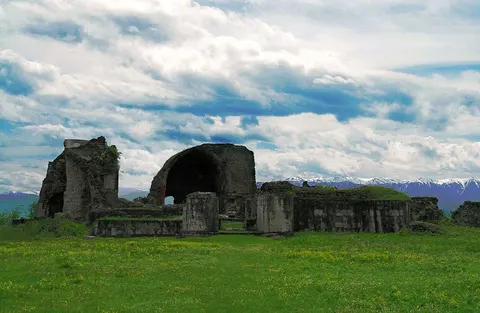
Geguti Palace
Brick ruins of George III's great palace on the Rioni plain south of Kutaisi, where in 1191 rebel nobles crowned a rival to Queen Tamar.
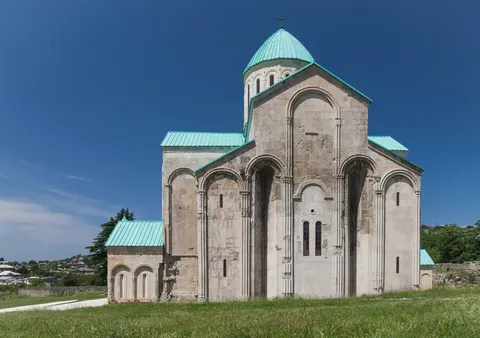
Bagrati Cathedral and central Kutaisi
Bagrat III's cathedral of 1003 on Ukimerioni Hill, blown up by an Ottoman garrison and controversially rebuilt, above the old heart of Kutaisi.
Part of these road trips
- Imereti with the Family 3 days · 240 km
Best car for this trip
Guides
- Driving in Georgia: What the Distances Actually Cost You Georgia is a small country with slow roads. Here is what 267 measured drives from Tbilisi say about how long y
Pickup locations
Car Rental in Kutaisi — 11 km (straight line)