
Satsurblia Cave
A karst cave beside Prometheus Cave where a 13,300-year-old bone yielded the genome that defined the Caucasus Hunter-Gatherers.
- Time needed
- 0.5 h
- From Tbilisi
- 244 km · 3:40
- Road
- Mostly paved
- Car needed
- Economy class
- Season
- All year
- Entry
- check locally
In 2013 archaeologists lifted a fragment of human skull from the floor of this cave, and from it geneticists read the genome of a man who died some 13,300 years ago.
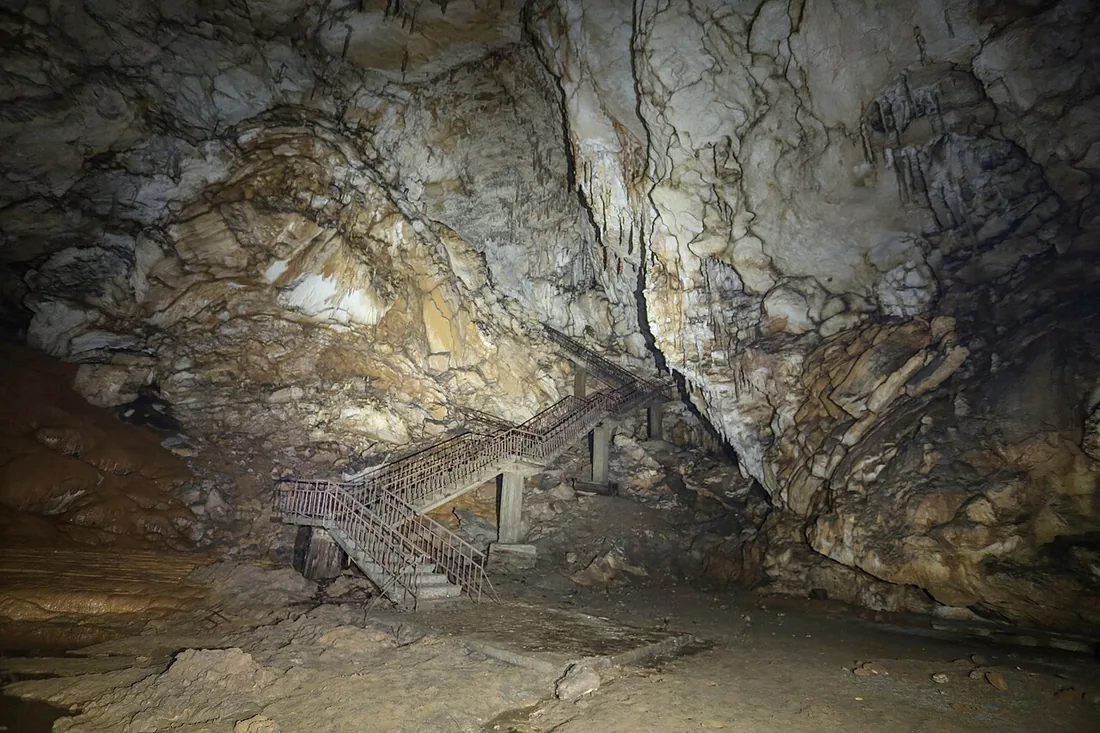
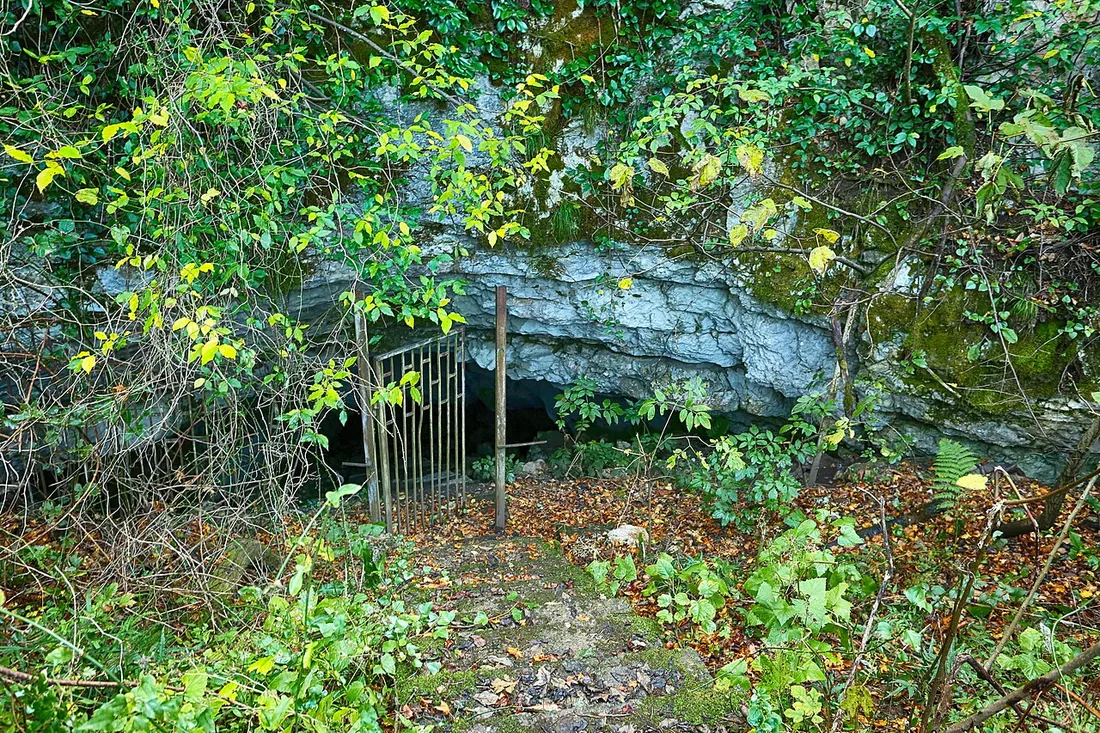
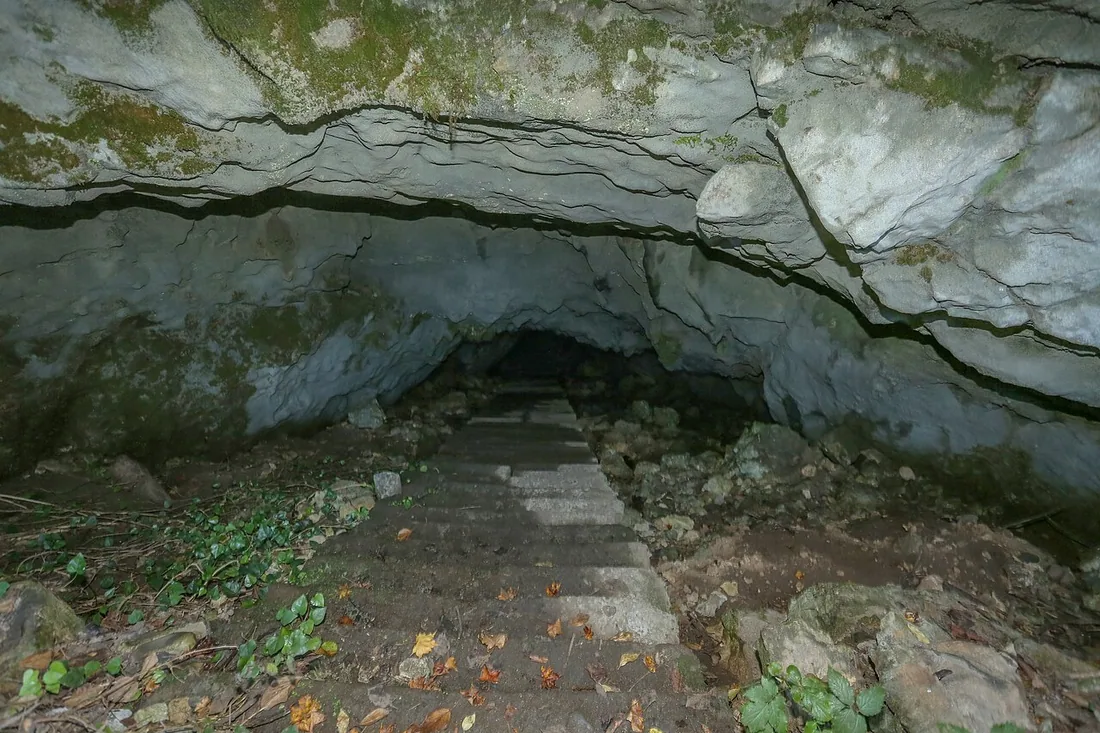
Satsurblia is a karst cave in the Sataplia–Tskaltubo limestone massif, 1.2 km from Kumistavi village and close to the lit halls of Prometheus Cave. A mouth about six metres wide opens onto an 80-metre tunnel that drops steeply over natural rock steps a metre or more high. Some 125 metres in lies a great hall, 30 by 25 metres. A. N. Kalandadze first excavated here in 1976.
People used the cave twice: roughly 25,500 to 24,400 years ago, and again from about 17,000 to 16,200 years ago. The silence in between matches the Last Glacial Maximum, when the site was probably too cold to live in. They left stone and bone tools, flax fibres, pendants of polished stalagmite and bone, and traces of yellow, red and brown ochre. They hunted mainly wild boar and red deer, and also aurochs, steppe bison, Caucasian tur and roe deer.
The man found in 2013 had dark hair, brown eyes and light skin. He could not digest milk, and about two per cent of his DNA was Neanderthal. Together with a 9,700-year-old individual from Kotias Klde, also in western Georgia, he defines the Caucasus Hunter-Gatherers. This lineage supplied about half the ancestry of the Bronze Age Yamnaya herders and, through them, entered the ancestry of much of Europe. Modern Georgians are among his closest living relatives.
A medieval refuge, the cave has been a protected Natural Monument since 2011. Prometheus Cave shows what water can do with stone. Satsurblia shows what stone can do for us: it kept one man for thirteen thousand years, until someone learned to read him.
Gallery
Practical advice
Satsurblia is a scientific site, not a show cave. The entrance is closed by an iron gate, and although a metal staircase has been installed in the main hall, no ticket office or published hours have been confirmed. Plan on seeing the gated entrance only, unless you arrange access locally in Kumistavi or through the Imereti Caves Protected Areas administration. Wear shoes that grip, as the approach is muddy after rain. This is a protected Natural Monument: dig nothing, move nothing, take nothing. Food, toilets and parking are at nearby Prometheus Cave. The two fit easily into one morning, and you can add Sataplia, with its dinosaur footprints and glass viewing platform.
How to get there from Tbilisi
From Tbilisi take the E60/S1 west past Gori, Khashuri and Zestaponi to Kutaisi, about 220 km. Cross the city and take the Sh15 towards Tskaltubo, then follow the signs for Prometheus Cave to Kumistavi. The cave lies about 1.2 km from the village, and the last stretch is a gravel and dirt track that an economy car manages in dry weather. Allow about 244 km and 3 hours 40 minutes. Refuel in Kutaisi or Tskaltubo. After heavy rain, park where the track turns soft and walk the rest.
Click a marker for details. Coloured lines are ready-made road trips.
Nearby places
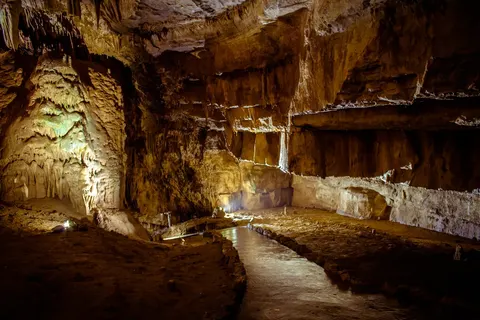
Prometheus Cave
Six lit halls in the Imereti karst, found in 1984, guarded through the lean years by one villager, and, for a few lari more, left by boat on a hidden lake.
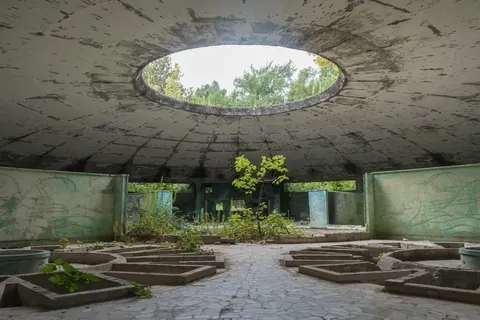
Tskaltubo
A Soviet spa town laid out in a ring around warm radon springs, where working bathhouses stand beside sanatoriums slowly turning into forest.
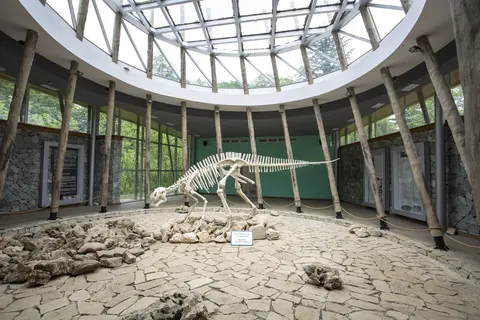
Sataplia Nature Reserve
Some 200 dinosaur footprints in the rock, a dripping karst cave and a glass deck over Colchic forest, about ten kilometres from Kutaisi.
Best car for this trip
Mostly paved
Guides
- Driving in Georgia: What the Distances Actually Cost You Georgia is a small country with slow roads. Here is what 267 measured drives from Tbilisi say about how long y
Pickup locations
Car Rental in Kutaisi — 16 km (straight line)