
Rustaveli Theatre
Georgia's largest theatre, a Rococo wedding cake on Rustaveli Avenue — stage of Akhmeteli and Sturua, with a basement painted by Gudiashvili and Kakabadze.
- Time needed
- 2.5 h
- From Tbilisi
- 1 km · 0:05
- Road
- Paved
- Car needed
- Economy class
- Season
- All year
- Entry
- ticket
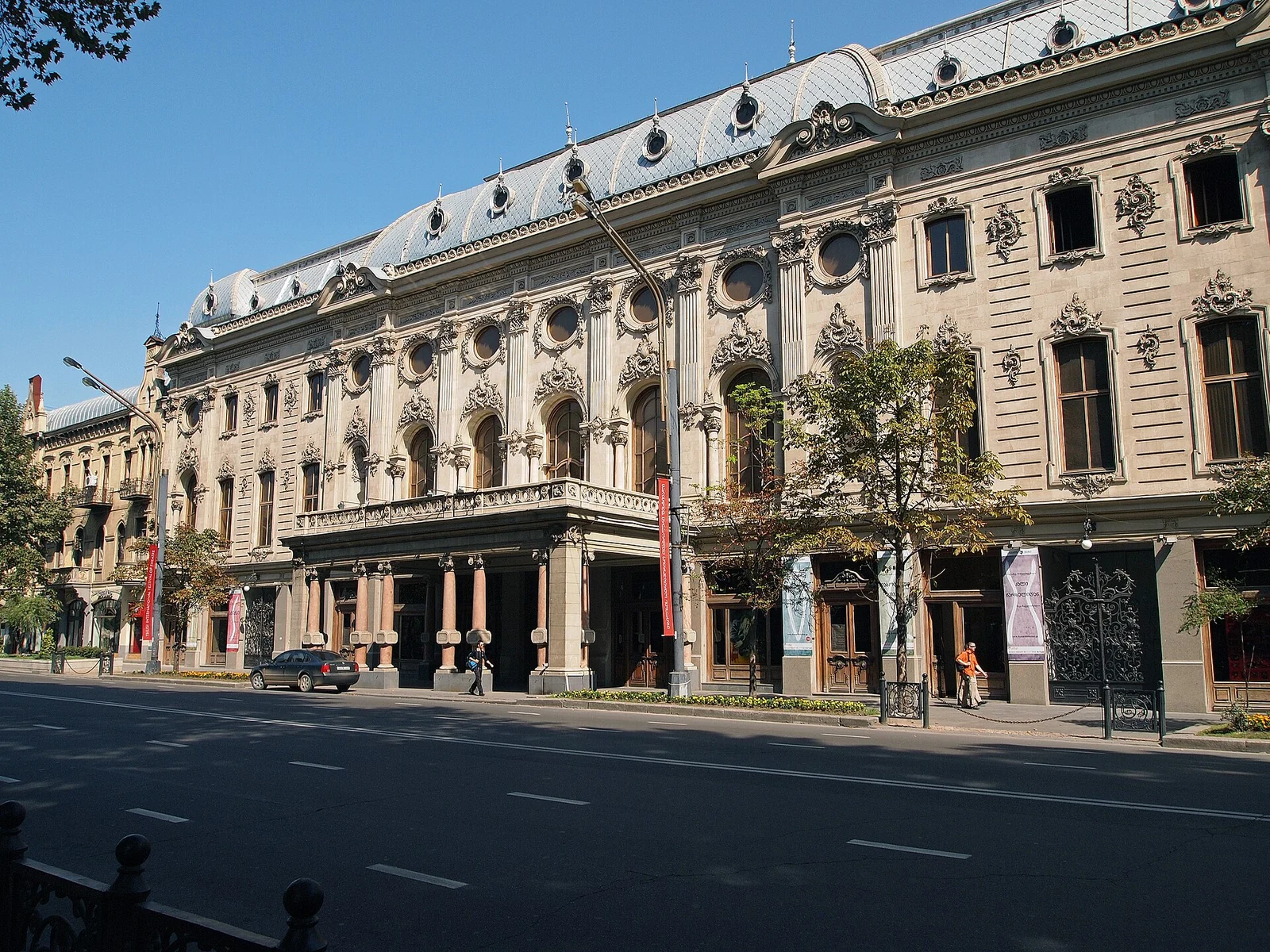
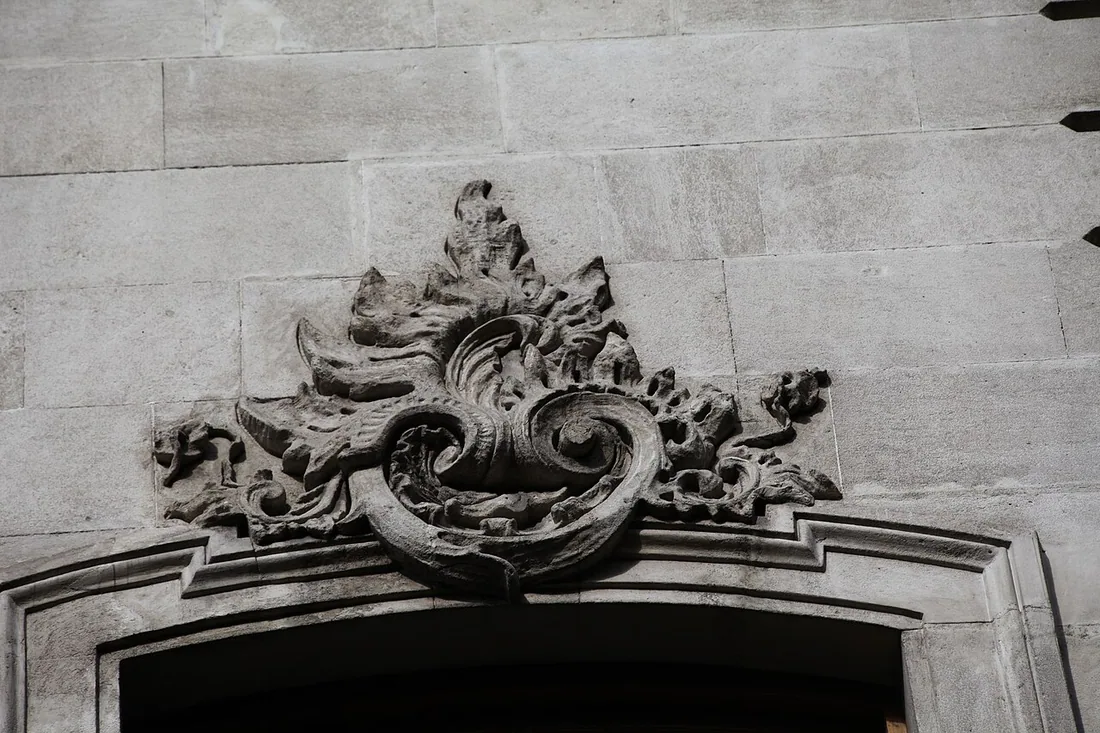
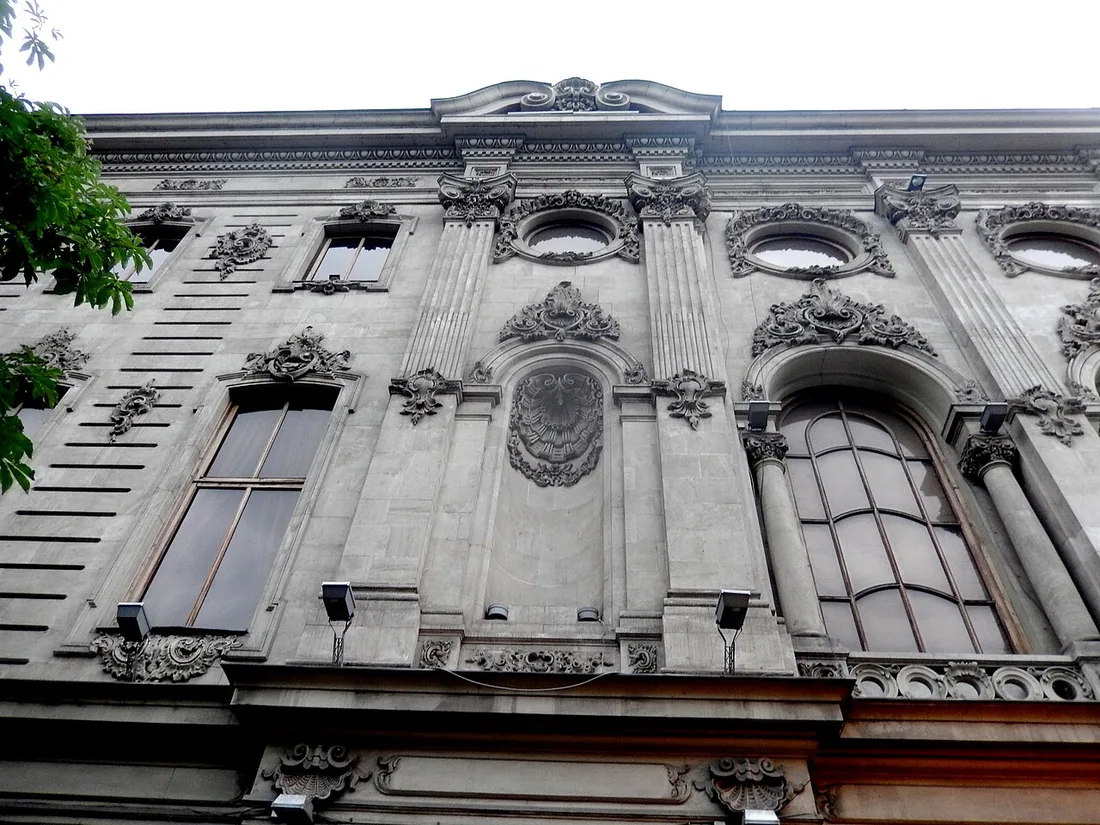
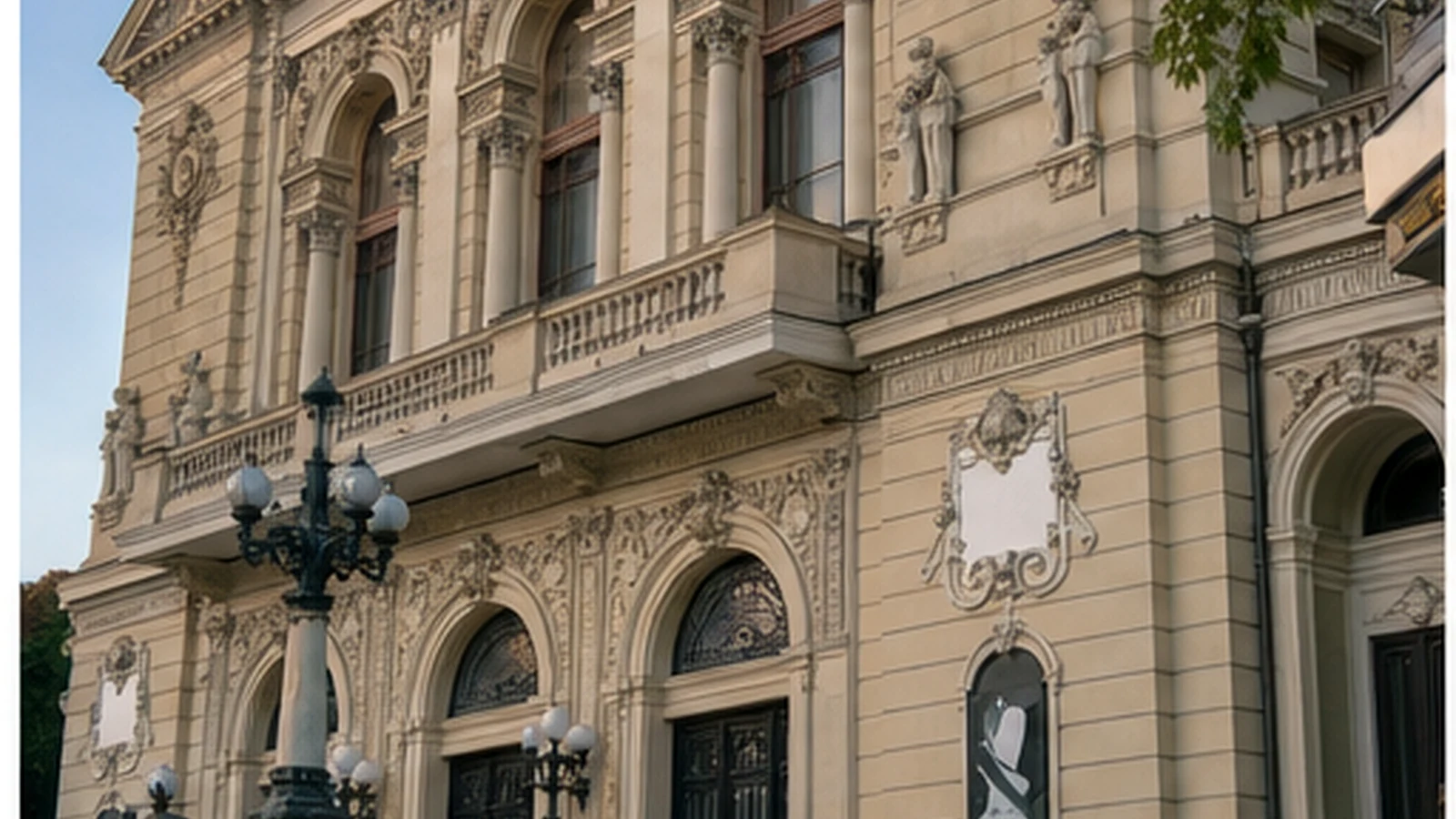
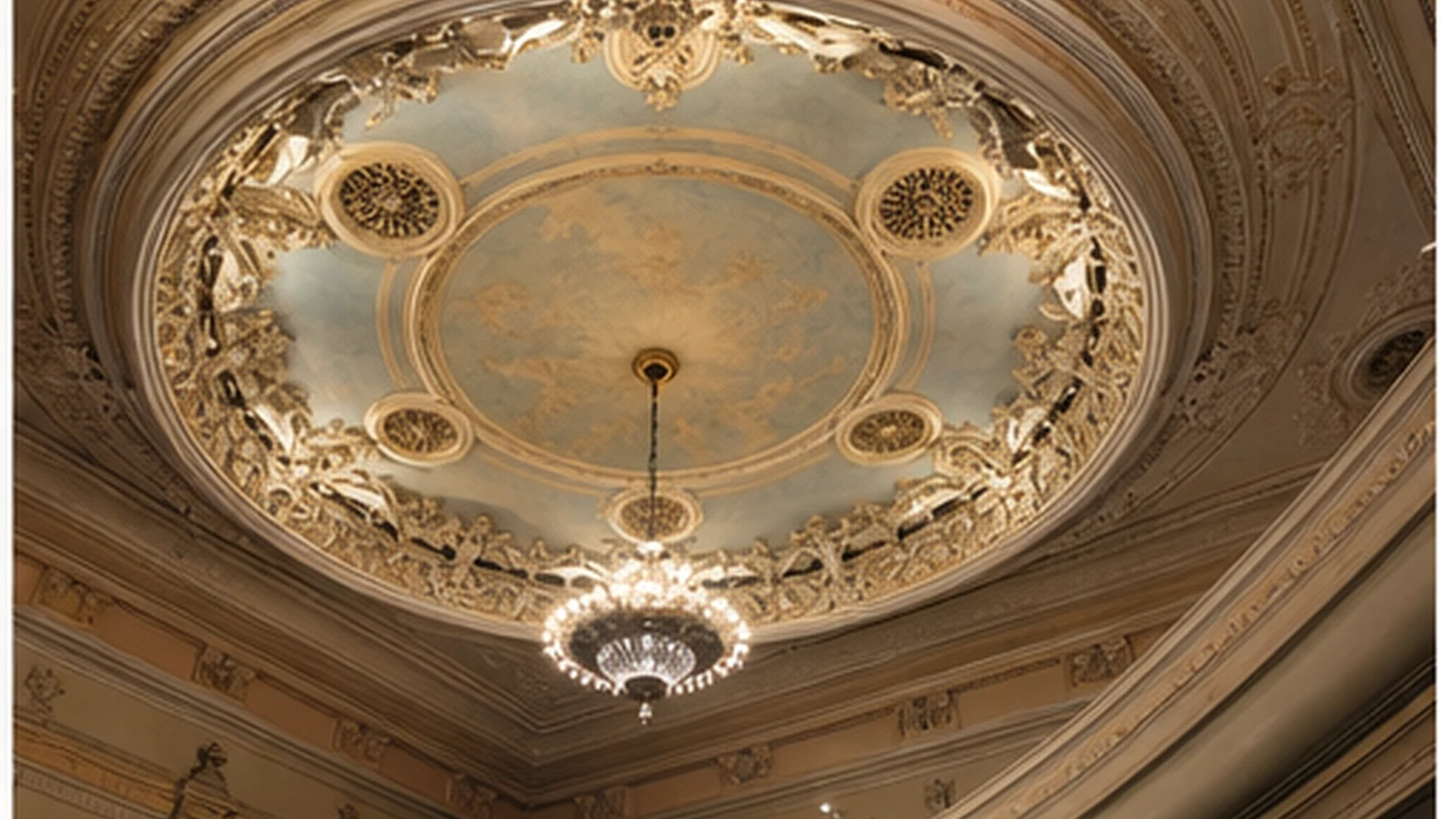
Georgia's biggest theatre was born as a house for artists, and its most famous room is underground. In 1898 the Tiflis Artistic Society laid the foundations of its new home on Golovin Prospect — today's Rustaveli Avenue. On 6 February 1901 the building was blessed, and on 5 March the stage opened with Avksenti Tsagareli's comedy Khanuma. The oil magnate Alexander Mantashev paid for the construction, and the architects Korneli Tatishchev and Aleksander Szymkiewicz dressed it in a Rococo façade that still looks like a wedding cake among the avenue's sterner neighbours.
Downstairs lies Kimerioni, a basement whose walls and ceilings were painted by Lado Gudiashvili, David Kakabadze and Sergei Sudeikin, the Ballets Russes designer, later joined by Mose and Irakli Toidze. Soviet whitewash covered the paintings, and only part has been brought back.
The theatre took the name of the poet Shota Rustaveli on 25 November 1921, and the century that followed reads like a chronicle of Georgian directing. Kote Marjanishvili staged Fuenteovejuna (1922) and Hamlet (1925) here; Sandro Akhmeteli made the company famous in Moscow and perished in the purges of the 1930s; Robert Sturua's The Caucasian Chalk Circle (1975) and Richard III (1979) carried the Rustaveli name to Edinburgh, Avignon and Adelaide.
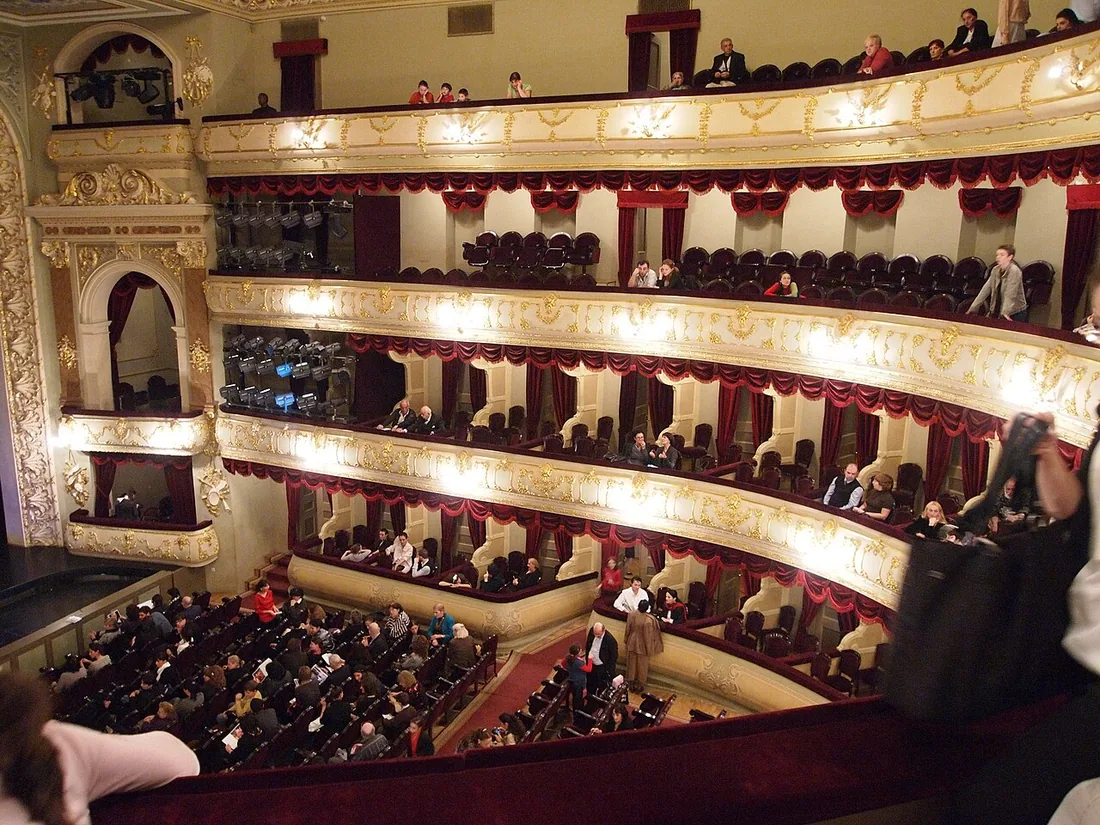
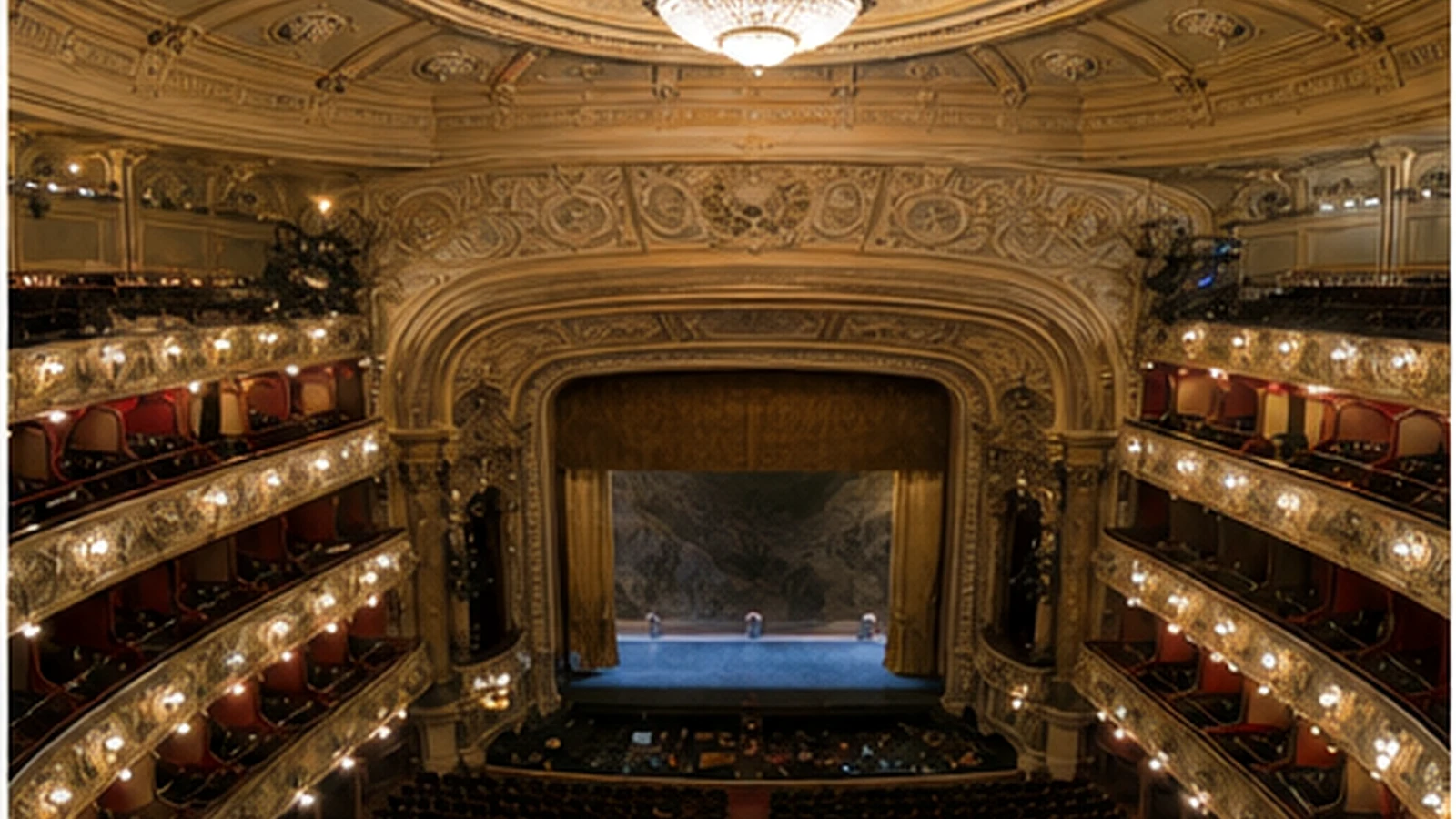
Today there are three stages: the main house with about 800 seats, a small stage with 283 and a black box with 182. Go even if you have no Georgian — this stage has always spoken in images as much as in words. And if the dates don't match, the theatre museum runs guided tours through the building, down to Kimerioni itself.
Gallery
Practical advice
Programmes and tickets are on rustavelitheatre.ge and tkt.ge; popular productions sell out, so book a few days ahead. Most performances are in Georgian — ask the box office which ones carry surtitles. Arrive 20 minutes early: latecomers may have to wait for the interval. Dress is smart-casual. The theatre museum runs guided tours of the building and the Kimerioni frescoes; call +995 322 98 40 51 to arrange one.
How to get there from Tbilisi
The theatre stands at 17 Rustaveli Avenue, about 1 km from Freedom Square — five minutes by car, but here the car is the problem, not the solution: there is no stopping on the avenue. Look for paid municipal bays in the side streets behind it and allow time to circle, or leave the car at your hotel. By metro it is easy: Liberty Square and Rustaveli stations are each about ten minutes' walk away. After an evening show, taxis are quick and cheap to find on the avenue. If you do drive in, a small economy car is by far the easiest to park.
Click a marker for details. Coloured lines are ready-made road trips.
Nearby places
Kashveti Church of St George
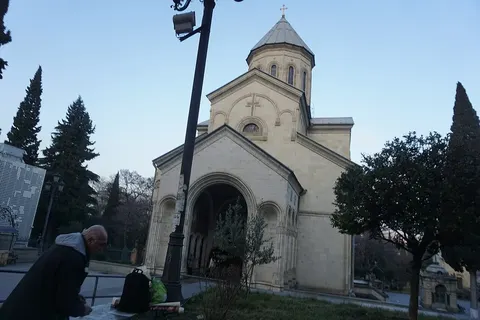
The stone church facing Parliament on Rustaveli: a legend in its name, Samtavisi in its lines, and paintings that cost Lado Gudiashvili his post.
Tbilisi Opera and Ballet Theatre
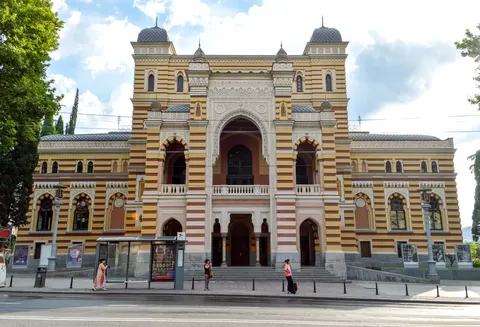
The Paliashvili opera house on Rustaveli Avenue: a neo-Moorish façade, a European hall, 175 seasons and the State Ballet of Georgia.
Georgian National Museum
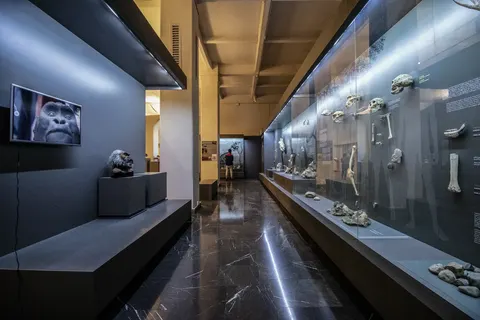
The Janashia Museum on Rustaveli Avenue: 1.8-million-year-old Dmanisi skulls, Colchian gold and a sober hall on the Soviet occupation.
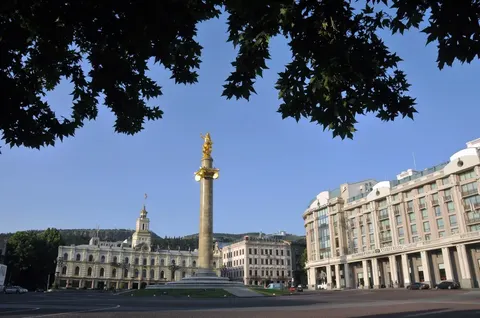
Freedom Square and the Old Parliament
Tbilisi's central square has changed its name with every new master, from a Russian general to Beria and Lenin; today St George rides above the traffic.
Part of these road trips
- Tbilisi Theatre and Performance Day 1 days · 9 km
- Museum Theatre and Evening Performance 1 days · 8 km
Best car for this trip
Guides
- Driving in Georgia: What the Distances Actually Cost You Georgia is a small country with slow roads. Here is what 267 measured drives from Tbilisi say about how long y
Pickup locations
Car Rental in Tbilisi — 1 km (straight line)