
National Gallery (Blue Gallery)
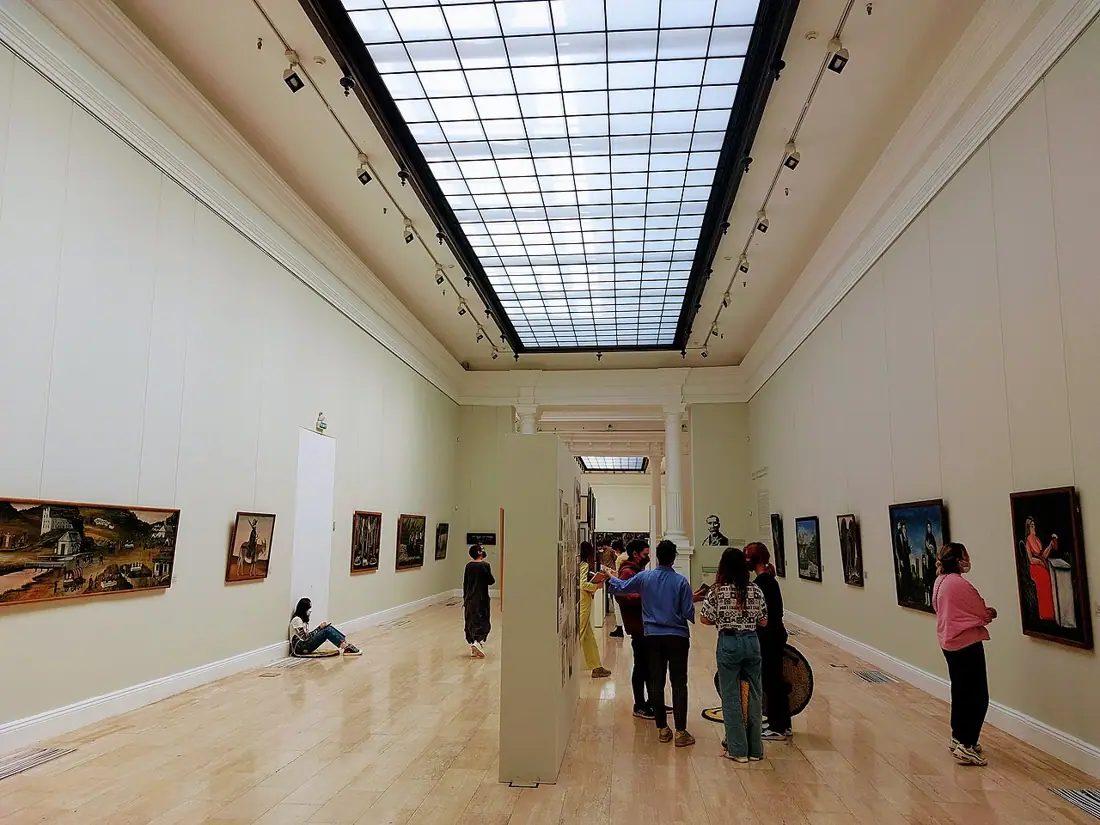
Fifty-four Pirosmanis in four rooms on Rustaveli Avenue, in a gallery co-founded by a painter who died for defying Beria.
- Time needed
- 1.5 h
- From Tbilisi
- 1 km · 0:10
- Road
- Paved
- Car needed
- Economy class
- Season
- All year
- Entry
- ~40 ₾
In 1917 the painter Dimitri Shevardnadze hung Niko Pirosmani's pictures in his own apartment; three years later he helped open Georgia's first national gallery, and today Pirosmani fills four of its rooms.
The building is older than the gallery. It went up in 1888, by decision of the Russian emperor, for the Russian Military History Museum, the "Temple of Glory", on what was then Golovin Street and is now Rustaveli Avenue. The first art exhibition opened here in October 1920. Tbilisians still call it the Blue Gallery, after the blue-green paint that once covered the façade, although the walls are grey today. Since 2007 it has belonged to the Georgian National Museum, and after the renovation that followed, two of its halls are lit from above through glass ceilings.
The Pirosmani rooms are the reason to come: fifty-four works, "Actress Margarita" and "Giraffe" among them. Reproductions shrink him. In the originals his figures rise out of black oilcloth, the animals look back at you with unsettling frankness, and the feasts seem laid for real guests. If twentieth-century painters such as Lado Gudiashvili and David Kakabadze are on show, stay with them too: they show where Georgian painting went next.
Shevardnadze's own ending belongs to this story. In 1937 Lavrentiy Beria set out to demolish the medieval Metekhi church, and Shevardnadze led the intellectuals who stood against him. Beria offered him the directorship of a future museum that would keep a scale model of the church, if only he would let the matter go. He refused, and was arrested and executed. The church still stands.
Later, when you see Metekhi on its cliff above the Mtkvari, remember who paid for that view.
Practical advice
Open Tuesday to Sunday, 10:00–18:00; closed on Mondays. Adult tickets have risen steeply, to about 40 GEL in 2026 reports against 25 GEL not long before, so check museum.ge before you go and ask about concessions. Allow ninety minutes and head straight for the Pirosmani rooms while your eyes are fresh; the ground floor is given over to temporary exhibitions. Midday, between tour groups, is often the quietest time.
How to get there from Tbilisi
The gallery is at 11 Rustaveli Avenue, beside 9 April Park, between Freedom Square and the Opera: barely a kilometre from the centre and 10–15 minutes by car from most central hotels. Parking is the real question. Rustaveli is a no-stopping zone, so use the Freedom Square underground car park or the paid street zone around Orbeliani Square (Tbilisi Parking app) and walk five minutes. After 18:00 the avenue jams, so mornings are easier. Any economy car will do, though if you are staying centrally, the metro to Rustaveli or Liberty Square station honestly beats driving.
Click a marker for details. Coloured lines are ready-made road trips.
Nearby places
Rustaveli Avenue
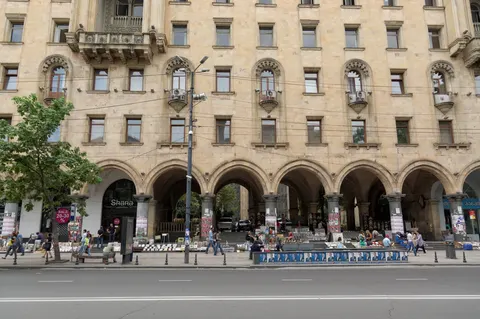
A kilometre and a half of opera, parliament, frescoed church and plane-tree shade: Tbilisi's showcase and the stage of its political memory.
Georgian National Museum
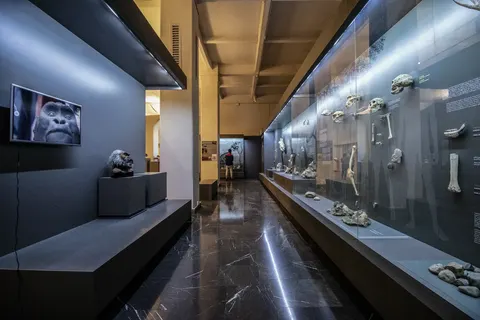
The Janashia Museum on Rustaveli Avenue: 1.8-million-year-old Dmanisi skulls, Colchian gold and a sober hall on the Soviet occupation.
Tbilisi Opera and Ballet Theatre
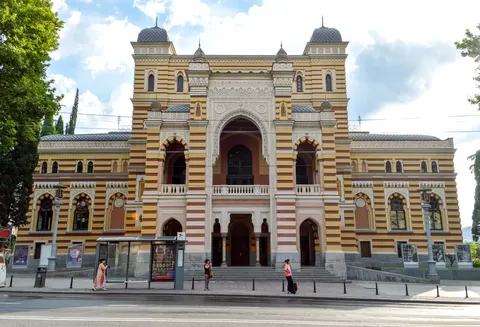
The Paliashvili opera house on Rustaveli Avenue: a neo-Moorish façade, a European hall, 175 seasons and the State Ballet of Georgia.
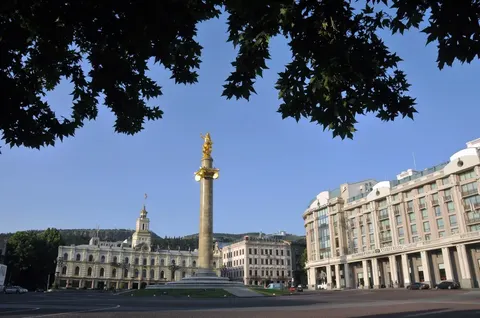
Freedom Square and the Old Parliament
Tbilisi's central square has changed its name with every new master, from a Russian general to Beria and Lenin; today St George rides above the traffic.
Best car for this trip
Guides
- Driving in Georgia: What the Distances Actually Cost You Georgia is a small country with slow roads. Here is what 267 measured drives from Tbilisi say about how long y
Pickup locations
Car Rental in Tbilisi — 1 km (straight line)