
Muri Fortress
Lechkhumi's cliff-top stronghold above Tsageri, with towers named like battle cries and, by tradition, the grave of Maximus the Confessor.
- Time needed
- 1.5 h
- From Tbilisi
- 326 km · 5:05
- Road
- Paved
- Car needed
- Economy class
- Season
- All year
- Entry
- free
Prince Vakhushti, the 18th-century geographer, described Muri in words that still read like a boast: 'never breached or taken by anyone'.
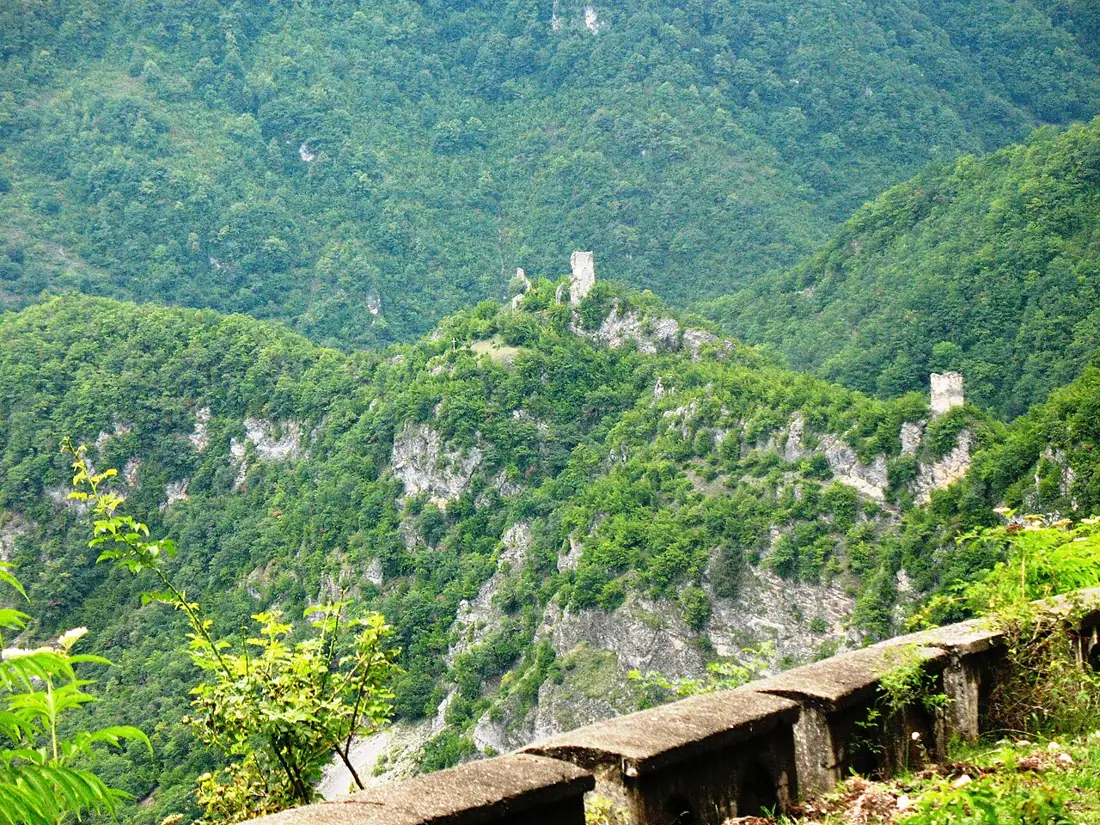
The fortress stands on a rocky ridge at the edge of Tsageri, above the Tskhenistskali. The historian Simon Kaukhchishvili identified it with Skiomaris, the stronghold that, according to the 6th-century Byzantine historian Procopius, barred the road from Skvimnia to Svaneti. From late antiquity until 1867 Muri was the political centre of the valley, and together with the Ragvi tower on the opposite bank it closed the roads from the gorge to the lowlands. From the early 18th century it was a residence of the Dadiani. In 1770 Elisabed, sister of King Erekle II and wife of Katsia Dadiani, Prince of Mingrelia, died in its palace.
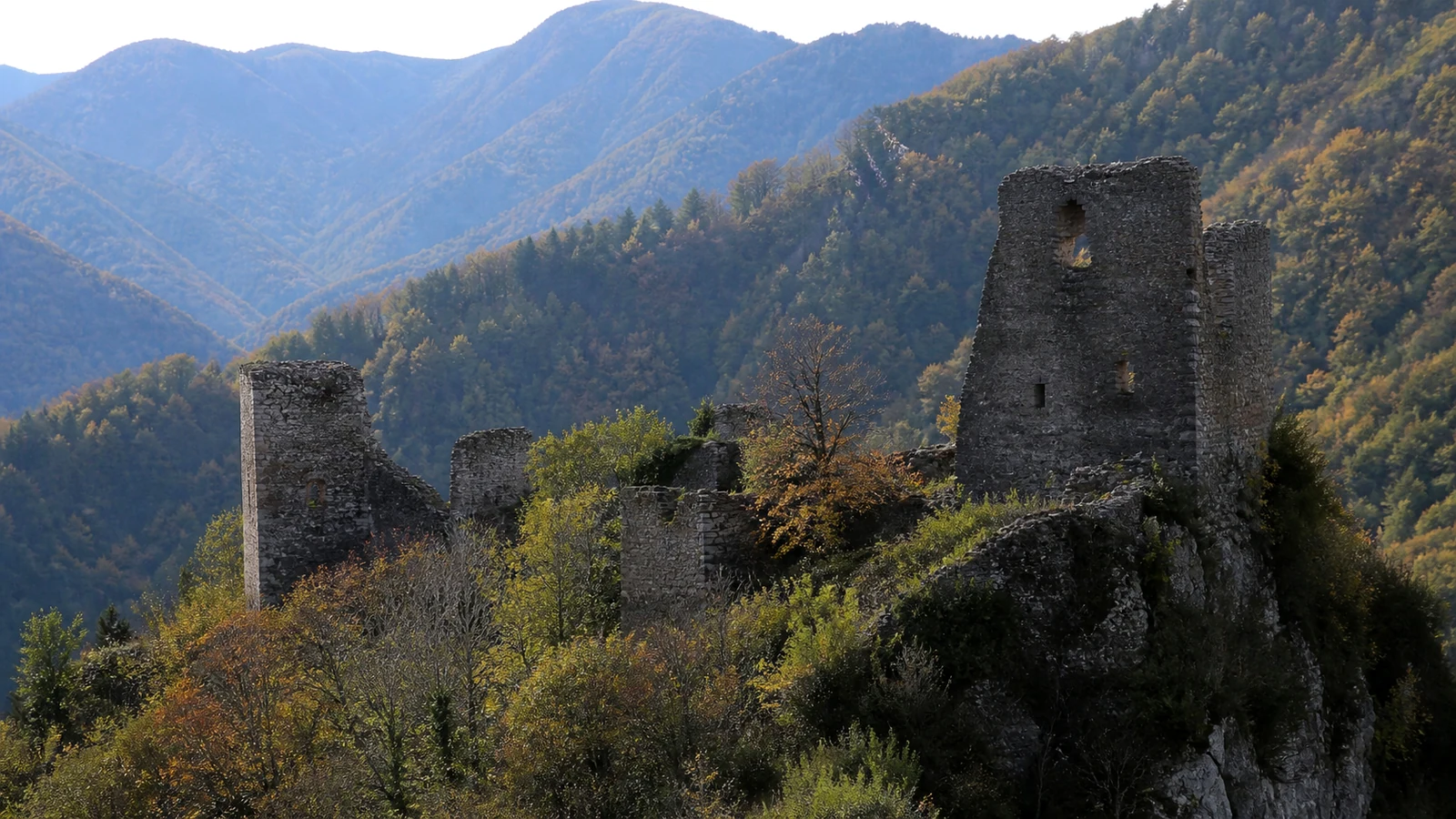
Tradition gives its parts the names of shouted orders. When an enemy approached, the eastern watchtower, Hk'a Magas ('Strike him!'), would call to the keep: 'The enemy is here, meet them well!' The keep itself was called Marjved Dakhvdi, 'Meet them well'. When the beaten enemy turned back past the western tower, the keep would call to it: Ar Gaushva, 'Don't let him go!'
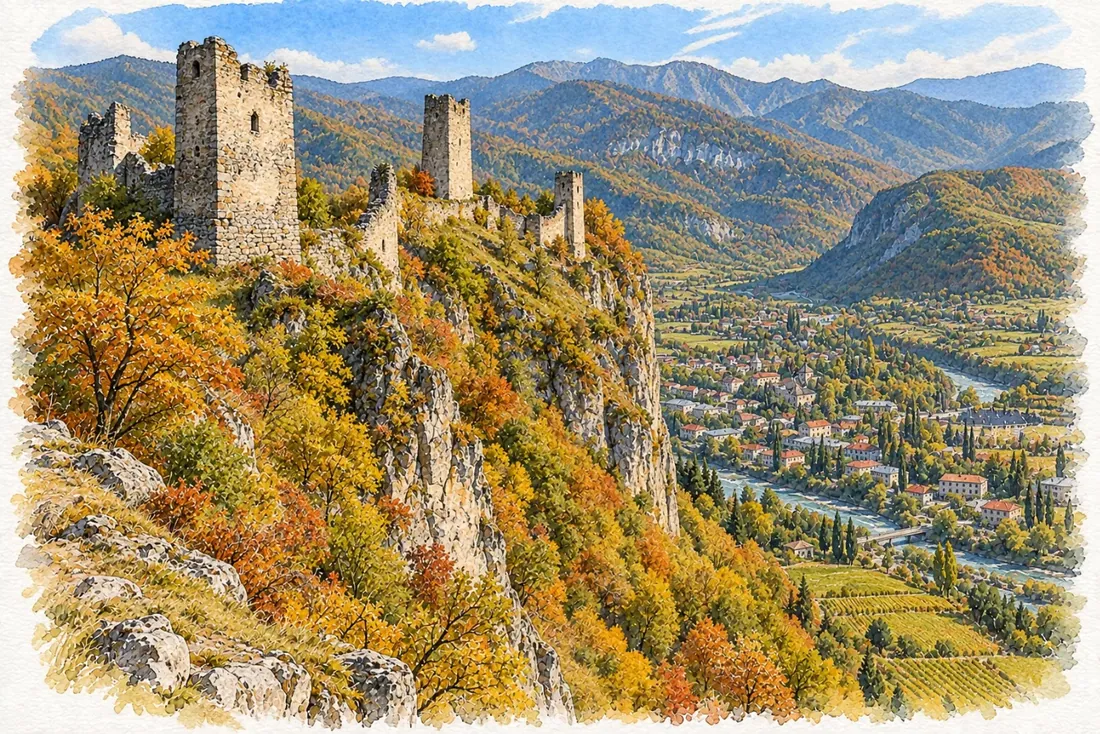
Four towers survive. Look for the hollow in the rock where the well once was, and for the ruined two-storey house in the eastern part, probably the Dadiani palace. At the foot of the western tower are a monastery and a grave that tradition assigns to Maximus the Confessor, the Byzantine theologian who died in exile in 662. The claim rests on a note in the margin of a 12th-century manuscript.
A siege legend explains the boast. An Ottoman army camped below to starve the garrison out. Every day the defenders tipped a barrel or two of lime over the wall, and the besiegers took it for flour so plentiful it was spoiling. As winter drew near they struck camp, and Muri stayed untaken.
Gallery
Practical advice
Allow an hour and a half for the climb and the ruins. The path is steep, so take it slowly and wear shoes with a good grip, because stone and clay turn slippery after rain. There is nothing to buy at the top, so carry water. The walls are unstable: look, but don't climb. Long trousers help against ticks in the summer grass. If you visit the monastery of St Maximus, dress as you would for any working church, with shoulders and knees covered and a headscarf for women. Cafés, shops and toilets are in Tsageri.
How to get there from Tbilisi
From Tbilisi take the S1 (E60) west to Kutaisi, then the Sh16 up the Rioni gorge through Tvishi to Alpana and the Sh18 across to Tsageri. That is about 326 km and five hours. It is asphalt all the way, narrow and winding after Kutaisi, and an economy car copes in any season with winter tyres in the cold months. The fortress stands on the ridge at the north-eastern edge of town, about 2 km from the centre. Set your navigator to Muristsikhe, leave the car at the foot of the ridge and ask locally where the path starts. Fill up in Kutaisi. Tsageri has a station, but little choice.
Click a marker for details. Coloured lines are ready-made road trips.
Nearby places
Tsageri and Lechkhumi
Lechkhumi's quiet capital on the Tskhenistskali: a bishop's town, a saint's grave beneath Muri fortress, and Usakhelouri, the wine called 'nameless'.
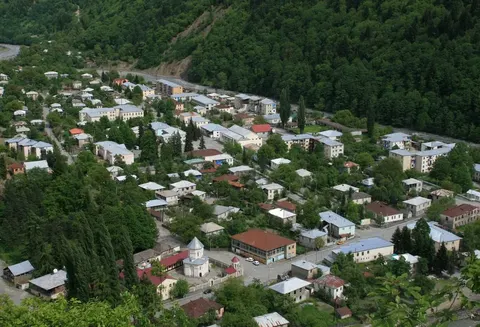
Lentekhi
The quiet centre of Lower Svaneti in the Tskhenistskali valley: Svan towers, beech forest, and a town fountain that never got its goddess.
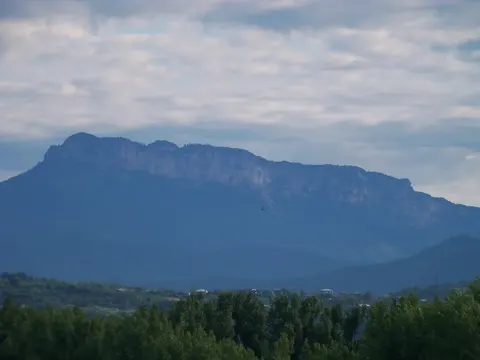
Khvamli Massif
A 2,002-metre limestone massif in Lechkhumi: a summit that looks sliced off with a knife, a cave of royal treasure and a Prometheus legend.
Best car for this trip
Guides
- Driving in Georgia: What the Distances Actually Cost You Georgia is a small country with slow roads. Here is what 267 measured drives from Tbilisi say about how long y
Pickup locations
Car Rental in Kutaisi — 44 km (straight line)
Booking and enquiries
The easiest way to reach these places is by car — you pick the route and the stops.