
Blue Monastery (Lurji Monastery)
A church of the 1180s, named for its long-lost blue-glazed roof tiles, standing quietly among the houses of Vera a few minutes from Rustaveli.
- Time needed
- 0.5 h
- From Tbilisi
- 3 km · 0:10
- Road
- Paved
- Car needed
- Economy class
- Season
- All year
- Entry
- free
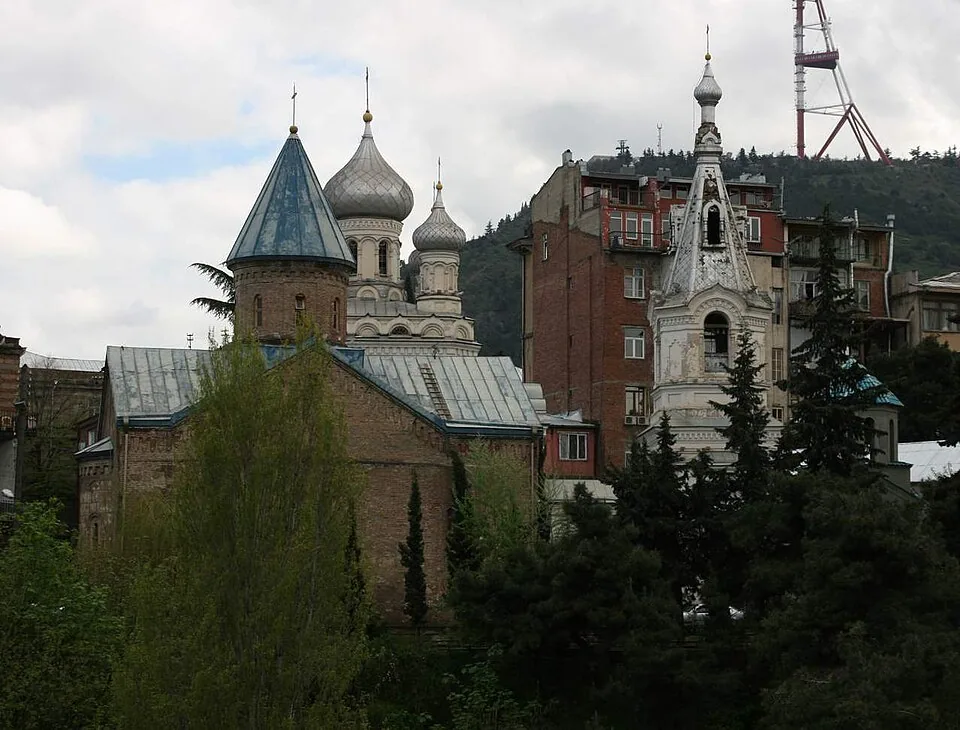
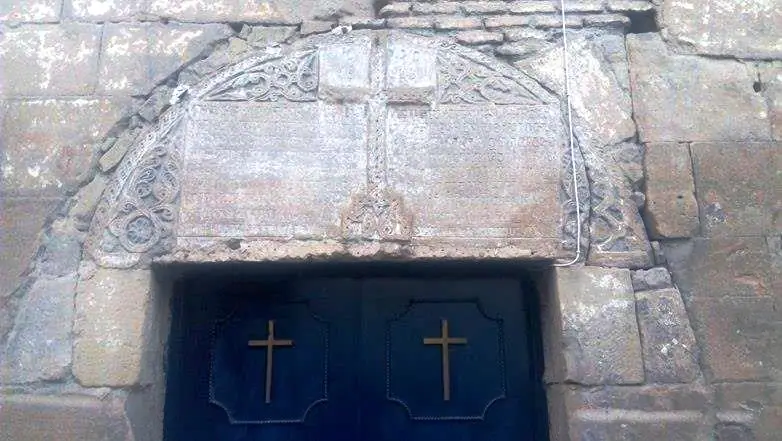
Queen Tamar's Tbilisi has all but vanished, yet one piece of it still stands among the apartment blocks of Vera. The church of St Andrew the First-Called was built in the 1180s, early in Tamar's reign, as a domed cross-in-square church. Its roof was once covered with glazed blue tiles; fragments of them survive, and the colour gave the monastery its name: Lurji, "blue".
Few buildings wear the city's history so openly. Damaged over the centuries, the church was rebuilt in the 17th century as a domeless, three-nave basilica. In 1873, under Russian rule, it was crowned with a round dome quite foreign to Georgian architecture, and in 1898–1901, while Prince Grigory Golitsyn governed the Caucasus, the red-brick Russian church of St John the Theologian rose beside it. That is the building most visitors notice first. Soviet power used the old church by turns as a factory, a warehouse and the Museum of Georgian Medicine. It went back to the Church in 1990, and in 1995 the alien dome gave way to a Georgian conical one.
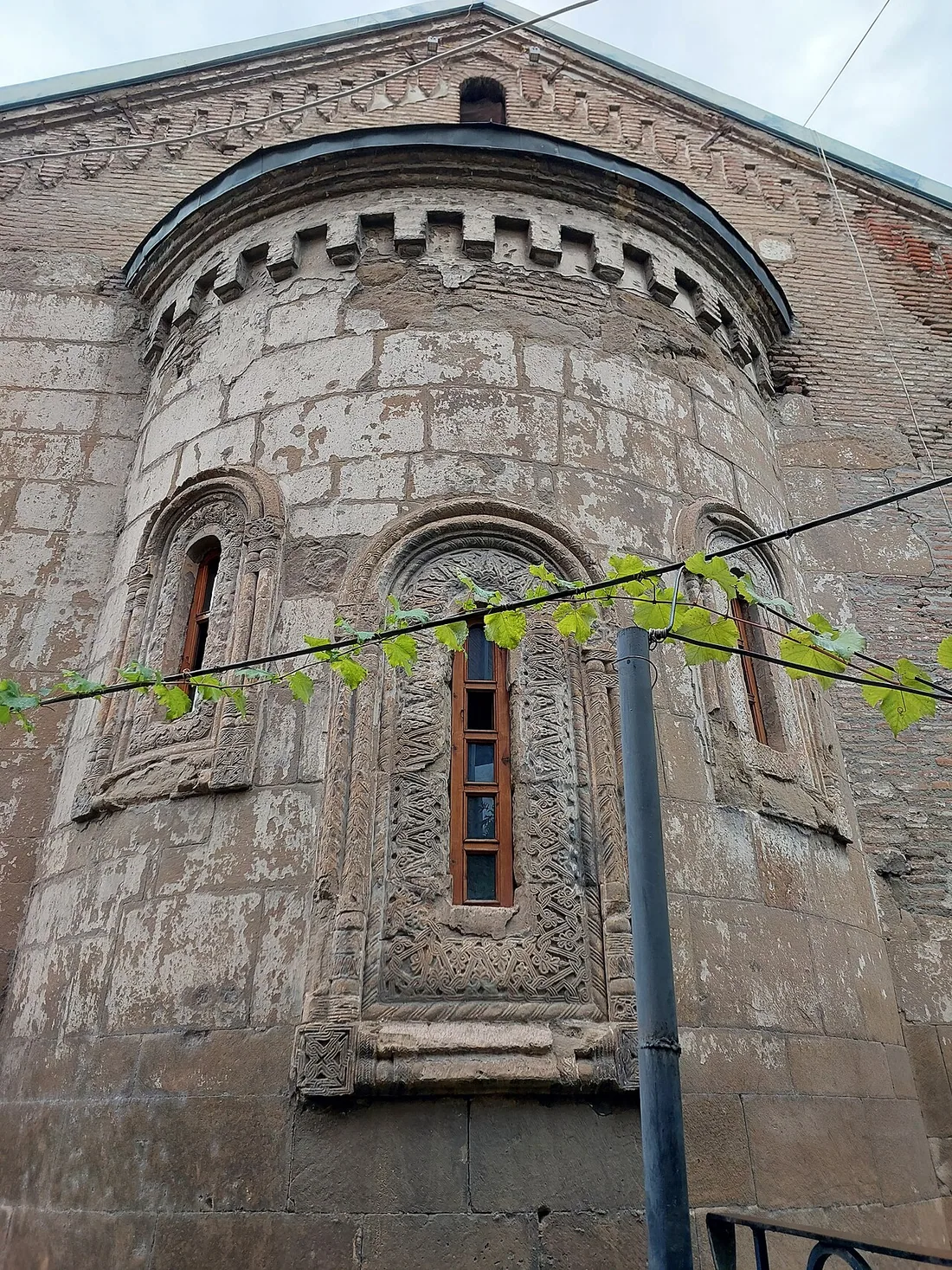
Of the 12th-century church only fragments remain, above all the apse with its ornamental windows and stretches of the old walls. Look closely and you can see where the old masonry gives way to later rebuilding: the building reads like a parchment scraped clean and written over again and again.
The courtyard is small and shaded, and the roar of Rustaveli, five minutes away, somehow never reaches it. Come at midday, when it is almost empty, and you may have eight centuries to yourself.
Practical advice
This is a working church, not a museum. Entry is free; women cover their heads, men wear long trousers, and shoulders stay covered. Scarves are usually left by the door for anyone who needs one. Services are held in the morning and evening: don't photograph during them, and keep your voice low. Midday is the quietest time. There is nothing to buy at the church itself, but Vera's cafés and bakeries are a couple of streets away, and the walk carries on naturally down to Rustaveli Avenue or up into Vera's old streets.
How to get there from Tbilisi
The church stands in Vera, just above Vera Park, about 3 km by road from Freedom Square: five minutes' drive from Rustaveli Avenue in light traffic, or a ten-minute walk. The last stretch is fiddly by car. Vera's narrow one-way streets knot into one another, and the satnav sometimes sends you the long way round. Leave the car in the paid zone on Kiacheli or Nikoladze Street, wherever a space appears, and walk the final hundred metres. An economy car is more than enough, and if you are staying in the centre, honestly, walk.
Click a marker for details. Coloured lines are ready-made road trips.
Nearby places
Rustaveli Avenue
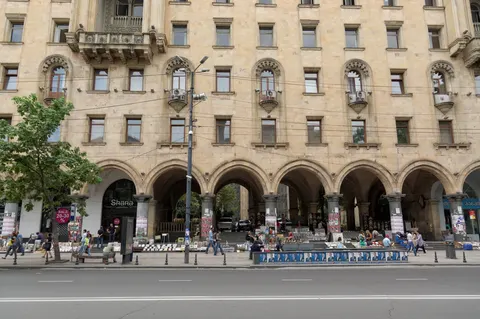
A kilometre and a half of opera, parliament, frescoed church and plane-tree shade: Tbilisi's showcase and the stage of its political memory.
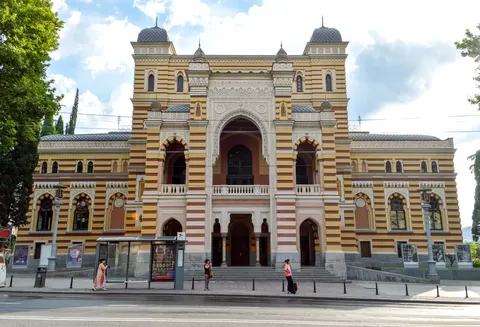
Tbilisi Opera and Ballet Theatre
The Paliashvili opera house on Rustaveli Avenue: a neo-Moorish façade, a European hall, 175 seasons and the State Ballet of Georgia.
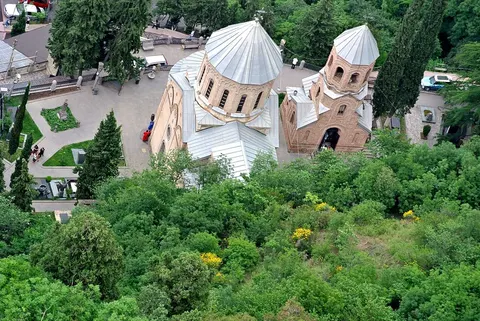
Mtatsminda Pantheon
Moss-grown terraces round St David's church, halfway up the holy mountain: Griboyedov and Nino, Ilia, Vazha, Galaktion and Georgia's quarrels.
Best car for this trip
Guides
- Driving in Georgia: What the Distances Actually Cost You Georgia is a small country with slow roads. Here is what 267 measured drives from Tbilisi say about how long y
Pickup locations
Car Rental in Tbilisi — 2 km (straight line)