
Betania Monastery
A Golden Age monastery deep in the wooded Vere gorge, where Queen Tamar looks out from a fresco painted in her own lifetime.
- Time needed
- 1.5 h
- From Tbilisi
- 35 km · 1:05
- Road
- Paved
- Car needed
- Crossover / SUV
- Season
- All year
- Entry
- free
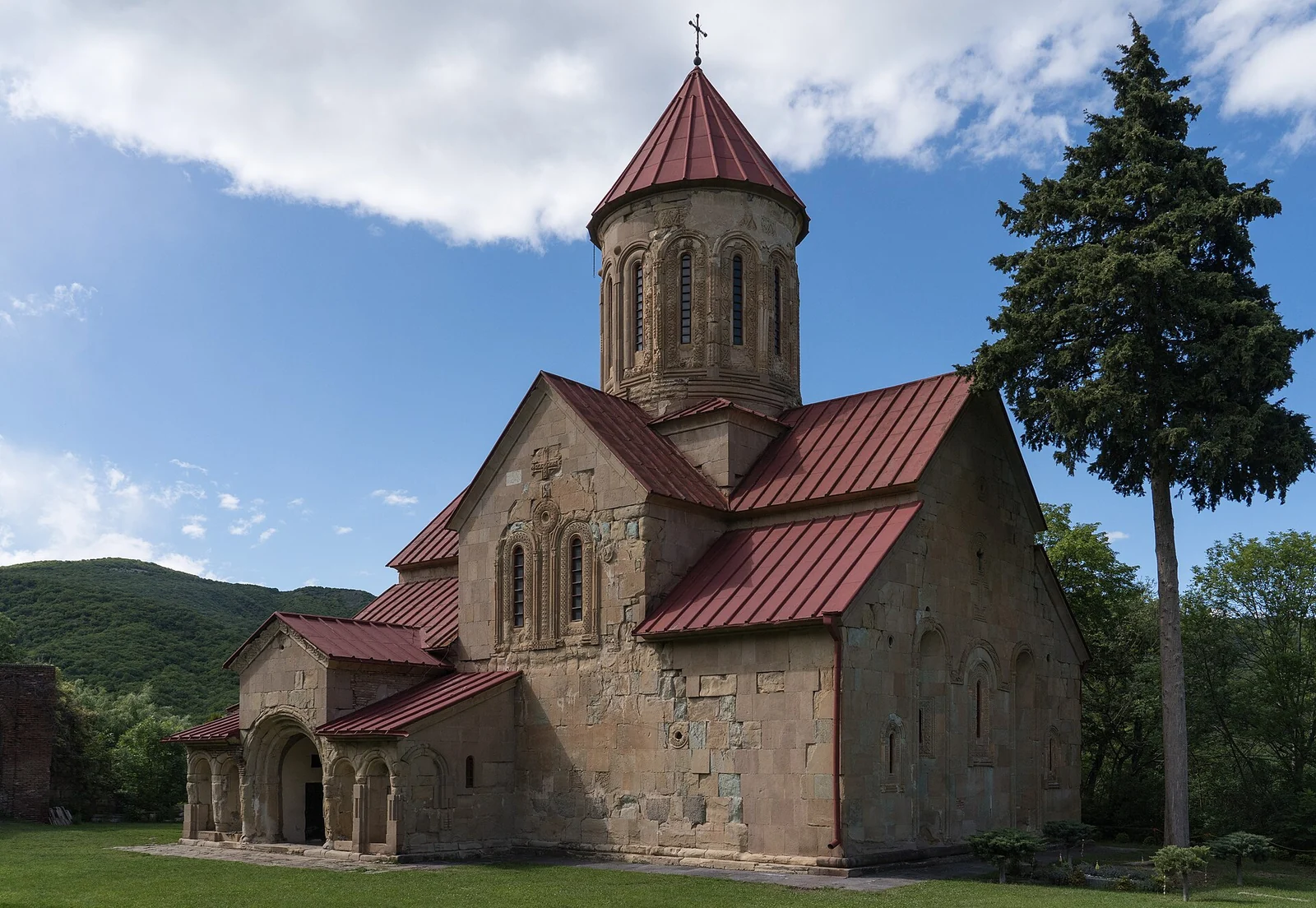
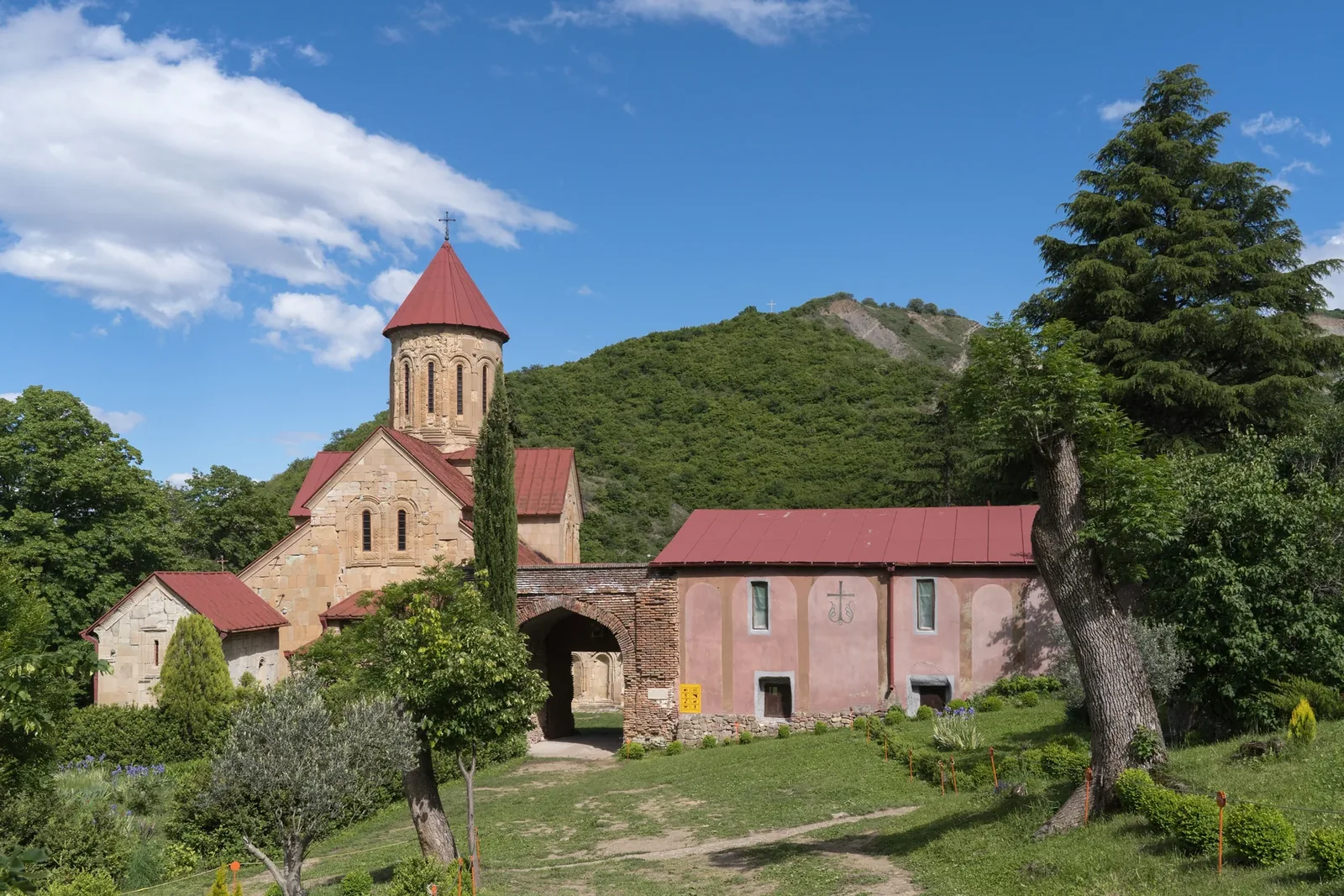
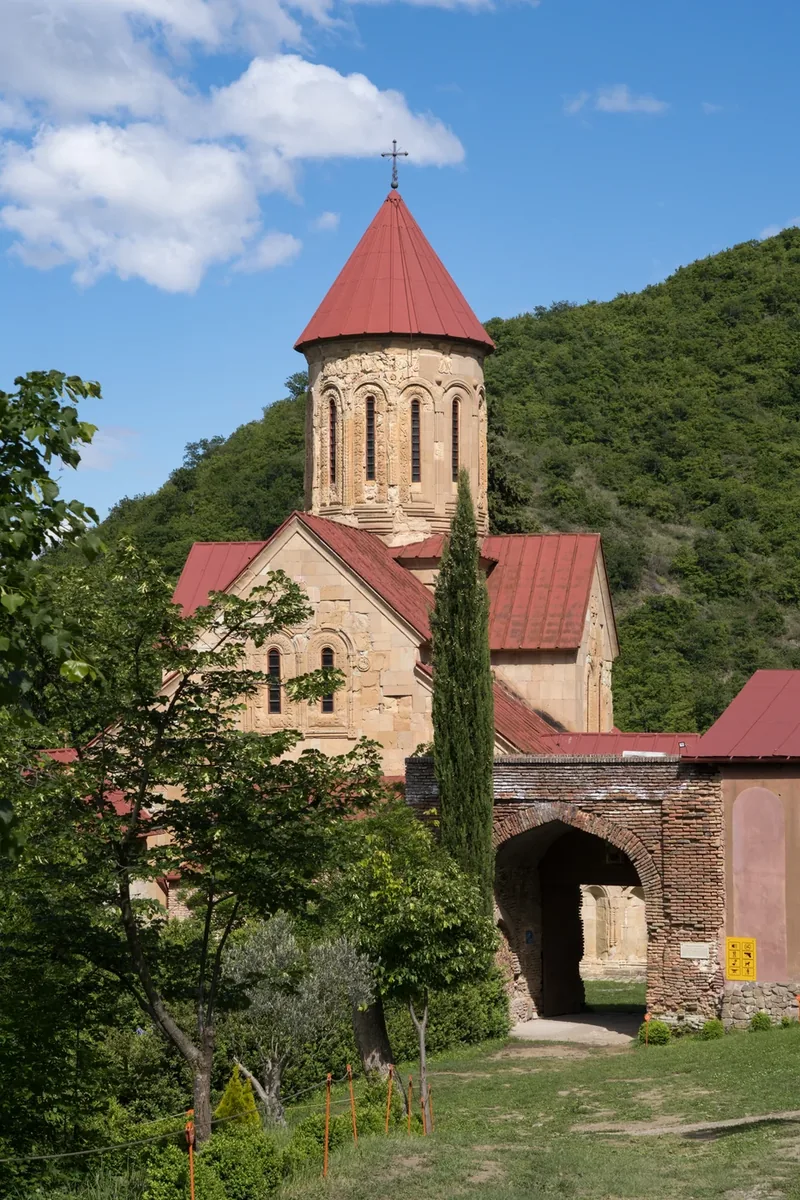
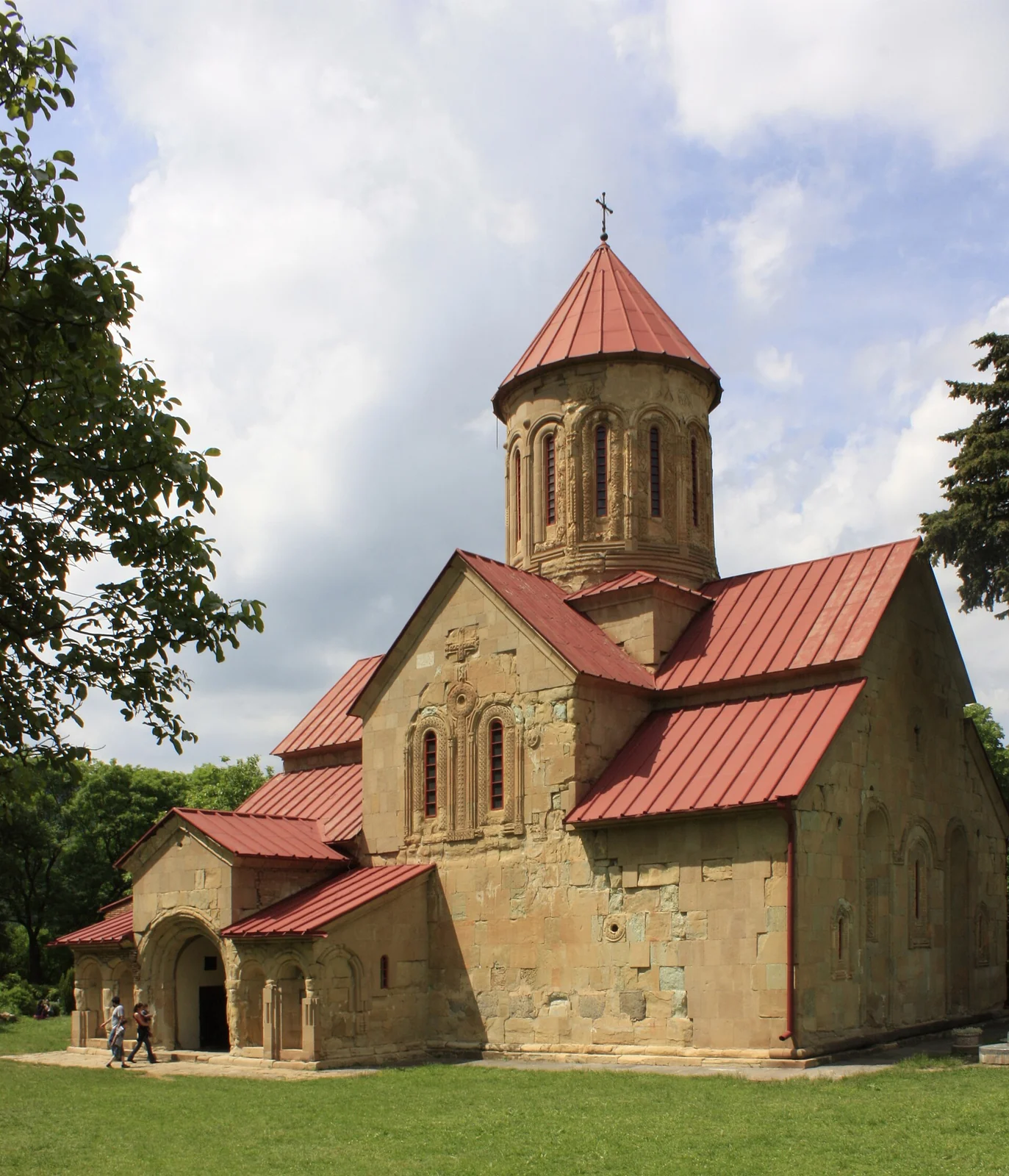
Betania is only sixteen kilometres from Tbilisi as the crow flies, yet it feels a day's ride from anywhere. The monastery hides in the wooded valley of the Vere and takes its name from Bethany, the Gospel village of Lazarus, Mary and Martha. It was the family abbey of the Orbeli princes, and on the south transept Sumbat and Liparit Orbeli still stand before the Mother of God. The domed church of the Nativity of the Mother of God rose at the turn of the 12th and 13th centuries, probably over an older basilica; beside it are the small hall church of St George, dated 1196, and a ruined tower.
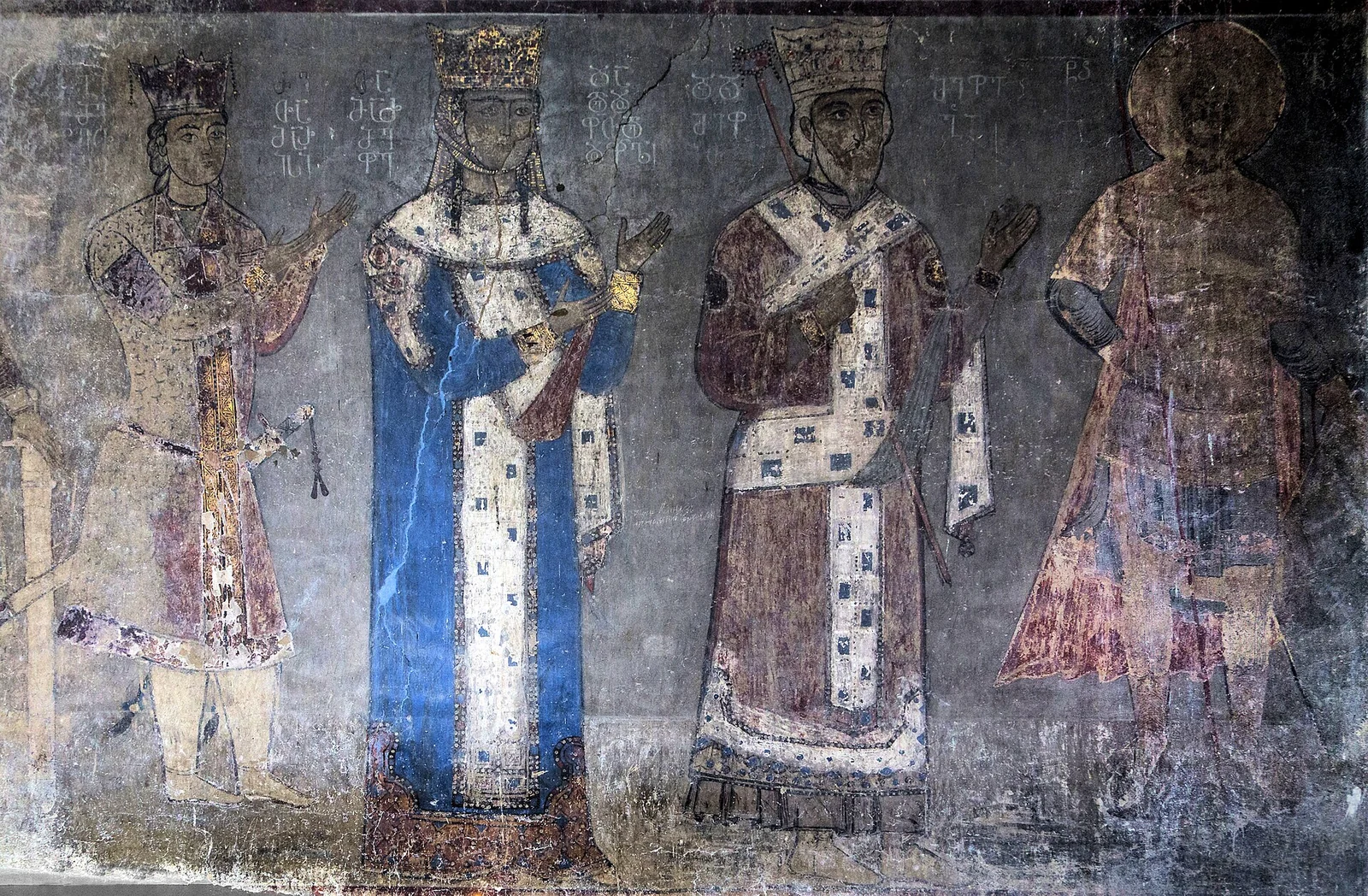
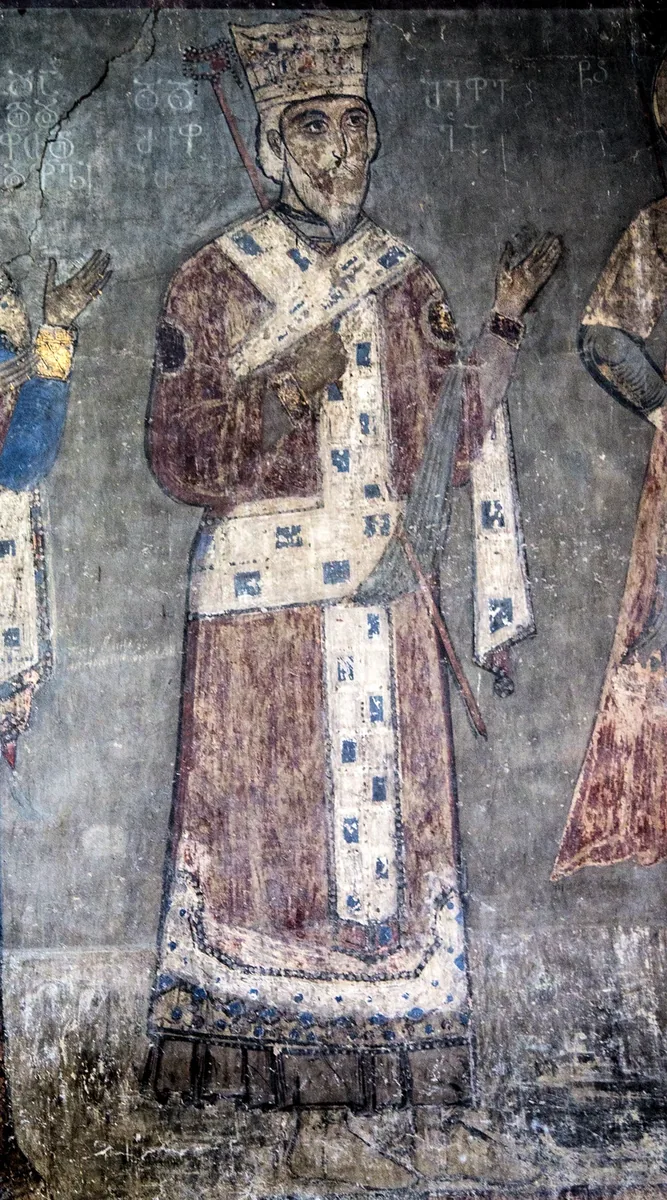
The reason to come is in the north transept. There, around 1207, three crowned rulers were painted side by side: George III, his daughter Queen Tamar, and her son George IV Lasha, a beardless young king with crown and sword. It is one of the very few images of Tamar made in her lifetime; the Russian prince Grigory Gagarin cleaned and published it in 1851. Notice what is missing, too: none of the royal figures has a halo, the mark that usually set a monarch apart in Georgian painting. Around them the Passion, Old Testament scenes and the Last Judgement are badly damaged, yet in the dim light their colours still surface from the plaster.
The monastery's modern story is just as stubborn. The hieromonk Spiridon Ketiladze restored it in the later 19th century; he and his successor, Ilia Pantsulaia, were both shot in the Soviet purges. Even so, Betania stayed, unofficially, the only working monastery in Georgia until 1963. After fifteen silent years, Patriarch Ilia II won permission to reopen it in 1978. The monks are back, and the forest still keeps the road quiet.
Gallery
Practical advice
Betania is a working men's monastery. Cover shoulders and knees; women should bring a headscarf, and a long skirt is the respectful choice. Ask before photographing the frescoes. The church is dim, so give your eyes a minute to adjust. The royal portraits are in the north transept, on your left as you face the altar. There is no shop or café at the monastery: bring water, and buy food in Tskneti on the way. Weekday mornings are the quietest; keep voices low, as this is a place of prayer first and a monument second.
How to get there from Tbilisi
Leave Tbilisi through Vake, climb the Tskneti highway through leafy Tskneti and follow the road across the hills to the Tbilisi–Manglisi road (Sh36); right at the junction, take the signposted Betania road (Sh159). In all it is about 35 km and 1 hour 5 minutes. The last 7 km drop into the Vere gorge as a narrow lane of steep hairpins. It now has a concrete surface, but drive slowly and expect oncoming cars on blind bends. In dry weather a careful driver manages in an ordinary car; from late autumn to early spring, when ice lingers on shaded curves, choose a crossover or SUV. For a loop home, return east along the Sh36 through Kojori.
Click a marker for details. Coloured lines are ready-made road trips.
Nearby places
Manglisi Cathedral
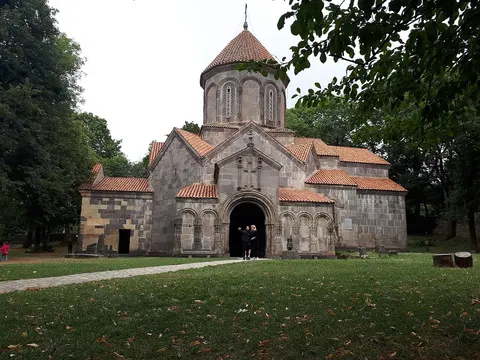
An early-medieval cathedral among pines at 1,200 m, founded by tradition in the 4th century and rebuilt in the 11th, in an old garrison resort.
Algeti National Park
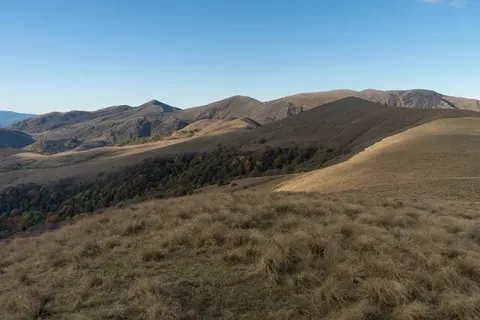
Georgia's easternmost spruce and fir, protected since 1965 on the Trialeti slopes above Manglisi: cool forest, five trails and very few people.
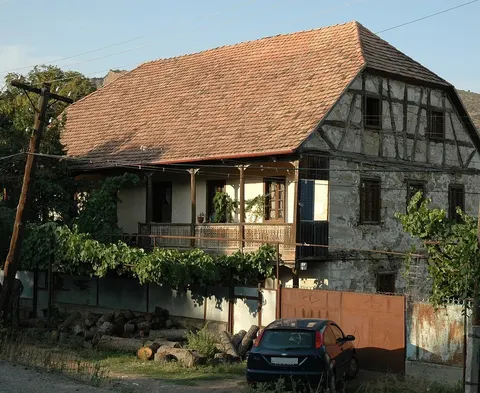
Asureti
The Swabian colony of Elisabethtal, founded in 1818: tiled gables, deep wine cellars, a Lutheran church of 1871 and a grape first found in the woods.
Best car for this trip
Guides
- Driving in Georgia: What the Distances Actually Cost You Georgia is a small country with slow roads. Here is what 267 measured drives from Tbilisi say about how long y
Pickup locations
Car Rental in Tbilisi — 16 km (straight line)