Surami Fortress
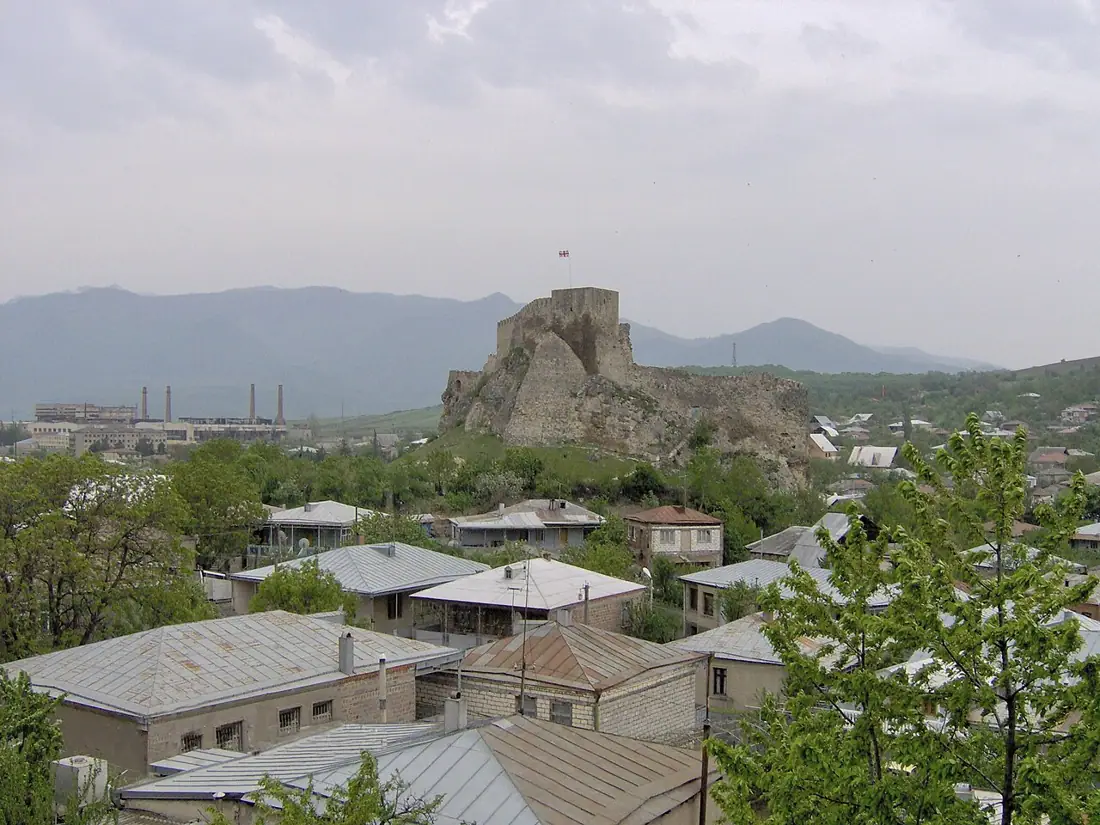
A medieval fortress on a rocky knoll at the foot of the Likhi range, and the setting of the best-known legend in Georgian literature.
- Time needed
- 1 h
- From Tbilisi
- 133 km · 1:45
- Road
- Paved
- Car needed
- Economy class
- Season
- All year
- Entry
- free
Surami sits on the hill from which you can see where Georgia divides in two. The Likhi range drops to the plain here, and for centuries this narrow gap was the only practical passage between eastern and western Georgia. Whoever held the hill held the trade and the armies that used it.
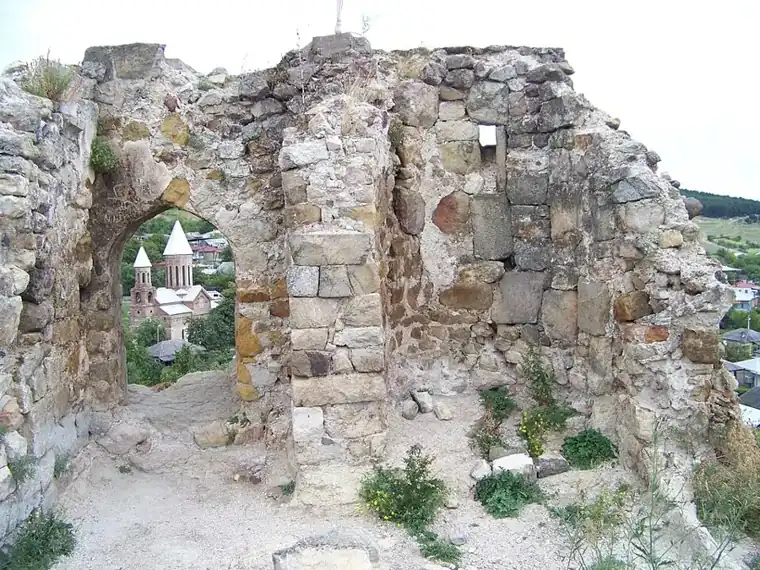
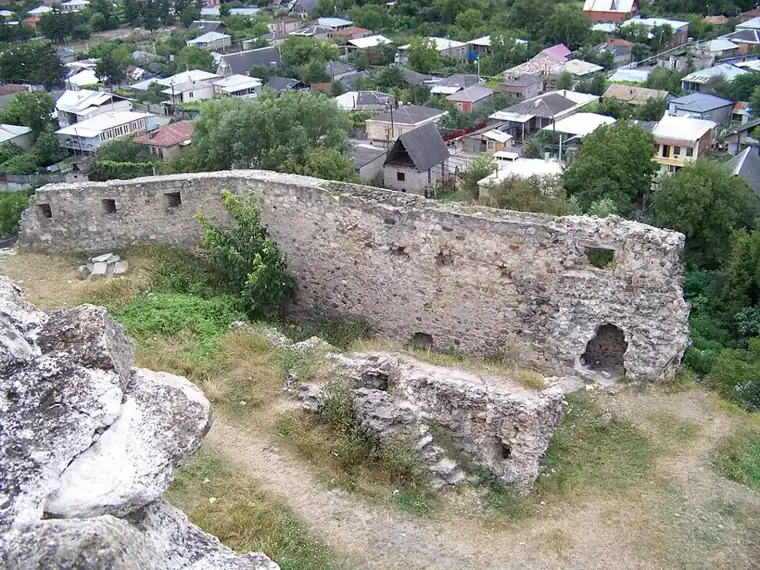
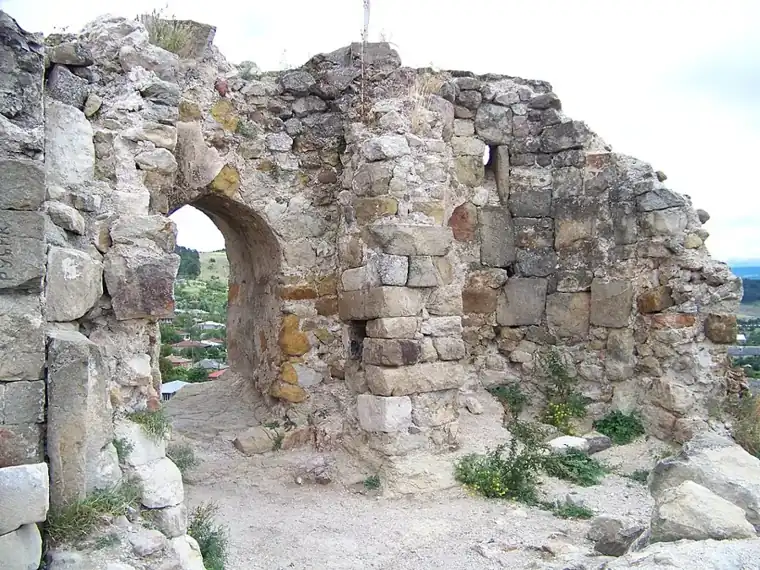
The core of the castle is 12th century, though a stronghold stood here much earlier. Most of what you walk through now — curtain walls, round bastions, the tall keep — went up between the 16th and 18th centuries, when Surami belonged to the Amilakhvari family. A restoration in the late 20th century put the silhouette back together, so the profile is complete while some of the stonework is visibly modern. Inside there is little but grass, stairs and towers; the reward is the view down the valley and over the railway that still climbs towards the pass.
The fortress is famous less for its architecture than for a story. Daniel Chonkadze's 1859 novella The Surami Fortress tells of walls that kept collapsing until a young man, Zurab, agreed to be immured alive in them. Sergei Parajanov and Dodo Abashidze filmed it in 1985, and the film carried the tale far beyond Georgia. For Georgian visitors the hill is read through that text.
Surami itself is a small pine-shaded town, a climatic resort in Soviet times with sanatoria for lung patients. Along the through-road, stalls sell nazuki — sweet spiced bread baked in a clay oven — which is what most Georgian drivers actually stop here for. In winter the hill is often under snow and the pass above disappears into cloud; in spring everything around it is green and the walls read most clearly.
Gallery
Practical advice
An hour is enough. The path up is short but steep and cobbled, and it becomes genuinely slippery in wet weather. There are no handrails on the towers, so keep children close. No toilets or cafe at the fortress itself, but the nazuki stalls on the main road have both bread and cold drinks. Leave the car on the village street below the hill. In midsummer there is no shade at all on top, so come early or late in the day.
How to get there from Tbilisi
Leave Tbilisi westbound on the E60 towards Gori and Khashuri, then follow signs for Zestaponi after Khashuri — 133 km in total, about an hour and forty-five minutes. The road is asphalt throughout and mostly dual carriageway, and the new Rikoti sections have made the run faster than it used to be. The Surami turn-off is clearly marked and the fortress is visible from the main road. Refuel in Gori or Khashuri; filling stations in the village are small. An economy car is enough all year.
Click a marker for details. Coloured lines are ready-made road trips.
Nearby places
 Town
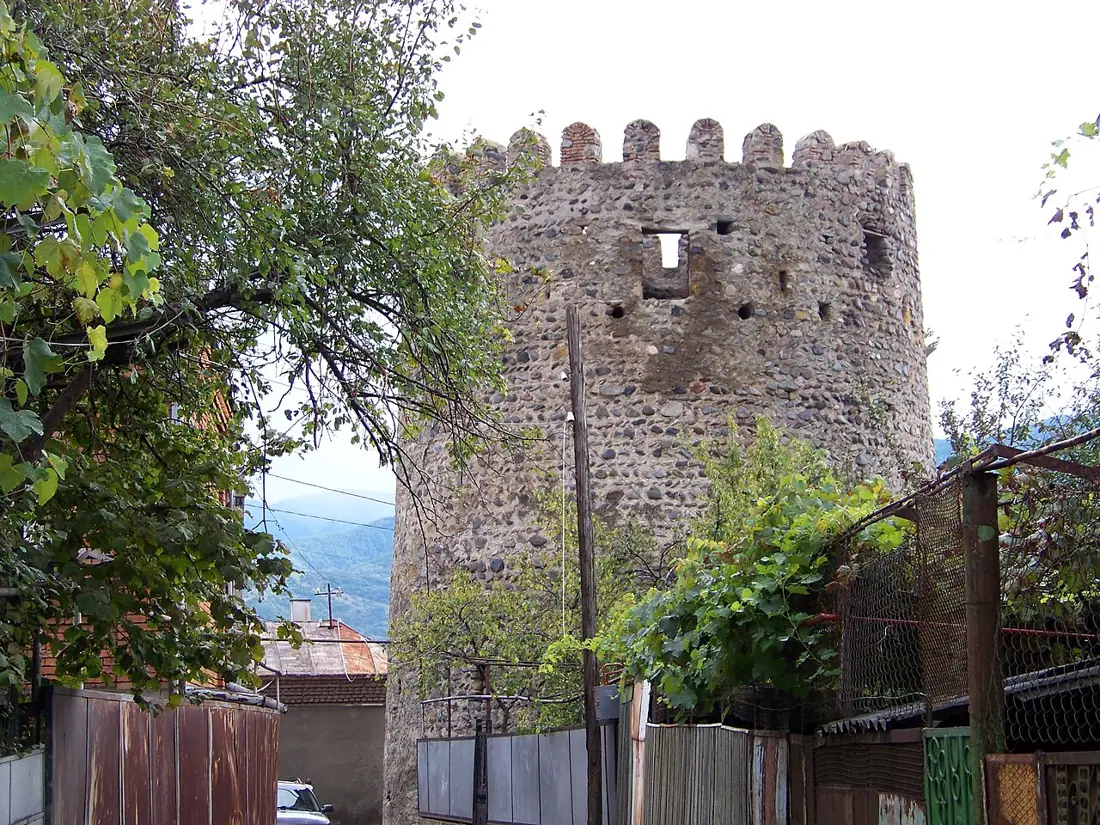
TownKhashuri
A rail and road junction at the western edge of Shida Kartli, where the routes to Borjomi and to western Georgia divide.
 Monastery
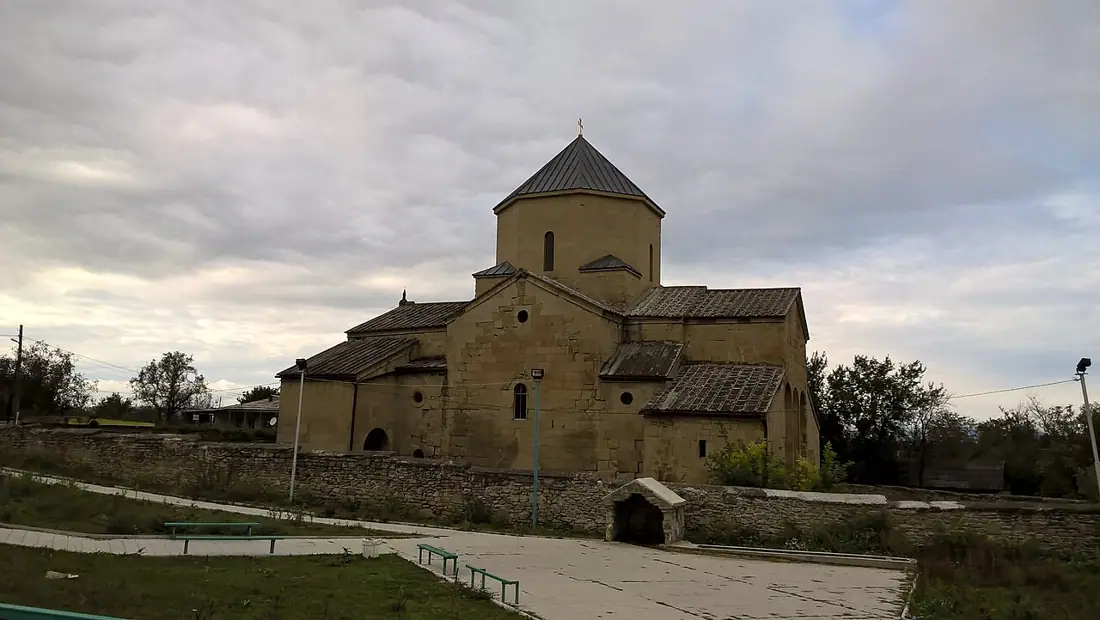
Tsromi Church
A church of 626-634 near Khashuri, a pivotal monument of Georgian architecture and today a partial ruin.
 Spa resort
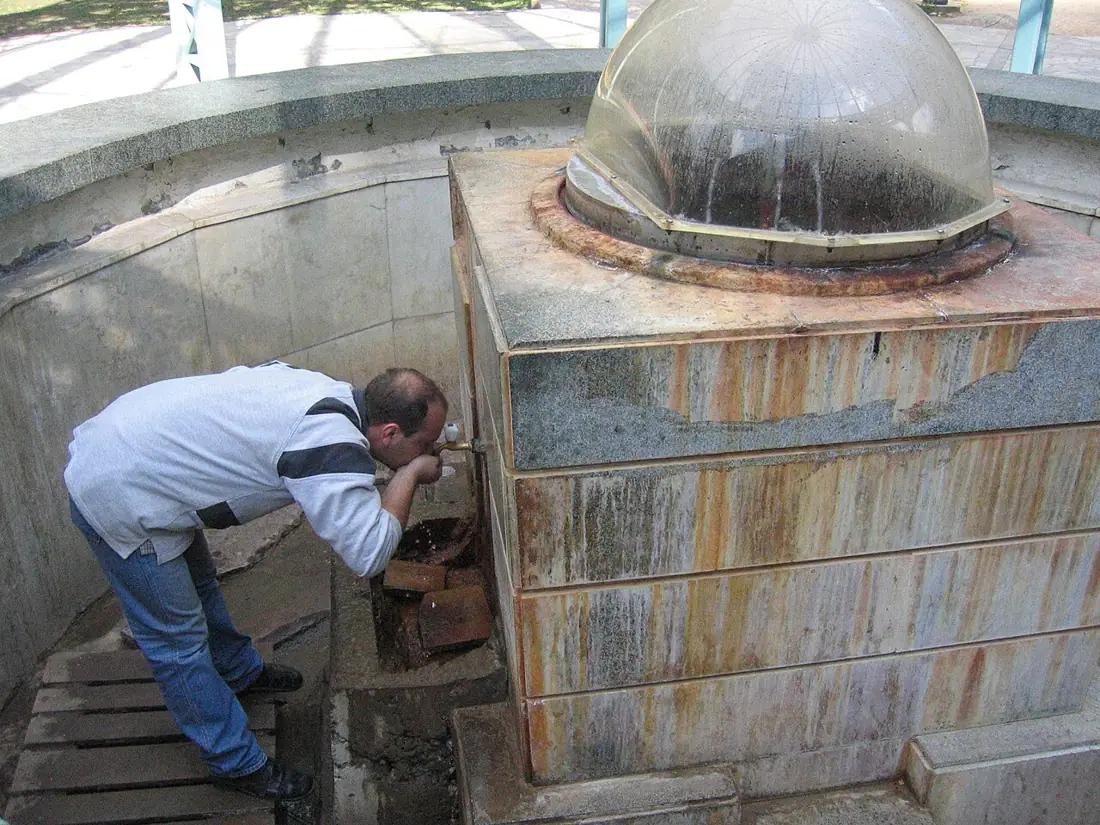
Borjomi Central Park and Mineral Springs
The historic spa park where you drink warm Borjomi water free, straight from the source.
Booking and enquiries
This site is informational — there is no online payment. Call or email us to book.