Napareuli
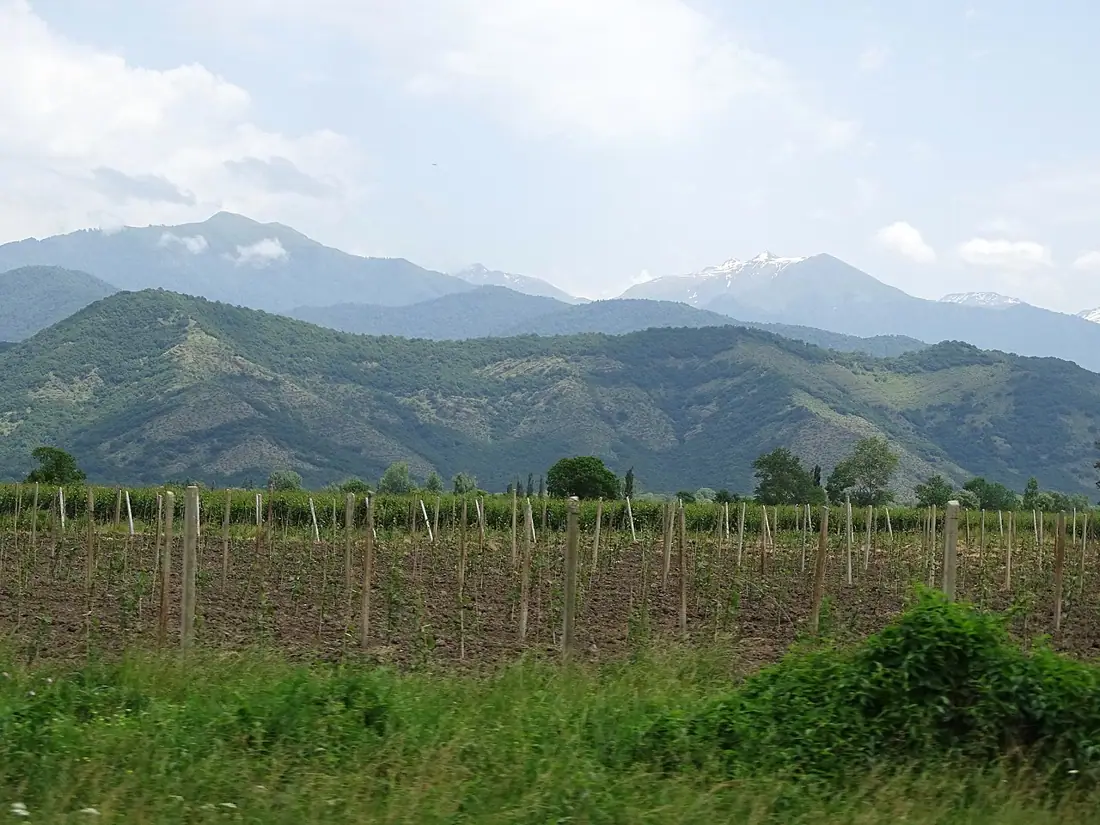
A village on the left bank of the Alazani that gave its name to an appellation and where qvevri are still made by hand.
- Time needed
- 2 h
- From Tbilisi
- 115 km · 2:10
- Road
- Paved
- Car needed
- Economy class
- Season
- All year
- Entry
- free
Napareuli is one of the few villages where the whole chain of Georgian winemaking is visible in one place — vine to qvevri, qvevri to glass. It lies about twenty kilometres north of Telavi on the left bank of the Alazani, right under the Caucasus foothills.
The village name became an appellation. Napareuli denotes two controlled-origin wines: a dry red from Saperavi and a dry white from Rkatsiteli. The soils here are gravelly and free-draining, and cold air slides down off the mountains at night; that combination is what separates Napareuli fruit from the softer wines grown out on the plain.
Two things draw visitors:
-
The qvevri museum, where cutaway sections show buried jars in place, alongside the tools and an explanation of how the clay vessels are coiled, fired and lined with beeswax — the same technology that has held wine here for six thousand years
-
Working cellars, where tastings happen beside sealed qvevri in the ground rather than in a reception hall
The Georgian qvevri method was inscribed on the UNESCO list of intangible cultural heritage in 2013. In Napareuli this is not a museum exhibit: buried qvevri sit in ordinary private courtyards, and in October the whole village is at the harvest.
Late September and October are a different visit altogether. Tractors come down the lanes loaded with grapes, gates stand open, and the smell of fermentation is in the air from one end of the village to the other. It is also the hardest time to get anyone's attention, because everyone is working.
The vineyards themselves reward a slow look. Rows here tend to run down towards the river rather than along the contour, and the older blocks are planted at wide spacing, a legacy of ploughing with oxen rather than tractors.
Gallery

Practical advice
Two hours covers one cellar and the museum. Most places want a booking, especially during harvest, and simply turning up often does not work. Decide who is driving before you arrive; Kakhetian hospitality does not take refusal easily and pours are generous. Qvevri whites are tannic and amber rather than crisp and pale — that is the style, not a fault, so taste them on their own terms. Toilets are at the cellars; cafes are in Telavi and Kvareli.
How to get there from Tbilisi
There are two routes from Tbilisi: over the Gombori Pass to Telavi (95 km) and then twenty kilometres north along the Alazani, or the longer plain road through Gurjaani, which adds about twenty kilometres. Total 115 km, roughly two hours ten. The road is asphalt throughout and in good condition, narrowing to a village lane at the end. Fuel is available in Telavi. An economy car is entirely sufficient all year round.
Click a marker for details. Coloured lines are ready-made road trips.
Nearby places
 Fortress
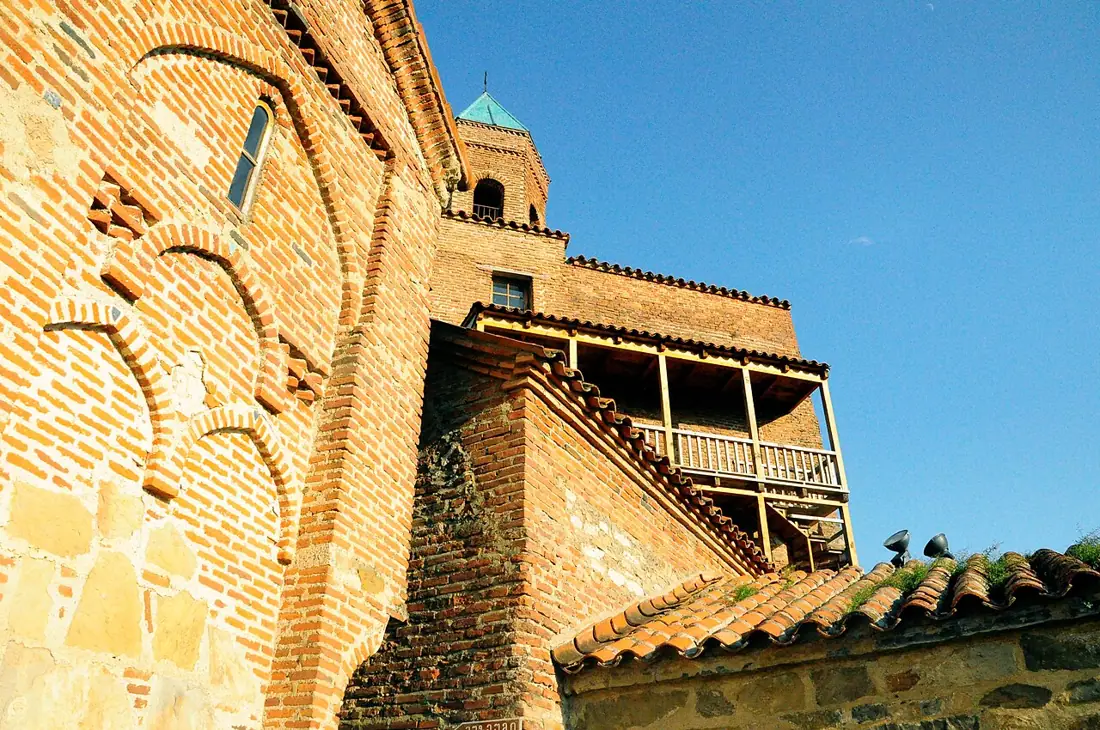
Gremi
The citadel of Kakheti's lost capital — a 1565 church and tower on a hill above the Alazani Valley.
 Museum
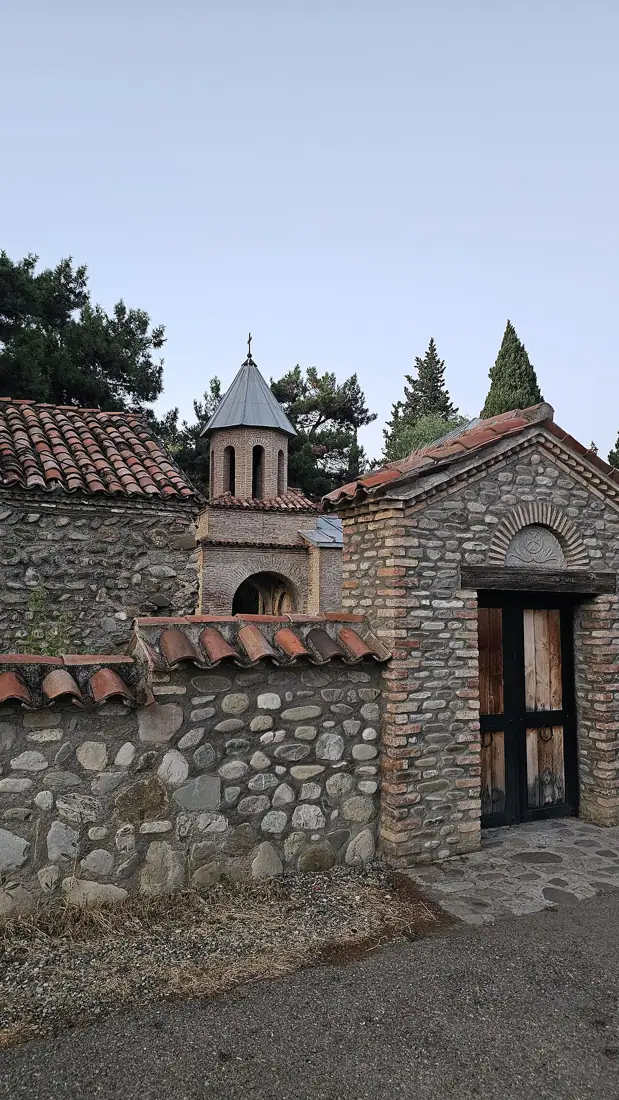
Tsinandali Estate
The Chavchavadze family house, a landscaped English-style park and the first European-style winery in Georgia.
 Town
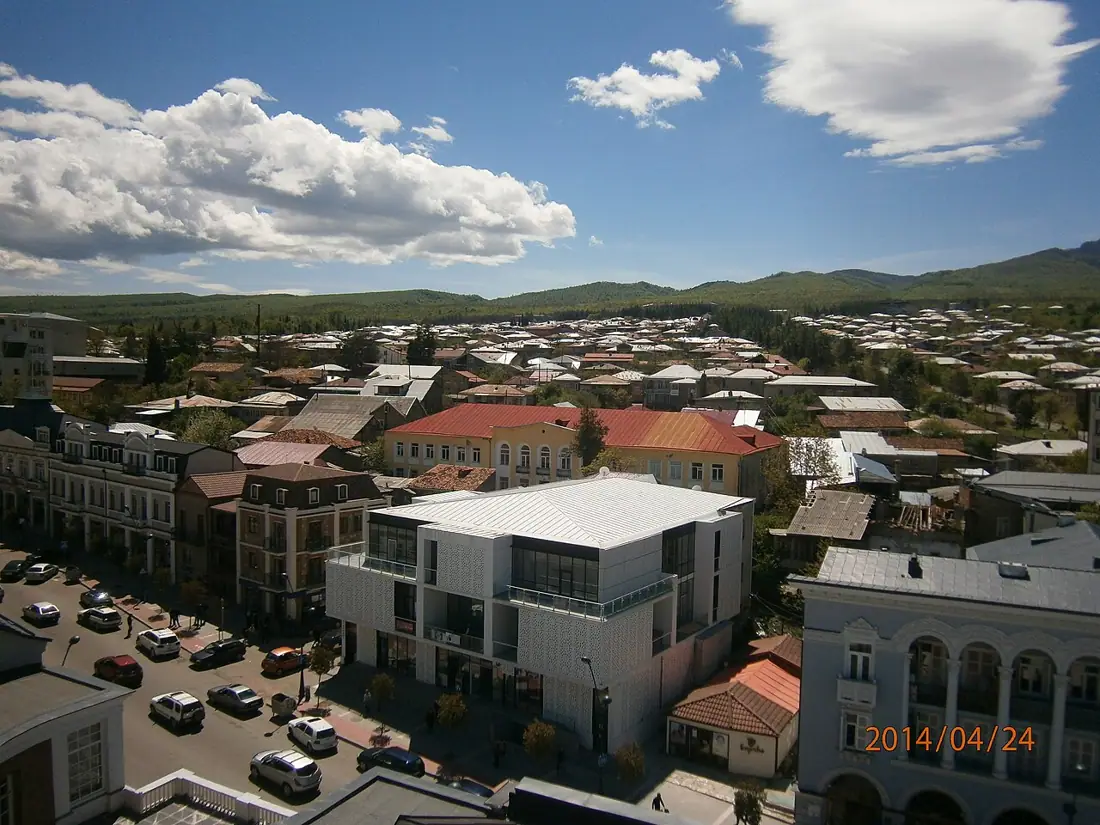
TownTelavi and Batonis Tsikhe
The capital of Kakheti on a terrace above the Alazani Valley, with King Erekle II's residence and a nine-century-old plane tree.
 Monastery
Alaverdi Cathedral
An eleventh-century cathedral rising fifty metres out of the Alazani plain — for centuries the tallest building in Georgia.