Gurjaani Kvelatsminda
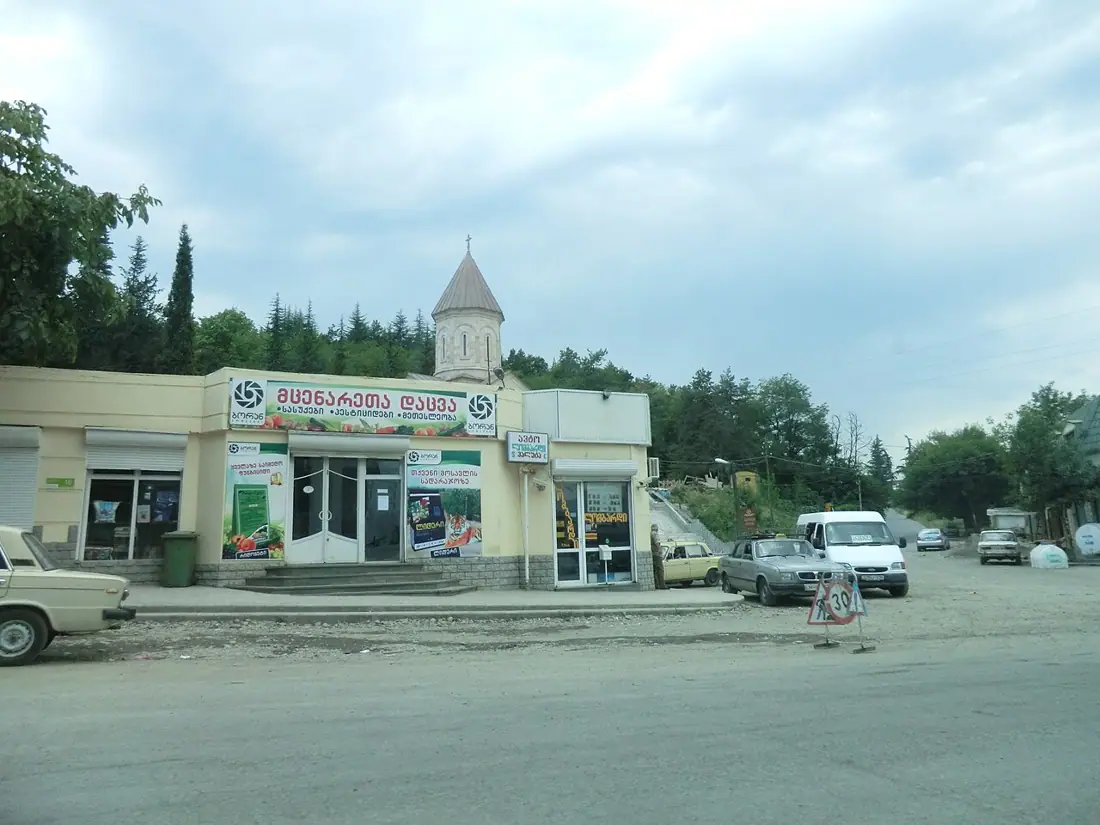
The only two-domed church in Georgia, built in the 8th or 9th century on a wooded slope above Gurjaani.
- Time needed
- 1 h
- From Tbilisi
- 105 km · 1:55
- Road
- Mostly paved
- Car needed
- Economy class
- Season
- All year
- Entry
- free
Kvelatsminda is the only church in Georgia with two domes, and that single fact makes it a compulsory stop for anyone who cares about architecture. It stands a couple of kilometres above the town of Gurjaani on a wooded slope, well off the main road and easy to miss.
The church dates from the 8th or 9th century. It is a three-nave basilica, but over the central nave sit two domes, one behind the other. Nothing else in Georgian architecture repeats the arrangement, and its origin is still argued about: some scholars look for Armenian and Syrian parallels, others treat it as a local experiment that was tried once and never repeated.
The fabric is river cobble and brick, and the proportions are low and heavy, closer to a fortified hall than to the tall, sharp churches of the later medieval period. From outside the domes are almost invisible until you come round to the south; inside, the doubled vertical space registers immediately and is genuinely disorienting. Fragments of 11th and 12th-century wall painting survive, badly damaged, though figures can still be read in places.
A bell tower and later additions share the yard, with oak forest all around. The church is in use, but the daily congregation is small; more often than not the door is open and there is nobody inside.
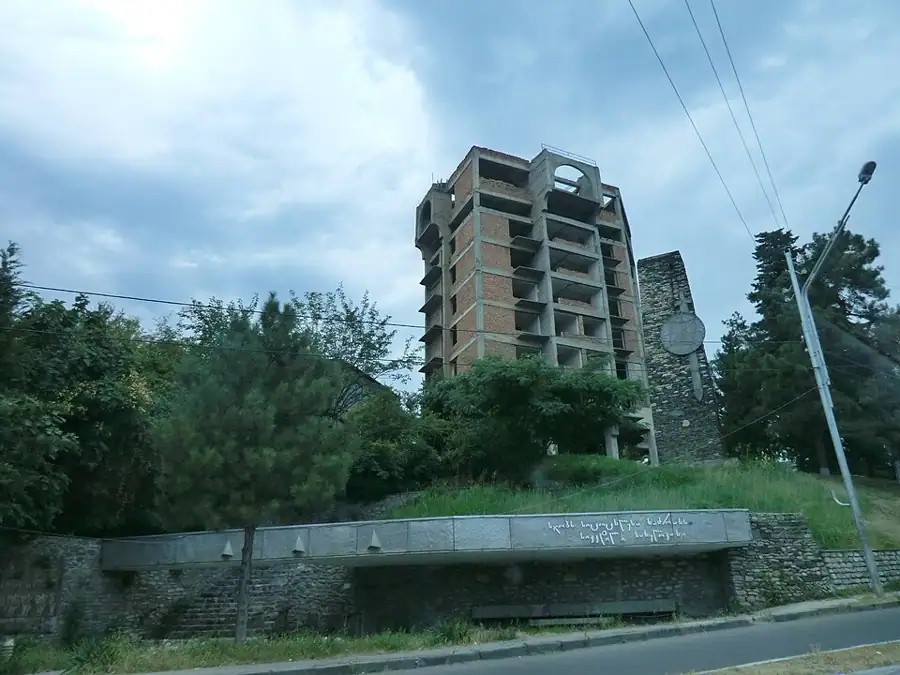
Gurjaani itself is known for wine and for a mud-treatment spa, though the town is unremarkable to look at. Kvelatsminda is the reason to turn off here, and half an hour on this slope explains more about early Georgian building than a whole day in the valley below.
One further oddity is worth noticing as you walk out. The two domes are not identical twins — the eastern one sits slightly higher and is a little wider, which suggests they were not planned in a single stroke.
Gallery
Practical advice
Fifty minutes is plenty. The last kilometre is a narrow gravel road through forest that turns muddy after rain; an ordinary car manages it if you go slowly. Dress rules apply, and although headscarves are sometimes left by the door you should not count on it. The interior is dark and a phone torch helps with the frescoes, but do not shine it directly on the painted surface. Toilets and cafes are down in Gurjaani. There is no ticket and no guide on site.
How to get there from Tbilisi
Take the Kakheti highway from Tbilisi through Sagarejo and Badiauri towards Gurjaani, roughly 100 km of good asphalt and about an hour and a half. In Gurjaani turn north-east and follow the sign for Kvelatsminda; the last two or three kilometres climb the slope and are partly gravel. Total 105 km and about an hour and fifty minutes. Fuel is available in Gurjaani. An economy car is sufficient in dry weather, and the church pairs well with Tsinandali or with continuing to Sighnaghi.
Click a marker for details. Coloured lines are ready-made road trips.
Nearby places
 Museum
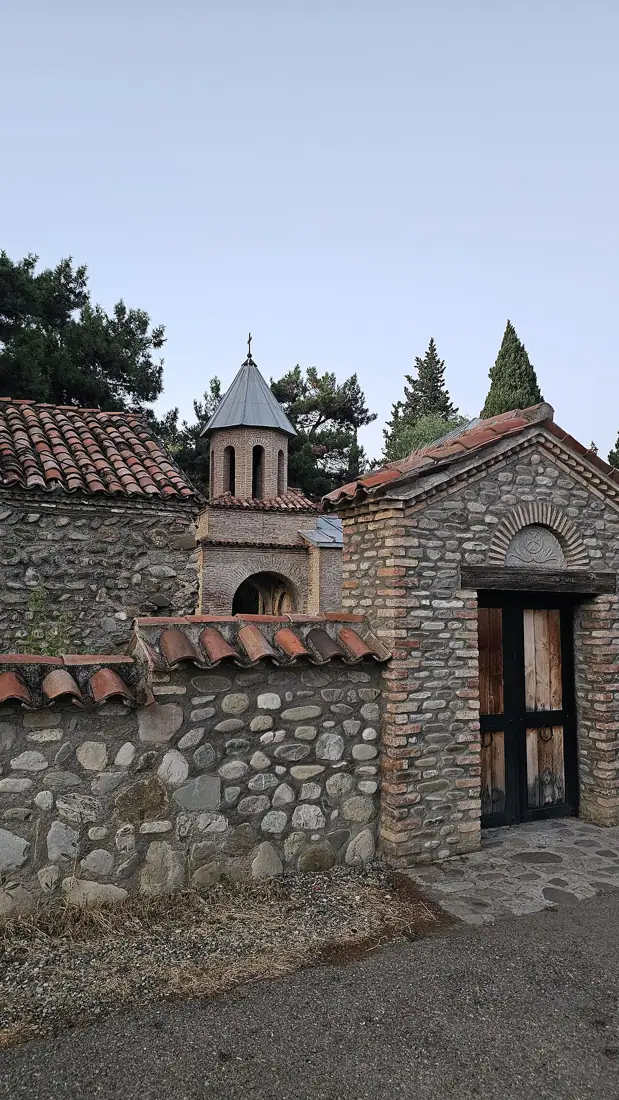
Tsinandali Estate
The Chavchavadze family house, a landscaped English-style park and the first European-style winery in Georgia.
 Town
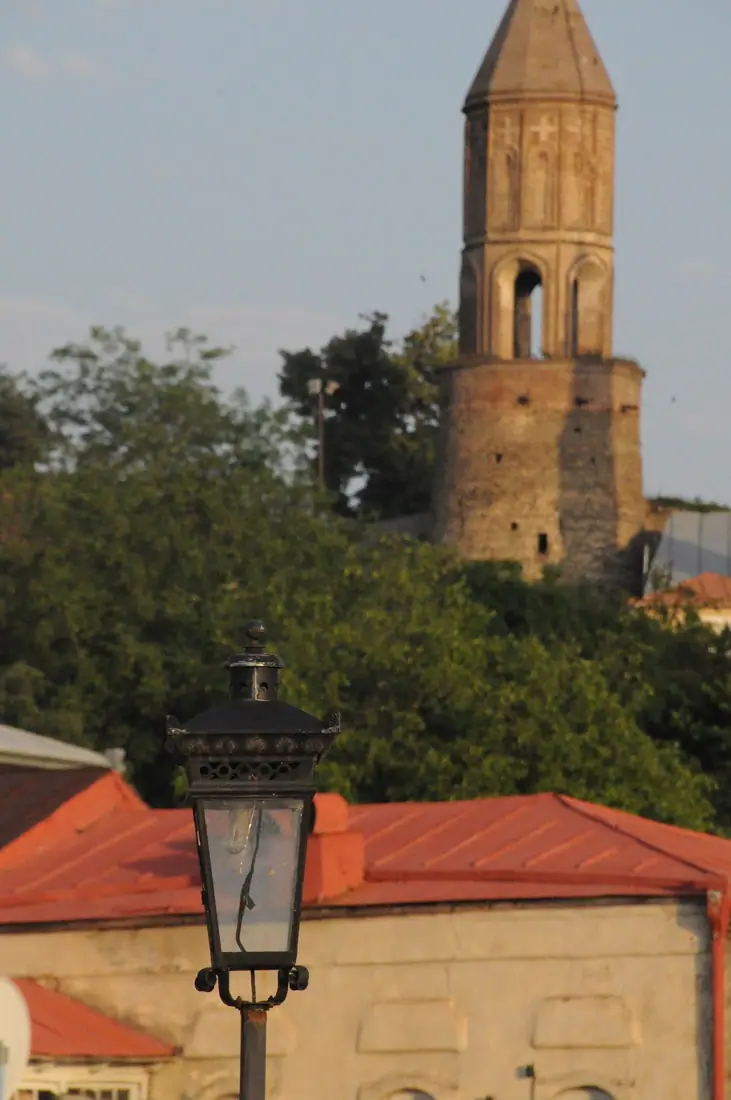
TownSighnaghi
A small walled town on a ridge above the Alazani Valley, with the most photographed view in Kakheti.
 Monastery
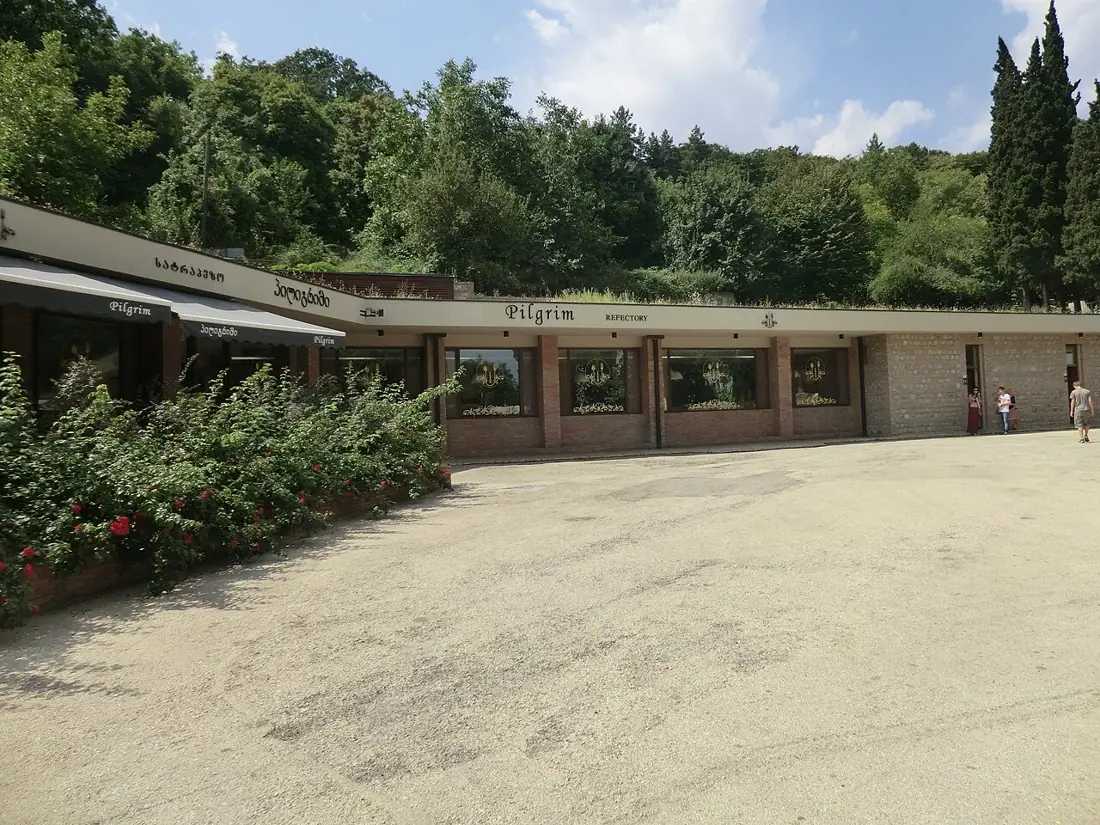
Bodbe Monastery
The burial place of St Nino beside Sighnaghi — one of Kakheti's most visited shrines, with a cypress avenue and valley views.