Armaztsikhe-Bagineti
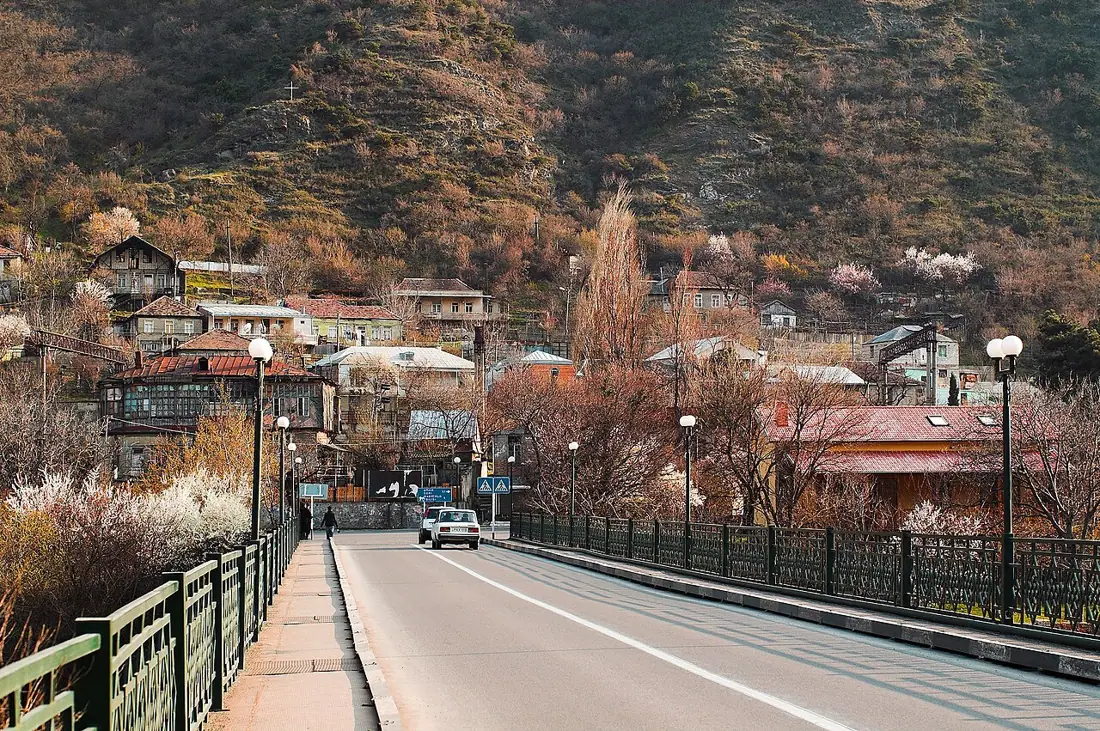
The excavated acropolis of Iberia's ancient capital, on a terrace above the meeting of the Mtkvari and the Aragvi.
- Time needed
- 1.5 h
- From Tbilisi
- 30 km · 0:45
- Road
- Mostly paved
- Car needed
- Economy class
- Season
- May–October
- Entry
- free
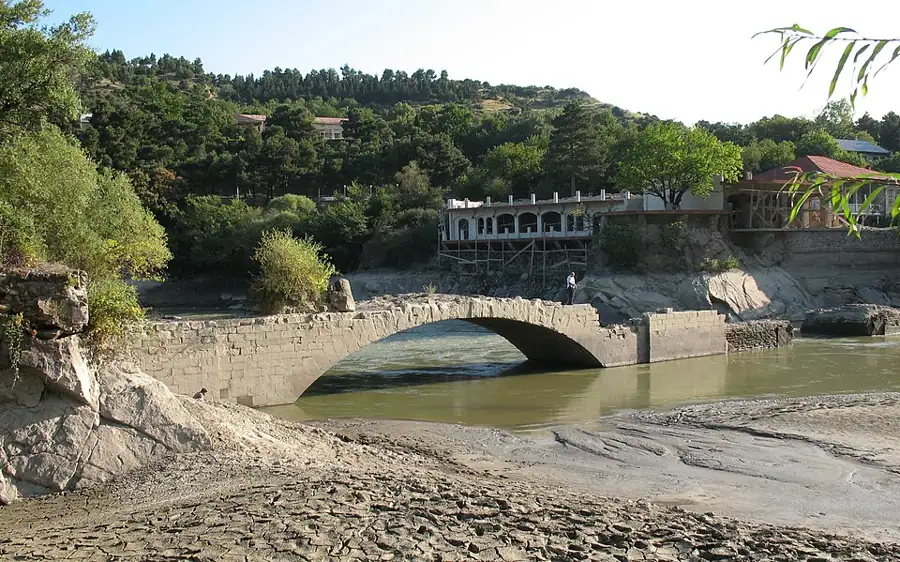
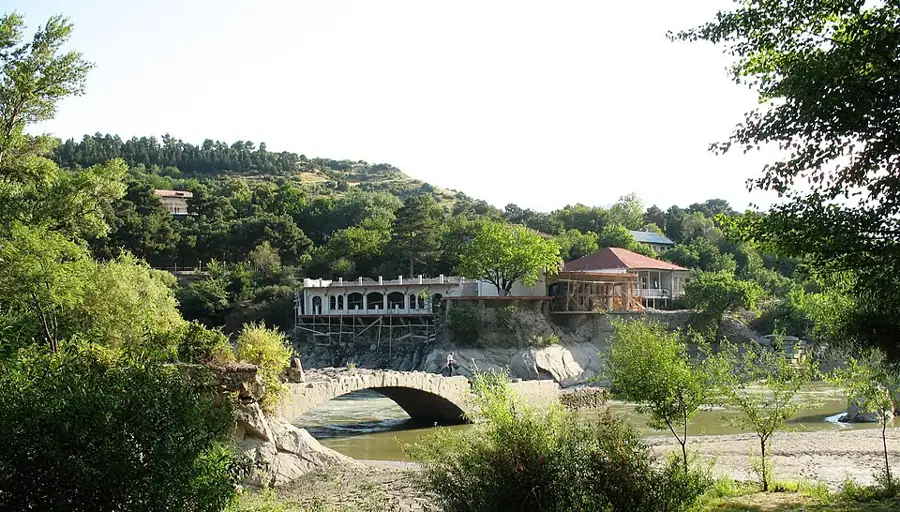
Before Mtskheta was a Christian city it was a pagan one, and Armaztsikhe was its citadel. The ruins lie on a terrace on the right bank of the Mtkvari, directly opposite the mouth of the Aragvi, with Jvari monastery on the skyline above. Almost nobody comes, which is both the charm of the place and its problem: no signs worth reading, no ticket office, no shade.
The city took its name from Armazi, the chief idol of pre-Christian Kartli, and was the seat of the kings of Iberia from roughly the 3rd century BC. Strabo and later Roman writers knew of it. Pompey's army came up the valley in 65 BC; the city was rebuilt, flourished under Roman influence in the 1st to 3rd centuries AD, and was finally wrecked by the Arab commander Marwan ibn Muhammad in the 730s.
Systematic excavation began in 1937 under Andria Apakidze and continued for decades. What you can walk over today, most of it at knee height:
-
the foundations of a six-columned audience hall, the stone bases still in line
-
a Roman-style bath house with the brick pillars of its underfloor heating intact
-
a wine cellar with the mouths of buried qvevri set into the floor
-
stretches of city wall in large dressed blocks, and a stepped water cistern
In the side ravine of Armaziskhevi, a short distance away, archaeologists found the graves of the pitiakhshi, the viceroys who governed on behalf of the kings. The Roman silver, engraved gems and gold taken from them are among the finest objects in the National Museum in Tbilisi, and the famous bilingual Armazi stele, inscribed in Greek and in the local Aramaic script, came out of the same dig in 1940. None of that is here. Come for the site and the plan of the city, not for objects.
Practical advice
Allow an hour, longer if you enjoy reading ruins. The site is open ground: no gate, no guard, no water and no toilet, so bring a bottle and a hat — the terrace bakes in July. Wear shoes with grip; the paths between the trenches are bare earth and turn slippery after rain, and the tops of some walls are unstable. Load the site plan onto your phone while you still have signal. Seeing this together with the National Museum in Tbilisi, where the finds actually are, makes far more sense than seeing it alone.
How to get there from Tbilisi
From Tbilisi take the E60 north and leave the highway at Mtskheta, cross to the right bank of the Mtkvari and follow the small road towards Armazi village — about 30 km and 45 minutes in all. The last kilometre is a narrow, patched lane ending in a rough turning area below the terrace, which holds mud in winter. In dry weather an economy car manages without trouble. Park at the end of the lane and walk up for about five minutes. There is no fuel or shop on the final stretch, so fill up in Mtskheta or Tbilisi.
Click a marker for details. Coloured lines are ready-made road trips.
Nearby places
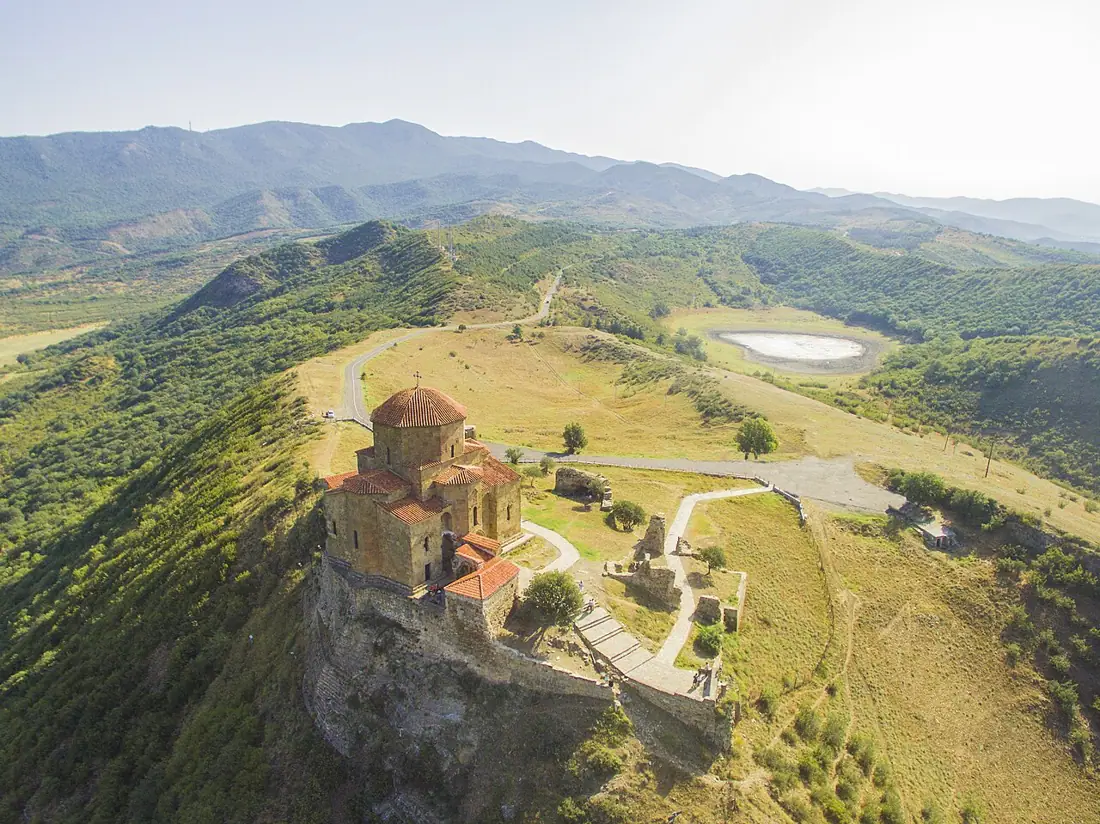 Monastery
Jvari Monastery
A 6th-century church on a cliff above the meeting of the Aragvi and Mtkvari — the starting point of Georgian architecture.
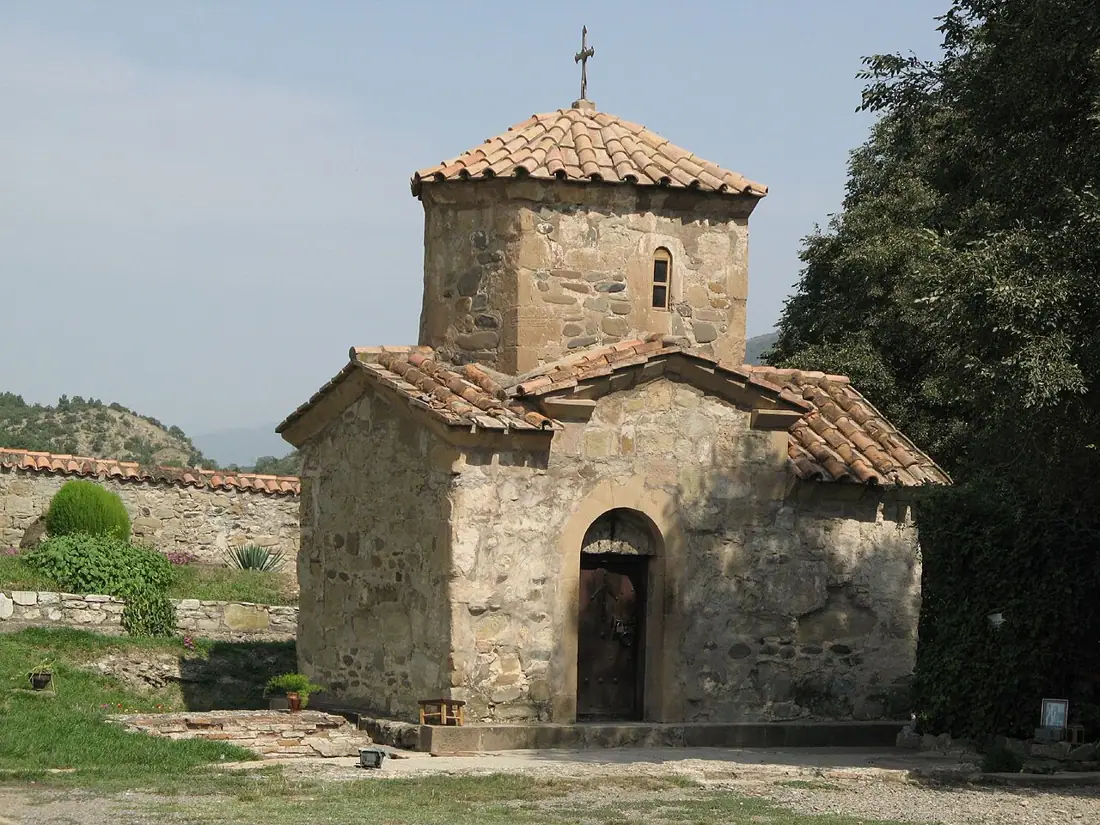 Monastery
Svetitskhoveli Cathedral
The 11th-century cathedral of Mtskheta, said to hold the robe of Christ — the mother church of Georgian Orthodoxy.
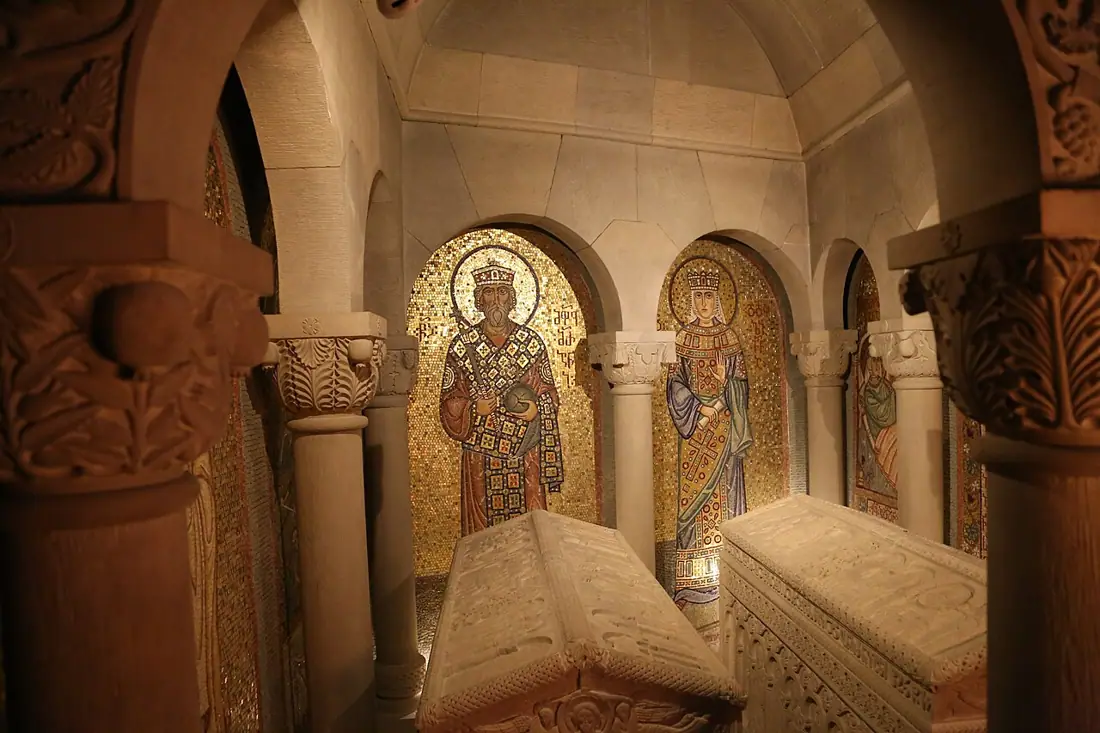 Monastery
Samtavro Monastery
The quieter half of Mtskheta's UNESCO ensemble — a working nunnery holding the graves of Georgia's first Christian king and queen.
Booking and enquiries
This site is informational — there is no online payment. Call or email us to book.