
Ozurgeti Drama Theatre (Alexandre Tsutsunava State Drama Theatre)
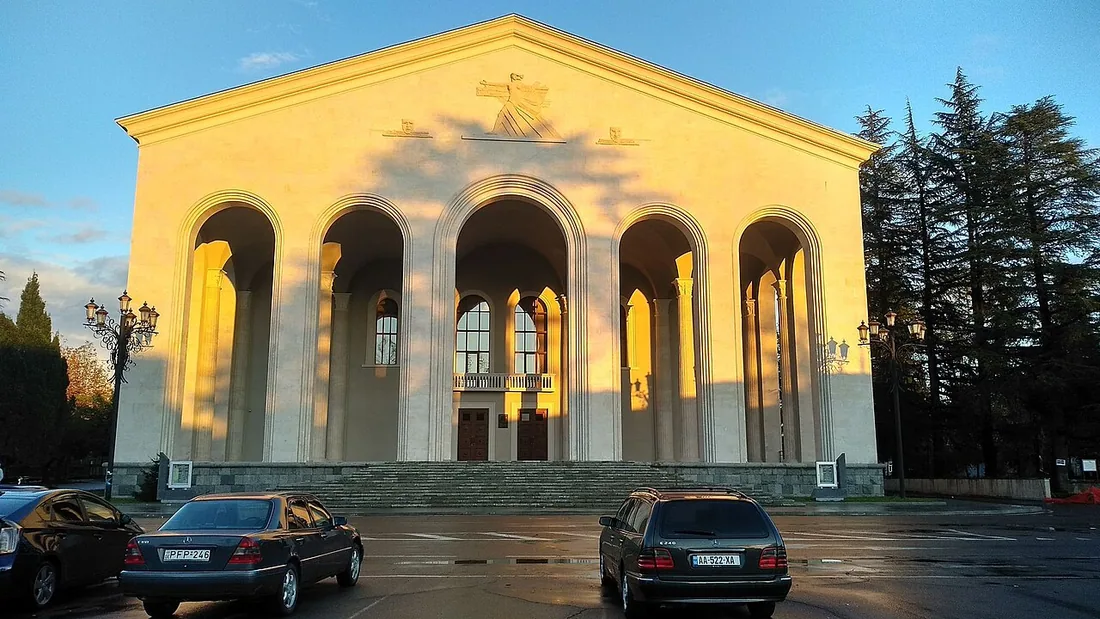
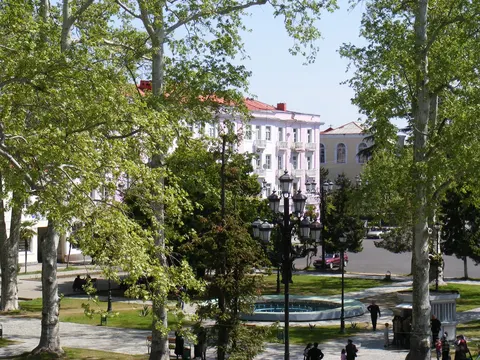
A white neoclassical giant in the town garden — begun in 1934, finished in 1962, restored in 2020 — with a 750-seat hall and a revolving stage.
- Time needed
- 0.5 h
- From Tbilisi
- 300 km · 4:50
- Road
- Paved
- Car needed
- Economy class
- Season
- All year
- Entry
- check locally
It took Ozurgeti twenty-eight years, two long halts and a change of plan to finish its theatre — and the town got one of the largest stage houses in Georgia.
The town's stage is older than its building. Ozurgeti dates its theatre from a charity performance in March 1868. In 1893 an American circus came to town and stayed a whole year; it so dazzled a twelve-year-old named Alexandre Tsutsunava that he and his friends resolved to become performers, and by 1895 he was leading the local amateur troupe. Born in nearby Likhauri in 1881, Tsutsunava learnt directing from Stanislavski in Moscow, staged Zakaria Paliashvili's new opera Abesalom and Eteri in Tbilisi in 1919 and became one of the founders of Georgian cinema — his silent Revolt in Guria (1928) put this province on screen. The theatre has carried his name since 1968.
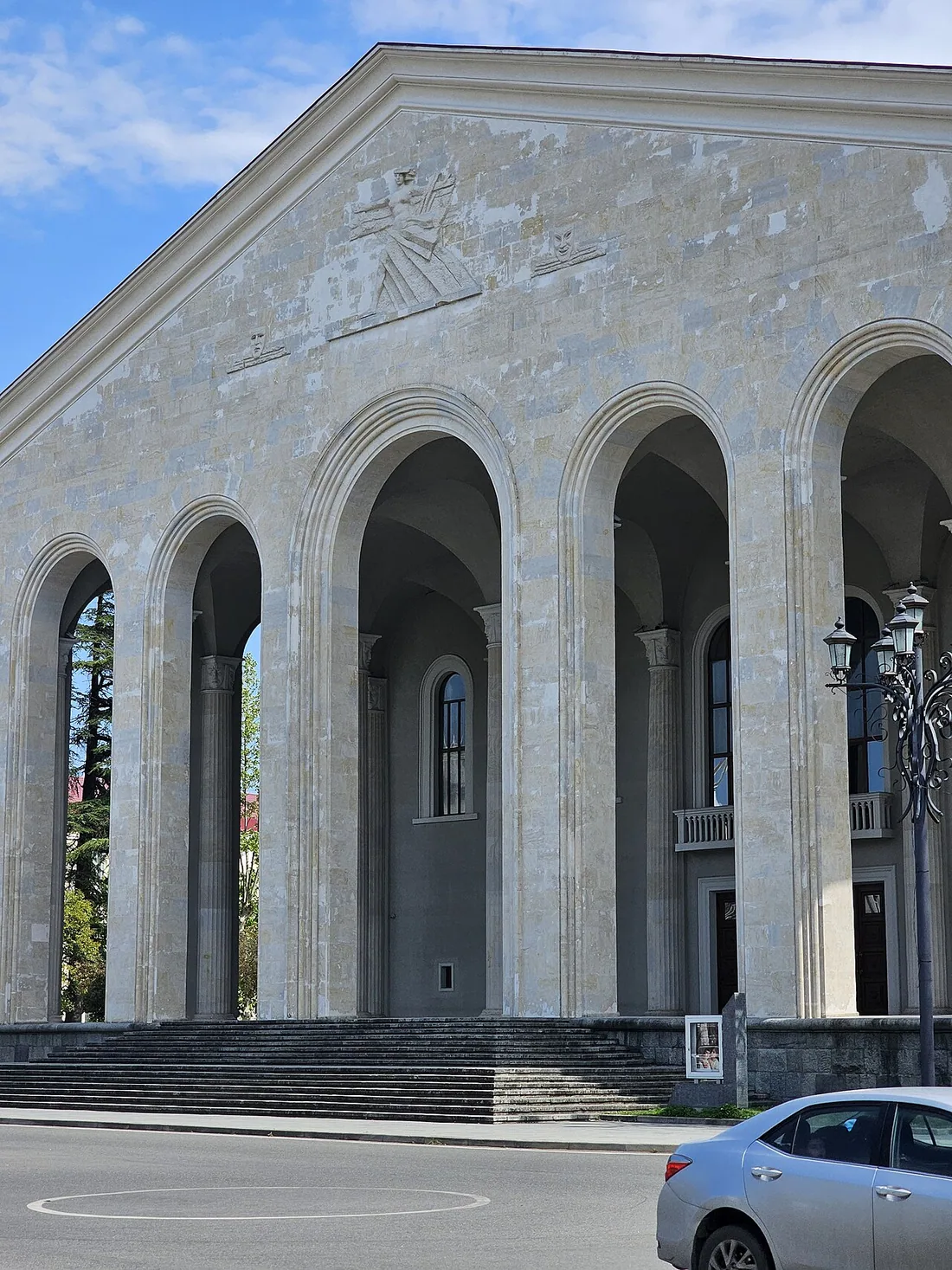
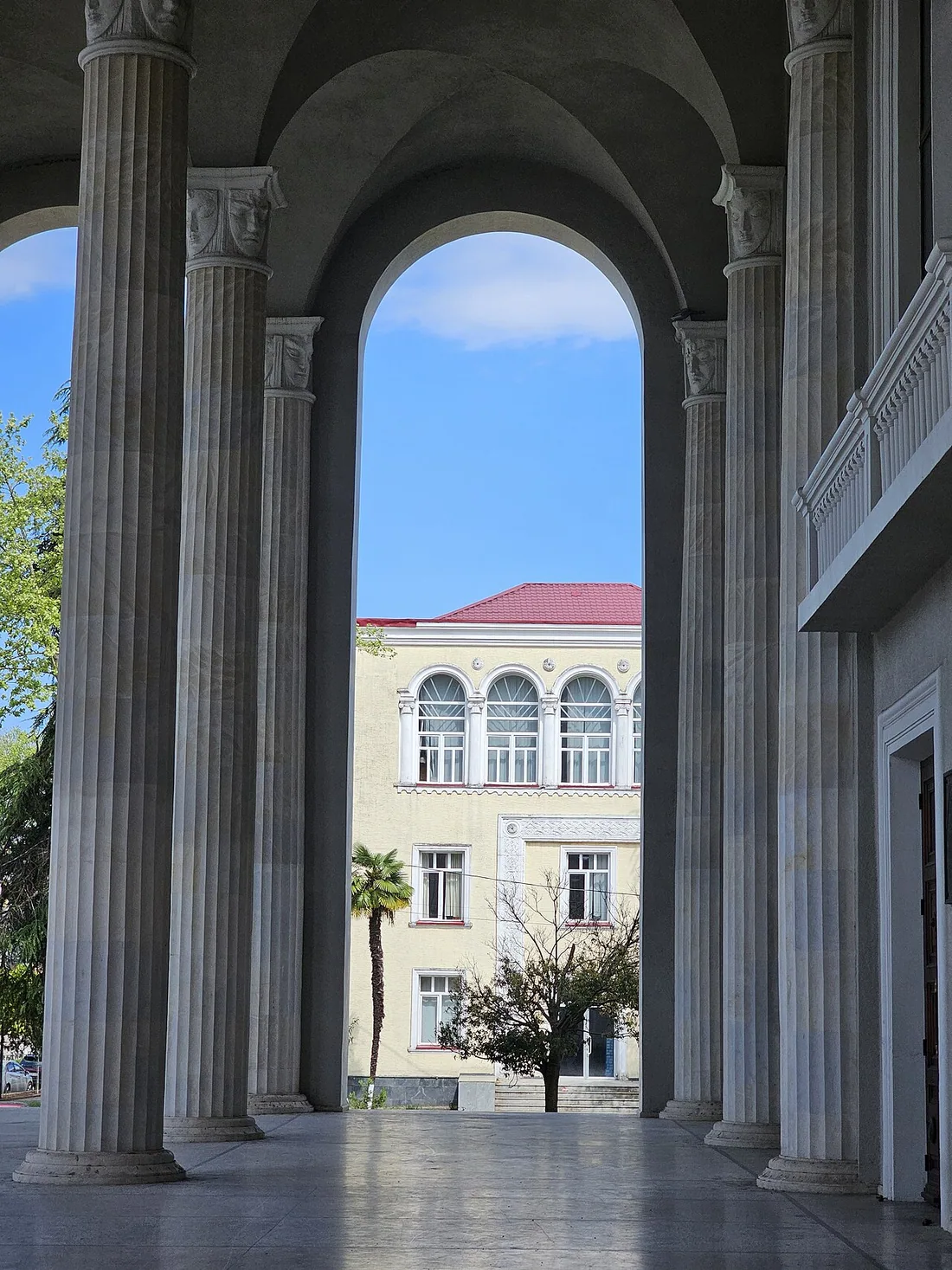
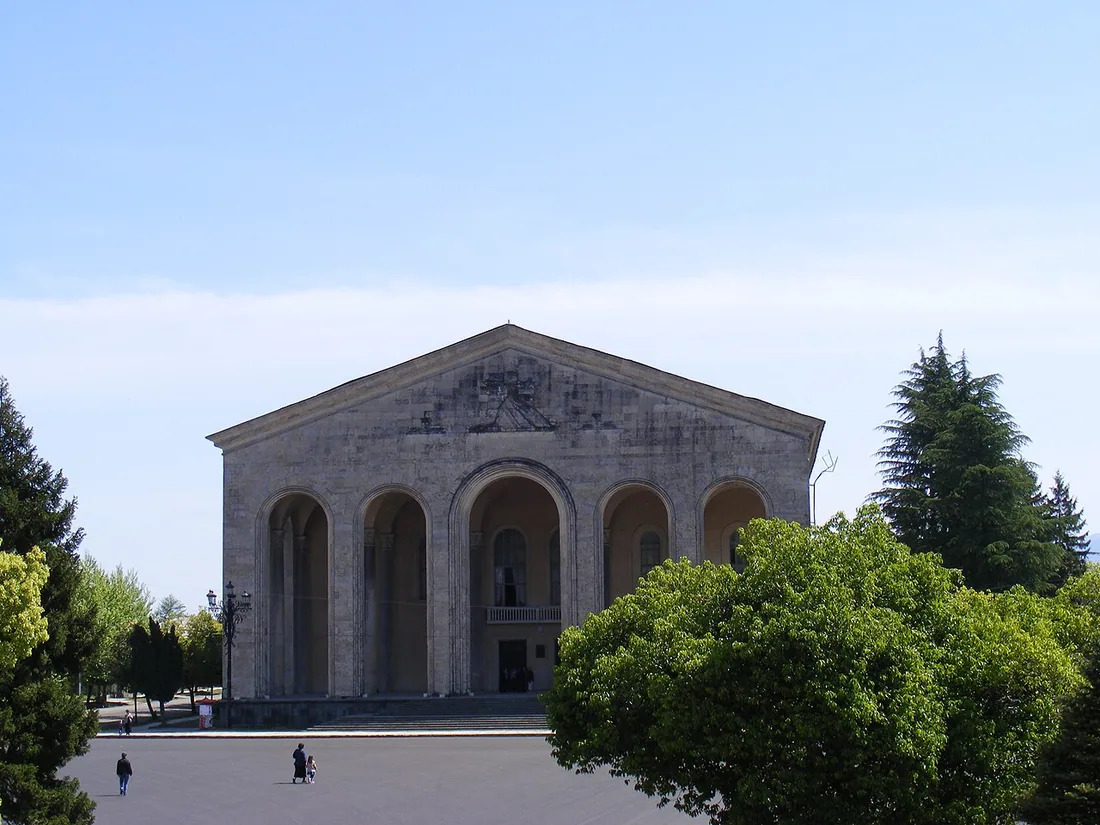
The present building was begun in 1934–35 in the town garden, to a design by Vano Kadieshvili. Work stopped in 1937, resumed in 1949 on a revised design by Kote Chkheidze, stopped again in 1952 and restarted in 1955 — now as a house of culture for the tea industry's workers. It was finished in 1962. Outside, it is a Greek temple in Soviet dress: tall arches, white stone walls on a granite base. Inside, 750 seats rise from semicircular stalls into two tiers of boxes beneath a ceiling painted by Apollon Kutateladze, and set into the stage — twenty metres by twenty, eighteen high — is a revolving circle 13 metres across.
Listed as a cultural monument in 2017, the building was restored between 2016 and 2020 for 18 million lari, paid by the Cartu Foundation. Come for a performance if you can: a hall that waited this long deserves to be seen with the lights on.
Gallery
Practical advice
The façade and Tsutsunava's statue are free to see at any hour; the interior normally opens only for performances, so check the programme and buy a ticket if anything is on — the hall is worth it even without a word of Georgian. Between shows there are no visitor facilities. Park in the side streets. The History Museum is a couple of minutes' walk away; directly opposite the theatre, behind the police car park, lie the unsigned, easily missed foundations of a bathhouse thought to have served the Gurieli princes, and the Platanus Garden is a block further north.
How to get there from Tbilisi
Ozurgeti is 300 km from Tbilisi, about 4 hours 50 minutes, on asphalt all the way. Take the E60 (S1) west past Khashuri, through the Rikoti section and past Zestaponi and Kutaisi to Samtredia. There switch to the S12 towards Lanchkhuti, and beyond Lanchkhuti follow local roads and the Sh2 into Ozurgeti — about 50 km from Samtredia across Guria's green, hazel-planted lowland. The theatre stands on Rustaveli Street in the centre; you cannot miss its arches. Fuel up at Khashuri, Zestaponi, Samtredia or in Ozurgeti itself. Any economy car will do.
Click a marker for details. Coloured lines are ready-made road trips.
Nearby places
Ozurgeti
Guria's capital since the days of the Gurieli princes: a green town on three terraces, with a drama theatre that has played since 1868.
Best car for this trip
Guides
- Driving in Georgia: What the Distances Actually Cost You Georgia is a small country with slow roads. Here is what 267 measured drives from Tbilisi say about how long y
Pickup locations
Car Rental in Batumi — 43 km (straight line)