
Achi Monastery
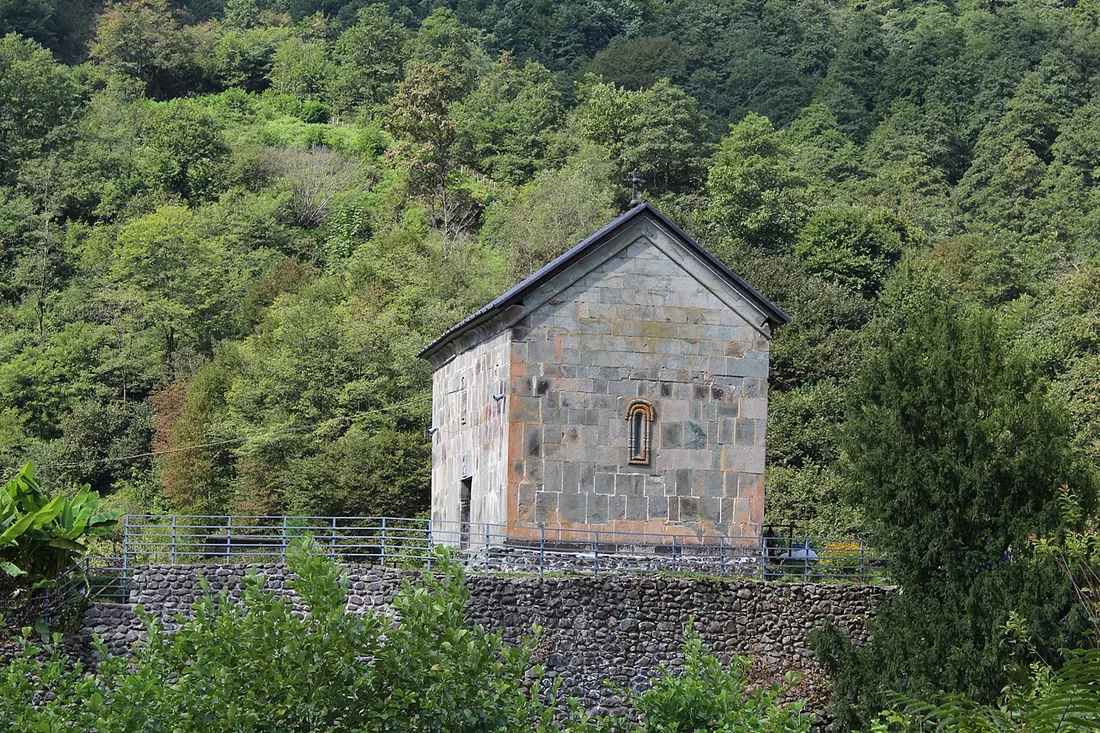
A small hall church south of Ozurgeti with late-13th-century Palaeologan frescoes, a rare cycle of St George and the Greek name of a painter from Trebizond.
- Time needed
- 1 h
- From Tbilisi
- 311 km · 4:40
- Road
- Mostly paved
- Car needed
- Economy class
- Season
- All year
- Entry
- free
Some seven hundred years ago a man called Onesimos, from Trebizond, left his name in Greek on the wall of a village church in Guria, and probably the paintings around it too.
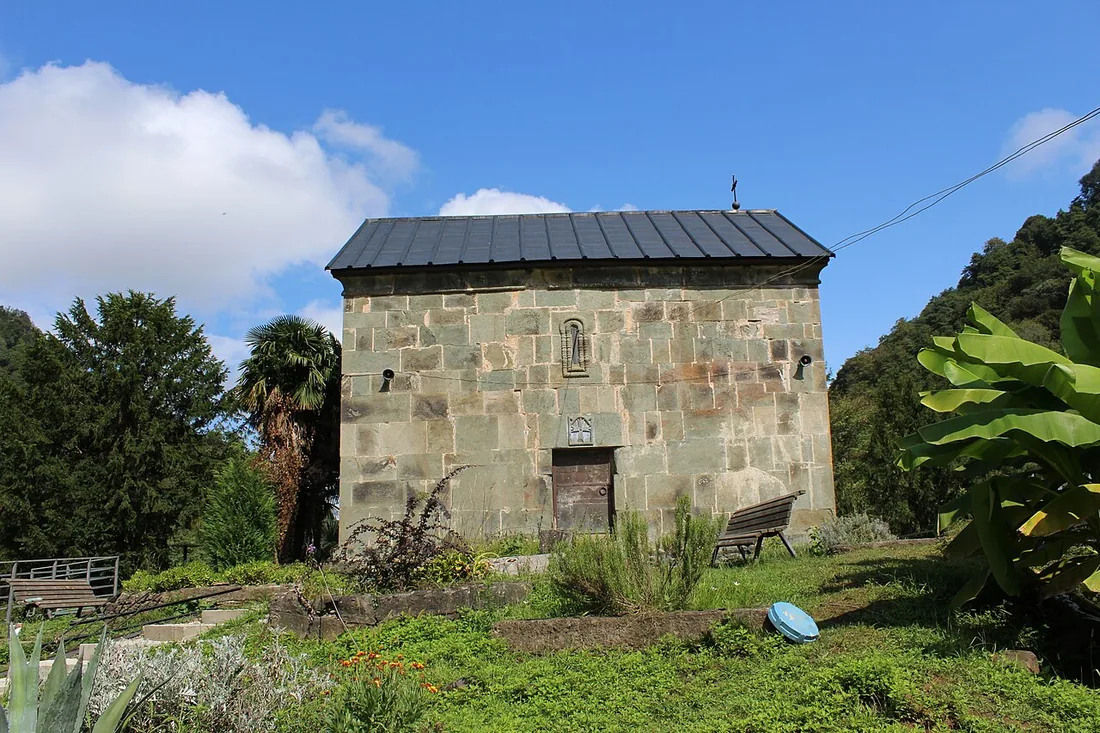
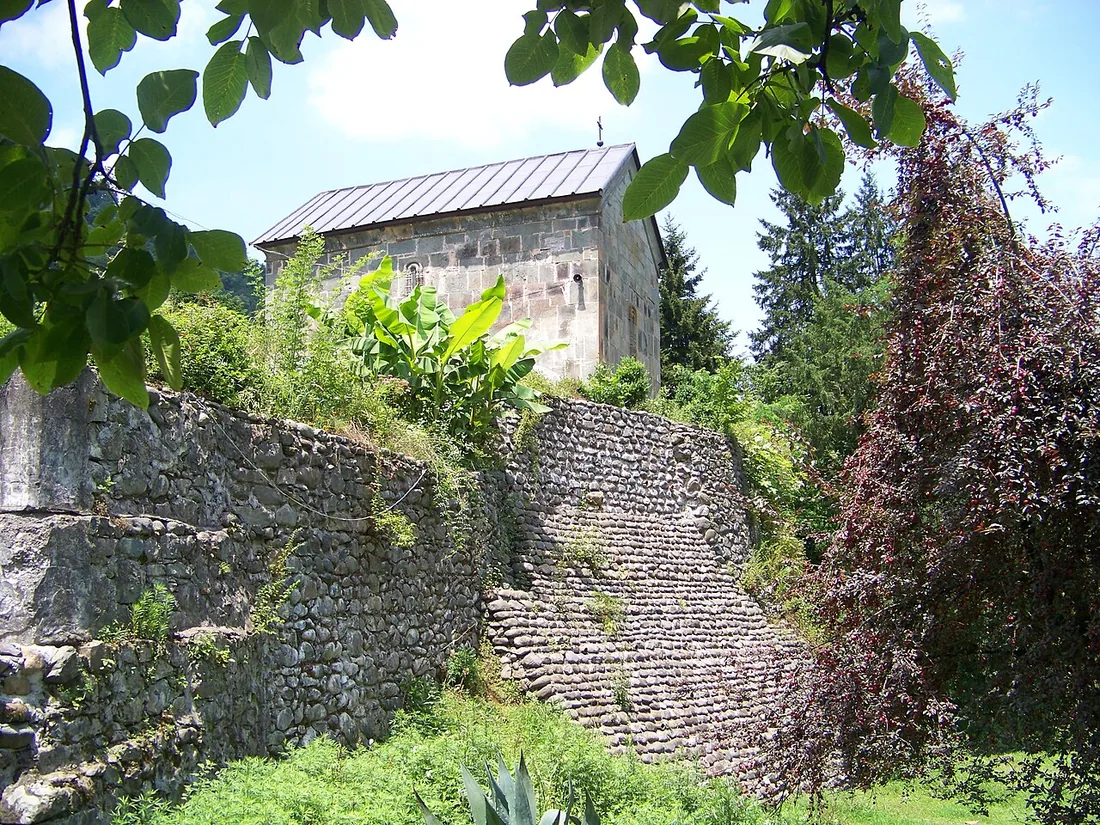
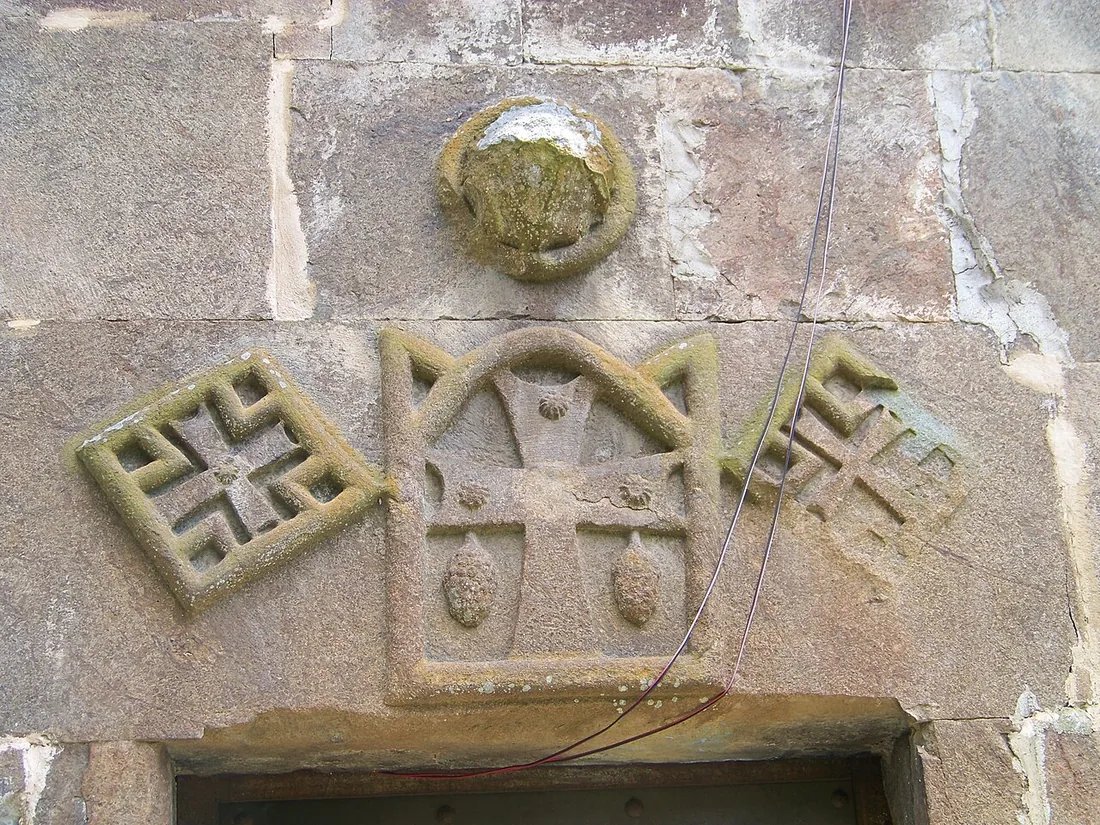
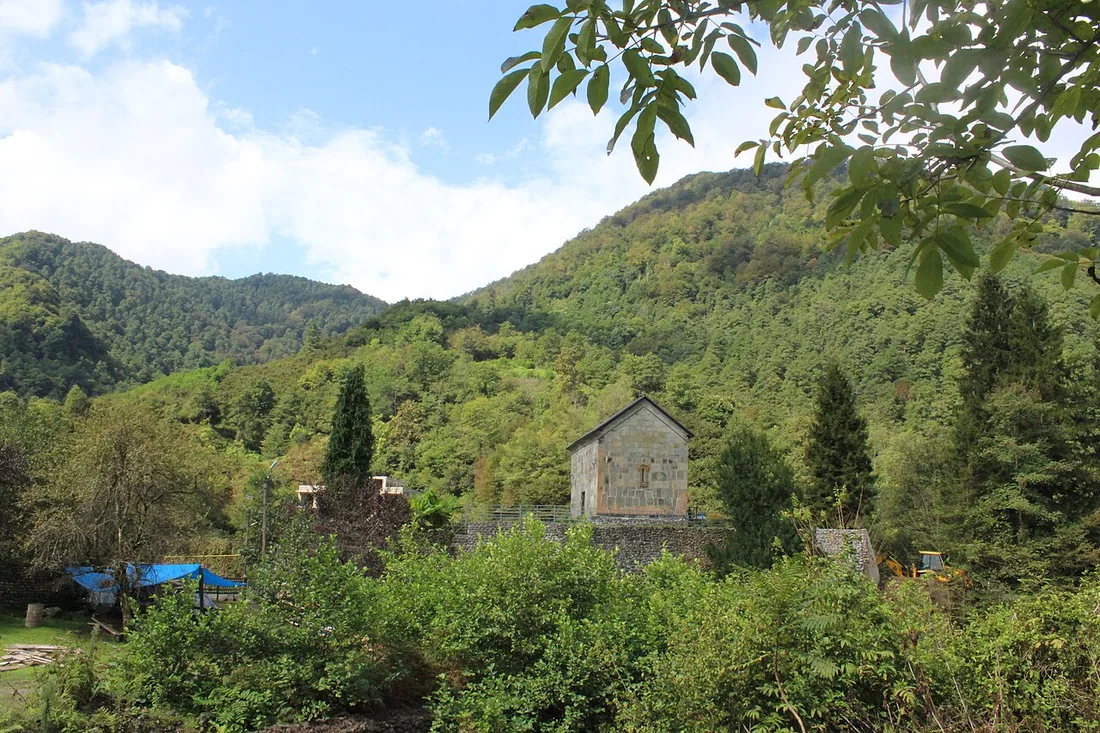
Achi was built of hewn stone at the end of the 13th century or early in the 14th: a single-nave hall, later renovated and ringed with defensive walls. It is rare to know so exactly who made a building. An inscription in asomtavruli, the old Georgian capitals, on the east façade asks remembrance for the lords Saghir, Rati and Ushanian, for Nikoloz of Achi, and for the stonemasons Mikel and Mkhetsidze, the men who laid these stones.
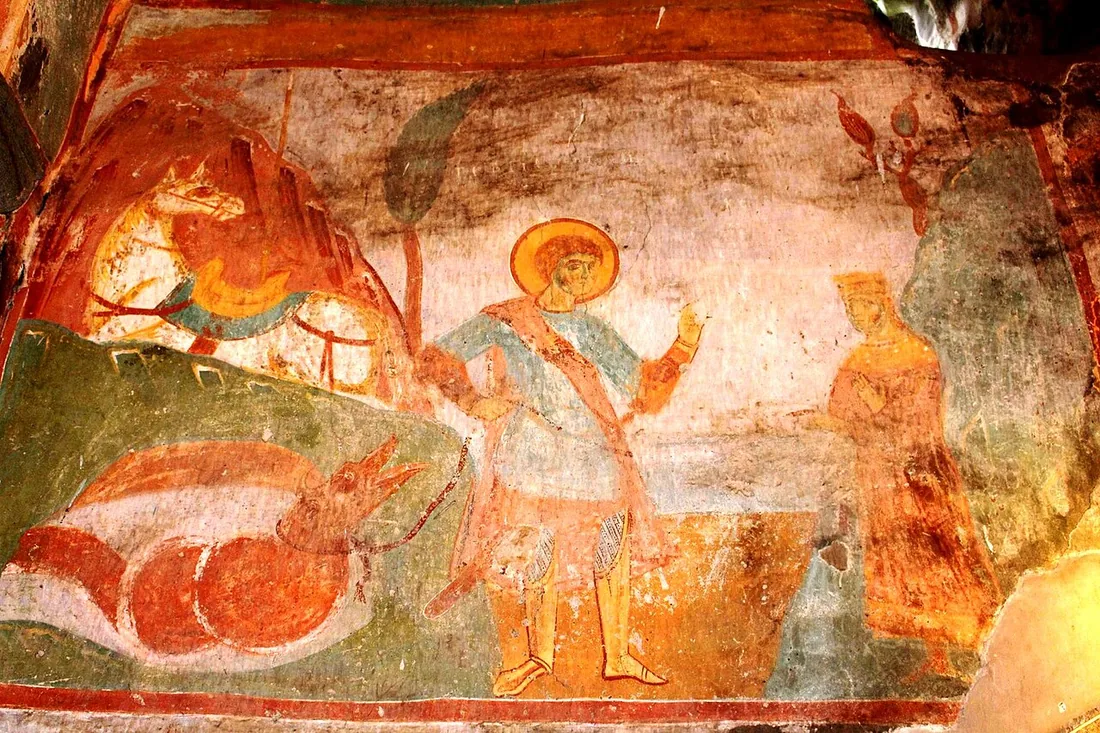
Inside, the walls are painted in the Palaeologan manner, the refined style of late Byzantium, and the murals are dated on stylistic grounds to the late 13th century. Among them, fittingly for a church dedicated to St George, is a cycle of his life: Georgia's patron saint, shown here in scenes that are iconographic rarities. The Greek inscription naming Onesimos, “a Trapezuntine”, ties this Gurian village to the Empire of Trebizond, further down the Black Sea coast.
In the 17th century the princes of Guria took the church under their wing. Simon II and Kaikhosro I Gurieli favoured it, and Kaikhosro made Achi a dependency of the bishopric of Shemokmedi. The church also held a gilded silver cross with a Georgian inscription mentioning Queen Tamar, brought to light by the scholar Ekvtime Takaishvili. Through the Soviet decades the Salukvadze family kept it safe, and in 2015 it came back to Achi. The church itself had been returned to worship in 1991; today it is a monument of national significance.
The cross travelled and came home. The frescoes never left; they simply waited.
Gallery
Practical advice
Entry is free. Achi is a working church, so men should wear long trousers and women a skirt and headscarf; Sunday mornings belong to the liturgy. The frescoes reward patience: give your eyes a few minutes to adjust to the dim nave, and ask before taking photographs, never with flash. Outside, walk round to the east façade for the asomtavruli inscription. Allow an hour. There are no facilities at the church; Ozurgeti, 9 km to the north, has cafés, ATMs and fuel. Shemokmedi Monastery makes an easy second stop on the same afternoon.
How to get there from Tbilisi
From Tbilisi it is about 311 km, some four hours forty minutes. Take the S1 (E60) west past Khashuri, through the Rikoti tunnels and past Kutaisi to Samtredia, then the S12 towards Lanchkhuti and on by country road to Ozurgeti. From the centre of Ozurgeti head south on the road towards Likhauri; Achi lies 9 km south of the town. The road is asphalt almost to the end, with a short graded stretch, and a brief walk brings you to the church. An economy car is entirely sufficient in any season. Fill up in Ozurgeti.
Click a marker for details. Coloured lines are ready-made road trips.
Nearby places
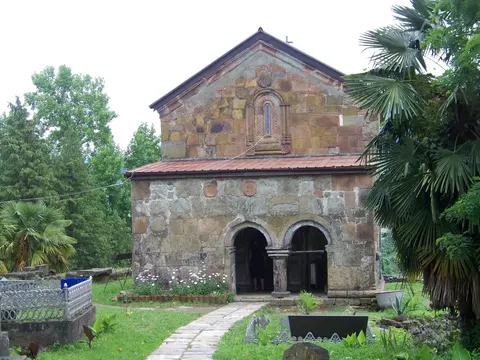
Likhauri Church of the Virgin
A carved stone hall church on a village hilltop south of Ozurgeti, with a bell tower dated 1422 and a three-towered fortress two kilometres away.
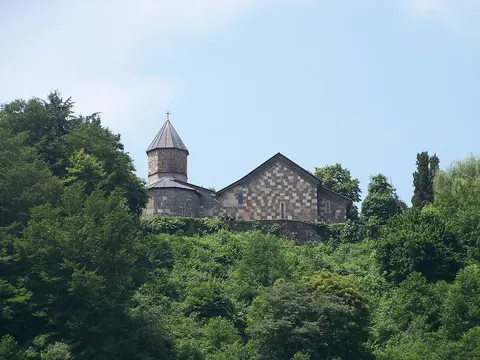
Shemokmedi Monastery
Two joined churches above the Bzhuzhi river: a Gurieli burial place, a bishop's seat, and a castle that Russian troops razed in 1820.
Best car for this trip
Mostly paved
Guides
- Driving in Georgia: What the Distances Actually Cost You Georgia is a small country with slow roads. Here is what 267 measured drives from Tbilisi say about how long y
Pickup locations
Car Rental in Batumi — 37 km (straight line)